


A hospital medical equipment list is more than a table of device names. Within a healthcare facility, equipment is distributed across many areas and serves very different functions: initial examination, patient monitoring, laboratory testing, diagnostic imaging, surgery, intensive care, rehabilitation, patient transport, and infection control support.
A general hospital may require a much broader range of equipment than a specialized clinic.
Even between two hospitals of similar size, equipment lists may differ because their scope of clinical services, patient populations, bed capacity, emergency care models, laboratory capabilities, surgical capacity, and level of digitalization are not the same.
WHO notes that selecting appropriate equipment depends on the type of healthcare facility, available workforce, and the health needs of the population served. It is therefore not possible to create one core equipment list that is both comprehensive and universally applicable to every facility.
A more useful approach is to build a hospital equipment map across two dimensions:
- What function does the equipment perform?
- In which area is the equipment used?
This classification helps hospitals better understand the relationship between equipment, clinical workflows, and physical spaces before developing detailed lists for individual departments.
Quick Summary
- There is no single fixed hospital medical equipment configuration suitable for every facility.
- Equipment can be grouped by function, such as diagnosis, monitoring, treatment, life support, surgery, laboratory testing, rehabilitation, and patient support.
- By area of use, common groups include outpatient clinics, emergency departments, inpatient wards, ICUs, operating rooms, diagnostic imaging departments, laboratories, rehabilitation areas, and other specialized units.
- One device may be used across multiple departments; conversely, one clinical area typically requires several equipment groups to work together.
- When developing an equipment list, hospitals should consider their scope of clinical services, capacity, staffing, infrastructure, and opportunities for shared equipment use.
- Higher specifications or larger quantities should not automatically be assumed to create a more appropriate system.
How Should a Hospital Medical Equipment List Be Understood?
In practice, the term medical equipment list may be used for different purposes.
A list developed for clinical planning may include:
- Equipment group.
- Function.
- Department or area of use.
- Level of necessity.
- Estimated quantity.
- Potential for shared use.
- Main infrastructure requirements.
By contrast, an asset management inventory may also need to include:
- Equipment ID.
- Model.
- Serial number.
- Manufacturer.
- Commissioning date.
- Status.
- Maintenance schedule.
- Asset value.
These two types of lists may be related but are not identical.
This article focuses on an equipment map by function and area of use, helping facilities visualize the equipment groups commonly found across healthcare delivery systems. It is not intended to create a mandatory list applicable to every hospital.
Approach 1: Classifying Hospital Equipment by Function
Equipment can be classified according to the primary function it supports within the patient care process.
| Functional Group | Primary Role | Common Examples |
|---|---|---|
| Diagnostic | Collects data to support assessment of the patient's condition | X-ray, CT, MRI, ultrasound, electrocardiograph |
| Monitoring | Continuously or periodically monitors parameters | Patient monitors, blood pressure monitors, pulse oximeters |
| Laboratory testing | Analyzes biological specimens | Hematology, clinical chemistry, immunoassay analyzers, PCR instruments/systems |
| Treatment | Supports therapeutic interventions or treatment | Electrotherapy equipment, therapeutic lasers, dialysis machines |
| Life support | Maintains or supports critical physiological functions | Ventilators, oxygen support equipment, selected resuscitation systems |
| Infusion and medication delivery | Controls the administration of fluids or medications into the body | Syringe pumps, infusion pumps |
| Surgery and procedures | Supports surgical or interventional procedures | Operating tables, surgical lights, electrosurgical units, endoscopy systems |
| Rehabilitation | Supports training and functional improvement | Exercise equipment, rehabilitation robots, gait training systems |
| Mobility and patient care support | Supports positioning, transport, and daily care | Hospital beds, stretchers, wheelchairs, walkers |
| Infection control and sterilization | Cleans, disinfects, or sterilizes instruments | Instrument washers, sterilizers |
| Data and connectivity systems supporting equipment | Manages, transmits, stores, or integrates data | PACS, device connectivity gateways, specialized workstations |
Systems such as PACS, gateways, servers, or workstations should be considered in the implementation map because they may directly affect equipment connectivity and operation. However, not every software or IT system used in a hospital should automatically be managed as a medical device under the same regulatory mechanism. WHO considers software to fall within the scope of a medical device when it meets the relevant conditions based on the medical purpose intended by the manufacturer.
Diagnostic Equipment
This group supports the collection of information about the patient's anatomy, function, or health status.
Common equipment may include:
- X-ray systems.
- CT systems.
- MRI systems.
- Ultrasound systems.
- Electrocardiographs.
- Electroencephalography equipment.
- Pulmonary function testing equipment.
- Diagnostic endoscopy systems.
- Bone densitometry systems.
- Specialty diagnostic equipment.
Not every hospital requires all of these systems.
A facility with a basic scope of services may focus on X-ray and ultrasound, while a specialized center may require CT, MRI, angiography, or more advanced imaging systems.
When developing the list, hospitals should distinguish between the main equipment and the supporting ecosystem.
For example, a diagnostic imaging system may also require:
- Workstations.
- Post-processing software.
- Detectors or probes.
- Contrast injectors.
- PACS.
- Storage systems.
- Quality control equipment.
If the equipment list includes only the main machine, the actual scale of the solution may be underestimated.
Patient Monitoring Equipment
Monitoring equipment is used across many areas of a hospital.
It may be found in:
- Emergency departments.
- ICUs.
- Operating rooms.
- Post-anesthesia care units.
- Inpatient wards.
- Procedure rooms.
- Patient transport areas.
This group commonly includes:
- Patient monitors.
- Blood pressure monitors.
- Pulse oximeters.
- ECG monitoring equipment.
- Transport monitors.
- Central monitoring systems.
- Certain specialized monitoring devices.
An important point is that monitoring requirements differ between clinical areas.
An ICU monitor typically requires different configurations and connectivity capabilities from equipment used in an outpatient clinic or during patient transport.
The list therefore should not simply state “monitor,” but may need to distinguish between:
- Bedside monitors.
- Transport monitors.
- Specialized monitors.
- Central monitoring systems.
- Expansion modules.
Treatment and Life-Support Equipment
This group includes equipment that directly supports or maintains physiological functions.
Depending on the hospital's scope, it may include:
- Ventilators.
- Oxygen support equipment.
- Suction devices.
- Dialysis machines.
- Respiratory therapy equipment.
- Syringe pumps.
- Infusion pumps.
- Defibrillators.
- Resuscitation equipment.
- Patient temperature management systems.
These devices often have significant requirements for:
- Availability.
- Power supply.
- Batteries.
- Backup capability.
- Maintenance.
- Accessories.
- Connectivity.
- User training.
A well-developed list should consider not only quantity but also whether equipment will be permanently assigned to individual beds or shared between several areas.
Surgical and Procedure Equipment
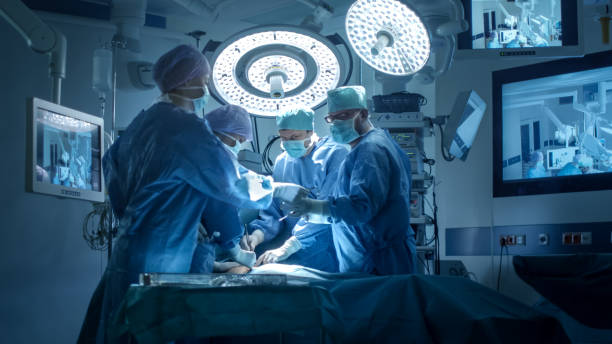
The operating room is one of the most technology-intensive areas in a hospital.
Equipment groups may include:
- Operating tables.
- Surgical lights.
- Anesthesia machines.
- Monitors.
- Electrosurgical units.
- Suction systems.
- Endoscopy systems.
- Cameras and light sources.
- Irrigation pumps.
- Specialty surgical equipment.
- C-arm systems where applicable.
- Patient warming equipment.
- Image management systems.
- Resuscitation equipment.
The equipment list should be developed according to the type of operating room and scope of surgery, rather than assuming that every room requires the same configuration.
For example, general operating rooms, endoscopic surgery rooms, interventional rooms, and specialized surgical suites may require different systems.
Laboratory and IVD Equipment
A laboratory consists of more than analyzers.
The system can be viewed across three main stages.
Pre-Analytical
- Specimen collection equipment.
- Centrifuges.
- Pipettes.
- Barcode printers and scanners.
- Aliquoting equipment.
- Refrigerators and freezers.
- Biological safety cabinets.
Analytical
- Hematology analyzers.
- Clinical chemistry analyzers.
- Immunoassay analyzers.
- Coagulation analyzers.
- Microbiology systems.
- PCR instruments/systems and molecular diagnostic equipment.
- Urinalysis analyzers.
- POCT equipment.
Post-Analytical
- Specimen storage systems.
- Specimen preservation equipment.
- Tools supporting result review, storage, and reporting.
In addition to these three stages, systems such as LIS, barcoding, servers, and data connectivity platforms may support the entire workflow, from specimen receipt and identification to analyzer connectivity, result validation, and reporting. LIS therefore should not be viewed only as a component of the post-analytical stage.
If a hospital includes only the main analyzers in its investment list without considering centrifuges, cold storage, data systems, or supporting equipment, bottlenecks may still occur across the laboratory workflow.
Rehabilitation Equipment
Rehabilitation equipment covers a wide range, from simple tools to robotic systems.
It may be divided into:
- Range-of-motion training equipment.
- Strength training equipment.
- Endurance training equipment.
- Electrotherapy equipment.
- Standing training systems.
- Gait training equipment.
- Balance platforms.
- Rehabilitation robots.
- Hand rehabilitation equipment.
- Occupational therapy tools.
- Respiratory rehabilitation equipment.
- Wheelchairs and assistive products.
- Orthotic devices.
In this area, the equipment list should be developed based on patient groups and functional goals, not on how advanced the technology appears.
A specialized rehabilitation center may require gait robots, while a general hospital may need to prioritize foundational equipment that can serve a broader range of patients.
Patient Support and Transport Equipment
Some equipment receives less attention during planning but directly affects daily operations.
This may include:
- Hospital beds.
- Stretchers.
- Wheelchairs.
- Transport carts.
- Examination chairs.
- Examination tables.
- Blood collection chairs.
- Patient lifting and transfer equipment.
- Mattresses or positioning support systems.
Not all products in this group are managed under the same regulatory or technical framework. However, they should still be included in the operational map because they affect patient flow, staffing, and space requirements.
Disinfection, Sterilization, and Infection Control Equipment
Depending on the facility model, this group may include:
- Instrument washers.
- Ultrasonic cleaners.
- Steam sterilizers.
- Drying systems.
- Packaging equipment.
- Instrument storage cabinets.
- Equipment for transporting clean and contaminated instruments.
- Certain environmental control equipment appropriate to specific areas.
This is an example of equipment that may not come into direct contact with patients but still affects the service capacity of multiple departments.
If the sterilization area is interrupted, operating rooms, endoscopy units, and many procedure areas may be affected at the same time.
Approach 2: Classifying Equipment by Area of Use in the Hospital

Grouping equipment by area helps planners answer a more practical question:
When designing or upgrading a clinical area, which equipment groups should be considered together?
Outpatient Clinics
Equipment typically depends on the specialty but may include:
- Examination tables.
- Examination beds.
- Blood pressure monitors.
- Pulse oximeters.
- Scales.
- Electrocardiographs.
- Ultrasound systems.
- ENT examination equipment.
- Ophthalmic examination equipment.
- Specialty examination instruments.
Individual clinics do not necessarily need to own every diagnostic device.
Certain technologies may be centrally located and shared across several clinics to improve utilization.
Emergency Department
Emergency departments need to respond to many situations within a short period, so equipment lists often prioritize availability and flexibility.
They may include:
- Monitors.
- Ventilators.
- Defibrillators.
- Electrocardiographs.
- Suction equipment.
- Syringe pumps.
- Infusion pumps.
- Oxygen equipment.
- Stretchers.
- Resuscitation equipment.
- Bedside ultrasound where appropriate.
- Patient transport equipment.
Certain devices should be suitable for continued use when patients are transferred from the emergency department to diagnostic imaging, the operating room, or the ICU.
Inpatient Wards
An inpatient ward equipment list may include:
- Hospital beds.
- Blood pressure monitors.
- Pulse oximeters.
- Monitors for patients requiring observation.
- Syringe pumps.
- Infusion pumps.
- Oxygen equipment.
- Suction equipment.
- Medical carts.
- Patient transport support equipment.
Not every bed requires the same configuration.
Facilities should estimate the proportion of patients who frequently require monitoring or infusion therapy to avoid shortages during peak periods and excess equipment during normal operations.
Intensive Care Unit – ICU
ICUs generally require higher levels of monitoring and support.
Equipment groups may include:
- Multiparameter monitors.
- Central monitoring systems.
- Ventilators.
- Syringe pumps.
- Infusion pumps.
- Defibrillators.
- Suction devices.
- Oxygen equipment.
- Temperature management equipment.
- Electrocardiographs.
- Certain renal support systems.
- Bedside ultrasound systems.
- Specialized transport equipment.
The important considerations are not limited to equipment quantity, but also include:
- Data connectivity.
- Backup power.
- Space around the bed.
- Medical gas systems.
- Pump placement.
- Visibility of alerts.
- Staff movement.
An ICU may contain many devices and still be difficult to operate if the layout is inappropriate.
Operating Room
Operating room equipment lists can often be divided into:
- Operating tables and surgical lights.
- Anesthesia.
- Monitoring.
- Respiratory support.
- Electrosurgery.
- Endoscopy.
- Suction.
- Infusion.
- Imaging.
- Specialty equipment.
- Recovery equipment.
In addition to direct equipment, this area also depends on infrastructure such as:
- Electricity.
- Medical gases.
- HVAC.
- Environmental control.
- Network connectivity.
- Physical layout.
- Clean and contaminated flows.
These items are not always classified as medical equipment but should be planned together with the equipment.
Post-Anesthesia Care Unit
The recovery area may require:
- Monitors.
- Oxygen equipment.
- Suction equipment.
- Syringe pumps.
- Infusion pumps.
- Airway support equipment.
- Shared defibrillators.
- Central monitoring equipment.
Capacity should be based on the number of operating rooms, procedure volume, and patient recovery time.
Diagnostic Imaging Department
Main equipment may include:
- X-ray.
- CT.
- MRI.
- Ultrasound.
- Mammography.
- Bone densitometry.
- Angiography.
- C-arm.
- Specialized imaging equipment.
However, the operating ecosystem may also include:
- PACS.
- RIS.
- Workstations.
- Diagnostic displays.
- Injectors.
- Quality control equipment.
- Storage systems.
- UPS.
- Patient support equipment.
A “diagnostic imaging equipment list” containing only CT, MRI, and X-ray systems therefore does not fully reflect the operating ecosystem.
Laboratory
Laboratory equipment may be grouped according to:
- Specimen reception.
- Specimen preparation.
- Centrifugation.
- Storage.
- Analysis.
- Quality control.
- Specimen retention.
- LIS data connectivity.
The actual list depends heavily on:
- Test menu.
- Sample volume.
- Degree of automation.
- Emergency testing needs.
- Reagent supply model.
- Available space.
A low-volume laboratory does not need to copy the configuration of a high-throughput testing center.
Obstetrics and Neonatal Care
Depending on the clinical scope, equipment may include:
- Obstetric monitors.
- Ultrasound systems.
- Fetal monitoring equipment.
- Delivery tables or beds.
- Neonatal resuscitation equipment.
- Incubators.
- Infant warmers.
- Neonatal monitors.
- Appropriate respiratory support equipment.
- Syringe pumps.
- Phototherapy equipment where clinically required.
Neonatal equipment often has different requirements for size, sensors, accessories, and temperature control compared with equipment intended for adults.
Hemodialysis Unit
This area may require:
- Dialysis machines.
- Chairs or beds.
- Water treatment systems.
- Monitoring equipment.
- Scales.
- Blood pressure monitors.
- Emergency equipment.
- Supply storage and distribution systems.
Here, water infrastructure quality and backup capability may be as important as the main equipment itself.
Endoscopy Unit
An endoscopy system may include:
- Endoscopes.
- Image processors.
- Light sources.
- Displays.
- Suction equipment.
- Pumps.
- Electrosurgical equipment where applicable.
- Monitoring equipment.
- Image storage systems.
- Endoscope cleaning and reprocessing equipment.
The list should clearly distinguish between:
- Equipment used during the procedure.
- Equipment used for post-procedure reprocessing.
If only the endoscopy system itself is included while the reprocessing area is overlooked, the workflow may not operate as intended.
Rehabilitation Department
Equipment groups may include:
- Physical therapy equipment.
- Movement training equipment.
- Strength training equipment.
- Gait training equipment.
- Parallel bars.
- Balance equipment.
- Occupational therapy equipment.
- Robotics.
- Assistive products.
The list should balance foundational equipment and advanced technologies.
Facilities should avoid investing heavily in complex systems while lacking basic equipment that serves the majority of patients.
Central Sterile Services Department – CSSD
This area may include:
- Washers.
- Ultrasonic cleaners.
- Packaging equipment.
- Sterilizers.
- Drying equipment.
- Transport systems.
- Instrument storage cabinets.
- Process monitoring equipment.
The CSSD list should be developed based on:
- Instrument volume.
- Number of surgical cases.
- Instrument types.
- Processing cycles.
- Backup capability.
Not Every Device Belongs Exclusively to One Department

One common source of confusion when developing a hospital medical equipment list is trying to assign every device to only one department.
In practice, there are three main models.
Fixed Equipment by Area
Examples:
- CT.
- MRI.
- Operating tables.
- Sterilizers.
- Large laboratory analyzers.
These devices depend on infrastructure and are generally not moved.
Mobile Equipment
Examples:
- Mobile X-ray systems.
- Portable ultrasound systems.
- Transport monitors.
- Transport ventilators.
- Syringe pumps.
- Infusion pumps.
These devices may move with patients or rotate among several departments.
Shared Equipment
Some facilities may establish shared equipment pools for:
- Infusion pumps.
- Syringe pumps.
- Monitors.
- Respiratory support equipment.
- Other mobile devices.
This model may reduce idle equipment but requires effective control of equipment status, location, cleaning, and allocation.
Technical Infrastructure Should Not Be Overlooked When Developing the Equipment List
A common mistake is to create the equipment list first and only afterward determine whether the facility can support installation.
Depending on the area, equipment may depend on:
- Power supply.
- Grounding.
- UPS.
- Backup generators.
- Medical gases.
- Water.
- Water treatment systems.
- Wastewater systems.
- Air conditioning.
- HVAC.
- Radiation shielding.
- Vibration control.
- Network connectivity.
- Servers.
- Storage systems.
- Floor load capacity.
- Ceiling height.
- Transport access.
Not all of these items are medical devices in the legal sense. However, they should appear in the implementation map because equipment may not operate as required if the infrastructure is inadequate.
Building a Hospital Equipment List in Six Steps

Step 1: Define the Scope of Services
The hospital should clarify whether it provides:
- Outpatient care.
- Inpatient care.
- Emergency care.
- ICU services.
- Surgery.
- Laboratory testing.
- Diagnostic imaging.
- Rehabilitation.
- Specialized clinical services.
The equipment list should follow the scope of clinical services, not the other way around.
Step 2: Map Patient Flow and Workflows
Identify:
- Which areas patients pass through.
- Which equipment they encounter.
- Which steps require monitoring.
- Which steps require diagnosis.
- Which steps require treatment.
- Where backup equipment is required.
This approach helps reduce the risk of overlooking supporting equipment between workflow stages.
Step 3: Group Equipment by Function
Equipment may be divided into:
- Diagnostic.
- Monitoring.
- Treatment.
- Life support.
- Laboratory testing.
- Surgery.
- Rehabilitation.
- Patient support.
Each group can then be mapped to the relevant clinical areas.
Step 4: Identify Fixed, Mobile, and Shared Equipment
Not every department needs to own the same equipment independently.
Facilities should consider:
- Distance between departments.
- Frequency of use.
- Urgency.
- Transport time.
- Risks if equipment is not immediately available.
- Cleaning requirements.
- Location-tracking capability.
Step 5: Cross-Check Infrastructure and Staffing
Each equipment group requires appropriately trained users and suitable technical infrastructure.
Equipment may not be appropriate if:
- There are insufficient staff.
- There is no suitable room.
- Power supply is inadequate.
- Network or storage capacity is insufficient.
- Maintenance support is unavailable.
- There is no reliable consumables supply chain.
Step 6: Standardize Equipment Group Names Before Selecting Models
At the mapping stage, begin with generic names such as:
- Patient monitor.
- Ultrasound system.
- Ventilator.
- Clinical chemistry analyzer.
Only after the need has been established should the facility define:
- Model.
- Configuration.
- Modules.
- Accessories.
- Capacity.
This helps ensure that the equipment list reflects hospital needs rather than being unintentionally shaped by one supplier's catalog.
Sample Framework for a Hospital Medical Equipment List
Hospitals can build a table using the following structure:
| Area | Functional Group | Equipment Group | Intended Use | Fixed / Shared | Main Infrastructure Requirements |
|---|---|---|---|---|---|
| Emergency Department | Monitoring | Monitor | Patient monitoring | Fixed + mobile | Power, network |
| ICU | Respiratory support | Ventilator | Respiratory support | Fixed | Medical gases, power |
| Laboratory | Analysis | Clinical chemistry analyzer | Specimen analysis | Fixed | Power, water, LIS connectivity |
| Diagnostic Imaging | Diagnostic | CT | Cross-sectional imaging | Fixed | Power, air conditioning/cooling, radiation shielding according to system requirements |
| Rehabilitation | Movement training | Exercise equipment | Support rehabilitation | Fixed / flexible | Space, power |
After the overall framework has been completed, individual departments can then develop detailed equipment lists.
Common Mistakes When Developing an Equipment List
Copying Another Hospital's Equipment List
Two hospitals with the same number of beds may not have the same:
- Scope of services.
- Service volume.
- Staffing.
- Infrastructure.
- Referral model.
Another hospital's list may be used as a reference but should not be copied unchanged.
Starting with a Specific Model
This may cause the plan to be shaped by a product before the actual need has been clarified.
Counting Only Major Equipment
Items such as:
- Monitors.
- Pumps.
- Suction devices.
- Transport equipment.
- Pre-analytical equipment.
may determine day-to-day operational capability even though each device costs less than a CT or MRI system.
Allowing Each Department to Develop Its Own List Independently
This may result in:
- Duplicate equipment.
- Excess capacity.
- Difficulty standardizing systems.
- Insufficient shared equipment.
Hospitals should include a facility-wide review layer.
Failing to Consider Future Expansion
Equipment and infrastructure should meet current needs while also accounting for reasonable growth during the expected service period.
Review Checklist Before Finalizing the Equipment List

Scope
- Departments and services have been identified.
- Patient groups have been identified.
- Expected capacity has been defined.
Function
- Each device has a clear purpose.
- No important functional group has been overlooked.
- Main equipment has been distinguished from accessories and supporting systems.
Area
- Equipment is linked to its area of use.
- Shared equipment has been identified.
- Transport requirements have been considered.
Infrastructure
- Power requirements have been reviewed.
- Medical gases have been considered.
- Water and wastewater requirements have been reviewed where necessary.
- Network and storage requirements are included in the plan.
- Maintenance access space has been considered.
Staffing
- Appropriate users are available.
- A training plan is available.
- Technical support capability is available.
Frequently Asked Questions About Hospital Medical Equipment Lists

What Does a Hospital Medical Equipment List Include?
Depending on the facility, the list may include diagnostic, monitoring, laboratory, treatment, life-support, surgical, infusion, rehabilitation, patient transport, and related supporting systems.
Is There a Standard Equipment List Applicable to Every Hospital?
No. The type and quantity of equipment depend on each facility's clinical scope, scale, staffing, patient groups, capacity, and infrastructure. WHO also notes that it is not possible to create a core equipment list that is both comprehensive and universally applicable to every healthcare facility.
Is ICU Equipment Different from Equipment Used in General Inpatient Wards?
It may differ significantly. ICUs generally require continuous monitoring, respiratory support, multiple infusion channels, and higher levels of connectivity than standard inpatient wards.
Can Software Be Considered Part of the Equipment List?
It depends on the purpose of the list.
WHO recognizes that software may fall within the scope of medical devices when the manufacturer intends it to be used for a medical purpose. However, not every software or IT system used in a hospital is automatically considered a medical device.
For operational planning, platforms such as PACS, equipment-related software, connectivity gateways, servers, and storage systems should still be considered alongside equipment because they may directly affect system connectivity and usability.
Should Every Department Have Its Own Device?
Not necessarily. Equipment may be fixed, mobile, or shared depending on urgency, frequency of use, distance, and coordination capability.
Should Accessories Be Included in the Equipment List?
Yes. For many systems, accessories, modules, sensors, probes, workstations, or software are required for the equipment to perform its full intended function.
Is an Equipment List the Same as an Asset Inventory?
This article is provided for informational purposes only. Hospital medical equipment lists should be developed according to each facility's scope of clinical services, operating model, infrastructure conditions, workforce, and applicable regulations.
Explore the Hospital Equipment Ecosystem at PHARMEDI & HEALTHCARE VIETNAM 2026
A hospital equipment list becomes truly useful when it is built around the needs of each clinical area and can be compared with solutions currently available in the market. After identifying the equipment groups required for emergency care, intensive care, operating rooms, laboratories, diagnostic imaging, and rehabilitation, the next step is to explore technologies and understand how different systems can work together in practice.
At PHARMEDI & HEALTHCARE VIETNAM 2026, the Product Showcase Area is one of the program highlights. The area brings together products, technologies, and solutions from domestic and international companies, including medical devices and supplies, diagnostic technologies, laboratory solutions, digital health, and smart healthcare. According to the Organizing Committee, it is also a space where professional visitors can explore new solutions, compare technologies, and identify options aligned with their organization's investment and upgrade plans.
For hospitals, medical centers, and clinics reviewing investment lists, visiting PHARMEDI VIETNAM 2026 can help clarify:
- Which equipment categories currently offer multiple technology options in the market?
- Does a solution consist only of the main device, or does it also require specific modules, software, and accessories?
- Which devices can connect with the hospital's existing systems?
- How do power, network, cooling, and installation-space requirements differ between solutions?
- Can the equipment be used as a fixed system, a mobile system, or shared among several departments?
- How does the supplier provide installation, training, maintenance, and spare parts support?
- Are there solutions better suited to phased upgrade plans rather than large-scale investment at one time?
PHARMEDI VIETNAM 2026 also offers a Group Visit Program for delegations from hospitals, medical centers, clinics, and healthcare facilities across Vietnam, providing opportunities for companies to engage directly with organizations that have investment needs.
According to information from the Organizing Committee, the 2026 event is expected to feature more than 600 booths across 12,000 m², with companies from more than 20 countries and territories.
International Conference Series on Investment and Innovation in Healthcare
Alongside the exhibition area, PHARMEDI & HEALTHCARE VIETNAM 2026 hosts the International Conference Series over two days, September 22–23, 2026, expanding discussions from investment and innovation to hospital management and operations.
- Day 1 – September 22, 2026: focuses on Vietnam's Healthcare Sector – The Next Decade of Growth, covering healthcare demand, investment trends, hospital supply procurement and investment decisions, and applications of AI in healthcare.
- Day 2 – September 23, 2026: focuses on Hospital Management & Operations, including the hospital of the future, operations and accreditation, clinical innovation, growth strategies, and balancing quality and access with financial efficiency.
For facilities developing or reviewing medical equipment lists, the conference series adds perspectives on investment strategy, procurement, infrastructure, and hospital operations alongside direct exploration of solutions across the exhibition area.
B2B Matchmaking – One-to-One Connections at PHARMEDI VIETNAM 2026
In addition to the exhibition and conference activities, B2B Matchmaking is a one-to-one connection program arranged by the Organizing Committee based on the needs and potential fit between participants. The program gives professional visitors and companies additional time to discuss investment needs, solutions, implementation capabilities, and cooperation opportunities during the exhibition.
In this way, PHARMEDI & HEALTHCARE VIETNAM 2026 can serve as a practical reference point for healthcare facilities seeking to move from an equipment list on paper to direct exploration of technologies, implementation conditions, and the support ecosystem behind each equipment group before developing future investment plans.
Dates: September 22–24, 2026
Venue: Saigon Exhibition and Convention Center (SECC), Ho Chi Minh City
Exhibitor Registration:https://pharmed.vn/exhibitor/application-form
Visitor Registration:https://ers-vn.informa-info.com/pha2026?cid=FB
Contact:
Booth Booking: [email protected] (Thanh Thuý)
Media Support: [email protected] (Anita Pham)
Visitor Support: [email protected] (Ciel Le)
Related post
- Circular No. 40/2025/TT-BYT Fully Replaces Circular No. 07/2024/TT-BYT Dated May 17, 2024
- On the morning of March 8, Covid-19 vaccine was present at the first 4 injection sites
- Hospital Medical Equipment Procurement Process: From Needs Assessment to Acceptance
- Monkeypox Outbreak in Vietnam: WHO Declares Global Health Emergency
- Vietnam: A Promising Hub for Healthcare Investment