

An EO gas sterilizer is a commonly used term for equipment that uses ethylene oxide gas (EO or EtO) to sterilize compatible medical products and instruments. It is one of the low-temperature sterilization technologies used for devices that are sensitive to heat or moisture or have structures that are difficult to process using certain other methods.
Unlike steam sterilizers, EO sterilization systems use a chemical agent in gaseous form to inactivate microorganisms. This technology can penetrate many compatible packaging materials and instrument structures, making it applicable both in medical device manufacturing and in certain reprocessing activities at healthcare facilities.
However, ethylene oxide is a hazardous, carcinogenic, and flammable chemical. Its use requires not only control of sterilization effectiveness but also management of occupational exposure, emissions, and residual EO remaining on products.
In particular, completion of the sterilization cycle does not mean that the product can immediately be released for use. Facilities must also meet requirements related to aeration, residual control, cycle-result evaluation, and product-release conditions.
This article focuses on the operating principles, applications, limitations, and selection criteria for EO sterilization equipment used by hospitals, manufacturers, and organizations that need to process specialized medical devices.
What Is EO Gas Sterilization?
Ethylene oxide sterilization is a method that uses ethylene oxide as the sterilizing agent in a designed, validated, and controlled process.
Ethylene oxide can act on essential components of microorganisms, disrupting biological processes required for their survival and reproduction.
According to the U.S. Centers for Disease Control and Prevention (CDC), EO is used for heat- or moisture-sensitive medical devices that are not suitable for steam sterilization.
This technology is particularly relevant for certain polymer materials, multi-component devices, and products sterilized in their final packaging.
However, EO sterilization capability depends on the material, product structure, packaging, process conditions, and the ability to remove residual gas. Not every heat-sensitive device is suitable for EO processing.
Does an EO Sterilizer Use Steam?
Not according to the operating principle of a saturated-steam sterilizer.
The term “EO gas autoclave” or similar expressions may appear in commercial use in Vietnam. Technically, the more accurate term is ethylene oxide sterilizer.
During an EO process, the system may control humidity to create suitable conditions for the sterilizing agent. However, EO is the primary sterilizing agent, rather than moist heat from saturated steam as used in steam sterilization.
This distinction is important when evaluating materials, installation conditions, and quality-control methods.
1. Operating Principle of EO Sterilization Equipment
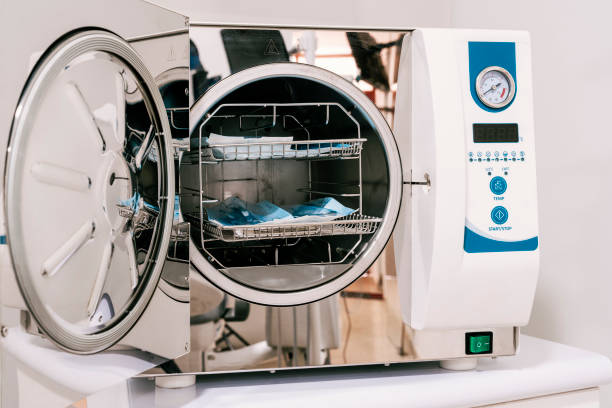
In principle, the equipment creates conditions that allow ethylene oxide gas to contact the surfaces requiring sterilization within a controlled process.
Depending on the technology, the system may include the following functional stages:
1. Chamber conditioning: The equipment controls chamber conditions and other factors required for processing.
2. Sterilant delivery: EO is introduced into the system through a dedicated gas-delivery method according to the design.
3. Exposure and processing: EO gas is distributed so that it can contact areas within the validated sterilization scope.
4. Gas removal: The system performs processing stages designed to remove EO from the chamber.
5. Residual-gas aeration: Products undergo a validated aeration process to reduce EO retained within the material.
6. Evaluation and product release: Sterilization results, process data, and residual requirements are reviewed before the product is released for use or distribution.
This is a general description of the operating principle and not a direct operating procedure.
Factors Affecting the Sterilization Process
According to the CDC, EO sterilization effectiveness is related to conditions such as:
- Gas characteristics and distribution.
- Temperature.
- Humidity.
- Exposure time.
- Product material and structure.
- Cleaning status.
- Ability of the gas to penetrate the processing load.
These factors should be defined during process development and validation.
Sterilization conditions should not be adjusted arbitrarily to shorten processing time or increase throughput without an appropriately validated process.
2. What Components Are Included in an EO Sterilization System?
An EO sterilization system may include multiple mechanical, electronic, and chemical-safety components.
| Component | Primary Function |
|---|---|
| Sterilization chamber | Contains the processing load under controlled conditions |
| EO supply system | Delivers the sterilizing agent according to the system design |
| Temperature and humidity control system | Supports maintenance of process conditions |
| Vacuum and gas-handling system | Supports chamber-conditioning and gas-removal stages |
| Aeration system | Reduces EO residues on products according to the process |
| Sensors and controller | Monitor supported technical parameters |
| Interlocks and alarm mechanisms | Help prevent unsafe operation |
| Emission-control system | Collects and treats exhaust gas according to the configuration |
| Software and data recorder | Stores process information, alarms, and batch records |
Not every device integrates all of these components within the same equipment enclosure.
For example, the aeration system may be integrated or installed as a separate area or device. Similarly, the emission-control system may use components connected to dedicated facility infrastructure.
What Is the Role of the Aeration System?
Ethylene oxide can be absorbed and retained by certain materials.
After sterilization, the amount of retained gas needs to be reduced to an appropriate level before the product is released for use.
Therefore, aeration or degassing is an important part of the overall EO processing workflow.
It should not be treated merely as an optional function or a step that can be omitted to shorten processing time.
3. Which Medical Devices Can Be Sterilized with EO Gas?
EO technology is widely used in medical device manufacturing, particularly for products that are not suitable for the temperature or moisture conditions of steam sterilization.
Depending on the design and validated process, product groups that may be considered include:
- Certain medical catheters.
- Certain polymer tubing and line systems.
- Certain packaged medical device sets.
- Devices or components containing heat-sensitive materials.
- Certain products with complex structures.
- Single-use medical products designed to be sterilized in their final packaging.
However, the list above is for general reference only.
Not every catheter, plastic device, or single-use product can be processed with EO.
The product manufacturer should evaluate and validate the technology for the specific material, structure, packaging system, and intended use.
Applications in Medical Device Manufacturing
In manufacturing, EO sterilization is commonly used as part of the process for producing sterile medical devices.
Manufacturers may need to evaluate:
- Product design and materials.
- Packaging system.
- Ability of EO to contact areas requiring sterilization.
- Required sterility assurance level.
- Residual EO after processing.
- Validation and process-control documentation.
- Traceability by production lot.
Unlike the reprocessing of certain reusable instruments in hospitals, sterilization systems used in manufacturing may need to integrate directly with packaging, quality control, and product-release processes.
Applications in Hospitals and Healthcare Facilities
Some healthcare facilities may use EO to process reusable instruments that are permitted by the manufacturer and are not suitable for available sterilization methods.
However, implementation requires:
- Dedicated systems and installation conditions.
- Trained personnel.
- Chemical-safety procedures.
- Emission and exposure control.
- Process-validation capability.
- Aeration and instrument-release procedures.
Because of these requirements, facilities should carefully assess feasibility before investing in an on-site EO system.
Hospitals should not assume that owning an EO sterilizer means they can reprocess every heat-sensitive instrument. The instrument manufacturer's reprocessing instructions remain essential.
4. Limitations of EO Gas Sterilization

Although EO can be applied to many material groups, the technology also has important limitations.
Material Limitations
Certain materials may absorb or retain EO after processing.
This can affect aeration time and conditions, as well as residual evaluation on the product.
Compatibility may also depend on:
- Specific polymers.
- Additives.
- Coatings.
- Adhesives.
- Electronic components.
- Product structure and design.
Therefore, tolerance of low temperatures does not automatically mean compatibility with ethylene oxide.
Limitations for Lumen Devices
One advantage of EO is its ability to penetrate compatible structures and materials.
However, devices with long, narrow lumens or complex internal structures may still present challenges for sterilant distribution.
The CDC notes that EO effectiveness may be affected by:
- Lumen length.
- Internal diameter.
- Residual organic material.
- Salts or inorganic soil.
- Device structure.
Therefore, it should not be assumed that EO can process every endoscope or every internal pathway within a device.
Processing-Time Limitations
Unlike some other low-temperature sterilization technologies, EO may require a significant aeration period after the sterilization cycle.
This affects:
- Instrument turnaround time.
- Daily processing capacity.
- Number of backup loads or instrument sets required.
- Storage space.
- Operating costs.
A system with a large chamber may not necessarily provide rapid product release if aeration becomes the limiting factor in throughput.
Chemical-Safety Limitations
EO presents toxicity, fire, explosion, and environmental-emission risks.
This makes investment and operation more complex than simply installing a conventional sterilizer.
Facilities need to evaluate the complete system, including personnel safety, gas control, and applicable legal requirements.
5. Comparison of EO, Steam, and Hydrogen Peroxide Plasma Sterilization
All three technologies are used in medical device reprocessing or manufacturing, but they do not have the same operating principles or application scope.
| Criterion | Steam | H₂O₂ Plasma | EO Gas |
|---|---|---|---|
| Primary agent | Saturated steam | Hydrogen peroxide in a system that includes a plasma phase | Ethylene oxide |
| Technology group | Moist heat | Low temperature | Low temperature |
| Heat-tolerant instruments | Generally suitable when permitted | May be suitable when confirmed | May be suitable when confirmed |
| Heat-sensitive instruments | Limited by tolerance to heat and moisture | May be suitable for validated compatible materials | May be suitable for validated compatible materials |
| Packaging materials | Must allow steam penetration | Must be compatible with H₂O₂ | Must allow EO penetration and support maintenance of sterility |
| Lumen instruments | Depends on design and cycle | Has technology-specific structural limitations | Offers penetration capability but still requires validation |
| Chemical residues | No EO residues from the process | Depends on the technology and processing conditions | EO and related products require specific control |
| Post-process aeration | No EO-residual aeration stage | Generally does not require prolonged aeration like EO for appropriate cycles | An important requirement |
| Safety requirements | Heat, pressure, and steam | Hydrogen peroxide and related system requirements | Toxicity, flammability, exposure, and emissions |
When Should EO Be Considered?
EO may be considered when a product:
- Is not suitable for steam sterilization.
- Has materials and structures validated as compatible with EO.
- Requires processing in compatible packaging.
- Cannot be appropriately processed using an alternative validated technology.
- Has a feasible residual-control and safety process.
EO should not be selected solely because it is a low-temperature technology.
If a medical device can be processed using another appropriate method, facilities should evaluate the alternatives according to professional requirements, safety, and operating conditions.
6. Why Are EO Residues Particularly Important?
One of the major differences of EO technology is the risk of chemical residues after sterilization.
During processing, ethylene oxide may be absorbed by certain materials. The retained EO may then continue to be released from the product.
In addition to EO, evaluation may also involve ethylene chlorohydrin (ECH), a reaction product that needs to be controlled within the scope of the applicable standard.
What Does ISO 10993-7:2026 Specify?
ISO 10993-7:2026 – Biological evaluation of medical devices, Part 7: Ethylene oxide sterilization residuals is the new version published in April 2026.
The standard specifies:
- Allowable limits for residual EO.
- Allowable limits for residual ECH.
- Measurement and evaluation methods.
- Principles for determining conformity.
- Requirements related to product-release decisions.
Appropriate limits may depend on exposure characteristics, patient group, and duration of device use.
Therefore, a single residual limit should not be applied to every medical product.
Does Aeration Mean That No EO Remains on the Product?
No.
The purpose of aeration is to reduce EO retained within materials according to a validated process.
It should not be assumed that EO on the product will always be reduced to zero after aeration.
The key consideration is whether residual levels meet the allowable limits for the specific product and intended use.
Three States That Should Be Distinguished
| Status | Meaning |
|---|---|
| EO exposure stage completed | The stage involving exposure to the sterilizing agent has ended |
| Aeration process completed | The process designed to reduce residual EO has been completed |
| Product eligible for release | Established process-control and product-release criteria have been met |
These three states should not be considered equivalent.
In particular, a “Cycle Complete” message does not by itself demonstrate that the device meets all EO-residual requirements or is ready to be released for use.
Product release should be based on a validated process, monitoring data, and corresponding quality-control requirements.
7. Personnel Safety and EO Emission Control
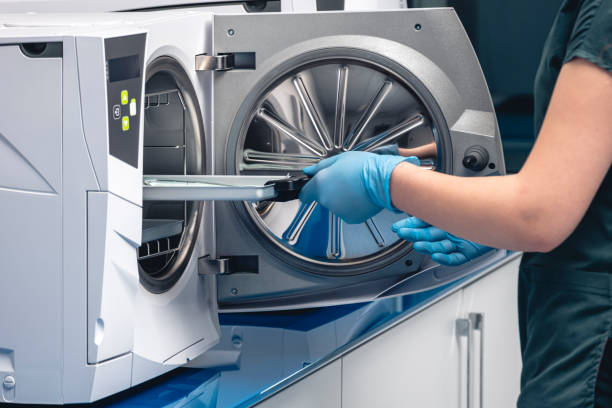
Ethylene oxide is toxic, flammable, and associated with carcinogenic risk following exposure. Chemical safety should therefore be treated as a core investment criterion.
According to the U.S. Occupational Safety and Health Administration (OSHA), EO can cause acute effects such as respiratory irritation, headache, nausea, and other health effects. Long-term exposure has been associated with cancer risk and chronic toxic effects.
Leakage and Exposure Control
Facilities should evaluate:
- System leak tightness.
- Leak-detection and alarm capability.
- Interlock mechanisms.
- Controls for areas where chemical exposure may occur.
- Appropriate ventilation.
- Exposure-monitoring systems where required.
- Incident-response procedures.
- Protective equipment and staff training.
The presence of a sealed chamber or self-test function should not by itself be considered evidence that exposure risk has been fully controlled.
Environmental Emission Control
EO is relevant not only to operator safety but may also present risks to surrounding areas if emissions are not adequately controlled.
Depending on the scale and technology, facilities may require solutions for:
- Gas collection.
- Exhaust routing.
- Exhaust-gas treatment.
- Emission monitoring.
- Maintenance of environmental-control systems.
In the United States, the Environmental Protection Agency (EPA) has issued regulations and management measures related to EO at commercial sterilization facilities. In 2026, the EPA also published a proposal to reconsider certain emission requirements for this group of facilities.
This illustrates that EO-management requirements may change over time and differ by legal jurisdiction.
U.S. requirements should not be applied directly as mandatory legal requirements in Vietnam.
Facilities operating in Vietnam should review current requirements relating to chemicals, occupational safety, fire prevention and control, environmental protection, and medical devices before implementation.
8. Quality Control for EO Sterilization Cycles
An EO sterilization system should be managed as a validated process rather than simply as a device with an automatic operating program.
Monitoring of Technical Parameters
Depending on the system, cycle data may include:
- Time.
- Temperature.
- Pressure.
- Information related to process conditions.
- Operating status.
- Alarms.
- Batch-processing logs.
The range of recorded data depends on the design of each model.
In particular, it should not be assumed that every machine directly measures and stores every factor that may affect sterilization effectiveness.
Chemical Indicators
A chemical indicator (CI) provides information showing that the indicator has been exposed to the conditions it is designed to detect.
The indicator should be compatible with EO technology and appropriate for its intended use.
However:
A chemical indicator changing color does not by itself prove that the entire load has been successfully sterilized.
Biological Indicators
A biological indicator (BI) is used to evaluate microbial inactivation performance under appropriate test conditions.
For EO sterilization, biological indicators commonly use spores of Bacillus atrophaeus.
ISO 11138-2:2017 specifies requirements for biological indicators used in ethylene oxide sterilization processes.
Process Validation
ISO 11135:2014, together with Amendment 1:2018, specifies requirements related to the development, validation, and routine control of EO sterilization processes for medical devices.
As of October 2026, ISO has issued a final draft for a replacement version, but ISO 11135:2014 remains the published version currently in force.
The standard applies within its relevant scope to both manufacturing and healthcare-facility environments.
Facilities should distinguish among:
- Validation of sterilization capability for a defined load.
- Routine monitoring of the cycle.
- Residual evaluation.
- Record control and product-release decisions.
These are related activities but do not completely replace one another.
9. Packaging and Data Traceability in EO Sterilization
When products are sterilized in final packaging, the packaging material should be compatible with EO and support maintenance of sterility after processing.
What Should the Packaging System Provide?
Facilities should confirm:
- Can EO appropriately penetrate the packaging system?
- Is the packaging compatible with the processing conditions?
- Does the material affect EO absorption and desorption?
- Can seals or packaging structures maintain integrity?
- Can the product be stored under the intended conditions?
ISO 11607-1:2019 specifies requirements related to materials, sterile barrier systems, and packaging systems for terminally sterilized medical devices.
The standard also has a 2023 amendment and remains a relevant reference for packaging evaluation.
Batch-Record Management
An EO system may include integrated data-management software.
Depending on the configuration, the software may support:
- Batch identification.
- Cycle-parameter storage.
- Alarm records.
- Operating logs.
- Report export.
- User-access management.
- Data traceability when required.
Facilities should define the relationship among the sterilization batch, load type, control results, aeration process, and product-release decision.
Having a report-storage function does not mean that the system automatically meets all quality-management or traceability requirements.
10. Should a Healthcare Facility Invest in an On-Site EO Sterilizer?
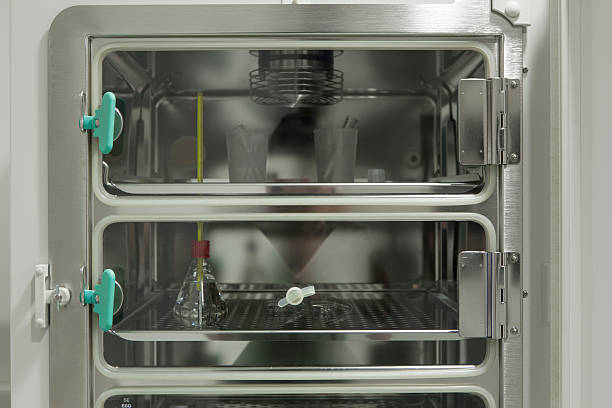
Not every hospital or reprocessing organization needs to invest in an on-site EO system.
The decision should begin with the actual inventory of instruments and products, followed by an evaluation of technical and safety requirements.
When Should Investment Be Considered?
A facility may consider investment when:
- It needs to process products that have been validated as compatible with EO.
- Existing sterilization technologies cannot meet the requirements of certain product groups.
- Processing demand is sufficiently defined to evaluate investment capacity.
- Appropriate safety infrastructure can be implemented.
- Suitable personnel and quality-management systems are available.
- Feasible residual-control and emission-control arrangements can be established.
When Should Alternative Solutions Be Considered?
Facilities should proceed cautiously when:
- Most instruments can be processed using steam.
- EO sterilization demand is very limited.
- Chemical-safety conditions have not been established.
- Appropriate emission-control systems are unavailable.
- Process-validation and residual-control capability has not been established.
- Operating costs are too high relative to actual demand.
For some organizations, evaluating outsourced sterilization services or a validated alternative technology may be appropriate when compared with investing in an on-site system.
However, when using an external service, the facility still needs to assess the provider's capability, process suitability, transport conditions, quality documentation, and product-release responsibilities.
Total Lifecycle Cost
In addition to the equipment purchase price, facilities should account for:
- EO supply system.
- Infrastructure and supporting construction.
- Aeration solutions.
- Emission-control equipment.
- Safety-monitoring systems.
- Indicators and quality-control activities.
- Residual evaluation.
- Packaging materials.
- Maintenance and technical testing.
- Staff training.
- Environmental and safety-management costs.
- Downtime when equipment or the processing area is undergoing maintenance.
The initial equipment price is only one component of the total cost of implementing EO technology.
11. Ten Criteria for Selecting EO Gas Sterilization Equipment
When evaluating suppliers, facilities may use the following criteria:
| Criterion | What Should Be Evaluated? |
|---|---|
| 1. Intended use | Medical device manufacturing or reprocessing in a healthcare facility |
| 2. Compatible load types | Materials, structures, packaging, and validated processing scope |
| 3. EO technology | System design and appropriate sterilant-delivery method |
| 4. Aeration and residues | Aeration process, EO/ECH evaluation, and product-release conditions |
| 5. Chemical safety | Leak detection, interlocks, alarms, and exposure management |
| 6. Emission control | Collection, treatment, monitoring, and ability to meet applicable requirements |
| 7. Quality control | Process validation, monitoring, indicators, and batch records |
| 8. Actual throughput | Load type, processing time, aeration, and product-release capacity |
| 9. Technical service | Installation, training, maintenance, spare parts, and support in Vietnam |
| 10. Total lifecycle cost | Equipment, infrastructure, chemicals, monitoring, aeration, and operation |
Common Investment Mistakes
Looking only at sterilization time: Failing to account for aeration and product-release conditions.
Assuming EO is suitable for every heat-sensitive material: Failing to assess compatibility and gas absorption.
Assuming penetration capability means every lumen can be processed: Failing to evaluate the specific structure and load type.
Overlooking EO residues: Failing to consider EO and ECH evaluation requirements before product release.
Assessing only the sterilizer without evaluating infrastructure: Lacking appropriate ventilation, gas-control systems, or safety measures.
Failing to account for operating costs: Additional expenses may arise from chemicals, indicators, monitoring, exhaust-gas treatment, and residual testing.
Failing to clarify responsibilities among parties: The equipment supplier, installation contractor, and operating facility may not have clearly defined responsibilities for acceptance, safety, and quality control.
12. Questions to Ask Suppliers Before Purchasing an EO Sterilizer
Before selection, facilities should clarify:
1. Is the equipment designed for a manufacturing environment or healthcare facility, and what are its limitations of use?
2. Which material groups, structures, and packaging types have been validated as compatible?
3. Is the aeration system integrated or does it require a separate installation?
4. How does the supplier support evaluation and control of EO/ECH residues?
5. Which leak-detection, alarm, and operator-protection mechanisms are provided?
6. What ventilation, gas-collection, and exhaust-treatment infrastructure must the facility prepare?
7. Which monitoring methods, indicators, and process-validation records are required?
8. How is actual processing capacity calculated when aeration time is included?
9. Does the supplier support infrastructure assessment, installation, training, and maintenance?
10. What costs are included in total multi-year ownership and operation?
In particular, before making an investment decision, facilities should ask the supplier to clearly define responsibilities for chemical safety, emissions, residual control, and technical acceptance within each party's scope of supply.
Frequently Asked Questions About EO Gas Sterilizers
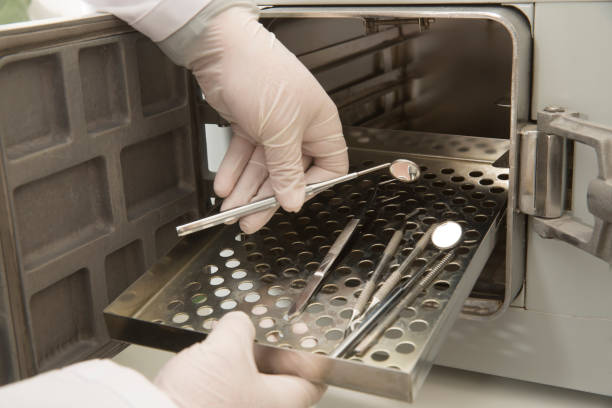
What Is an EO Gas Sterilizer?
It is equipment that uses ethylene oxide gas to sterilize compatible medical products through a validated process. Technically, the system does not use saturated steam as the primary sterilizing agent.
Is EO Sterilization a Low-Temperature Technology?
Yes. EO is a low-temperature sterilization technology used for certain heat- or moisture-sensitive products within a validated scope.
Can an EO Sterilizer Process Every Medical Device?
No. Processing capability depends on the material, structure, packaging, gas penetration, and product manufacturer's instructions.
Why Is Aeration Required After EO Sterilization?
Ethylene oxide can be absorbed and retained by certain materials. Aeration helps reduce residual EO according to a validated process before product release.
Does a Completed Cycle Mean That the Device Is Safe to Use?
Not necessarily. The facility still needs to review process-control results, aeration status, and appropriate EO/ECH residual requirements for the product.
Can EO and Hydrogen Peroxide Plasma Sterilization Replace Each Other?
Not completely. The two technologies use different sterilizing agents and mechanisms and have different limitations related to materials, instrument structure, packaging, and safety control.
Should a Hospital Invest in an On-Site EO Sterilizer?
The decision depends on processing demand, instrument compatibility, chemical-control capability, infrastructure conditions, and total cost. For some facilities, an alternative technology or outsourced sterilization service may be an option worth comparing.
This article is provided for informational purposes regarding the operating principles, applications, limitations, and selection criteria for EO gas sterilization equipment. It does not provide parameters, formulas, gas-delivery instructions, or operating procedures for ethylene oxide. EO is a hazardous chemical associated with carcinogenic and fire risks; installation, operation, gas handling, process validation, and product release should be carried out by appropriately qualified personnel according to manufacturer documentation and applicable legal requirements. The ISO standards and CDC, OSHA, and EPA guidance mentioned are international technical references and do not automatically constitute mandatory legal requirements in Vietnam.
Explore EO Sterilization Technology and Infection-Control Solutions at Pharmedi Vietnam 2027
For hospitals, central sterile processing units, and medical device manufacturers, sterilization-technology selection should begin with product characteristics, quality requirements, material compatibility, and risk-control capability.
For ethylene oxide sterilization in particular, in addition to sterilization effectiveness, facilities need to pay special attention to chemical-residual control, aeration systems, personnel safety, and environmental emissions. These factors directly affect the feasibility of implementation and long-term operation.
Pharmedi Vietnam 2027, taking place from September 28–30, 2027 at the Saigon Exhibition and Convention Center (SECC), Ho Chi Minh City, provides an opportunity for businesses, professionals, and healthcare organizations to meet, explore technologies, and discuss equipment solutions supporting healthcare delivery, infection control, and medical instrument sterilization.
Technology groups related to low-temperature sterilization equipment, infection-control systems, quality-monitoring solutions, and sterilization-process management are particularly relevant for facilities researching investment in or upgrades to instrument-reprocessing systems.
For organizations preparing procurement plans, Pharmedi Vietnam 2027 provides an opportunity to explore technology solutions, identify suppliers, and define the technical requirements that should be evaluated when selecting EO sterilization equipment.
When discussing solutions with suppliers, healthcare facilities and businesses may proactively explore:
- Is EO sterilization suitable for the instruments or products that need to be processed?
- For which materials, structures, and packaging types has the sterilization method been validated?
- How is the aeration system designed, and is there a solution for controlling EO/ECH residues?
- Which cycle-monitoring, data-storage, and traceability functions are supported?
- What infrastructure, leak-control, personnel-safety, and environmental-emission requirements apply?
- Does the supplier support site assessment, installation, process validation, training, and maintenance in Vietnam?
- How are total long-term investment and operating costs, including chemicals, consumables, maintenance, and quality control, determined?
Preparing these criteria helps facilities compare solutions, evaluate their ability to meet sterilization requirements, and develop an investment plan aligned with infrastructure conditions, safety requirements, and actual operating scale.
For ethylene oxide technology, an appropriate solution is not simply one that can sterilize the product. It should also provide an integrated control system covering material compatibility, process validation, aeration, residual control, safety, and long-term operational management.
Dates: September 28–30, 2027
Venue: Saigon Exhibition and Convention Center (SECC), Ho Chi Minh City
Exhibition Information: https://pharmed.vn/
Product Categories: https://pharmed.vn/exhibitors/products
Exhibitor registration, visitor registration, and program information will be updated according to official announcements from the Pharmedi Vietnam 2027 Organizing Committee.
Related post
- Technology trends will shape healthcare in 2021
- THE FINAL DAY CONNECTING AND SHAPING THE FUTURE OF HEALTHCARE AT PHARMEDI & HEALTHCARE VIETNAM 2026
- Thiết bị chẩn đoán hình ảnh hàng đầu tại triển lãm y tế 2021
- Triển lãm Y Tế Quốc Tế - Pharmed & Heathcare Vietnam 2020/ Ứng dụng công nghệ trực tuyến.
- Introducing Vietnam - Korea Joint Venture Medical Company (VIKOMED) - The Gold Sponsor for Pharmedi Vietnam 2024