


An exercise ECG stress testing system is a group of devices used to record and monitor the electrical activity of the heart while a patient performs controlled physical exercise. Unlike a resting ECG, this method allows healthcare professionals to observe changes in ECG signals, heart rate, and related parameters as exercise intensity increases and during the recovery phase.
A typical exercise ECG system combines an ECG acquisition unit, treadmill or cycle ergometer, monitoring and analysis software, blood pressure measurement equipment, and safety-support components.
However, selecting an exercise ECG system should not be based only on screen resolution or the number of available test protocols. Healthcare facilities should also evaluate signal quality during movement, control of the exercise device, reliability of the monitoring system, data-storage functions, safety requirements, and installation conditions.
This article focuses on the components, functions, and selection criteria for exercise ECG systems used in hospitals and cardiology clinics. It does not provide instructions for performing exercise tests or interpreting results for diagnosis.
What Is an Exercise ECG Stress Testing System?
An exercise ECG stress testing system is a system that records electrocardiographic signals while a patient performs exercise according to a protocol selected and supervised by qualified healthcare personnel.
During the test, the ECG system monitors the electrical activity of the heart while working with other equipment to record the body's response to increasing exercise levels.
According to the American Heart Association (AHA) publication Exercise Standards for Testing and Training, exercise ECG testing may be used when professionally indicated to support assessment of cardiovascular response to exercise and provide information relevant to risk evaluation.
However, not every patient is suitable for exercise stress testing. Indications, contraindications, and the testing method should be assessed by appropriately qualified healthcare personnel.
How Does Exercise ECG Differ from Resting ECG and Holter Monitoring?
| Criterion | Resting ECG | Holter ECG | Exercise ECG |
|---|---|---|---|
| Recording condition | Patient at rest | Recorded during an ambulatory monitoring period according to the device design | Controlled physical exercise |
| Monitoring duration | Usually a short recording | May extend for many hours or several days | Includes pre-exercise, exercise, and recovery phases |
| ECG | Usually uses a standard 12-lead ECG | Number of channels/leads depends on the device | Typically monitors a 12-lead ECG |
| Associated equipment | ECG machine and accessories | Wearable recorder, electrodes, and software | ECG, treadmill/cycle ergometer, blood pressure equipment, and software |
| Primary purpose | Record cardiac electrical activity at rest | Monitor cardiac electrical activity over an extended period | Record ECG response during controlled exercise |
These three systems have different intended uses and should not be considered direct substitutes for one another.
1. Main Components of an Exercise ECG System
An exercise ECG system may consist of several coordinated devices.
| Component | Primary Function |
|---|---|
| ECG acquisition unit | Acquires cardiac electrical signals |
| Electrodes and lead wires | Connect the patient to the signal-acquisition system |
| Treadmill or cycle ergometer | Provides a controlled exercise workload |
| Exercise-testing software | Monitors ECG and manages protocols and data |
| Display monitor | Displays waveforms, parameters, and alerts |
| Blood pressure measurement device | Records blood pressure during appropriate test stages |
| Printer and storage system | Stores, exports, and prints reports |
| Safety equipment | Supports risk control during operation |
Not every system includes all of these components in the standard configuration. Some measurement devices or analysis functions may need to be purchased separately.
ECG Acquisition Unit
The ECG acquisition unit records cardiac electrical signals for processing and display by the software.
Exercise ECG systems commonly use a 12-lead ECG, allowing multiple electrical perspectives of the heart to be monitored during exercise.
When selecting a system, facilities should evaluate:
- Simultaneous lead-acquisition capability.
- Sampling rate.
- Signal resolution.
- Frequency response.
- Noise-rejection capability.
- Connection between the acquisition unit and computer.
- Compatibility of electrodes and lead wires.
Some systems use wired connections, while other models support wireless connectivity according to their design.
ECG quality should not be assessed only by the number of channels or the connection technology. Signal stability while the patient is moving is an important factor for an exercise ECG system.
ECG Electrodes and Lead Wires
During exercise testing, the patient may walk, run, or cycle, which exposes the electrodes and lead wires to movement.
Facilities should therefore assess:
- Electrode adhesion.
- Contact quality.
- Lead-wire design.
- Ability to reduce motion-related artifact.
- Ease of connection.
- Availability of replacement electrodes.
During exercise testing, limb-electrode positions may be modified onto the torso using an appropriate method to help reduce motion artifact. However, changing electrode positions may affect waveform morphology compared with a resting ECG recorded using standard electrode placement.
Healthcare personnel should therefore follow the facility's ECG-recording and comparison procedures and should not change electrode positions arbitrarily.
2. What Is the Difference Between a Treadmill and a Cycle Ergometer?
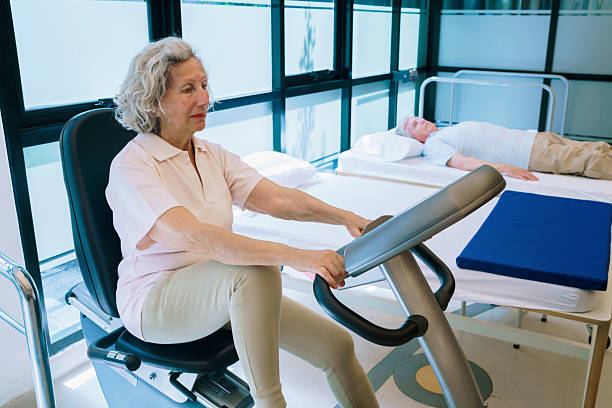
The exercise-load device is an important component of an exercise ECG system.
Two commonly used options are:
- Medical treadmill.
- Cycle ergometer.
Treadmill Exercise ECG System
A treadmill allows speed and incline to be adjusted according to the supported protocol.
When evaluating a treadmill, facilities should review:
- Speed range.
- Incline-adjustment capability.
- Stability of the running belt.
- Size of the running surface.
- Handrails.
- Emergency stop function.
- Connectivity with the ECG software.
- Control and stopping mechanisms.
One important consideration is that a treadmill intended for medical exercise testing should not be selected solely based on specifications used for a conventional fitness treadmill.
Facilities should confirm that the manufacturer states the device is suitable for use with the exercise-testing system and that appropriate safety functions are provided.
Exercise ECG System with a Cycle Ergometer
A cycle ergometer provides an exercise workload through a resistance-control system.
Depending on the model, the device may record or control:
- Workload.
- Pedaling speed.
- Exercise duration.
- Protocol stages.
- Other parameters.
When selecting a cycle ergometer, facilities should review seat adjustability, positioning design, stability, supported workload range, and compatibility with the exercise-testing software.
Comparison of Treadmill and Cycle Ergometer
| Criterion | Treadmill | Cycle Ergometer |
|---|---|---|
| Exercise method | Walking or running | Cycling |
| Workload adjustment | Speed and incline | Resistance or power |
| Position | Standing and moving on the treadmill belt | Seated or another position depending on the design |
| Motion artifact | Requires control of torso movement and ECG lead wires | Motion artifact may still occur, but movement characteristics differ |
| Space requirements | Requires space for the device and a safety clearance area | Depends on the dimensions and configuration of the ergometer |
| Software connectivity | Compatibility should be confirmed | Compatibility should be confirmed |
No single exercise-load device is appropriate for every patient or every type of stress test.
Selection should be based on professional objectives, the patient's exercise capability, and the implementation conditions at the healthcare facility.
3. What Functions Does Exercise ECG Software Provide?
The software links ECG data with the operation of the exercise-load device and other monitoring information.
Depending on the system, the software may support:
- Continuous ECG display.
- Heart-rate recording.
- ST-segment trend monitoring.
- Exercise-protocol management.
- Control of compatible treadmills or cycle ergometers.
- Blood pressure recording.
- Marking events requiring attention.
- Data storage during different test stages.
- Report generation and export.
For example, SCHILLER's CARDIOVIT CS-200 Excellence system supports exercise ECG recording, signal analysis, and data connectivity with compatible information systems.
Meanwhile, GE HealthCare's CardioSoft platform supports multiple exercise-testing equipment configurations, result management, and related analysis tools.
These examples illustrate that software functionality can vary significantly among manufacturers.
Continuous ECG Monitoring
Unlike recording only a short ECG, an exercise-testing system needs to support ECG monitoring during exercise and the recovery phase.
Some software also allows the entire continuous ECG dataset to be stored for retrospective review (full disclosure).
During procurement, facilities should clarify:
- How is the ECG displayed continuously?
- Is the entire signal stored or only selected segments?
- Can data be reviewed by time point?
- Are relevant events recorded?
- How long is the data retained?
Continuous ECG display does not automatically mean that the system stores the complete signal for later review.
ST-Segment Analysis and Related Parameters
Some software can calculate and display trends in ST-segment changes, heart rate, and other parameters during exercise testing.
However, analysis quality may be affected by artifact, movement, electrode contact quality, and the characteristics of the baseline ECG.
Therefore, automated analysis results are intended to support qualified healthcare personnel and do not replace clinical assessment or review of the original data.
When selecting a system, facilities should determine whether the software allows users to review waveforms, compare different time points, and verify automated results.
4. Exercise Protocols and Device-Control Capability
An exercise ECG system may support multiple predefined exercise protocols or allow the facility to configure protocols within the range supported by the manufacturer.
Protocols commonly referenced in professional materials include Bruce, Modified Bruce, and other workload-adjustment methods.
However, the availability of a named protocol does not mean that the system is appropriate for every patient.
When evaluating the system, facilities should clarify:
- Which protocols are supported?
- Does the software directly control the exercise-load device?
- Can the current stage and workload be clearly viewed?
- Are device changes recorded in the data?
- Can the device be stopped using an appropriate safety mechanism?
- How are data stored if the test is terminated early?
Protocol selection, workload adjustment, and decisions to terminate the test should be made by qualified healthcare personnel according to professional indications and appropriate procedures.
Why Is the Recovery Phase Important?
The recovery phase is an important part of exercise ECG testing.
After exercise ends, cardiac electrical activity, heart rate, blood pressure, and related findings may continue to change.
The software should therefore support monitoring and data storage during this phase according to the professional workflow.
A system should not be selected only for its ability to record ECG during exercise while overlooking recovery-phase monitoring.
5. Blood Pressure Measurement During Exercise ECG Testing
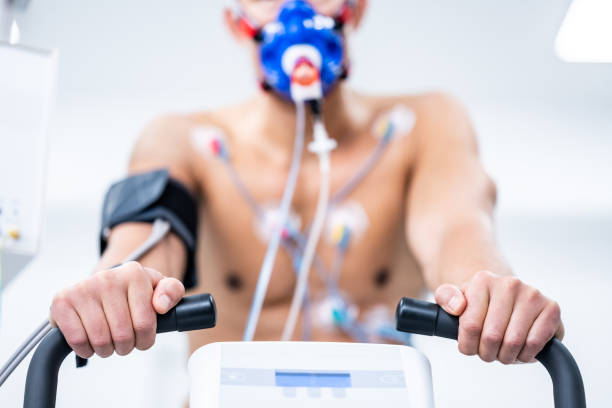
In addition to ECG, blood pressure is an important parameter to monitor during appropriate stages of an exercise stress test.
Depending on the configuration, the system may use:
- Manual blood pressure measurement equipment.
- A blood pressure monitor designed for exercise-testing environments.
- An automated blood pressure system capable of connecting with the ECG software.
Why Can Blood Pressure Measurement During Exercise Be Difficult?
Patient movement, vibration from the treadmill, and mechanical interference may affect measurement quality.
Some conventional automated blood pressure monitors may not be designed or performance-validated for use during exercise.
Facilities should therefore check:
- Is the device stated to be suitable for measurement during exercise?
- Can data be recorded according to test stages?
- Does the software allow manual entry of blood pressure values?
- Are blood pressure data synchronized with ECG data?
- Is there a mechanism for identifying invalid measurements?
According to AHA guidance on exercise-testing standards, blood pressure monitoring should be appropriately organized during the test.
Facilities should not assume that every exercise ECG system includes an automated blood pressure monitor in the standard configuration.
6. Safety Requirements for Exercise ECG Implementation
Unlike resting ECG, exercise stress testing requires the patient to perform exercise under controlled workload conditions.
Facilities therefore need to evaluate the safety of both the technical system and the overall testing workflow.
Screening and Professional Supervision
The AHA emphasizes assessment of indications, contraindications, clinical status, and supervision capability before exercise testing is performed.
Facilities should have procedures for identifying appropriate patients, monitoring them during testing, and responding to abnormal situations.
Automated software does not replace the responsibility of qualified healthcare personnel.
Safety of the Treadmill or Cycle Ergometer
For exercise-load equipment, facilities should evaluate:
- Emergency stop mechanism.
- Appropriate handrails or support components.
- Stability.
- Software-control capability.
- Response to connection loss.
- Response to power interruption.
- Pre-use inspection requirements.
In particular, facilities should confirm how the exercise-load device responds if the control software fails or the connection is lost.
The emergency stop function should not be reviewed only in promotional materials; it should also be assessed on the configuration actually delivered.
Emergency Equipment in the Exercise-Testing Area
The AHA recommends that exercise-testing areas have appropriately trained personnel and suitable resources for managing emergencies.
Depending on the facility's scope of practice and safety program, planning should address:
- Emergency call or response system.
- Appropriate defibrillation equipment.
- Necessary monitoring equipment.
- Emergency supplies and equipment according to facility requirements.
- Patient access and movement arrangements.
- Incident-response procedures.
Installing an exercise ECG system does not mean that a clinic automatically meets all professional and safety conditions required to perform exercise testing.
Staffing, emergency equipment, and operational requirements should be evaluated separately.
7. Is an Exercise ECG System the Same as a CPET System?
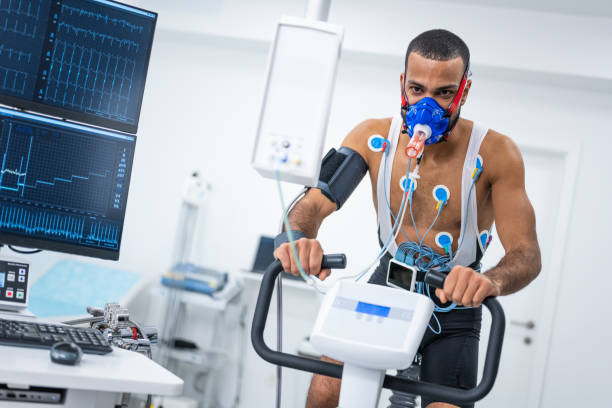
Not exactly.
Exercise ECG testing primarily focuses on monitoring cardiac electrical activity and related parameters while the patient exercises.
In contrast, CPET (Cardiopulmonary Exercise Testing) evaluates cardiopulmonary responses to exercise and may incorporate respiratory gas-exchange measurements such as oxygen consumption and carbon dioxide production.
A CPET system may integrate exercise ECG but requires additional specialized components to measure and analyze respiratory gases.
| Factor | Exercise ECG | CPET |
|---|---|---|
| ECG monitoring | Yes | May be integrated |
| Exercise-load device | Treadmill or cycle ergometer | Treadmill or cycle ergometer |
| Blood pressure monitoring | According to the testing protocol | According to the testing protocol |
| Respiratory gas analysis | Not a core function | An important component |
| Additional components | ECG software and accessories | Requires additional gas-analysis equipment, sensors, and appropriate accessories |
| Scope of assessment | Focuses on ECG response to exercise | Provides integrated assessment of cardiopulmonary response to exercise |
When planning an investment, hospitals should clearly determine whether they need conventional exercise ECG testing or cardiopulmonary exercise testing with respiratory gas analysis.
It should not be assumed that an exercise ECG system can perform CPET simply by adding software.
8. Infrastructure and Maintenance for Exercise ECG Systems
To implement the system, facilities need to provide appropriate space for the exercise-load device, healthcare personnel, and monitoring activities.
Installation Space
Facilities should consider:
- Room area.
- Position of the treadmill or cycle ergometer.
- Safety clearance.
- Position of the monitoring display.
- Working space for healthcare personnel.
- Electrical and ECG cable routing.
- Power supply and grounding.
- Location of emergency equipment.
- Ventilation and environmental conditions.
The required room area should not be calculated based only on the physical dimensions of the treadmill.
Facilities need to evaluate the actual operational space, including the position of monitoring personnel and access to the patient if assistance is required.
Maintenance of Exercise-Load Equipment
Treadmills and cycle ergometers include mechanical components that should be inspected according to manufacturer instructions.
Items may include:
- Running belt and drive mechanism.
- Speed or workload-adjustment capability.
- Control system.
- Emergency stop function.
- Mechanical components.
- Sensors and connection interfaces.
- Verification of speed, incline, or workload accuracy where required.
For the ECG system, technical management may include inspection of lead wires, the acquisition unit, software, recording functions, report printing, and electrical safety.
Maintenance schedules should be based on the exact model, level of use, and manufacturer instructions.
Data and Software Management
Some systems support storage of the complete ECG recording, final reports, and other information associated with each test.
If the facility requires integration with HIS/EMR, it should confirm:
- Data-export formats.
- Whether the original ECG can be exported or only a PDF report.
- Whether appropriate communication protocols are supported.
- Whether separate software licenses are required.
- Whether access control and backup functions are available.
- How software updates are supported.
Having a network port does not mean that an exercise ECG system can automatically integrate with every hospital software system.
9. Criteria for Selecting an Exercise ECG System for a Healthcare Facility
When comparing systems, hospitals and clinics may use the following evaluation framework:
| Criterion | What Should Be Evaluated? |
|---|---|
| 1. Intended use | Functional diagnostic requirements, patient groups, and professional scope |
| 2. ECG system | Number of leads, signal quality, and continuous-monitoring capability |
| 3. Exercise-load device | Treadmill or cycle ergometer, operating range, and safety mechanisms |
| 4. Exercise-testing software | Protocol management, ECG monitoring, trends, and data |
| 5. Blood pressure monitoring | Measurement device, recording capability, and data synchronization |
| 6. Safety functions | Emergency stop, alerts, and response to loss of connection |
| 7. Storage and reporting | Continuous ECG storage, review, printing, and data export |
| 8. Infrastructure | Space, power, emergency equipment, and installation location |
| 9. Technical service | Installation, training, maintenance, spare parts, and software updates |
| 10. Total lifecycle cost | Equipment, electrodes, software, printer, and maintenance |
Common Selection Mistakes
Purchasing the ECG machine and treadmill separately without integration assessment: Failing to verify connectivity and control between the two systems.
Looking only at the number of leads: Overlooking ECG signal quality while the patient is moving.
Failing to evaluate the blood pressure monitor: A conventional monitor may not be suitable for the exercise-testing environment.
Overlooking the recovery phase: Failing to evaluate monitoring and data storage after exercise ends.
Lacking a safety plan: Failing to prepare appropriate personnel, emergency equipment, and response procedures.
Failing to account for software costs: Additional licensing, connectivity, or data-storage costs may arise after purchase.
10. Questions to Ask Suppliers Before Investing
Before selecting an exercise ECG system, healthcare facilities should clarify:
1. How many ECG leads does the system support, and can ECG be recorded continuously throughout the entire test?
2. Which treadmills or cycle ergometers are confirmed as compatible?
3. Which protocols and data-management methods does the software support?
4. Does the system support ST-segment trend monitoring, heart rate, and related parameters?
5. Is the blood pressure monitor included in the quoted configuration?
6. How does the system respond if the exercise-load device loses connection or develops a fault?
7. How can ECG data and reports be stored, exported, and integrated with hospital software?
8. Does the supplier provide installation, training, maintenance, and performance-testing support in Vietnam?
During a demonstration, facilities should ask the supplier to show, using an appropriate test configuration, how the ECG system connects with the exercise-load device, how data are displayed, how protocol stages are changed, how recovery is monitored, how results are stored, and how safety functions operate.
Frequently Asked Questions About Exercise ECG Systems
What Is an Exercise ECG System?
An exercise ECG system monitors ECG while a patient performs controlled exercise and is commonly combined with a treadmill or cycle ergometer and dedicated monitoring software.
Is an Exercise ECG System Different from a 12-Lead ECG Machine?
Yes. Exercise ECG systems commonly use 12-lead ECG but are designed to monitor signals during exercise and combine them with an exercise-load device and test-management functions.
Is a Treadmill or Cycle Ergometer Better for Exercise ECG Testing?
There is no single option that is appropriate for every situation. Facilities should consider professional objectives, patient groups, intended protocols, and installation conditions.
Does Exercise ECG Testing Require Blood Pressure Monitoring?
Blood pressure monitoring is an important component of exercise-testing workflows. Facilities should prepare an appropriate measurement device and recording method.
Can an Exercise ECG System Perform CPET?
Not automatically. CPET requires additional respiratory gas-analysis equipment and appropriate components. Some systems may support upgrades, but this capability should be confirmed by the manufacturer.
Can a Clinic Install an Exercise ECG System in a Small Room?
This depends on equipment size, safety clearance, working space, monitoring requirements, and emergency-response arrangements. The required area should not be calculated only from the footprint of the treadmill.
Does an Exercise ECG System Require Periodic Maintenance?
Yes. The system includes electronic equipment and mechanical exercise-load equipment, so inspection and maintenance should be performed according to manufacturer instructions and the facility's equipment-management program.
This article is provided for informational purposes regarding the components, functions, and selection criteria for exercise ECG systems. It does not provide guidance on indications, protocol selection, exercise-level settings, test-termination criteria, or ECG interpretation for diagnosis. These activities should be carried out by appropriately qualified healthcare personnel according to the patient's condition, manufacturer instructions, and facility procedures. The international standards mentioned are technical references and do not automatically constitute mandatory legal requirements in Vietnam.
Explore Exercise ECG Systems and Cardiac Diagnostic Equipment at Pharmedi Vietnam 2027
For hospitals and cardiology clinics, investment in an exercise ECG system requires coordinated evaluation of the ECG acquisition unit, exercise-load device, monitoring software, blood pressure measurement capability, and safety requirements.
In addition to ECG signal quality, the integration among system components and the effectiveness of data management also directly affect functional cardiac assessment workflows.
Pharmedi Vietnam 2027, taking place from September 28–30, 2027 at the Saigon Exhibition and Convention Center (SECC), Ho Chi Minh City, provides an opportunity for businesses, professionals, and healthcare organizations to meet, explore technologies, and discuss equipment solutions that support healthcare delivery.
For facilities planning to invest in or upgrade functional diagnostic departments, Pharmedi Vietnam 2027 provides an opportunity to explore technology solutions, identify suppliers, and define the technical requirements that should be evaluated when selecting an exercise ECG system.
Technology groups worth exploring include exercise ECG systems, medical treadmills, cycle ergometers, blood pressure monitoring equipment, and ECG analysis software. Understanding how these components integrate can help facilities evaluate system compatibility and implementation requirements before investment.
When discussing solutions with suppliers, hospitals and clinics may proactively explore:
- Does the ECG system provide appropriate signal acquisition during exercise?
- How are the treadmill or cycle ergometer connected to and controlled by the system?
- Does the software support continuous ECG monitoring and retrospective data review?
- Is the blood pressure monitoring system suitable for the exercise-testing environment?
- How are emergency-stop and fault-response functions designed?
- Does the system support data storage, report export, and connectivity with hospital software?
- Does the supplier provide long-term training, maintenance, and accessory support?
Preparing these criteria helps healthcare facilities compare solutions, evaluate their ability to meet cardiac functional-assessment needs, and develop an investment plan suited to actual operating conditions.
For exercise ECG systems, appropriate selection should be based on the integration of the ECG recording system, exercise-load device, monitoring software, and the facility's safety conditions, rather than comparing only the number of functions or initial purchase price.
Dates: September 28–30, 2027
Venue: Saigon Exhibition and Convention Center (SECC), Ho Chi Minh City
Exhibition Information: https://pharmed.vn/
Product Categories: https://pharmed.vn/exhibitors/products
Exhibitor registration, visitor registration, and program information will be updated according to official announcements from the Pharmedi Vietnam 2027 Organizing Committee.
Related post
- Vietnam’s Ministry of Health Grants Marketing Authorization for Russian Anti-Cancer Drug
- Rehabilitation robots: applications, limits and selection criteria for medical facilities
- Thêm cơ hội khám chữa bệnh trong kỷ nguyên cách mạng 4.0
- PHARMEDI VIETNAM 2024 EXHIBITION CO-SPONSOR - BOOTH: A4
- Nano Eye drops