


An electrocardiograph is a device that records the electrical activity of the heart through electrodes placed on the surface of the body. The equipment is used in hospitals, general clinics, cardiology clinics, and other areas where electrocardiography is performed as part of clinical evaluation.
Today, electrocardiographs are available in many configurations, ranging from compact devices with integrated printers to digital ECG systems that support automated analysis, data storage, and connectivity with healthcare facility management software.
However, selecting an electrocardiograph should not be based only on the number of channels or the initial purchase price. Facilities should also consider signal acquisition capability, number of leads, recording quality, display and printing functions, data management, accessories, and technical service.
One particularly important point is to distinguish a 12-lead electrocardiograph from terms such as 3-channel, 6-channel, or 12-channel ECG machine. These terms may describe different characteristics and should not be treated as equivalent.
What Is an Electrocardiograph?
An electrocardiograph, also referred to as an ECG machine, EKG machine, or electrocardiograph, is a device that acquires electrical signals related to cardiac activity and presents them as an electrocardiogram recording.
An electrocardiograph system may include:
- Electrodes and ECG lead wires.
- Signal acquisition, amplification, and processing components.
- Display.
- Printer.
- Memory and software.
- Battery, power supply, and connectivity ports.
Depending on the configuration, results may be printed on paper, stored in the device, or transferred to the hospital's data-management system.
IEC 60601-2-25:2011 is an international standard specifying particular requirements for the basic safety and essential performance of electrocardiographs designed to generate electrocardiographic reports for diagnostic purposes.
The standard also distinguishes diagnostic electrocardiographs from certain continuous ECG monitoring devices or Holter systems intended for different uses.
How Does an Electrocardiograph Work?

The heart generates changes in electrical potential during its activity. These signals can be recorded from the body surface using electrodes positioned according to an appropriate lead system.
The operation of an electrocardiograph can be described in four stages:
1. Signal acquisition: Electrodes detect differences in electrical potential from the body surface.
2. Amplification: Low-amplitude signals are transmitted through lead wires to the device's amplifier.
3. Signal processing: The device converts and processes the signals, reduces interference, and organizes the data into electrocardiographic leads.
4. Display and result storage: Waveforms are displayed on the screen, printed as a report, or stored as electronic data.
Recording quality depends on the entire system, including the electrodes, lead wires, signal-acquisition components, processing software, and conditions of use.
For example, unstable electrode contact, damaged lead wires, or movement during recording can all introduce artifacts or interference.
1. What Is a 12-Lead ECG?
A 12-lead electrocardiogram (12-lead ECG) is a standard ECG configuration commonly used in healthcare facilities.
The system provides 12 electrical views, including:
- 6 limb leads: I, II, III, aVR, aVL, and aVF.
- 6 precordial leads: V1, V2, V3, V4, V5, and V6.
An important point is that a standard 12-lead ECG typically uses 10 electrodes, consisting of four limb electrodes and six precordial electrodes.
What Is the Difference Between Electrodes, Leads, and Recording Channels?
These are three concepts that are often confused when discussing electrocardiographs.
| Concept | Meaning |
|---|---|
| Electrode | Component that contacts the body to acquire electrical signals |
| Lead | A representation of the heart's electrical activity from a particular electrical viewpoint |
| Recording/printing channel | May refer to the number of acquisition channels or the number of signal traces displayed or printed simultaneously, depending on how the manufacturer defines the specification |
For example, a standard 12-lead ECG system may use 10 electrodes but generate 12 waveforms from different leads.
Meanwhile, an electrocardiograph described as a 3-channel machine may still support 12-lead ECG recording while printing only three signal traces at a time in groups.
Therefore, when reviewing technical specifications, facilities should determine:
- Does the device support standard 12-lead ECG?
- Are signals acquired simultaneously or sequentially?
- How many leads can be displayed on the screen?
- How many signal traces can be printed at the same time?
The number of printing channels is not the same as the number of leads the device can record.
2. What Is the Difference Between 3-Channel, 6-Channel, and 12-Channel ECG Machines?
Electrocardiographs are commonly classified in the market according to the number of channels stated by the manufacturer. However, this classification should be interpreted carefully within the context of each device's technical documentation.
3-Channel ECG Machine
A 3-channel ECG machine is often designed to be compact and convenient for facilities that perform routine electrocardiography.
Depending on the device, it may support full 12-lead ECG acquisition while printing results in several groups, each containing a limited number of signal traces.
When selecting a device, facilities should review acquisition capability, report format, printing speed, and memory rather than relying only on the “3-channel” designation.
6-Channel ECG Machine
A 6-channel ECG machine may be able to present more signal traces within a single printout than certain 3-channel configurations.
This can make paper-record review more convenient, particularly in facilities that frequently use printed ECG reports.
However, a 6-channel machine does not automatically provide better signal quality than a 3-channel machine.
12-Channel ECG Machine
A 12-channel ECG machine is commonly marketed with the ability to display or print multiple signal traces simultaneously.
Some devices also include larger screens, multiple report formats, memory, and integrated analysis software.
However, it should not be assumed that every 12-channel machine includes all of these functions or provides better recording quality than every 6-channel device.
Quick Comparison
| Criterion | 3-Channel Machine | 6-Channel Machine | 12-Channel Machine |
|---|---|---|---|
| Number of signal traces printed simultaneously | Usually fewer | Usually more | May print many traces at the same time |
| 12-lead ECG | May be supported | May be supported | Commonly supported |
| Simultaneous acquisition | Depends on the design | Depends on the design | Depends on the design |
| Display and printer | Depends on the model | Depends on the model | Depends on the model |
| Memory and software | Depends on the model | Depends on the model | Depends on the model |
| Connectivity | Depends on the model | Depends on the model | Depends on the model |
The table is intended only as general guidance. Selection should be based on the technical documentation for the specific device.
3. Main Components and Functions of an Electrocardiograph
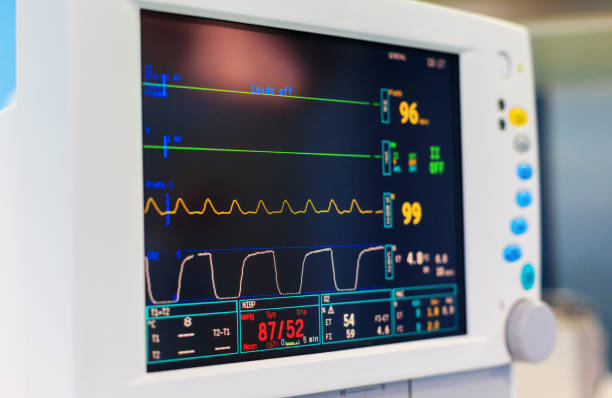
A digital electrocardiograph typically integrates multiple components to record, process, and output ECG results.
| Component | Primary Function |
|---|---|
| Electrodes and ECG lead wires | Acquire and transmit signals |
| Amplifier and processor | Amplify, digitize, and process signals |
| Display | Display waveforms, information, and device status |
| Printer | Print ECG recordings and reports |
| Memory | Store results for later retrieval |
| Software | Measurement, analysis, and data management depending on the configuration |
| Battery and power supply | Provide power to the device |
| Connectivity ports | Exchange data with computers or other systems |
ECG Recording and Display
This is the most fundamental function. The device needs to acquire signals and present waveforms in a manner appropriate to its stated intended use.
During evaluation, facilities should review the number of supported leads, recording modes, lead-off detection capability, and report formats provided by the device.
Automated Measurement and Analysis
Some electrocardiographs include software that automatically calculates parameters such as heart rate, intervals, and certain characteristics of the ECG signal.
Devices with more advanced analysis functions may also provide preliminary algorithm-based interpretations.
However, automated analysis results are intended to support evaluation and do not replace physician assessment. Facilities should review the intended use, the ability to verify results, and limitations stated by the manufacturer.
Printing, Storage, and Report Export
Depending on the model, the device may support:
- Automatic or manual printing.
- Multiple report layouts.
- Storage of results in internal memory.
- Export to PDF or other data formats.
- Connectivity with ECG management software.
The presence of USB or Wi-Fi does not necessarily mean that the device supports complete data-exchange functionality.
4. Factors Affecting ECG Signal Quality
When selecting an electrocardiograph, signal quality should be evaluated independently of screen size or the number of printing channels.
Electrodes and Lead Wires
Electrodes and ECG lead wires are components that can be significantly affected by routine use.
Facilities should review:
- Compatible electrode types.
- Connector security.
- Cable length and durability.
- Replacement availability.
- Accessory supply.
Unstable electrode contact or damaged lead wires may cause noise, signal loss, and reduced recording quality.
Noise and Interference Reduction
Common sources of interference include mains electricity, movement, muscle activity, and poor electrode contact.
Electrocardiographs may use filters to reduce the effects of these factors. However, inappropriate signal processing may also alter waveform characteristics.
Therefore, a smoother-looking waveform does not always mean a more accurate recording.
Technical Specifications to Review
When comparing devices, technical teams may review:
- Sampling rate.
- Signal resolution.
- Frequency response.
- Noise-rejection capability.
- Filter modes.
- Electrical safety characteristics.
These specifications should be assessed against the intended use and the manufacturer's testing data.
5. How Does an Electrocardiograph Differ from a Patient Monitor, Holter Monitor, and Exercise ECG System?
Although all of these devices involve ECG signals, they are designed for different purposes.
| Device | Primary Purpose |
|---|---|
| Diagnostic electrocardiograph | Records and generates electrocardiographic reports for professional evaluation |
| Patient monitor | Continuously or periodically monitors physiological parameters and generates alarms |
| Holter ECG recorder | Records ECG over an extended period while the patient continues normal activities according to clinical instructions |
| Exercise ECG system | Records ECG during exercise testing performed according to professional protocols |
A conventional 12-lead electrocardiograph focuses on generating an ECG recording for evaluation at the time the test is performed.
In contrast, a patient monitor may continuously display ECG together with other parameters such as SpO₂ or blood pressure. The ability to display ECG does not mean that a patient monitor can replace a dedicated diagnostic electrocardiograph.
Holter and exercise ECG systems also have their own equipment, software, and operational requirements. These systems should therefore not be selected as if they were interchangeable products.
6. ECG Data Storage and Integration with HIS/EMR
As hospitals implement electronic medical records, electrocardiographs may become part of the data-management ecosystem for functional diagnostic testing.
Depending on the configuration, a workflow may include:
Patient registration → ECG recording → result review → storage → report confirmation → linkage to the medical record
Data may be stored on the device, on a computer, in ECG management software, or on a facility server.
Network Connectivity Does Not Necessarily Mean EMR Integration
A device with LAN or Wi-Fi does not automatically have the ability to send data directly to HIS/EMR.
Facilities should clarify:
- In which formats can the device export results?
- Does it support centralized ECG data management?
- Can waveform data be transmitted, or only PDF reports?
- Is middleware or an additional software license required?
- How are results linked to the patient identifier?
An important distinction should be made between a PDF report and structured ECG data, as these data types differ in how they can be stored, reviewed, and exchanged.
Patient Identity Management
When results are stored electronically, the facility should control patient identifiers, recording time, the person performing the examination, and report status.
If identification information is incorrect, the recording may be associated with the wrong medical record even if the ECG signal itself was acquired correctly.
Integration capability should therefore be evaluated together with the hospital's data-review and correction workflows.
7. Battery, Usability, and Maintenance
Battery and Portability
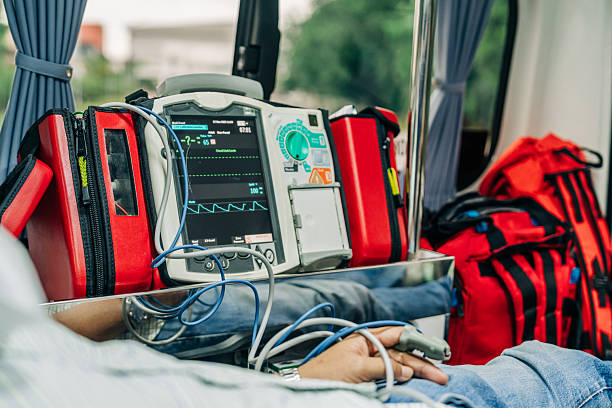
An electrocardiograph may be installed in a fixed location or moved between departments.
For mobile use, facilities should review:
- Size and weight.
- Handle or trolley.
- Battery runtime and charging time.
- Battery replaceability.
- Storage of ECG lead wires and electrodes.
Actual battery runtime should be evaluated under expected operating conditions, particularly when the device frequently prints results or uses wireless connectivity.
Usability
During demonstrations, facilities should observe the time and number of steps required to enter patient information, record the ECG, preview the recording, print, and save the result.
A clear display, consistent presentation of units, and easy-to-understand error messages may help make routine operation more convenient.
Cleaning and Maintenance
The electrocardiograph, lead wires, and accessories should be cleaned according to the manufacturer's instructions.
Depending on the model, the maintenance program may include:
- Visual inspection of the device, lead wires, and connectors.
- Functional checks of recording and signal quality.
- Printer and battery checks.
- Electrical safety testing according to the facility's program.
- Functional verification or calibration where appropriate.
- Software updates where supported by the manufacturer.
A fixed maintenance interval should not be applied to every electrocardiograph without considering manufacturer instructions, level of use, and the facility's equipment-management program.
8. Ten Criteria for Selecting an Electrocardiograph for a Healthcare Facility
| Criterion | What Should Be Evaluated? |
|---|---|
| 1. Intended use | Department or area of use, number of recordings, portability requirements |
| 2. Number of leads | 12-lead ECG capability, acquisition method |
| 3. Signal quality | Resolution, frequency response, filters, and noise-rejection capability |
| 4. Display and printer | Number of displayed/printed channels, paper format, report formats |
| 5. Analysis software | Measurements, automated interpretations, and limitations of use |
| 6. Data storage | Memory, search, export, and result-backup capability |
| 7. HIS/EMR integration | Protocols, management software, middleware or other intermediary components |
| 8. Usability | User interface, recording time, battery, and mobility |
| 9. Technical support | Warranty, maintenance, spare parts, and engineering capability |
| 10. Lifecycle cost | Device price, electrodes, lead wires, printing paper, battery, software, and service |
Common Selection Mistakes
Selecting based only on the number of channels: Failing to verify which leads the device actually supports and how signals are acquired.
Judging quality by the display or printout: Overlooking signal-acquisition and processing characteristics.
Failing to test the workflow: Discovering inconvenient recording, data-entry, or printing processes only after the device is already in use.
Overlooking accessories and consumables: Failing to account for the cost of electrodes, ECG lead wires, printing paper, and batteries.
Ignoring storage requirements: The device may work well as a standalone system but be difficult to connect with hospital systems.
Focusing only on the warranty for the main unit: Failing to review support conditions for the printer, lead wires, battery, and software.
9. Questions to Ask Suppliers Before Purchasing an Electrocardiograph

Before selecting a device, facilities may use the following questions:
1. Does the device support standard 12-lead ECG, and how are the signals acquired?
2. Does the stated number of channels refer to acquisition, display, or printing channels?
3. Which specifications and test conditions are used to evaluate signal quality?
4. Which recording modes, printing options, and report formats are available?
5. Are ECG measurement and analysis functions included in the standard configuration?
6. In which formats can results be stored and exported?
7. If HIS/EMR integration is required, which additional software or systems are needed?
8. How are batteries, ECG lead wires, electrodes, and printing paper supplied?
9. How are warranty, maintenance, and technical support organized in Vietnam?
10. What costs are involved in putting the device into operation and maintaining it over several years?
Short Checklist Before Finalizing the Device
- Confirm the intended use and number of leads.
- Review signal quality, display capability, and printing functions.
- Demonstrate the recording, storage, and export workflow.
- Confirm compatible accessories, battery, and consumables.
- Clarify data-integration requirements where applicable.
- Review warranty, maintenance, and total lifecycle cost.
Frequently Asked Questions About Electrocardiographs
What Is an Electrocardiograph Used For?
An electrocardiograph records the electrical activity of the heart and generates an electrocardiogram for professional evaluation within a healthcare facility.
Are an ECG Machine and an Electrocardiograph Different?
In most contexts, these terms refer to the same category of equipment. ECG is the internationally used term commonly found in professional documentation and product names.
Does a 12-Channel ECG Machine Use 12 Electrodes?
No. A standard 12-lead ECG typically uses 10 electrodes, including four limb electrodes and six precordial electrodes. The number of channels should be interpreted according to the technical specifications of the specific device.
Can a 3-Channel ECG Machine Record 12 Leads?
Yes, in some cases. Certain devices support full 12-lead ECG acquisition but print only a limited number of signal traces at a time. The acquisition capability and print format of the specific model should be reviewed.
Can an Electrocardiograph Diagnose Disease Automatically?
Some devices include automated analysis software that provides preliminary algorithm-based interpretations. However, these results are intended only to support the evaluation process; physicians still need to review the recording and make the professional conclusion.
Should a Facility Choose a 3-Channel, 6-Channel, or 12-Channel ECG Machine?
The decision should be based on ECG recording requirements, acquisition method, report format, patient volume, storage needs, and budget. The number of printing channels should not be the only deciding factor.
This article is provided for informational purposes regarding the principles, functions, and selection of electrocardiographs for healthcare facilities. It does not provide instructions for self-interpretation of electrocardiograms or for diagnosis or treatment. Device use and interpretation of ECG results should be performed by qualified professionals according to the device's intended use and facility procedures. The international technical standards mentioned in this article do not automatically constitute mandatory legal requirements in Vietnam.
Explore Electrocardiograph and Medical Equipment Technologies at Pharmedi Vietnam 2027
For hospitals and clinics, investing in an electrocardiograph involves more than selecting a device that records electrical signals. Data storage, connectivity, accessory availability, and technical service can also directly affect long-term usability.
Pharmedi Vietnam 2027, taking place from September 28–30, 2027 at the Saigon Exhibition and Convention Center (SECC), Ho Chi Minh City, provides an opportunity for businesses, professionals, and healthcare organizations to meet, explore technologies, and discuss medical equipment solutions that support healthcare delivery.
For organizations considering investment in electrocardiographs, Pharmedi Vietnam 2027 provides an opportunity to explore technology trends, learn about solutions from suppliers, and prepare the technical requirements that should be evaluated before selecting equipment.
Some topics that hospitals and clinics may proactively explore with suppliers include:
- Which 3-channel, 6-channel, and 12-channel ECG configurations are appropriate for different usage needs?
- How are signal quality and analysis software evaluated?
- How does the device store and connect data with hospital systems?
- Are ECG lead wires, electrodes, printing paper, and spare parts supplied reliably?
- How are training, warranty, and technical-support policies organized?
Preparing these criteria gives healthcare facilities a clearer basis for comparing solutions, assessing their suitability for professional needs, and developing an appropriate investment plan.
As digitalization becomes increasingly important across healthcare facilities, electrocardiograph selection should focus on recording quality, result-management capability, operational convenience, and long-term value.
Dates: September 28–30, 2027
Venue: Saigon Exhibition and Convention Center (SECC), Ho Chi Minh City
Exhibition Information: https://pharmed.vn/
Visitor registration, exhibitor registration, and program information will be updated according to official announcements from the Pharmedi Vietnam 2027 Organizing Committee.
Related post
- Breakthrough in Cancer Treatment: Next-Generation Robotic Surgery in Vietnam
- Việt Nam xuất 415 triệu khẩu trang từ đầu năm
- Pharmaceutical, healthcare expo begins in HCM City
- What Is the Difference Between Medical Equipment Verification and Calibration? Key Considerations for Healthcare Facilities
- Plan your appearance now at favorable conditions under the roof of the German joint stand!