


A 24-hour Holter ECG monitor is a device that continuously records the electrical activity of the heart during a monitoring period, typically 24 hours or longer depending on the system. Unlike a conventional ECG machine that produces a recording only at the time of examination, Holter ECG allows data to be collected while the patient carries out daily activities, rests, and sleeps during the prescribed monitoring period.
In hospitals and cardiology clinics, a Holter system consists of more than a compact recorder worn by the patient. To generate a clinically useful report, the facility also requires electrodes, lead wires, analysis software, a computer, signal-quality review procedures, and a data-storage system.
Therefore, when selecting a 24-hour ECG monitoring system, facilities should not consider only battery life or the number of recording channels. They should also evaluate signal quality, continuous-recording capability, wearing comfort, event-marking functions, reliability of the analysis software, and the ability to manage multiple recordings.
This article focuses on the components, operating principles, operational requirements, and selection criteria for Holter ECG systems used in healthcare facilities. It does not provide instructions for self-interpretation of ECG recordings or diagnosis of cardiac arrhythmias.
What Is a 24-Hour Holter ECG Monitor?

A 24-hour Holter ECG monitor, also known as a Holter ECG or ambulatory ECG monitor, is a system designed to record cardiac electrical signals over an extended period while the patient carries out normal daily activities.
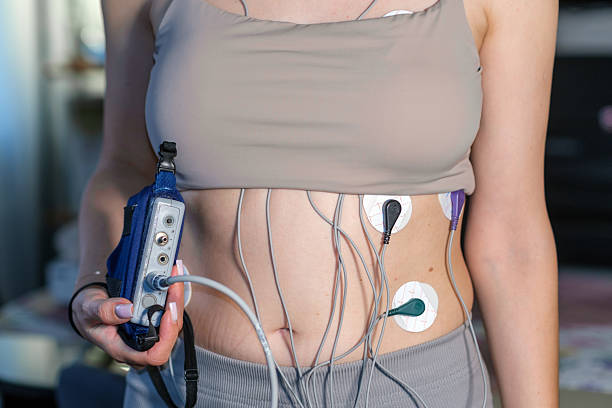
The device typically includes a small recorder connected to electrodes attached to the body. Data are stored throughout the monitoring period and then transferred to dedicated software for processing and report generation.
According to the 2017 ISHNE–HRS expert consensus, traditional Holter monitoring commonly provides continuous recording for approximately 24–48 hours. Some newer generations of devices may support longer recording durations depending on their design and storage capacity.
A key characteristic of Holter monitoring is its ability to create an extended ECG recording covering multiple periods of time, rather than capturing only a short interval in the clinic.
When Is Holter ECG Monitoring Used?
In clinical practice, physicians may order Holter monitoring to collect additional information about cardiac electrical activity over a defined period.
The data may support:
- Recording cardiac electrical activity during normal daily activities.
- Monitoring changes in heart rate over time.
- Recording periods of rhythm abnormalities for physician review.
- Correlating the timing of patient-reported symptoms with ECG data.
- Assessing other information according to clinical indications and the capabilities of the system.
However, 24-hour Holter monitoring is not appropriate for every monitoring objective. The recording duration and device type should be selected according to clinical requirements.
1. How Does a 24-Hour Holter ECG Monitor Work?
Holter systems use electrodes placed on the body surface to acquire cardiac electrical signals. The device records continuously and stores the data in internal memory or another suitable storage medium.
The process can be divided into four stages.
Stage 1 – Signal acquisition: Electrodes and lead wires acquire cardiac electrical signals while the patient wears the device.
Stage 2 – Signal processing and data recording: The recorder amplifies, digitizes, and stores the signals according to the device configuration.
Stage 3 – Data transfer: After the monitoring period, data are transferred to the analysis software through a connection port, data reader, or another method depending on the system.
Stage 4 – Analysis and reporting: The software supports processing of the recording, identifies signal segments that may require review, and generates a report for qualified personnel to examine and confirm.
Not every Holter system uses the same data-transfer method. Some devices record data to memory and transfer it only after monitoring is complete, while other systems may offer additional data-transmission capabilities.
Continuous Recording Does Not Mean Real-Time Alerts
This is an important distinction when selecting a Holter monitor.
Traditional Holter ECG systems are primarily designed to record data for analysis after the monitoring period. They do not automatically send an immediate alert to healthcare personnel whenever an abnormal signal is detected.
In contrast, certain remote cardiac monitoring systems may provide connectivity and real-time alerting functions.
Facilities should therefore clearly determine whether they need:
- Continuous ECG recording for later analysis.
- Monitoring with remote data transmission.
- Or a system that provides real-time monitoring and alerts.
These three functions should not be treated as equivalent.
2. Components of a Holter ECG System
A Holter ECG system may include the following components:
| Component | Primary Function |
|---|---|
| Holter recorder | Acquires and stores cardiac electrical signals during the monitoring period |
| Electrodes | Contact the body to acquire electrical signals |
| Electrode lead wires | Transmit signals from the electrodes to the recorder |
| Battery or power source | Maintains device operation |
| Event marker button | Records a user-marked time point where supported |
| Memory | Stores ECG data |
| Computer and software | Receive, process, review, and analyze data |
| Storage system | Manages recordings and reports according to the facility's workflow |
Depending on the design, electrodes may connect through lead wires or be integrated into a wearable patch-style device.
Holter Recorder
The recorder is the central component and is typically designed to be small and lightweight for greater convenience during the monitoring period.
When evaluating the recorder, facilities should consider:
- Size and weight.
- Number of recording channels.
- Supported recording duration.
- Memory capacity.
- Battery life.
- How device status is displayed.
- Lead-off detection capability.
- Data-transfer method.
A compact recorder may still interrupt monitoring if its battery life or storage capacity is insufficient for the intended recording duration.
Electrodes and Lead Wires
Electrodes and lead wires are important because the Holter system must continue recording while the patient moves, changes position, and carries out daily activities.
Factors to review include:
- Compatible electrode type.
- Stability of electrode contact.
- Lead-wire durability.
- Connectors.
- Replacement availability.
- Wearing comfort.
- Consumable supply availability.
Facilities should not compare only the recorder while overlooking the associated electrode system.
3. What Is the Difference Between 3-Channel, Multi-Channel, and 12-Lead Holter Systems?
Holter systems may use different signal-recording configurations.
According to ISHNE–HRS documentation, conventional Holter systems may support two-channel, three-channel, or more extensive lead configurations, including 12-lead Holter monitoring.
However, three concepts should be distinguished:
- Electrode: the component that contacts the body.
- Recording channel: a signal stream acquired by the device according to its configuration.
- Lead: a representation of cardiac electrical activity from a particular electrical viewpoint.
Therefore, a 3-channel Holter monitor does not necessarily use only three electrodes. The actual number of electrodes depends on the lead configuration and manufacturer design.
Should Facilities Choose a Holter System with More Channels?
More channels may provide additional information from different recording perspectives, supporting signal review and helping identify certain forms of artifact.
However, additional channels may also involve:
- More electrodes and lead wires.
- More complex setup requirements.
- Larger data volumes.
- Corresponding software requirements.
It should not be assumed that a 12-lead Holter system is always the most appropriate option for every facility.
The facility should determine what type of data the clinical team requires and review the system's analysis and reporting capabilities.
4. Signal Quality Is a Key Factor in 24-Hour Holter Monitoring

Unlike a conventional ECG that is recorded over a short period, Holter monitoring must acquire signals while the patient performs many different activities.
This makes the data more susceptible to:
- Movement.
- Changes in body position.
- Unstable electrode contact.
- Lead wires being pulled or becoming loose.
- Muscle artifact.
- Environmental interference.
- Recording interruptions caused by technical issues.
The ISHNE–HRS consensus also notes that artifact in ambulatory ECG recordings can create waveforms that may be mistaken for rhythm abnormalities if they are not carefully reviewed.
Wear Time Is Not the Same as Analyzable Data Time
A device may be worn for 24 hours, but the resulting recording may not necessarily contain 24 hours of usable signal.
During the recording period, there may be segments with:
- Clear, analyzable signals.
- Significant artifact.
- Loss of electrode contact.
- No data due to device interruption.
Therefore, when evaluating a Holter system, facilities should consider the duration of usable signal rather than only the total time the recorder remains switched on.
Facilities should ask suppliers:
- Does the software identify noisy or artifact-heavy segments?
- Does it calculate valid recording time?
- Can the complete original signal be reviewed?
- Can the analyst mark or exclude artifact segments?
Should Strong Noise-Reduction Capability Be Prioritized?
Noise reduction is an important consideration, but it should not be evaluated solely by whether the processed waveform appears smoother.
Filters may affect signal characteristics. Facilities should therefore review acquisition specifications, processing algorithms, and the ability to access and review data according to the system design.
5. Battery Life, Memory, and Continuous Recording Capability
For a 24-hour Holter ECG monitor, supported recording duration is one of the criteria that should be confirmed before purchase.
Manufacturers may specify recording capability of:
- 24 hours.
- 48 hours.
- 72 hours.
- Or longer depending on the device.
However, actual recording time may depend on the number of channels, sampling rate, memory capacity, recording configuration, and power source.
Battery Life
Facilities should verify:
- How long can the device record continuously in the intended configuration?
- Does it use a rechargeable or replaceable battery?
- Is a low-battery warning available?
- Can the battery be replaced before a new recording session?
- What are the battery cost and supply availability?
Facilities should not rely solely on the maximum battery life stated in marketing materials without understanding the associated test conditions.
Memory and Data Integrity
Memory capacity should support the intended recording duration and signal configuration.
In addition to capacity, hospitals should determine:
- In which format are the data stored?
- What happens when storage is nearly full?
- Is there a mechanism for detecting or reporting recording errors?
- How are data preserved if the power supply is interrupted?
- Can staff confirm that a recording has been transferred successfully before the device is reused?
These factors directly affect whether a monitoring session can be completed successfully.
6. Event Marker Button and Symptom Diary
Some Holter monitors allow the patient to press a button to mark the time of an event during the recording period.
In addition, facilities may use a diary to record times, activities, or symptoms according to their clinical procedures.
According to information from Cambridge University Hospitals (NHS), a Holter diary may include the time, activity, and symptoms to support correlation with ECG data.
Why Are Time Markers Important?
Holter data may extend over many hours. Event markers make it easier for the software and qualified personnel to locate signal segments requiring review.
Facilities should therefore verify:
- Does the device have an event marker button?
- How accurately is the event time stored?
- Can events be reviewed in the software?
- Can additional information from the symptom diary be entered?
- Can the time be synchronized between the recorder and the computer?
Marking an event only helps identify a time point for review; it does not by itself confirm that the patient has a specific cardiac abnormality.
7. What Functions Should Holter ECG Analysis Software Provide?
Software is an important component because continuous recordings may contain a large volume of signal data.
A Holter system may support:
- Receiving data from the recorder.
- Displaying ECG waveforms.
- Analyzing heart rate over time.
- Algorithm-based detection and classification of certain rhythm patterns.
- Flagging signal segments for review.
- Event statistics.
- Trend display.
- Report generation and export.
Specific functions depend on the software and the intended use stated by the manufacturer.
Automated Analysis Does Not Replace Professional Review
Software may support classification of signal patterns, but automated results can still be affected by artifact, loss of electrode contact, or algorithm limitations.
The system should therefore allow authorized personnel to:
- Review flagged signal segments.
- Check classification results.
- Distinguish artifact from usable data.
- Adjust analysis information where appropriate.
- Finalize the report according to the facility's professional workflow.
The ability to review the original signal is an important consideration, particularly when results generated by the software need to be verified.
What Information Is Commonly Included in a Holter Report?
Depending on the system, a report may include:
- Patient information.
- Recording start and end times.
- Total recording duration.
- Duration of analyzable signal.
- Heart-rate information over time.
- Events identified by the software.
- Selected signal strips.
- Professional comments and confirmation.
It should not be assumed that every Holter software platform provides the same report content or analytical capabilities.
8. How Does a Holter ECG Monitor Differ from a Conventional ECG Machine and Remote Monitoring Devices?
Although these systems all record cardiac electrical signals, they are designed for different purposes.
| Device | Primary Characteristic | Key Consideration |
|---|---|---|
| Conventional ECG machine | Creates an ECG recording over a short period | Focuses on the recording captured at the time of examination |
| 24-hour Holter ECG | Continuously records ECG during the monitoring period | Emphasizes long-term signal quality and analysis software |
| Event recorder | Records signal segments according to events or system-specific mechanisms | Does not necessarily record the entire ECG continuously |
| Patch ECG device | May support continuous recording for longer periods depending on the design | Number of leads, data-acquisition method, and analysis capabilities vary |
| Remote cardiac monitoring system | May transmit data and support remote monitoring depending on the configuration | Alert functions and connectivity infrastructure should be confirmed |
The table is intended as general guidance and does not represent every product available on the market.
A 2025 professional consensus from the Heart Rhythm Society and the Japanese Circulation Society also distinguishes conventional Holter monitors from patch ECG devices, handheld devices, and smart wearable ECG systems.
When purchasing equipment, facilities should therefore determine whether they need a 24-hour ECG recorder for later analysis or another form of cardiac monitoring.
9. Data Storage and Management of Multiple Holter Recordings
In facilities with high patient volumes, Holter management involves more than simply receiving and analyzing data.
A workflow may include:
Patient registration → recorder preparation → ECG recording → device return → data transfer → quality review → analysis → report confirmation → storage
The workflow may require simultaneous management of:
- Patient ID.
- Recorder ID.
- Start and end times.
- Data status.
- Analyst.
- Confirmed report.
- Recorder readiness for the next monitoring session.
HIS/EMR Connectivity
Some Holter software platforms may export PDF reports or exchange data with other systems.
However, the presence of USB, LAN, or Wi-Fi connectivity does not mean that the system can automatically integrate with HIS/EMR.
Facilities should ask:
- In which formats can reports be exported?
- Are original signal data retained?
- Is centralized management software available?
- Can records be searched by Patient ID?
- Is a server or middleware required?
- How are data backed up and access permissions controlled?
Because Holter recordings contain extended ECG data, storage requirements may differ substantially from those for conventional short ECG recordings.
10. Operational and Maintenance Requirements to Consider
Comfort During the Monitoring Period
Because Holter monitors are worn for extended periods, facilities should assess:
- Recorder weight and size.
- How the device is secured.
- Comfort when worn with clothing.
- Whether lead wires are likely to be pulled or become caught.
- Whether the electrodes maintain stable contact.
- The level of water resistance stated by the manufacturer.
It should not be assumed that every Holter monitor can be exposed to water or worn while bathing. Specific limitations depend on device design, protection rating, and manufacturer instructions.
Managing the Device Between Recording Sessions
After a monitoring session is completed, the facility should have a process for receiving the device, transferring the data, cleaning the equipment, and preparing it for the next use.
The management program may include:
- Visual inspection.
- Lead-wire and connector inspection.
- Battery check.
- Recording-function check.
- Software-connectivity check.
- Cleaning according to manufacturer instructions.
- Inspection of accessories and consumables.
- Software updates where supported.
In particular, facilities should avoid deleting or overwriting data before confirming that transfer and storage have been completed successfully.
11. Ten Criteria for Selecting a 24-Hour Holter ECG Monitor
When comparing systems, hospitals may use the following criteria:
| Criterion | What Should Be Evaluated? |
|---|---|
| 1. Intended use | 24-hour, 48-hour, or other monitoring duration according to clinical requirements |
| 2. Channels and leads | Recording configuration, number of electrodes, and data provided |
| 3. Signal quality | Continuous recording capability, noise reduction, and lead-off detection |
| 4. Battery life | Ability to support the entire intended monitoring period |
| 5. Memory | Capacity, data integrity, and transfer method |
| 6. Usability | Size, weight, wearing method, and convenience |
| 7. Analysis software | Original-signal review, event detection, editing, and reporting |
| 8. Storage and integration | Data export, patient management, and HIS/EMR connectivity where required |
| 9. Accessories and service | Electrodes, lead wires, batteries, warranty, and technical support |
| 10. Lifecycle cost | Recorder, software, computer, consumables, maintenance, and licenses |
Common Selection Mistakes
Looking only at maximum recording duration: Failing to verify stable recording capability under the intended configuration.
Assuming more channels are always better: Failing to assess the intended use and actual analysis requirements.
Overlooking the software: The recorder may have good technical specifications, but the software may make it difficult to review signals or generate reports.
Failing to evaluate signal quality during movement: The device may perform well during a short test but produce substantial artifact during long-term recording.
Failing to account for consumables and the number of devices required: Lead wires, electrodes, batteries, and analysis turnaround may affect the department's service capacity.
Lacking a data-management workflow: This may increase the risk of incorrect Patient IDs, lost results, or deletion of data before successful storage.
12. Questions to Ask Suppliers Before Purchasing a Holter ECG System
Before selection, healthcare facilities should clarify:
1. How long can the device record continuously in the intended configuration?
2. How many channels does the device support, and how many electrodes are used?
3. Under what conditions is signal quality evaluated?
4. Can the device detect lead-off conditions or recording errors?
5. In which formats can data be transferred and stored?
6. Does the software allow review of the complete original signal and assessment of artifact segments?
7. Can events be marked and correlated with a symptom diary?
8. How can reports be edited, confirmed, and exported?
9. How many recorders can one computer or software system manage?
10. Does HIS/EMR integration require an additional server or license?
11. How are electrodes, lead wires, batteries, and spare parts supplied in Vietnam?
12. What costs are involved in implementation, operation, and maintenance over several years?
Short Checklist Before Finalizing the Device
- Confirm recording duration, number of channels, and electrode configuration.
- Review signal quality and recording-error detection capability.
- Demonstrate the analysis software, original-data review, and report export.
- Confirm the battery, memory, and data-transfer workflow.
- Assess wearing comfort, cleaning, and reuse of the recorder.
- Clarify consumable, software, and technical-support costs.
Frequently Asked Questions About 24-Hour Holter ECG Monitoring
What Is a 24-Hour Holter ECG Monitor?
It is a device that continuously records the electrical activity of the heart during a monitoring period, commonly 24 hours, to provide data for qualified healthcare personnel to analyze and professionally evaluate.
Is a Holter Monitor the Same as a Conventional ECG Machine?
No. A conventional ECG machine primarily creates a short recording at the time of examination, while a Holter monitor records data continuously as the patient carries out normal activities during the monitoring period.
Can a 24-Hour Holter Monitor Record for Longer Than 24 Hours?
Yes, depending on the model. Some devices support 48 hours, 72 hours, or longer. The supported duration should be verified for the actual configuration and power source.
Does a 3-Channel Holter Monitor Use Three Electrodes?
Not necessarily. The number of recording channels and the number of electrodes are different specifications. The actual configuration should be confirmed from the manufacturer's documentation.
Can a Holter Monitor Automatically Detect Arrhythmias?
Some systems include software that supports detection and classification of signal segments that may represent rhythm abnormalities. However, automated results may be affected by artifact and algorithm limitations and should be reviewed by qualified personnel before conclusions are made.
Does a Holter Monitor Provide Immediate Alerts for Dangerous Events?
Traditional Holter systems primarily record data for analysis after the monitoring period and do not automatically provide real-time alerts. If direct monitoring or remote alerts are required, the facility should select a system with an appropriate intended use and corresponding capabilities.
Should a Holter System Be Selected Based on Equipment Price?
The recorder price should not be considered in isolation. Facilities should also account for software, computers, electrodes, lead wires, batteries, memory, data storage, maintenance, and the ability to manage multiple recordings.
This article is provided for informational purposes regarding the principles, components, functions, and selection of Holter ECG systems for healthcare facilities. It does not provide instructions for self-interpretation of electrocardiograms, diagnosis of arrhythmias, or selection of monitoring duration for individual patients. Indications, device use, and interpretation of results should be performed by qualified personnel according to manufacturer instructions and facility procedures.
Explore Holter ECG Technologies and Cardiac Diagnostic Solutions at Pharmedi Vietnam 2027
For hospitals and cardiology clinics, investing in a Holter ECG system involves more than purchasing a wearable recorder that captures signals for 24 hours. Data quality, analysis software, the ability to manage multiple recorders, and technical service all influence long-term operational effectiveness.
Pharmedi Vietnam 2027, taking place from September 28–30, 2027 at the Saigon Exhibition and Convention Center (SECC), Ho Chi Minh City, provides an opportunity for businesses, professionals, and healthcare organizations to meet, explore technologies, and discuss medical equipment solutions that support healthcare delivery.
For organizations preparing to invest in cardiac functional diagnostic equipment, Pharmedi Vietnam 2027 provides an opportunity to explore technology solutions, identify potential suppliers, and prepare the technical requirements that should be evaluated when selecting a Holter ECG system.
Before meeting with suppliers, hospitals and clinics may proactively explore:
- How long can the device record ECG continuously, and which channel configurations are supported?
- How is data quality controlled while the patient is moving?
- Does the software support artifact review and access to the complete original signal?
- Can reports be exported and data integrated with hospital systems?
- How can a healthcare facility manage multiple Holter recorders within one operational workflow?
- How are electrodes, lead wires, batteries, and technical services supplied?
Preparing these criteria helps healthcare facilities compare solutions, evaluate their suitability for long-term ECG monitoring needs, and develop an investment plan aligned with operational scale.
For continuous ECG recording devices, an appropriate selection should consider three factors together: stable signal recording capability, the quality of the analysis software, and effective device management in real-world operations.
Dates: September 28–30, 2027
Venue: Saigon Exhibition and Convention Center (SECC), Ho Chi Minh City
Exhibition Information:https://pharmed.vn/
Exhibitor registration, visitor registration, and program information will be updated according to official announcements from the Pharmedi Vietnam 2027 Organizing Committee.
Related post
- Switzerland presents ventilators, antigen tests to support Việt Nam's fight against COVID-19
- HCM City adds facilities to hospitals to cope with overcrowding
- 1.37 billion medical masks will be exported in 2020
- What Should Be Done to Promote Pharmaceutical Technology Transfer in Vietnam?
- VIETNAM: MOH releases new Decree on Medical Device Management - Decree 98/2021/NĐ-CP – November, 2021