


An electroencephalograph is a device used to record the electrical activity of the brain through a system of electrodes, typically placed on the scalp. The equipment is used in hospitals, neurology clinics, and functional diagnostic units to generate electroencephalographic recordings for professional evaluation.
Today, EEG equipment has evolved from systems that simply recorded signals and printed them on paper to computerized EEG systems capable of acquiring multiple signal channels, displaying waveforms on a monitor, changing how recordings are presented, storing data, and integrating video when required.
However, selecting an EEG system should not be based only on the number of channels or screen size. Effective use also depends on electrode quality, signal amplifiers, impedance-checking capability, recording and review software, noise reduction, storage, connectivity, and technical service.
This article focuses on the components, operating principles, applications, and selection criteria for EEG systems in healthcare facilities. It does not provide instructions for interpreting electroencephalograms or diagnosing neurological disorders.
What Is an EEG Machine?
An electroencephalograph, also referred to as an EEG machine, electroencephalography system, or electroencephalograph (EEG), is a device that acquires and records changes in electrical potential associated with the electrical activity of the brain.
The signals are acquired through electrodes, transmitted to an amplifier, and processed to generate an electroencephalographic recording.
An EEG system may include:
- Electrodes and lead wires.
- Signal acquisition and amplification unit.
- Analog-to-digital conversion components.
- Computer and EEG recording software.
- Display monitor.
- Memory and storage system.
- Camera or other supporting equipment where required.
According to the FDA, a standard EEG system may include a recorder, electrode connection box, lead wires, computer, monitor, and software for acquiring, displaying, storing, or reviewing electroencephalographic signals.
IEC 80601-2-26:2019, including Amendment 1:2024, specifies particular requirements for the basic safety and essential performance of electroencephalographs. Its scope includes equipment designed for professional healthcare facilities and certain other use environments according to the manufacturer's intended use.
How Does an EEG Machine Work?
Neuronal activity produces changes in electrical potential. A portion of this combined electrical activity can be recorded from the scalp surface using an appropriate electrode system.
The EEG recording process can be described in four stages.
1. Signal acquisition: Electrodes detect differences in electrical potential at recording positions on the scalp.
2. Amplification: The amplifier receives and amplifies very low-amplitude signals.
3. Digitization and processing: Signals are converted into digital data, processed according to the system configuration, and organized into recording channels.
4. Display and storage: Waveforms are displayed in the software, stored in the system, and can be reviewed for reporting.
Unlike measuring a single parameter, EEG systems typically record multiple signals simultaneously. Recording quality therefore depends on the electrodes, amplifier, channel configuration, environment, and processing software.
1. Components of an EEG System
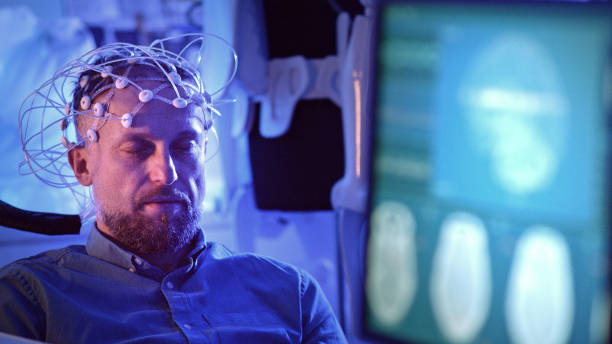
A computerized EEG system typically consists of multiple components working together.
| Component | Primary Function |
|---|---|
| EEG electrodes | Acquire electrical signals at recording positions |
| Electrode lead wires | Transmit signals from the electrodes to the acquisition unit |
| Electrode connection box (headbox) | Centralizes electrode connections and may include an integrated amplifier depending on the design |
| Amplifier | Amplifies low-amplitude EEG signals |
| Signal converter | Converts analog signals into digital data |
| Computer and software | Record, display, review, and organize data |
| Memory/storage system | Stores EEG recordings and related information |
| Camera and supporting equipment | Record video or acquire additional signals where required by the configuration |
Electrodes and Lead Wires
Electrodes are the components that come into direct contact with the patient to acquire signals.
Depending on the system, facilities may use:
- Cup electrodes.
- Electrodes used with appropriate gel or conductive material.
- EEG electrode caps.
- Specialized electrodes confirmed by the manufacturer.
When selecting a system, facilities should review:
- Electrode material.
- Compatible electrode types and quantities.
- Lead-wire durability.
- Ability to replace individual electrodes.
- Cleaning or reprocessing methods after use.
- Long-term availability of accessories.
It should not be assumed that every type of electrode is suitable for every EEG system.
Connection Box and Amplifier
The electrode connection box consolidates signals from multiple electrode leads. Depending on the design, the amplifier may be integrated into the connection box or located in another part of the system.
Because EEG signals have very low amplitudes, the amplifier needs to acquire signals reliably while limiting the effects of interference.
When comparing equipment, technical teams should review:
- Number of acquisition channels.
- Input characteristics.
- Noise-rejection capability.
- Sampling rate.
- Signal-conversion resolution.
- Electrode-impedance checking function.
- Ability to expand recording channels.
Signal quality should not be judged from a single specification alone.
Computer and Software
Computerized EEG systems use software to record and display data.
The software may support:
- Real-time signal viewing.
- Electrode-status checking.
- Changing channel display configurations.
- Adjusting scale and filters during review.
- Event marking.
- Saving and searching recordings.
- Data export and report generation.
For hospitals with high EEG volumes, software usability may directly affect data-processing time and operational efficiency.
2. EEG Electrode Systems and Recording Channel Configuration
An important feature of an EEG system is its ability to support standardized electrode-placement systems.
In EEG practice, the International 10–20 System is a commonly used method for defining electrode positions on the scalp.
The term 10–20 refers to the principle of determining electrode positions according to proportional distances across the head, rather than to a fixed number of electrodes used by every system.
Electrode positions are commonly identified by letters and numbers, helping standardize signal organization across recordings and facilities.
Are the Number of Electrodes and the Number of EEG Channels the Same?
These two concepts should not be used interchangeably.
| Concept | Meaning |
|---|---|
| Electrode | Contact component used to acquire electrical potential |
| Recording channel | A channel used to acquire and represent signals according to the system configuration |
| Montage | The way signal pairs or reference electrodes are selected and organized for EEG display |
| Auxiliary channels | Channels used for other signals such as ECG, EOG, or EMG where supported |
A system marketed as a 32-channel EEG machine does not necessarily use exactly 32 EEG electrodes in every recording session.
Facilities should confirm:
- How many EEG channels can be used simultaneously?
- How many channels are available for auxiliary signals?
- Which electrode configurations does the system support?
- Can the display montage be changed when reviewing data?
Should Facilities Prioritize EEG Systems with More Channels?
The number of channels should match the facility's intended use.
Higher-channel-count systems may support more complex recording configurations, but they may also increase the cost of electrodes and lead wires, setup time, and data-storage requirements.
The 2023 IFCN–ILAE recommendations for routine and sleep EEG discuss the 10–20 electrode system and recommend the expanded 25-electrode IFCN system where circumstances allow.
These are professional recommendations for specific recording contexts and do not mean that every facility must purchase the same EEG configuration.
3. Common Types of EEG Systems
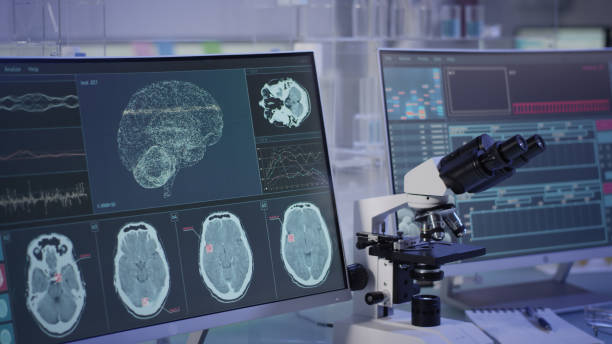
EEG equipment can be grouped according to recording method and intended scope of use.
Routine Computerized EEG System
This type of system is used for routine EEG recording in functional diagnostic workflows at healthcare facilities.
The configuration typically focuses on:
- Multi-channel EEG acquisition.
- Signal display on a computer.
- Electrode checking.
- Recording storage and review.
- Report generation.
This is the primary category to evaluate if the facility mainly performs routine EEG examinations in a functional diagnostic unit.
Video EEG System
Video EEG combines electroencephalographic signals with synchronized video images.
The system may include an EEG unit, camera, video-recording software, and data-storage components.
Time synchronization allows qualified personnel to compare EEG signals with events or movements captured during monitoring.
When selecting a system, facilities should clarify:
- How many cameras are included?
- Is the video time-synchronized with the EEG?
- Can signals and video be reviewed simultaneously?
- What storage capacity is required?
- Is an event-marking function available?
Long-Term EEG Monitoring System
Some systems are designed to record EEG over longer periods, such as continuous monitoring in appropriate specialized clinical areas.
Additional requirements may include:
- Continuous-recording capability.
- High-capacity data storage.
- Management of multiple recordings.
- Synchronized video.
- Remote viewing capability where supported.
- Specialized notification or alarm mechanisms where included within the intended use.
It should not be assumed that a routine EEG machine can become a continuous-monitoring system simply by increasing the recording duration.
Portable EEG Devices or Specialized Configurations
Some devices use compact recorders, reduced electrode configurations, or wireless connectivity.
These designs may be useful in appropriate use environments, but the number of channels, recording coverage, signal quality, and device limitations should be confirmed.
Reduced-channel EEG or amplitude-integrated EEG (aEEG) should also not be considered fully equivalent to a standard multi-electrode EEG system.
4. What Factors Affect EEG Signal Quality?
EEG recording quality is one of the most important criteria when evaluating equipment.
Electrode Impedance
Electrode impedance reflects an electrical characteristic at the contact point between an electrode and the body.
Excessively high or uneven impedance may make recordings more susceptible to interference depending on the structure and characteristics of the system.
The 2023 IFCN–ILAE recommendations for routine and sleep EEG propose:
- Electrode impedance below 5 kΩ as the recommended level.
- Electrode impedance below 10 kΩ as acceptable within the scope of the recommendation.
These are reference values from professional guidance and should not be treated as rigid thresholds for every electrode technology or every EEG system.
When purchasing equipment, facilities should determine whether the system includes impedance measurement, how impedance is displayed, and whether individual electrodes can be checked.
Interference During Recording
EEG signals may be affected by:
- Mains electrical interference.
- Movement.
- Muscle activity.
- Blinking or eye movement.
- Unstable electrode contact.
- Other electrical equipment in the environment.
Software may support filtering or marking of certain types of interference, but a recording that appears visually cleaner does not automatically have better professional quality.
Facilities should evaluate whether original data are retained and whether the recording can be reviewed using appropriate display settings.
Sampling Rate and Filters
Sampling rate refers to the number of times a signal is digitized within a unit of time.
The 2023 IFCN–ILAE recommendations propose a minimum sampling rate of 256 Hz for routine and sleep EEG within the scope of the guidance.
However, this figure should not be used in isolation when selecting every type of EEG system. Specialized applications may have different technical requirements.
When evaluating a system, facilities should review:
- Actual sampling rate.
- Signal resolution.
- Available filters.
- Ability to adjust settings during review.
- How original signals are stored.
- Test conditions stated by the manufacturer.
5. What Functions Should Computerized EEG Software Provide?

Software determines how recorded data can be used after signal acquisition.
EEG Display and Review
The system should be evaluated for:
- Multi-channel viewing.
- Ability to change montages.
- Display-scale adjustment.
- Filter adjustment during review.
- Event marking and searching.
- Reviewing signal segments over time.
For long recordings, loading speed and navigation through the recording can also significantly affect workflow efficiency.
Analysis and Event-Detection Support
Some EEG software may provide:
- Tools for marking segments requiring review.
- Frequency analysis.
- Signal-spectrum display.
- Quantitative analysis methods.
- Algorithms that support event detection.
However, not every computerized EEG system includes advanced analysis or artificial intelligence functions.
These features should be confirmed according to the software, licensing, and intended use of the system.
Automated analysis results are intended to support qualified personnel and do not replace physician review and professional conclusions.
EEG Data Storage and Export
Depending on the system, data may be stored in a proprietary manufacturer format or exported to supported standard formats.
The IFCN–ILAE recommendations discuss data-exchange formats such as EDF, CSV, or DICOM within the scope of the technical recommendations.
However, this does not mean that every EEG system supports all of these formats.
When evaluating a system, facilities should ask:
- Can original EEG signals be exported?
- Is proprietary software required to open the data?
- Can reports be exported as PDF files?
- How is synchronized video stored?
- Can data be backed up and restored?
- If the system is replaced, how can legacy data be retrieved?
6. Is EEG the Same as Other Functional Diagnostic Equipment?
EEG equipment may be confused with other devices that also record biological signals.
| Device | Primary Characteristic |
|---|---|
| EEG machine | Records the electrical activity of the brain |
| ECG machine | Records the electrical activity of the heart |
| EMG machine | Records electrical activity of muscles and supports neuromuscular assessment depending on the configuration |
| Polysomnography (PSG) system | Combines multiple physiological signals for sleep studies |
| Video EEG system | Combines EEG signals with synchronized video |
| aEEG system | Processes and displays EEG using a specialized amplitude-integrated method |
A system may support additional signals such as ECG, eye movements, or muscle activity. However, the presence of auxiliary channels does not mean that the device can replace another dedicated system.
In particular, sleep EEG and polysomnography should not be considered the same simply because both can include EEG recording.
7. Requirements for Implementing EEG Equipment in a Healthcare Facility
Implementing an EEG system requires consideration of both the equipment itself and the operating conditions of the functional diagnostic room.
Space and Recording Environment
Facilities should consider:
- Position of the recording bed or chair.
- Working space for staff.
- Position of the computer and monitor.
- Routing of electrode lead wires.
- Power supply.
- Lighting conditions.
- Potential sources of electrical interference that may affect signals.
- Camera position when video EEG is implemented.
Planning should not be limited to the physical footprint of the equipment. Sufficient space is also needed for staff operation, signal observation, cleaning, and maintenance.
Management of Electrodes and Accessories
Electrodes, lead wires, and other contact components should be managed according to manufacturer instructions.
Facilities should determine:
- Which electrodes are single-use or reusable?
- What cleaning procedures apply?
- Which components require scheduled or condition-based replacement?
- Can individual lead wires be purchased separately?
- Are compatible supplies available in Vietnam?
For electrode caps, facilities should also review sizing, electrode replaceability, and cleaning requirements.
Electrical Safety and Maintenance
Depending on the device, the maintenance program may include:
- Visual inspection.
- Lead-wire and connector inspection.
- Recording-channel checks.
- Impedance-measurement function checks.
- Signal-quality verification.
- Power-supply checks.
- Electrical safety testing according to the facility's program.
- Software updates.
- Data backup and recovery testing.
The maintenance schedule should be based on manufacturer documentation, level of use, and the hospital's equipment-management program.
IEC 80601-2-26 is a technical standard related to the safety and performance of electroencephalographs, but citing this standard should not be interpreted as evidence that the entire storage software system, camera system, or auxiliary stimulation equipment falls within the same certification scope.
8. EEG Data Storage and Integration with Hospital Systems
As the number of recordings increases, healthcare facilities need to consider long-term data-management capability.
A workflow may include:
Patient registration → system preparation → EEG recording → data review → analysis and interpretation → report confirmation → storage
The workflow may require management of:
- Patient ID.
- Recording time.
- Staff member performing the recording.
- Recording configuration.
- Original signal data.
- Video where applicable.
- Report status.
- Access permissions.
Having EEG Software Does Not Mean the System Can Integrate with HIS/EMR
It is important to distinguish:
The ability to record and store EEG data
from:
The ability to exchange data with hospital information systems.
An EEG system may export PDF reports but not support transmission of waveform data to another system.
When integration is required, hospitals should determine:
- Which types of data need to be transferred?
- Are appropriate protocols or formats available?
- Is middleware required?
- Can results be linked to the correct Patient ID?
- Who is responsible for implementing and maintaining the connection?
- How are data backed up and access permissions controlled?
For video EEG or long-term monitoring, storage requirements may be substantially greater than for routine EEG. Server, storage, and backup requirements should therefore be calculated in advance according to the expected operational scale.
9. Ten Criteria for Selecting an EEG Machine
When comparing systems, hospitals or clinics may use the following evaluation framework:
| Criterion | What Should Be Evaluated? |
|---|---|
| 1. Intended use | Routine EEG, sleep EEG, video EEG, or long-term monitoring |
| 2. Number of recording channels | Number of EEG channels, auxiliary channels, and expansion capability |
| 3. Electrode system | Electrode types, placement systems, EEG caps, and compatibility |
| 4. Signal quality | Amplifier, noise rejection, sampling rate, and resolution |
| 5. Impedance checking | Ability to measure and display electrode status |
| 6. Software | Display, montage changes, event marking, and review functions |
| 7. Synchronized video recording | Camera, time synchronization, and video storage where required |
| 8. Storage and integration | Original data, report export, backup, and HIS/EMR connectivity |
| 9. Technical support | Warranty, spare parts, training, and maintenance |
| 10. Total lifecycle cost | Equipment, electrodes, accessories, software, storage, and service |
Common Mistakes When Selecting an EEG System
Looking only at the number of recording channels: Failing to determine the actual number of EEG channels, auxiliary channels, and required electrode configuration.
Overlooking the electrode system: Failing to account for the cost, durability, and availability of lead wires, EEG caps, or other supplies.
Evaluating only the waveform shown during a demonstration: Failing to review noise-rejection capability, original data, and acquisition specifications.
Purchasing software without clarifying licensing: Discovering only after implementation that certain analysis or video functions require additional licenses.
Failing to calculate storage requirements: Particularly important for video EEG or long-term recordings.
Failing to assess the operating workflow: The system may offer many functions but be overly complex for preparation, recording, review, and reporting.
10. Questions to Ask Suppliers Before Purchasing an EEG System
1. Is the system suitable for routine EEG, video EEG, or other recording applications?
2. How many actual EEG channels and auxiliary channels does the system provide?
3. Which electrode-placement systems does the equipment support?
4. Does it include impedance measurement and electrode-status checking?
5. What sampling rate, resolution, and noise-rejection specifications are provided?
6. Can the software change montages, review original signals, and mark events?
7. Are the camera and synchronized video functions included in the standard configuration?
8. Which data formats can be exported, and how can the system integrate with HIS/EMR?
9. How are electrodes, lead wires, software, and spare parts supported in Vietnam?
10. What items are included in the total implementation and operating costs over several years?
Checklist Before Finalizing an EEG System
- Confirm the intended use and number of recording channels.
- Review electrodes, lead wires, and impedance-measurement functions.
- Evaluate signal quality and acquisition specifications.
- Demonstrate recording, review, storage, and data-export software functions.
- Confirm camera and synchronized video capability where required.
- Clarify storage, integration, and data-security requirements.
- Review warranty, spare parts, and lifecycle cost.
Frequently Asked Questions About EEG Machines

What Is an EEG Machine Used For?
An EEG machine records the electrical activity of the brain and generates an EEG recording for professional evaluation in a healthcare facility.
Is a Computerized EEG Machine Different from an EEG Machine?
A computerized EEG machine refers to a system that uses digital technology and computer software to record, display, process, and store electroencephalographic data. In principle, it still belongs to the EEG equipment category.
Does a 32-Channel EEG Machine Use Exactly 32 Electrodes?
Not necessarily. The number of recording channels and the number of electrodes are different specifications. The EEG configuration, reference electrodes, and auxiliary channels should be confirmed from the manufacturer's documentation.
Can an EEG Machine Diagnose Neurological Disorders Automatically?
Some software platforms provide analysis or event-detection support, but automated results do not replace physician review and professional conclusions.
Can an EEG Machine Record Video at the Same Time?
Yes, if the system supports video EEG. This function typically requires an appropriate camera, software, and data-synchronization capability.
Can an EEG System Integrate with Electronic Medical Records?
Some systems may export reports or exchange data with HIS/EMR. However, the required formats, protocols, middleware, and implementation responsibilities should be confirmed for the actual system.
Should an EEG Machine Be Selected Based Only on the Number of Channels?
No. Facilities should also consider the intended use, electrode system, signal quality, software, storage capability, and total operating cost.
This article is provided for informational purposes regarding the components, operating principles, and selection criteria for EEG equipment in healthcare facilities. It does not provide instructions for self-interpretation of electroencephalograms, recognition of disease from waveform patterns, or diagnostic or treatment decisions. EEG recording and interpretation should be performed by qualified personnel according to facility procedures. The international technical standards and professional recommendations mentioned in this article do not automatically constitute mandatory legal requirements in Vietnam.
Explore EEG Technologies and Diagnostic Equipment at Pharmedi Vietnam 2027
For hospitals and neurology clinics, investing in an EEG system involves more than selecting a device that records electrical signals. Electrodes, recording quality, analysis software, data management, and technical service also determine the system's long-term usability.
Pharmedi Vietnam 2027, taking place from September 28–30, 2027 at the Saigon Exhibition and Convention Center (SECC), Ho Chi Minh City, provides an opportunity for businesses, professionals, and healthcare organizations to meet, explore technologies, and discuss medical equipment solutions that support healthcare delivery.
For facilities preparing to invest in or upgrade neurological functional diagnostic systems, Pharmedi Vietnam 2027 provides an opportunity to explore technology solutions, identify potential suppliers, and prepare the technical requirements that should be evaluated when selecting an EEG system.
When discussing EEG systems with suppliers, hospitals and clinics may proactively explore:
- Which EEG configurations and channel counts does the system support?
- How are electrodes, lead wires, and EEG caps supplied?
- How are signal quality and noise-rejection capability evaluated?
- Does the software support review of original data and signal analysis?
- Is video EEG supported, and how is video synchronized with EEG data?
- What are the requirements for storage, backup, and HIS/EMR connectivity?
- How are warranty, spare parts, training, and technical services organized?
Preparing these criteria helps healthcare facilities compare solutions, assess their ability to meet neurological functional diagnostic requirements, and develop an investment plan appropriate to their operational scale.
As digitalization and functional diagnostic data management become increasingly important, EEG selection should focus on recording quality, the ability to analyze and retrieve data, operational convenience, and long-term value.
Dates: September 28–30, 2027
Venue: Saigon Exhibition and Convention Center (SECC), Ho Chi Minh City
Exhibition Information: https://pharmed.vn/
Exhibitor registration, visitor registration, and program information will be updated according to official announcements from the Pharmedi Vietnam 2027 Organizing Committee.
Related post
- City to host int’l pharma, health expo (http://vietnamnews.vn/economy)
- Comprehensive Guide to Medical Device Classification Standards in Vietnam
- What Should Be Done to Promote Pharmaceutical Technology Transfer in Vietnam?
- With double digit growth in the past few years, Việt Nam’s medical equipment and pharmaceutical markets are increasingly attractive to investors.