


A defibrillator is a medical device that uses controlled electrical pulses to perform defibrillation or other forms of electrical therapy according to its design. The device plays an important role in cardiac emergency systems, particularly in emergency departments, intensive care units, and other areas equipped to manage dangerous cardiac arrhythmias.
Today, defibrillators are available in a range of configurations, from manual defibrillators to monitor-defibrillator systems that combine patient monitoring, synchronized cardioversion, and transcutaneous pacing. Some systems also support event-data storage, CPR quality assessment, and connectivity with management software.
However, defibrillator selection should not be based only on maximum energy output or screen size. Healthcare facilities should also evaluate defibrillation waveform, operating modes, ECG monitoring capability, compatible electrodes, charge time, power supply, self-test functions, and maintenance capability.
This article focuses on the types of defibrillators used in professional healthcare environments, important technical functions, and equipment-selection criteria. It does not provide instructions on how to perform defibrillation or how to select treatment energy levels for individual patients.
What Is a Defibrillator?
A defibrillator, also referred to as a cardiac defibrillator, is a device capable of generating and delivering an electrical pulse to the heart through an appropriate electrode system.
In cardiac emergencies, defibrillation is used for shockable arrhythmias where electrical therapy is indicated, most notably ventricular fibrillation and pulseless ventricular tachycardia.
According to the 2025 American Heart Association (AHA) Guidelines for Cardiopulmonary Resuscitation and Emergency Cardiovascular Care, early defibrillation is an important component in the management of cardiac arrest with a shockable rhythm, particularly ventricular fibrillation or pulseless ventricular tachycardia.
However, not every cardiac arrest is an indication for defibrillation. The device should be used based on professional assessment, the cardiac rhythm, and an appropriate emergency-care protocol.
Defibrillators may be deployed in:
- Emergency departments.
- Intensive care units.
- Cardiology departments.
- Procedure rooms where clinically appropriate.
- Operating rooms and recovery areas.
- Specialized ambulances.
- Other areas within healthcare facilities that are organized for cardiac emergency response.
Device configuration will vary according to the use environment and professional capabilities of each facility.
IEC 60601-2-4:2010, including Amendment 1:2018 and Amendment 2:2026, specifies particular requirements for the basic safety and essential performance of cardiac defibrillators.
The consolidated version currently published by IEC is IEC 60601-2-4:2010+AMD1:2018+AMD2:2026, published on September 28, 2026.
How Does a Defibrillator Work?

A defibrillator uses an electronic system to store energy and deliver a controlled electrical pulse through therapeutic electrodes.
From a technical perspective, the operating process can be summarized as follows:
1. Power input: The device uses mains power, a battery, or another suitable power source according to its design.
2. Energy storage: The electronic system charges an energy-storage component, typically involving a capacitor.
3. Pulse control: The control circuitry determines the characteristics of the electrical pulse according to the technology and selected mode.
4. Pulse delivery: When activated under appropriate conditions, the device delivers the electrical pulse through the therapeutic electrodes.
5. Information recording: Depending on the configuration, the device may store the time of the event, pulse information, and related data.
Defibrillation should not be understood simply as using electricity to “restart a stopped heart.” The electrical pulse is intended to act on abnormal cardiac electrical activity in situations where defibrillation is indicated.
Pulse characteristics, control capability, and protective mechanisms depend on the technology used by each device.
1. Common Types of Defibrillators
Defibrillators can be grouped according to their control method and level of functional integration.
| Device Group | Primary Characteristics | Key Considerations |
|---|---|---|
| Manual defibrillator | Allows trained healthcare personnel to select and control defibrillation functions according to the device design | Requires appropriately trained users |
| Monitor-defibrillator | Combines defibrillation with ECG monitoring and may support additional physiological parameters | The included functions should be confirmed for the specific configuration |
| AED | Automatically analyzes cardiac rhythm and supports shock decisions according to an algorithm | Models are available for public use and for professional emergency responders |
These categories may overlap. For example, a monitor-defibrillator may support both manual and AED modes.
Manual Defibrillator
A manual defibrillator is designed for trained healthcare personnel to assess the patient's condition and control defibrillation functions according to professional indications.
Depending on the device, the user may be able to:
- Monitor ECG signals.
- Select the shock mode.
- Control energy within the supported range.
- Monitor charging status.
- Perform other functions related to electrical therapy.
The device is commonly used in areas where appropriately trained emergency or critical-care personnel are available.
Monitor-Defibrillator
A monitor-defibrillator combines defibrillation capability with patient monitoring.
Depending on the configuration, the device may support:
- ECG.
- SpO₂.
- Non-invasive blood pressure.
- End-tidal CO₂.
- Other parameters.
- Synchronized cardioversion.
- Transcutaneous pacing.
- Emergency-event data storage.
Not every monitor-defibrillator includes all of the functions above.
Parameters such as SpO₂, blood pressure, or CO₂ may require additional modules, sensors, and accessories.
How Is an AED Different from a Manual Defibrillator?
An AED (Automated External Defibrillator) is an external defibrillator that automatically analyzes the cardiac rhythm and determines whether a shock should be advised according to an algorithm.
According to the FDA, AEDs may be designed for use by members of the public or professional emergency responders. Devices may be semi-automated or fully automated.
The main difference is that an AED supports rhythm analysis and guides the shock process, while a manual defibrillator is designed for trained professionals who directly evaluate the rhythm and control the corresponding function.
AED selection according to deployment environment, electrodes, batteries, and periodic inspection programs will be discussed separately in an article dedicated to AEDs.
2. How Do Monophasic and Biphasic Defibrillators Differ?
One of the important technical characteristics of a defibrillator is its electrical waveform.
Two commonly discussed categories are monophasic and biphasic waveforms.
Monophasic Defibrillator
A monophasic waveform delivers an electrical pulse with current flowing in one direction during the discharge.
This technology was used in many earlier-generation devices.
Biphasic Defibrillator
A biphasic waveform changes the direction of current during pulse delivery.
Biphasic technology is now widely used in modern defibrillators.
According to the 2025 AHA guidelines, biphasic defibrillators are preferred when available because they may achieve equivalent or greater termination of certain arrhythmias compared with monophasic devices while using lower peak current.
However, the AHA also notes that there is not sufficient evidence to conclude that one specific biphasic waveform is consistently superior to all other biphasic waveforms for defibrillation effectiveness.
Should a Device Be Selected Based Only on Maximum Energy?
No.
A higher maximum energy level does not automatically mean that the device is more effective or more appropriate in every situation.
When evaluating equipment, facilities should review:
- Defibrillation technology and waveform.
- Supported energy range.
- Pulse characteristics stated by the manufacturer.
- How energy is controlled.
- Monitoring and information-display capabilities.
- Relevant test data and technical documentation.
In particular, facilities should not directly compare the energy levels of devices using different waveform technologies without considering the corresponding technical conditions.
3. Important Functions of Professional Defibrillators
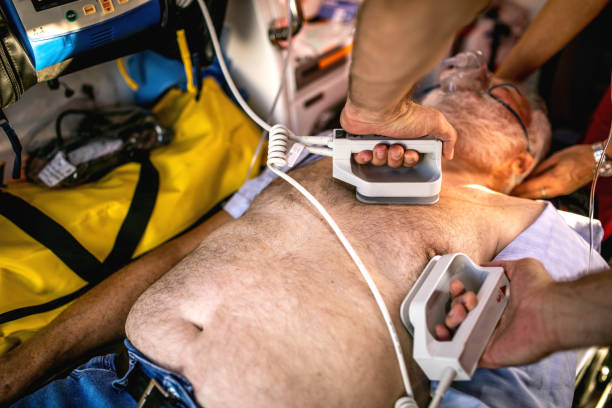
In addition to defibrillation, some professional systems may integrate other therapeutic and monitoring modes.
Unsynchronized Defibrillation
Unsynchronized defibrillation delivers a defibrillation pulse without timing the discharge to a specific point on the ECG waveform.
This function is used in situations where it is professionally indicated according to the applicable emergency-care protocol.
From an equipment-selection perspective, hospitals should evaluate controls, energy display, alarms, and readiness indicators for pulse delivery.
Synchronized Cardioversion
Synchronized cardioversion uses a mechanism that synchronizes electrical pulse delivery with the ECG signal.
According to ZOLL technical documentation, synchronized cardioversion systems may detect the R wave on the ECG and use that signal to control the timing of pulse delivery.
This is a different function from unsynchronized defibrillation.
When evaluating a device with synchronized mode, facilities should clarify:
- Does the device support this function?
- Where is the synchronization signal obtained?
- Is synchronized mode clearly indicated on the display?
- Are synchronization markers displayed?
- How does the device respond when the ECG signal is unsuitable?
Defibrillation mode and synchronized cardioversion should not be used interchangeably at the user's discretion. Mode selection falls within the scope of trained professional practice.
Transcutaneous Pacing
Some monitor-defibrillators also include transcutaneous pacing.
This function uses electrical pulses delivered through appropriate electrodes to support pacing where professionally indicated.
However, transcutaneous pacing is not available on every defibrillator.
When purchasing equipment, facilities should confirm:
- Is pacing integrated into the device?
- Are separate electrodes or cables required?
- Which parameters and modes are supported?
- Are additional licenses or accessories required?
ECG and Physiological Parameter Monitoring
For monitor-defibrillators, ECG is an important function that allows trained professionals to observe cardiac electrical activity.
Depending on the configuration, the system may also support additional parameters.
However, the monitor integrated into a defibrillator should not automatically be considered a full replacement for a multiparameter patient monitor intended for long-term monitoring. The intended use and actual operating capabilities of each system should be reviewed.
4. Basic Components of a Defibrillator
A professional defibrillator may include the following components:
| Component | Primary Function |
|---|---|
| Power supply and battery | Provide power to the system |
| Charging and energy-storage circuitry | Prepare energy for the defibrillation pulse |
| Pulse-control circuitry | Control pulse characteristics according to the design |
| Therapy electrodes | Deliver the electrical pulse through the designated contact positions |
| ECG acquisition unit | Acquire and display cardiac electrical signals |
| Control display | Display waveforms, status information, and alarms |
| Processor and software | Control operation, monitoring, and data storage |
| Printer or memory | Store, print, and export information where supported |
| Connectivity ports | Exchange data with other systems depending on the configuration |
Depending on the device, some components are integrated into the main unit, while other functions require additional accessories or modules.
An important consideration is the coordinated operation of the pulse-generation system, electrodes, ECG monitoring, and power supply.
5. How Should Defibrillation Electrodes and Accessories Be Evaluated?
Electrodes are directly involved in transmitting electrical energy from the device to the body.
Two common types used with external defibrillation systems are:
- Handheld paddles.
- Adhesive therapy pads.
Depending on the design, some defibrillators support both types, while others may be compatible with only a specific electrode group.
Handheld Paddles
Handheld paddles are accessories used with certain manual defibrillators.
When evaluating them, facilities should review:
- Compatibility with the device.
- Condition of the contact surfaces.
- Cables and connectors.
- Storage method.
- Cleaning method according to manufacturer instructions.
- Replacement availability if damaged.
Adhesive Therapy Pads
Adhesive therapy pads may be used with many professional defibrillation systems.
Depending on the device, certain pad types may support multiple functions such as defibrillation, synchronized cardioversion, or transcutaneous pacing.
However, it should not be assumed that one electrode type can be used for every function or with every device.
Facilities should confirm:
- Compatible electrode part number.
- Connector type.
- Supported patient groups.
- Expiration date.
- Storage conditions.
- Functions confirmed by the manufacturer.
- Availability in Vietnam.
In emergency and critical-care departments, electrodes are consumables that require regular inventory control. A properly functioning defibrillator without the correct compatible electrodes may not be ready for its intended use.
Use for Adults and Pediatric Patients
If the facility plans to use the device for both adults and pediatric patients, the configuration for each patient group should be confirmed according to the manufacturer's stated intended use.
Items to clarify include:
- Compatible electrodes or accessories.
- Energy-selection capability.
- Appropriate operating modes.
- Age or weight limitations where applicable.
- Other technical requirements.
It should not be assumed that every adult defibrillator can be used for pediatric patients without additional evaluation.
6. Charge Time, Battery, and Mobility
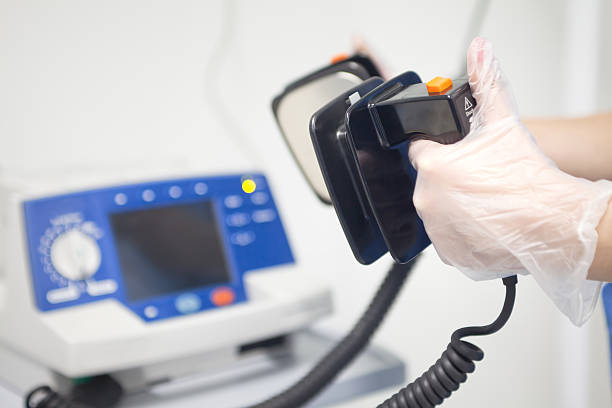
In emergency-care environments, the device needs to remain ready for use.
Therefore, in addition to defibrillation capability, power supply, charge time, and mobility are important factors to evaluate.
Energy Charge Time
A defibrillator requires a certain amount of time to prepare the selected energy before pulse delivery.
Charge time may vary depending on:
- Energy level.
- Power source being used.
- Battery condition.
- Test conditions.
- Device design.
Therefore, facilities should not compare only a single advertised charge-time figure without understanding the test conditions.
Hospitals may request that suppliers provide charge-time data for configurations relevant to their intended use.
Battery and Backup Power
Some devices can operate from both mains power and rechargeable batteries, allowing continued operation during transport or temporary interruption of the main power supply.
Facilities should review:
- Battery runtime.
- Full charging time.
- Battery replacement capability.
- Battery-status indicator.
- ECG monitoring capability while operating on battery power.
- Number of pulse deliveries under the manufacturer's stated test conditions.
- Cost and availability of replacement batteries.
A device may have a long stated monitoring runtime while still supporting only a limited number of pulse deliveries on battery power.
Mobility
If the device will be used in ambulances or moved between departments, facilities should evaluate:
- Weight.
- Dimensions.
- Carrying handle.
- Impact resistance according to the manufacturer's stated specifications.
- Dust and water protection rating where applicable.
- Mounting or securing systems.
- Storage for electrodes and accessories.
Mobility requirements for ambulance-based equipment should not automatically be applied to every stationary hospital defibrillator.
7. Readiness Checks and Defibrillator Maintenance
One important difference between defibrillators and many routine diagnostic devices is that a defibrillator may not be used frequently but must remain ready to operate when needed.
Therefore, management programs should not be based only on frequency of use.
Self-Test Functions
Some systems include a self-test function designed to assess important components according to the system design.
Depending on the device, the process may include:
- Battery status.
- Electronic circuitry.
- ECG system.
- Energy-charging and discharge circuitry.
- Compatible electrode status.
- Other components.
For example, the ZOLL R Series operating documentation describes a readiness-testing system that records test results in device memory.
However, the scope of self-testing varies between devices. A self-test function does not mean that every accessory, component, and function is comprehensively checked.
Equipment Checks as Part of Routine Management
Facilities should establish an inspection process consistent with manufacturer instructions.
Items may include:
- Readiness status displayed by the device.
- Power-supply and battery condition.
- Physical condition of the equipment.
- Cables and connectors.
- Availability and expiration status of electrodes.
- Associated accessories.
- Printer condition where applicable.
- Error notifications.
- Inspection and maintenance logs.
ZOLL R Series documentation also emphasizes checking device condition, accessories, and batteries to maintain readiness for use.
Periodic Technical Testing
In addition to self-tests, defibrillators may require evaluation using dedicated test equipment.
Depending on the model and facility management program, this may include:
- Functional testing.
- Verification of delivered energy.
- Charge-time testing.
- Synchronized-function testing where available.
- ECG monitoring checks.
- Alarm testing.
- Battery testing.
- Electrical safety testing.
- Testing of additional functions.
Tests involving electrical pulse delivery should be performed by authorized technical personnel using appropriate test equipment and procedures specified by the manufacturer.
Pulse-discharge testing should not be performed without suitable test conditions and safety measures.
8. Data Storage and Connectivity
Some monitor-defibrillators can store information generated during use.
Depending on the configuration, data may include:
- Time of operation.
- ECG waveforms.
- Electrical-pulse information.
- Monitoring data.
- Related events.
- Self-test results.
- Error logs.
This information may support equipment management, review of emergency-care activities, and quality-improvement programs.
Is HIS/EMR Integration Necessary?
Not every defibrillator needs to connect to the hospital information system.
For devices that need to export data, facilities should clarify:
- Which data formats can be exported?
- Can ECG recordings be stored?
- Is dedicated software required to review the data?
- Is network data transmission supported?
- Can information be linked to the patient's record?
- Are additional licenses or connectivity components required?
Having USB, LAN, or Wi-Fi connectivity does not mean that the device can automatically integrate with HIS/EMR.
Facilities should identify a clear operational benefit before investing in advanced data-management functions.
9. Ten Criteria for Selecting a Defibrillator for a Healthcare Facility
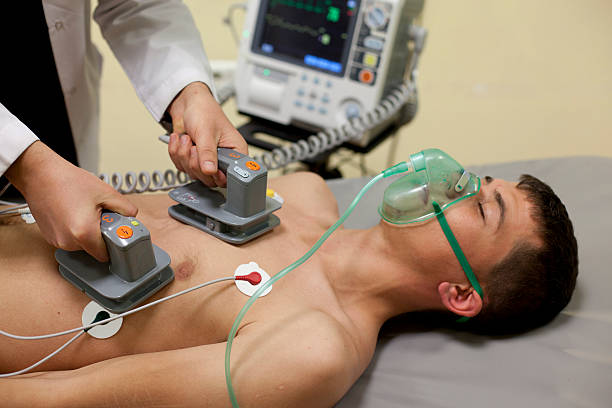
When comparing systems, hospitals may use the following evaluation framework:
| Criterion | What Should Be Evaluated? |
|---|---|
| 1. Intended use | Emergency department, ICU, operating room, ambulance, or other appropriate area |
| 2. Defibrillation technology | Waveform, pulse characteristics, and energy range |
| 3. Operating modes | Manual defibrillation, synchronized cardioversion, and AED mode where available |
| 4. Monitoring functions | ECG and supported physiological parameters |
| 5. Transcutaneous pacing | Integrated capability and compatible accessories where required |
| 6. Electrodes and accessories | Paddles, pads, cables, and supported patient groups |
| 7. Power supply and battery | Runtime, charging time, and replacement capability |
| 8. Testing and alarms | Self-test functions, readiness status, and fault alarms |
| 9. Technical support | Warranty, periodic testing, spare parts, and engineering capability |
| 10. Total lifecycle cost | Device, electrodes, batteries, accessories, software, and maintenance |
Common Mistakes When Investing in Defibrillators
Looking only at maximum energy: Failing to evaluate waveform, control capability, and test conditions.
Assuming every device supports synchronized mode: Some functions may not be available or may require a specific configuration.
Overlooking electrodes: Failing to confirm compatible part numbers, expiration dates, and supply availability in Vietnam.
Failing to evaluate battery runtime: The device may include a battery but provide insufficient operating time for the intended use.
Checking the device only after a problem occurs: Lacking a readiness-monitoring and accessory-management program.
Failing to account for technical-testing costs: Not clarifying requirements for energy-output testing, synchronization testing, and calibration or verification where needed.
Purchasing many functions without a clear operational need: Increasing accessory, software, and maintenance costs without corresponding operational value.
10. Questions to Ask Suppliers Before Purchasing a Defibrillator
Before selection, hospitals or emergency-care units may prepare the following questions:
1. Which defibrillation waveform does the device use, and what technical characteristics are stated by the manufacturer?
2. Which defibrillation, synchronized cardioversion, and pacing modes are supported?
3. Are ECG, SpO₂, blood pressure, or CO₂ monitoring functions included in the standard configuration?
4. Which electrodes, paddles, and cables does the device use?
5. Does the equipment include configurations appropriate for adults and pediatric patients according to its intended use?
6. Under what conditions are energy charge time and battery runtime evaluated?
7. Which components are covered by the self-test function?
8. Does the supplier support periodic technical testing using dedicated test equipment?
9. How are electrodes, batteries, and spare parts supplied in Vietnam?
10. What is the total multi-year cost including the device, accessories, testing, and maintenance?
Short Checklist Before Finalizing the Equipment
- Confirm the intended use and operating modes.
- Review waveform, pulse characteristics, and monitoring functions.
- Clarify electrodes, cables, and configuration for the intended patient groups.
- Evaluate battery performance, charge time, and mobility.
- Review self-test and readiness-alarm functions.
- Confirm maintenance, dedicated test-equipment requirements, and spare-parts support.
- Calculate total lifecycle cost rather than only the equipment purchase price.
Frequently Asked Questions About Defibrillators
Are a Cardiac Defibrillator and a Defibrillator the Same Device?
In most contexts, these terms refer to the same category of cardiac defibrillation equipment. In international technical documentation, the device is commonly called a cardiac defibrillator.
Can a Defibrillator Be Used for Every Cardiac Arrest?
No. Defibrillation is used for shockable arrhythmias such as ventricular fibrillation or pulseless ventricular tachycardia. Not every cardiac arrest rhythm is an indication for defibrillation.
How Do Monophasic and Biphasic Defibrillators Differ?
A monophasic device delivers an electrical pulse with current flowing in one direction, while a biphasic device changes the direction of current during the pulse. Biphasic technology is widely used in modern devices.
Is a Manual Defibrillator the Same as an AED?
Not exactly. A manual defibrillator allows trained professionals to control defibrillation functions, while an AED uses an algorithm to analyze the rhythm and support shock guidance. Some professional systems may integrate both modes.
Does a Defibrillator Include a Pacing Function?
Some monitor-defibrillators support transcutaneous pacing, but not every device includes this function. The exact configuration should be confirmed.
Does a Defibrillator Require Periodic Testing?
Yes. The device should be maintained in a ready-to-use condition, including checks of the power supply, battery, electrodes, operating status, and technical tests according to manufacturer instructions and the facility's equipment-management program.
This article is provided for informational purposes regarding the classification, functions, and selection criteria for defibrillators in healthcare facilities. It does not provide instructions on identifying shockable rhythms, selecting energy levels, positioning electrodes, or performing defibrillation during an emergency. These activities should be carried out by trained personnel according to clinical indications, manufacturer instructions, and professional procedures. The IEC standards mentioned are international technical references and do not automatically constitute mandatory legal requirements in Vietnam.
Prepare for Cardiac Emergency Equipment Investment at Pharmedi Vietnam 2027
For defibrillators, the ability to meet emergency-care needs depends on more than defibrillation technology. Equipment readiness, compatible electrodes, batteries, inspection programs, and technical support capability also directly influence long-term operational effectiveness.
Pharmedi Vietnam 2027, taking place from September 28–30, 2027 at the Saigon Exhibition and Convention Center (SECC), Ho Chi Minh City, provides an opportunity for businesses, professionals, and healthcare organizations to meet, explore technologies, and discuss medical equipment solutions that support healthcare delivery.
For hospitals, emergency-care units, and businesses interested in defibrillation equipment, Pharmedi Vietnam 2027 provides an opportunity to explore technology solutions, identify potential suppliers, and prepare the technical requirements that should be evaluated when selecting cardiac emergency systems.
When preparing an equipment-evaluation plan, organizations may proactively explore:
- Which defibrillation technologies and waveforms does the device support?
- Does the system combine ECG monitoring, synchronized cardioversion, or transcutaneous pacing?
- How are electrodes and accessories supplied in Vietnam?
- Do the battery and self-test functions meet the readiness requirements of the emergency department?
- Does the supplier support periodic technical testing and long-term spare-parts availability?
- How does total cost of ownership change when accessories and maintenance are included?
Preparing these criteria helps healthcare facilities compare solutions, evaluate their ability to meet emergency-care requirements, and develop an investment plan appropriate to actual operating conditions.
For cardiac emergency equipment, appropriate selection should focus on functions that meet professional needs, readiness for use, system reliability, and long-term operating costs.
Dates: September 28–30, 2027
Venue: Saigon Exhibition and Convention Center (SECC), Ho Chi Minh City
Exhibition Information: https://pharmed.vn/
Exhibitor registration, visitor registration, and program information will be updated according to official announcements from the Pharmedi Vietnam 2027 Organizing Committee.