


A plasma sterilizer is a common term for a group of low-temperature sterilization systems that typically use hydrogen peroxide (H₂O₂) combined with plasma technology to process compatible medical instruments. These systems are used in hospitals, sterile processing centers, and healthcare facilities that need to reprocess instruments that cannot tolerate the temperature or moisture conditions of steam sterilization.
Unlike steam sterilizers, hydrogen peroxide plasma systems do not use saturated steam under pressure as the sterilizing agent. Instead, they use hydrogen peroxide together with controlled processing stages to inactivate microorganisms.
However, low-temperature sterilization does not mean that every type of material or medical instrument can be processed. System effectiveness also depends on sterilant contact, instrument structure, dryness, packaging type, the cycle used, and the limitations specified by the manufacturer.
Therefore, when selecting a plasma sterilizer, healthcare facilities should evaluate the sterilization technology, compatible instrument list, lumen limitations, cycle-control system, consumables, safety requirements, and total operating cost.
This article focuses on the operating principles, applications, and selection criteria for hydrogen peroxide plasma sterilization systems used in healthcare facilities. It does not provide parameters or instructions for operating a specific sterilization cycle.
What Is a Plasma Sterilizer?
A hydrogen peroxide gas plasma sterilizer is a device that uses hydrogen peroxide together with a plasma-generation stage within a designed and controlled sterilization cycle.
This technology belongs to the low-temperature sterilization category and is commonly considered for instruments that are sensitive to heat or moisture but have been confirmed by the manufacturer as compatible with the method.
A system may include:
- Sterilization chamber.
- Vacuum system.
- Hydrogen peroxide delivery system.
- Sterilant distribution system.
- Plasma-generation unit.
- Sensors and control system.
- Operating display.
- Cycle recording and data-storage system.
- Protective and alarm mechanisms.
The actual configuration depends on the technology and design of each manufacturer.
According to the CDC, hydrogen peroxide gas plasma is a sterilization technology that uses hydrogen peroxide together with the generation of highly reactive species during the plasma phase, which act on essential microbial structures.
Is Plasma the Same as Hydrogen Peroxide Vapor?
Not exactly.
Two concepts should be distinguished:
Vaporized hydrogen peroxide (VH₂O₂) is a sterilizing agent used in many low-temperature sterilization systems.
Plasma is an energized gas state in which electrical energy creates charged particles and other highly reactive species.
In some systems, hydrogen peroxide is used together with a plasma-generation phase. However, there are also vaporized hydrogen peroxide sterilization systems that do not use plasma.
Therefore, not every low-temperature hydrogen peroxide sterilizer should automatically be considered a plasma sterilizer.
When evaluating a product, facilities should determine the exact technology, sterilizing agent, and cycles declared by the manufacturer.
How Does a Hydrogen Peroxide Plasma Sterilizer Work?

In principle, the device creates conditions that allow hydrogen peroxide to contact the surfaces requiring sterilization within a controlled cycle.
Depending on the system, the process may include the following stages.
1. Chamber conditioning: The system uses a vacuum or another mechanism to prepare the chamber for distribution of the sterilizing agent.
2. Hydrogen peroxide delivery: Hydrogen peroxide is introduced into the chamber according to the technology and device configuration.
3. Instrument exposure: The sterilizing agent is distributed so that it can contact surfaces within the validated processing scope.
4. Plasma generation: In systems using plasma technology, one stage of the cycle applies energy to generate plasma according to the design.
5. Cycle completion and control: The system performs the final stages, evaluates operating conditions, and displays completion status or warnings.
This is a general description and not a mandatory sequence for every device.
Role of Hydrogen Peroxide and Plasma
Hydrogen peroxide has oxidative activity and contributes to the inactivation of essential microbial components when appropriate contact conditions are achieved.
In gas plasma systems, the plasma phase may generate additional reactive species and may also participate in processing residual hydrogen peroxide, depending on the technology.
However, it should not be concluded that plasma is always the sole or most important factor responsible for sterilization effectiveness in every system.
Actual effectiveness must be validated for the complete cycle and the load types that the device is approved to process.
1. How Does a Plasma Sterilizer Differ from a Steam Sterilizer?
This distinction is important when developing a hospital sterilization equipment portfolio.
A steam sterilizer uses moist heat from saturated steam and is generally suitable for instruments that can tolerate heat and moisture.
In contrast, a hydrogen peroxide plasma sterilizer is designed to process compatible instrument groups under lower-temperature conditions.
| Criterion | Steam Sterilizer | H₂O₂ Plasma Sterilizer |
|---|---|---|
| Sterilizing agent | Saturated steam | Hydrogen peroxide, combined with a plasma phase according to the design |
| Primary principle | Moist heat | Chemical action of H₂O₂ and the system's processing stages |
| Processing environment | Higher temperature with steam | Low temperature, with load requirements specific to the process |
| Heat-resistant instruments | Generally suitable where permitted by the manufacturer | May be processable, but not automatically the necessary choice |
| Heat-sensitive instruments | Generally unsuitable if material limits are exceeded | May be suitable if compatibility has been confirmed |
| Important limitations | Heat tolerance, moisture tolerance, and steam penetration | Material compatibility, dryness, packaging, and H₂O₂ contact |
| Consumables | Depends on the system and monitoring program | H₂O₂, compatible packaging, and appropriate indicators |
| Quality control | According to the steam sterilization cycle | According to the specific hydrogen peroxide cycle |
The two methods should not be considered complete substitutes for one another.
For instruments that tolerate heat and moisture, steam sterilization is generally preferred when consistent with the reprocessing instructions. Low-temperature technologies are considered for instruments with specific requirements that steam sterilization cannot meet.
2. Which Instruments Can Be Sterilized with Plasma?
Plasma sterilizers may be considered for medical instruments that cannot tolerate the temperature or moisture conditions of steam sterilization.
However, the scope of use must be confirmed for each specific instrument.
Potentially Compatible Instruments
Depending on the design and manufacturer instructions, potentially suitable instrument groups may include:
- Certain heat-sensitive surgical instruments.
- Certain optical components.
- Instruments containing compatible plastics or polymers.
- Certain devices containing electrical or electronic components that are approved for reprocessing.
- Other medical instruments or accessories confirmed as compatible with a specific hydrogen peroxide cycle.
The list above should not be interpreted as general approval for every product within the same category.
For example, two endoscopic instruments with similar appearances may still have different sterilization instructions because of differences in materials, coatings, adhesives, or internal design.
Instruments That Are Unsuitable or Require Special Evaluation
According to the CDC comparison of sterilization technologies, hydrogen peroxide gas plasma systems have notable limitations for:
- Cellulose-containing materials such as ordinary paper.
- Fabrics and materials that are incompatible with the technology.
- Liquids.
- Certain long or narrow lumen instruments.
- Materials or structures not confirmed as compatible by the manufacturer.
In addition, some polymers, coatings, or instrument components may be affected by hydrogen peroxide after repeated reprocessing cycles.
Therefore, facilities should review the instrument manufacturer's reprocessing Instructions for Use (IFU) rather than relying only on the material name.
Compatibility Assessment Matrix
| Instrument/Material Group | What Should Be Confirmed Before Processing? |
|---|---|
| Metal | Compatibility and instrument structure |
| Plastics and polymers | Material limitations and reprocessing-cycle limits where applicable |
| Optical devices | Sterilization instructions and component protection requirements |
| Devices with electronic components | Scope permitted by the manufacturer |
| Lumen instruments | Diameter, length, structure, and appropriate cycle |
| Cellulose materials | Technology-specific limitations or exclusions |
| Liquids | Not processed in conventional gas plasma systems |
| Packaging | Material confirmed as compatible with the sterilizer and cycle |
The key point is that the ability to withstand low temperature does not by itself prove compatibility with hydrogen peroxide.
3. Why Are Lumen Instruments an Important Limitation?
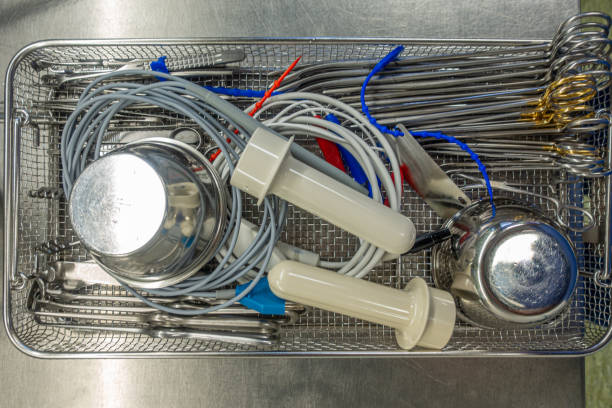
Lumen instruments require special evaluation when selecting a low-temperature sterilizer.
Some medical devices contain long, narrow pathways or complex internal structures. These characteristics may make it more difficult for the sterilizing agent to contact all surfaces that need to be processed.
According to the CDC, the effectiveness of hydrogen peroxide gas plasma may be affected by:
- Lumen length.
- Internal diameter.
- Residual salts or inorganic soil.
- Organic material.
- Accessibility of the sterilizing agent.
Therefore, a sterilizer having a lumen cycle does not mean that it can process every endoscope or every device with internal channels.
Which Specifications Should Be Checked?
Facilities should ask suppliers:
- Which lumen types does the sterilizer support?
- What minimum internal diameter is declared?
- What is the maximum supported length and under what conditions?
- Which materials do these limits apply to?
- Are there restrictions on the number of lumen devices in one load?
- Are specialized accessories or cycles required?
- What documentation validates processing capability for the intended load?
Limits from one model should not be applied to all plasma sterilization systems.
4. Cleaning and Drying Before Plasma Sterilization
A common misconception is that a plasma sterilizer can process instruments immediately after use without thorough cleaning.
In practice, cleaning remains a mandatory part of reusable medical device reprocessing according to appropriate instructions.
The FDA describes reprocessing as generally including initial treatment at the point of use, cleaning, and then disinfection or sterilization according to the intended use of the device.
Why Must Soil Be Removed?
Blood, tissue, salts, and other contaminants may interfere with contact between hydrogen peroxide and the surfaces requiring sterilization.
Instruments should therefore be cleaned, inspected, and prepared according to reprocessing instructions before being placed into an appropriate cycle.
A plasma sterilizer does not replace a washer-disinfector or the instrument-cleaning process.
How Does Residual Moisture Affect the Process?
Residual moisture is an important factor for many low-temperature hydrogen peroxide systems.
Depending on the technology, remaining water may affect vacuum conditions, sterilant distribution, or cause the cycle to be interrupted.
Facilities should therefore control:
- Surface dryness.
- Water remaining inside lumens.
- Cavities or areas that are difficult to dry.
- Drying methods permitted by the instrument manufacturer.
- Load-preparation requirements of the sterilizer.
It should not be assumed that the plasma cycle will completely dry instruments before sterilization.
5. Packaging and Instrument Arrangement in the Sterilization Chamber
Packaging directly affects sterilant contact and the ability to maintain sterility after processing.
Can Ordinary Paper Packaging Be Used?
For hydrogen peroxide gas plasma systems described by the CDC, cellulose-containing materials such as ordinary paper are not compatible with the process.
These systems commonly require compatible synthetic packaging materials, which may include certain types of:
- Polypropylene wraps.
- Polyolefin pouches.
- Specialized trays or containers.
- Other packaging materials validated as compatible.
However, not every synthetic pouch or film is suitable for every device.
Facilities should confirm:
packaging material + instrument + sterilizer + selected cycle.
How Does Load Arrangement Affect Performance?
Capacity should not be evaluated only by whether instruments physically fit inside the chamber.
A load that is too dense or improperly arranged may interfere with hydrogen peroxide distribution to the areas requiring processing.
When selecting equipment, facilities should review:
- Permitted load weight.
- Number of trays.
- Load arrangement.
- Spacing between packages according to instructions.
- Instruments that should not be processed together.
- Limitations of each cycle type.
Cycle-validation data should correspond to the types of loads that the facility actually intends to process.
6. Quality Control for Plasma Sterilization Cycles
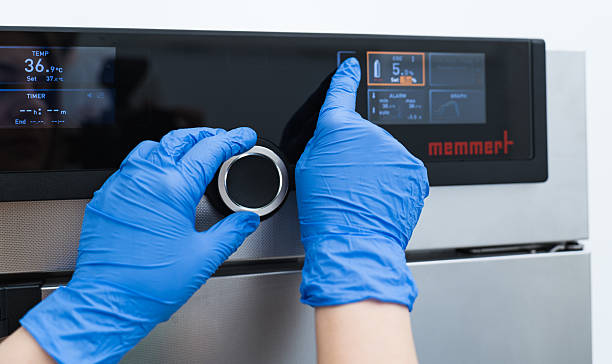
A completed cycle without a fault message is important information, but it should not be considered the only evidence that every instrument in the load has met sterilization requirements.
Facilities should combine monitoring and control methods appropriate to the technology.
Monitoring of System Parameters
Depending on the design, the system may record:
- Cycle time.
- Temperature.
- Pressure or vacuum status.
- Parameters related to the sterilizing agent.
- Processing stages.
- Warnings and error codes.
- Cycle-completion results.
The range of parameters recorded or displayed differs among manufacturers.
Chemical Indicators
A chemical indicator (CI) provides information showing that it has been exposed to the conditions it was designed to detect.
Some indicators are specifically developed for vaporized hydrogen peroxide or gas plasma processes.
However:
A chemical indicator changing color does not by itself prove that the entire load has been successfully sterilized.
The indicator should be selected for the correct technology and interpreted according to the manufacturer's instructions.
Biological Indicators
A biological indicator (BI) uses indicator microorganisms to evaluate microbial inactivation performance under appropriate test conditions.
For some hydrogen peroxide systems, biological indicators may use spores of Geobacillus stearothermophilus.
However, it should not be assumed that a single BI type can be used for every device or every hydrogen peroxide cycle.
Facilities should confirm:
- Which technology is the BI designed for?
- Is it compatible with the exact sterilizer and cycle?
- Where should the indicator be placed according to the procedure?
- Which reader or incubator is required?
- What are the result-acceptance criteria?
- What action is required if the result is unacceptable?
Distinguishing the Control Methods
| Method | Primary Role |
|---|---|
| Cycle data | Record and evaluate operating parameters |
| Chemical indicator | Provide information about exposure to conditions the indicator is designed to detect |
| Biological indicator | Evaluate microbial inactivation performance under appropriate conditions |
| Process validation | Demonstrate that the process meets requirements for defined load types and conditions |
| Routine-control records | Support traceability, review, and incident investigation |
Unlike steam sterilizers, which may use specific tests such as the Bowie–Dick test within their applicable scope, plasma systems require test methods designed and validated for the relevant hydrogen peroxide technology.
Steam-sterilizer test methods should not be applied directly to plasma sterilizers.
7. Technical Standards to Consider
An important standard for this technology group is ISO 22441:2022 – Sterilization of health care products — Low temperature vaporized hydrogen peroxide.
The standard specifies requirements related to:
- Development of the sterilization process.
- Process validation.
- Routine monitoring and control.
- Characteristics of the sterilizing agent and equipment.
- Controls for product categories within the applicable scope.
ISO 22441:2022 applies to processes using vaporized hydrogen peroxide as the sterilizing agent.
This does not mean that every device marketed as a “plasma sterilizer” automatically complies with or falls fully within the scope of ISO 22441.
Hospitals should determine the actual technology used by the device and ask suppliers to clearly explain which standards are used to assess the system.
How Does the FDA Classify Hydrogen Peroxide Sterilization Technology?
In January 2024, the FDA placed vaporized hydrogen peroxide (VH₂O₂) in Established Category A in its guidance on sterilization methods for medical devices.
This update reflects recognition of vaporized hydrogen peroxide as an established sterilization method within the FDA's regulatory framework.
However, this is a classification related to medical-device regulatory submissions in the United States and does not represent automatic approval of every plasma sterilizer model or every type of instrument.
8. Safety Requirements for Plasma Sterilizers
Although these systems generally operate at lower temperatures than steam sterilizers, hydrogen peroxide plasma sterilizers still use a chemical agent that requires appropriate safety management.
The technology should not be interpreted as completely risk-free for operators.
Hydrogen Peroxide Management
Depending on the device, hydrogen peroxide may be supplied through:
- Dedicated chemical cartridges.
- Bottles or containers according to the design.
- A compatible chemical-delivery system.
Facilities should verify:
- Which chemical product is approved for use.
- Concentration according to the product configuration.
- Packaging and chemical-delivery mechanism.
- Storage conditions.
- Expiration date.
- Procedures for alarms or incidents.
- Chemical-safety instructions.
Standard hydrogen peroxide should not be substituted simply because it contains the same active ingredient.
Leakage and Chemical Exposure
Hydrogen peroxide at inappropriate concentrations or exposure levels may present risks to operating personnel.
Facilities should therefore assess:
- Leakage-control mechanisms.
- Chamber-status monitoring.
- Alarm systems.
- Ventilation at the installation site.
- Incident-response procedures.
- Training and protective-equipment requirements.
Chemical-safety documentation and applicable requirements should be reviewed. A single exposure threshold should not be used as a substitute for a complete risk assessment.
Is Aeration Required After Sterilization?
One advantage of some hydrogen peroxide gas plasma systems is that they do not require a prolonged aeration phase like ethylene oxide (EO) technology when operating within validated cycles.
However, it should not be assumed that every system can be opened or unloaded under any condition.
Cycle completion, residual hydrogen peroxide control, and the permitted time for unloading should follow the design, alarms, and manufacturer instructions.
9. Capacity, Infrastructure, and Operating Cost
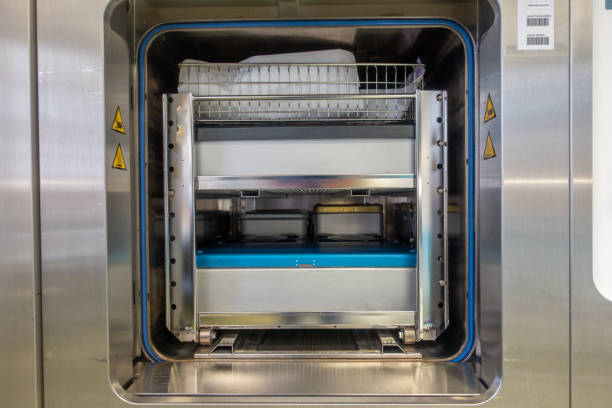
When investing in a plasma sterilizer for a hospital or CSSD, chamber capacity is an important consideration but does not determine overall processing capability.
Actual Processing Capacity
Facilities should determine:
- Number of instrument sets requiring processing each day.
- Proportion of instruments unsuitable for steam sterilization.
- Permitted load types.
- Number of trays and loading configuration.
- Duration of each cycle.
- Preparation and unloading time.
- Ability to maintain operations while the sterilizer is under maintenance.
A sterilizer with a shorter cycle but a smaller permitted load may not necessarily meet operational needs better than a larger-chamber system with a longer cycle.
Facilities should evaluate processing capacity for the actual load types, rather than relying only on chamber volume in liters.
Infrastructure Requirements
Depending on the equipment, required infrastructure may include:
- Electrical power.
- Grounding system.
- Installation space.
- Ventilation.
- Temperature and humidity conditions.
- Chemical-storage location.
- Loading and unloading space.
- Maintenance access.
- Computer or data network where required.
It should not be assumed that every plasma sterilizer can operate appropriately in every facility using only a standard electrical outlet.
Total Lifecycle Cost
In addition to equipment purchase price, facilities should account for:
- Hydrogen peroxide.
- Compatible packaging.
- Chemical indicators.
- Biological indicators.
- Trays and accessories.
- Indicator readers where required.
- Maintenance.
- Spare parts.
- Calibration or verification where appropriate.
- Training.
- Software and data storage.
- Costs associated with service interruption when the sterilizer is unavailable.
For facilities processing relatively few heat-sensitive instruments, the cost per cycle should also be evaluated before making an investment decision.
10. Criteria for Selecting a Plasma Sterilizer for a Hospital
When comparing systems, healthcare facilities may use the following evaluation framework:
| Criterion | What Should Be Evaluated? |
|---|---|
| 1. Sterilization technology | H₂O₂ gas plasma or VH₂O₂ without plasma; supported cycles |
| 2. Compatible instruments | Materials, structures, and reprocessing instructions |
| 3. Lumen processing capability | Length, diameter, and load-type limitations |
| 4. Chamber size and capacity | Number of trays, permitted load, and cycle duration |
| 5. Packaging and consumables | Compatible materials, chemicals, and supply availability |
| 6. Cycle control | Parameters, alarms, indicators, and test data |
| 7. Chemical safety | Protective mechanisms, chemical storage, and incident management |
| 8. Infrastructure | Electrical power, ventilation, space, and environmental conditions |
| 9. Technical service | Warranty, maintenance, spare parts, and training |
| 10. Total lifecycle cost | Equipment, chemicals, packaging, indicators, maintenance, and downtime |
Common Mistakes When Investing in Plasma Sterilization
Assuming plasma can process every heat-sensitive instrument: Failing to confirm material and instrument-structure compatibility.
Ignoring lumen limitations: Failing to compare lumen diameter and length with the declared cycle limits.
Using incompatible packaging: Applying packaging materials used for steam sterilization to hydrogen peroxide systems without confirming compatibility.
Loading instruments while still wet: Failing to control load-preparation conditions, which may affect the cycle.
Relying only on a completed-cycle message: Failing to establish an appropriate indicator and monitoring program.
Comparing only cycle time: Failing to account for actual processing capacity or consumable cost per load.
Ignoring chemical and spare-parts supply: The equipment may become unavailable when compatible supplies are not available.
11. Questions to Ask Suppliers Before Purchasing a Plasma Sterilizer
Before selection, hospitals or CSSDs should clarify:
1. Which hydrogen peroxide technology does the sterilizer use, and does it include a plasma-generation phase?
2. Which instrument and material groups has the system been validated to process?
3. What lumen limitations are declared?
4. Which cycles are available and what load ranges correspond to each cycle?
5. Which packaging materials and chemical products are required?
6. How are cycle data recorded, printed, and retrieved?
7. Which chemical indicators, biological indicators, and test methods are compatible?
8. Which protective mechanisms and hydrogen peroxide safety requirements apply?
9. How are chemicals, accessories, spare parts, and technical services supplied in Vietnam?
10. What costs are included in multi-year implementation and operation?
Short Checklist Before Finalizing the Equipment
- Identify the instruments requiring low-temperature sterilization.
- Compare the instrument reprocessing instructions with the sterilizer technology.
- Check material compatibility and lumen limitations.
- Confirm drying, packaging, and load-arrangement requirements.
- Evaluate the cycle-control system and indicators.
- Check chemical-safety and installation-infrastructure requirements.
- Clarify consumable supply, maintenance, and lifecycle cost.
Frequently Asked Questions About Plasma Sterilizers

What Is a Plasma Sterilizer?
This is a common term for a low-temperature sterilizer that uses hydrogen peroxide together with plasma technology. Technically, the device does not operate according to the saturated-steam principle used by conventional steam sterilizers.
Can a Plasma Sterilizer Process Every Medical Instrument?
No. Processing capability depends on material, instrument structure, packaging method, cycle, and the manufacturer's reprocessing instructions.
Can a Plasma Sterilizer Process Lumen Instruments?
Some systems can process certain lumen instruments within validated limits. However, lumen length, internal diameter, material, and cycle configuration may all affect processing capability.
Why Should Ordinary Paper Not Be Used in a Plasma Sterilizer?
For many hydrogen peroxide gas plasma systems, cellulose-containing materials are incompatible with the technology. Packaging should be confirmed by the manufacturer as compatible with the device and cycle.
Do Instruments Need to Be Dried Before Plasma Sterilization?
Yes. Low-temperature hydrogen peroxide systems generally require instruments to be appropriately prepared and dried. Residual water may affect cycle conditions or sterilant contact.
Can Plasma Sterilization Replace Steam Sterilization?
The two technologies should not be considered complete substitutes for one another. Steam sterilization is generally preferred for instruments that tolerate heat and moisture, while hydrogen peroxide plasma may be considered for compatible heat-sensitive instruments.
Does Plasma Sterilization Require Cycle Quality Control?
Yes. Facilities should combine parameter monitoring, appropriate indicators, and validated control procedures. A completed-cycle message or chemical-indicator color change does not by itself prove that the entire load has been successfully sterilized.
This article is provided for informational purposes regarding the operating principles, applications, and selection criteria for hydrogen peroxide plasma sterilizers used in healthcare facilities. It does not provide parameters, instructions for handling chemicals, or instructions for operating a specific sterilization cycle. Technology selection, instrument compatibility validation, quality control, and chemical handling should follow manufacturer instructions, professional procedures, and applicable requirements. The international standards mentioned do not automatically constitute mandatory legal requirements in Vietnam.
Explore Low-Temperature Sterilization Technologies at Pharmedi Vietnam 2027
For hospitals and central sterile processing departments, investment in plasma sterilization should begin with the list of instruments that are unsuitable for steam sterilization, followed by an evaluation of the technology, material compatibility, processing capacity, and operating costs.
In particular, limitations involving lumen instruments, packaging, and cycle-control capability make direct discussion with suppliers especially important before equipment selection.
Pharmedi Vietnam 2027, taking place from September 28–30, 2027 at the Saigon Exhibition and Convention Center (SECC), Ho Chi Minh City, provides an opportunity for businesses, professionals, and healthcare organizations to meet, explore technologies, and discuss equipment solutions that support healthcare delivery, infection control, and medical instrument sterilization.
For hospitals preparing to upgrade their instrument-reprocessing systems, Pharmedi Vietnam 2027 provides an opportunity to explore technology solutions, identify potential suppliers, and define the technical requirements that should be evaluated when selecting low-temperature sterilization equipment.
Before meeting with suppliers, healthcare facilities may proactively explore:
- Does the system use hydrogen peroxide plasma or another vaporized hydrogen peroxide technology?
- Which instruments and materials are confirmed as compatible?
- What are the lumen-processing limitations?
- Which chemicals, packaging materials, and indicators are required?
- How are cycle control and chemical safety designed?
- What are the actual processing capacity and cost per cycle?
- Are spare parts, chemicals, and technical services supplied reliably in Vietnam?
Preparing these criteria helps hospitals compare solutions, evaluate compatibility with their existing instrument inventory, and develop an investment plan that matches actual sterilization needs.
For long-term investment planning, sterilization technology should be selected based on compatibility among the equipment, instruments, quality-control process, and real-world operating conditions, rather than only on advertised cycle speed or technology.
Dates: September 28–30, 2027
Venue: Saigon Exhibition and Convention Center (SECC), Ho Chi Minh City
Exhibition Information: https://pharmed.vn/
Exhibitor registration, visitor registration, and program information will be updated according to official announcements from the Pharmedi Vietnam 2027 Organizing Committee.