


A blood gas analyzer is a laboratory device used to analyze blood samples and determine parameters related to acid–base balance and the partial pressures of oxygen and carbon dioxide. This equipment plays an important role in Intensive Care Units (ICUs), Emergency Departments, laboratories, and healthcare settings requiring point-of-care testing.
Modern blood gas analyzers may integrate functions beyond the three basic parameters of pH, pCO₂, and pO₂, including measurements of electrolytes, glucose, lactate, and hemoglobin fractions. Some devices use integrated cartridge or cassette technology to simplify consumable replacement and maintenance management.
However, selecting a blood gas analyzer involves more than comparing the number of test parameters or turnaround time. Healthcare facilities should also evaluate sensor accuracy, required sample volume, reagent technology, calibration mechanisms, quality control, LIS connectivity, and total operating costs.
In particular, blood gas results can be affected by pre-analytical factors such as sample quality, air bubbles, transport time, and inappropriate anticoagulants. Equipment performance should therefore be evaluated alongside the entire laboratory testing workflow.
This article focuses on the operating principles, analytical technologies, technical requirements, and selection criteria for blood gas analyzers used in hospitals and clinical laboratories.
What Is a Blood Gas Analyzer?
A blood gas analyzer is an in vitro diagnostic (IVD) device that uses specialized measurement methods to analyze parameters related to dissolved gases and acid–base status in blood samples.
The three fundamental parameters commonly measured directly are:
- pH: reflects hydrogen ion activity in the sample.
- pCO₂: partial pressure of carbon dioxide.
- pO₂: partial pressure of oxygen.
Depending on the configuration, the analyzer may also measure additional parameters such as:
- Sodium (Na⁺).
- Potassium (K⁺).
- Chloride (Cl⁻).
- Ionized calcium (iCa²⁺).
- Glucose.
- Lactate.
- Total hemoglobin (tHb).
- Hemoglobin fractions associated with oxygen transport.
Based on directly measured parameters, the software may also calculate bicarbonate (HCO₃⁻), base excess (BE), and other derived indices using integrated algorithms.
According to CLSI C46 – Blood Gas and pH Analysis and Related Measurements, blood gas testing requires appropriate control of pre-analytical factors, measurement characteristics, calibration, and result quality.
Is a Blood Gas Analyzer the Same as a Clinical Chemistry Analyzer?
Not exactly.
Some blood gas analyzers can measure glucose, lactate, and electrolytes, which are also commonly tested using clinical chemistry systems.
However, blood gas analyzers are specifically designed for blood gas parameters and related tests, typically using whole-blood samples.
Clinical chemistry analyzers, in contrast, have different testing capabilities, analytical principles, and sample-processing requirements.
Although the two systems may provide some overlapping parameters, their results should not automatically be considered equivalent or directly interchangeable in every situation.
1. Operating Principle of a Blood Gas Analyzer
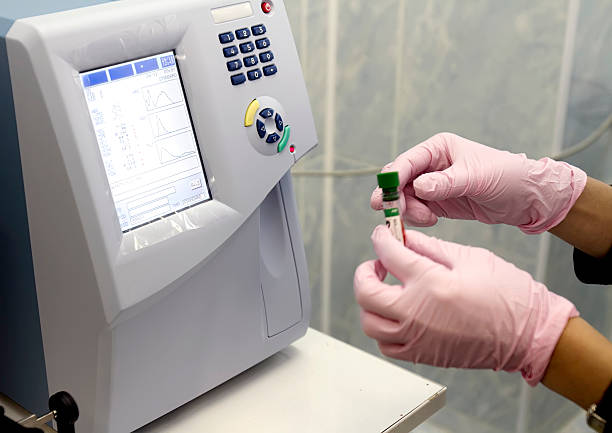
Blood gas analyzers commonly use electrochemical sensors to determine pH, pCO₂, and pO₂.
Depending on the design, the equipment may also incorporate ion-selective electrodes, enzyme-based sensors, and optical measurement systems.
The analytical process can be summarized as follows:
1. The sample is introduced into the analyzer using a compatible collection device.
2. The system directs the sample to the measurement sensors.
3. Each sensor generates a signal related to the target analyte.
4. The processor converts the signals into analytical results.
5. The software calculates derived parameters.
6. Results are displayed, stored, or transmitted to a management system.
Not every parameter displayed in a blood gas report is measured directly. This distinction is important when comparing different blood gas analyzers.
pH Measurement Sensor
pH is commonly measured using potentiometry, which employs an electrode sensitive to hydrogen ion activity.
The system measures the potential difference between the measuring electrode and a reference electrode, then converts the signal into a pH value according to the sensor's characteristics.
Accuracy is influenced by electrode condition, calibration, temperature, and operating conditions.
pCO₂ Measurement Sensor
One commonly used measurement principle is the Severinghaus electrode.
CO₂ diffuses through a gas-permeable membrane and changes the pH of an electrolyte solution inside the sensor.
This change is detected by a pH-sensitive electrode, allowing the system to determine pCO₂.
The Severinghaus principle is based on potentiometric measurement and differs from the principle commonly used to measure oxygen.
pO₂ Measurement Sensor
pO₂ is commonly measured using a Clark electrode based on amperometry.
Oxygen diffuses through the sensor membrane and participates in an electrochemical reaction at the electrode.
The resulting electrical current is related to the partial pressure of oxygen according to the sensor design.
Newer systems may use improved sensor structures, but electrochemical measurement remains an important foundation of many blood gas analyzers.
Summary of Measurement Principles
| Parameter | Common Measurement Principle | Characteristics |
|---|---|---|
| pH | Hydrogen ion-sensitive electrode | Potentiometric measurement |
| pCO₂ | Severinghaus electrode | Potentiometric measurement through changes in pH |
| pO₂ | Clark electrode | Amperometric measurement |
| Na⁺, K⁺, Cl⁻, iCa²⁺ | Ion-selective electrodes (ISE) | Measurement of electrical potential related to ion activity |
| Glucose, lactate | Enzyme-based electrochemical sensors | Conversion of biochemical reactions into measurable signals |
| Hemoglobin fractions | Multiwavelength spectrophotometry in systems with co-oximetry | Analysis of light-absorption characteristics |
Each measurement method has its own limitations and control requirements. Healthcare facilities should not evaluate equipment quality solely on the name of the sensor technology.
2. Common Parameters Provided by Blood Gas Analyzers
The available test menu depends on the equipment configuration, sensors, and cartridges used.
Parameters can be divided into three main groups.
Basic Blood Gas Parameters
| Parameter | Full Name | Technical Meaning |
|---|---|---|
| pH | Potential of Hydrogen | Reflects hydrogen ion activity |
| pCO₂ | Partial Pressure of Carbon Dioxide | Partial pressure of CO₂ |
| pO₂ | Partial Pressure of Oxygen | Partial pressure of O₂ |
| HCO₃⁻ | Bicarbonate | Commonly calculated from pH and pCO₂ |
| BE | Base Excess | A calculated parameter related to acid–base balance |
| tCO₂ | Total Carbon Dioxide | May be a calculated value depending on the system |
Electrolytes and Metabolites
Some blood gas analyzers also support additional measurements such as:
- Na⁺.
- K⁺.
- Cl⁻.
- iCa²⁺.
- Glucose.
- Lactate.
These parameters are measured using corresponding sensors according to the equipment configuration.
A basic blood gas analyzer should not automatically be assumed to support a complete electrolyte panel or lactate testing.
Hemoglobin Parameters and Co-Oximetry
Some systems include co-oximetry, which uses optical measurement technology to analyze different hemoglobin fractions.
Supported parameters may include:
- Total hemoglobin (tHb).
- Oxyhemoglobin (O₂Hb).
- Deoxyhemoglobin (HHb).
- Carboxyhemoglobin (COHb).
- Methemoglobin (MetHb).
- Oxygen saturation (sO₂), according to the supported measurement method.
These functions should be confirmed separately in the technical specifications.
Distinguishing Directly Measured and Calculated Parameters
Some analyzers measure only pH, pCO₂, and pO₂ directly but still display HCO₃⁻, BE, or sO₂.
This is possible because the software calculates derived values from directly measured parameters.
| Category | Examples |
|---|---|
| Directly measured | pH, pCO₂, pO₂ |
| Additional measurements when corresponding sensors are available | Na⁺, K⁺, iCa²⁺, glucose, lactate |
| Measured using co-oximetry when equipped | tHb, hemoglobin fractions, and related parameters |
| Calculated | HCO₃⁻, BE, certain sO₂ values, and other derived indices |
In particular, sO₂ may be measured using co-oximetry or estimated from other parameters, depending on the analyzer.
A calculated sO₂ value should not automatically be considered equivalent to a result measured directly by co-oximetry.
Similarly, hemoglobin calculated from hematocrit in certain systems is not equivalent to hemoglobin measured using an optical method.
When comparing quotations, hospitals should ask suppliers to clearly distinguish between measured parameters and calculated parameters.
3. Common Types of Blood Gas Analyzers
Blood gas analyzers can be classified according to their size, intended operating environment, and consumable technology.
Benchtop Blood Gas Analyzer
Benchtop systems are commonly installed in laboratories, ICUs, or other appropriate rapid-testing areas.
The equipment may integrate:
- Sensor modules.
- Sample introduction system.
- Analysis software.
- Control display.
- Printer.
- Data storage.
- Reagent system, calibration solutions, or cartridges.
Some models support multiple parameters within a single analytical run.
When selecting a system, facilities should consider actual throughput, operational readiness, and ongoing maintenance costs.
Cartridge- or Cassette-Based Blood Gas Analyzer
Some modern systems use integrated cartridges or cassettes containing sensors and other components required for analysis.
For example, the Siemens Healthineers RAPIDPoint 500e system uses measurement cartridges containing sensors and related components. The device also supports automated quality-control programs according to its configuration.
This technology can help simplify consumable replacement procedures.
However, cartridges typically have limitations such as:
- Shelf life before installation.
- Usable period after installation.
- Maximum number of tests.
- Storage conditions.
- Initialization time after cartridge replacement.
A cartridge that has not reached its expiration date does not necessarily have enough remaining capacity to perform the expected number of tests.
Healthcare facilities should evaluate both time-based limitations and test-count limits.
Handheld Blood Gas Analyzer
Some systems use a portable reader together with single-use cartridges or other dedicated consumables.
These devices may support Point-of-Care Testing (POCT) in appropriate healthcare environments.
Important selection criteria include:
- Weight and portability.
- Required sample volume.
- Available cartridge types.
- Turnaround time.
- Operator-management capability.
- Quality control.
- Data connectivity.
- Consumable-storage requirements.
Handheld analyzers should not automatically be assumed to provide the same testing menu or quality-control capabilities as all benchtop systems.
Comparison of Blood Gas Analyzer Categories
| Criterion | Benchtop Analyzer | Cartridge/Cassette-Based Analyzer | Handheld Analyzer |
|---|---|---|---|
| Use environment | Laboratory or designated testing area | Depends on the design | Emphasizes portability |
| Test menu | Depends on the configuration | Depends on cartridge/cassette type | Depends on cartridge type |
| Consumables | Sensors, reagents, and solutions depending on the system | Cartridges/cassettes and related consumables | Dedicated cartridges |
| Quality control | According to the equipment's QC program | May include automated QC | According to dedicated instructions |
| Data connectivity | Depends on the model | Depends on the model | Depends on the model |
| Actual operating costs | Depend on sample volume and ongoing operating costs | Depend on sample volume, cartridge validity, and consumables | Depend on cartridge costs and POCT management |
These categories may overlap. A benchtop analyzer may use cartridges, while a POCT system does not necessarily have to be handheld.
4. Main Components of a Blood Gas Analyzer
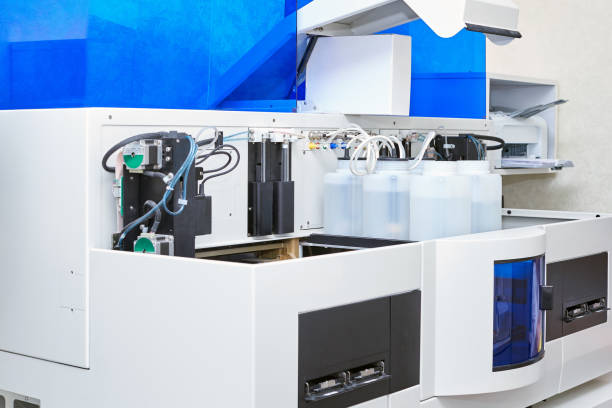
Depending on the manufacturer, a blood gas analyzer may include the following main components:
| Component | Function |
|---|---|
| Sample inlet | Receives samples from compatible collection devices |
| Sample transport system | Directs samples to the analytical area |
| Blood gas sensors | Measure pH, pCO₂, and pO₂ |
| Additional sensors | Measure electrolytes and metabolites when equipped |
| Co-oximetry module | Performs optical hemoglobin analysis |
| Calibration system | Controls the measurement characteristics of sensors |
| QC system | Monitors analytical quality |
| Processor and software | Process data and generate reports |
| Cleaning and waste-management system | Manages sample pathways and waste according to the design |
| Connectivity interfaces | Exchange data with relevant information systems |
Sample Inlet
Some systems support samples introduced from compatible syringes or capillary tubes.
Other models require dedicated collection devices or cartridges.
When purchasing equipment, facilities should clarify:
- Supported sample-introduction devices.
- Minimum sample volume.
- Anticoagulant requirements.
- Sample-loading error detection.
- Limitations for each sample type.
Sample Transport System
The sample pathway may include tubing, valves, measurement chambers, and related components.
In reusable analytical systems, the equipment should include appropriate mechanisms for managing blockages, deposits, or contamination according to its design.
Some models can detect air bubbles or clots, but the detection capabilities should be confirmed in the technical documentation for the specific device.
Reagent and Waste-Management Components
Blood gas analyzers may use:
- Calibration solutions.
- Cleaning solutions.
- Quality-control materials.
- Sensor cartridges.
- Waste containers or bags.
- Other accessories.
Healthcare facilities should evaluate replacement procedures, storage conditions, usable life, and waste-disposal requirements.
Cartridge-based equipment should not be considered completely maintenance-free or exempt from consumable management.
5. Pre-Analytical Factors Affecting Blood Gas Results
For blood gas testing, the pre-analytical phase has a significant impact on result reliability.
Problems may occur before the sample is introduced into the analyzer.
Sample Type
Depending on the intended clinical application and the manufacturer's stated scope of use, the system may support:
- Arterial blood.
- Venous blood.
- Capillary blood.
- Other specialized sample types when validated and supported.
These sample types should not automatically be considered equivalent.
In particular, pO₂ values may differ substantially among sample types.
Therefore, the software and laboratory workflow should accurately record sample type to prevent misinterpretation of results.
Air Bubbles in Blood Samples
Air bubbles can alter the gas equilibrium between the blood sample and the surrounding environment.
This may affect blood gas parameters, particularly pO₂ and pCO₂.
Facilities should therefore establish appropriate sample-control procedures before analysis.
Sample Transport Time
After collection, blood cells may continue their metabolic activity.
In addition, gas diffusion and changes in environmental conditions may affect test results.
The time between sample collection and analysis should therefore be controlled according to an established and validated procedure.
A single fixed maximum storage period should not be applied to all sample types, collection devices, and transport conditions.
Anticoagulants
Some blood gas samples are collected using appropriate heparin-containing devices.
However, the type of heparin, anticoagulant quantity, and sample dilution may affect certain results, particularly when the analyzer includes electrolyte testing.
Healthcare facilities should review the manufacturer's requirements for compatible sample-collection devices.
Clots and Sample Quality
Clotted or poorly mixed samples may obstruct the sample pathway, affect sensors, or produce unreliable results.
Some analyzers include functions for detecting abnormal sample conditions, but these should not be considered substitutes for an appropriate sample-management procedure.
Blood gas result quality depends on both analyzer performance and pre-analytical sample management.
6. Calibration and Quality Control of Blood Gas Analyzers
Calibration and quality control are related activities, but they are not identical.
Calibration
Calibration is the process of establishing or verifying the relationship between sensor signals and measured values using appropriate reference materials and methods.
Depending on the technology, an analyzer may perform:
- Automatic calibration.
- Calibration at defined intervals.
- Sensor checks after cartridge replacement.
- Other calibration activities specified by the manufacturer.
Some devices incorporate calibration materials into their consumable systems.
However, automatic calibration does not mean that the equipment will always meet quality requirements under every operating condition.
Internal Quality Control (IQC)
Internal Quality Control (IQC) is used to monitor the stability and analytical performance of the testing system.
Depending on the QC program, facilities may use control materials at different levels.
Software functions may include:
- QC result storage.
- Detection of results outside acceptable limits.
- Trend display.
- QC scheduling.
- Lockout or restriction of testing when QC fails, according to configuration.
- Quality-report export.
Some systems, such as the Radiometer ABL90 FLEX PLUS, provide automated quality-management functions that integrate calibration checks, QC, and other system components.
However, the degree of automation and the independence of QC materials should be evaluated for each model.
External Quality Assessment (EQA)
External Quality Assessment (EQA) evaluates laboratory performance through an external program, which may include appropriate interlaboratory comparisons.
IQC and EQA serve complementary purposes.
Facilities should not assume that an analyzer with automated QC is exempt from participating in applicable external quality-assessment activities.
ISO 15189:2022 Standard
ISO 15189:2022 – Medical laboratories: Requirements for quality and competence specifies requirements for the quality and competence of medical laboratories.
This edition also includes requirements applicable to Point-of-Care Testing (POCT).
Notably, ISO 15189:2022 incorporates POCT requirements previously addressed by ISO 22870:2016, which has since been withdrawn by ISO.
For healthcare facilities implementing blood gas analyzers in ICUs or Emergency Departments, particular attention should be given to coordination between the laboratory and the departments operating the equipment.
Reference to ISO 15189:2022 provides a framework for quality management and does not automatically mean that every healthcare facility in Vietnam must obtain accreditation under this standard.
7. Testing Capacity and Turnaround Time
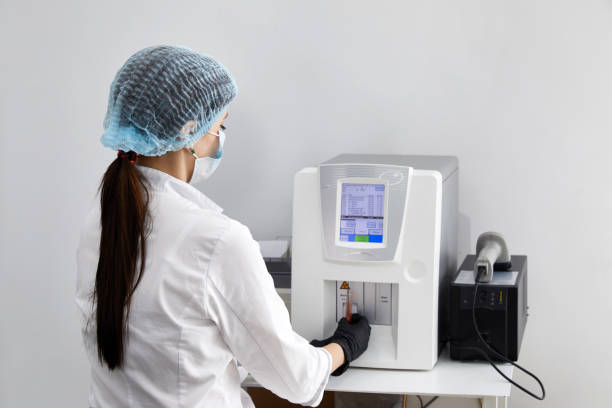
One of the commonly promoted advantages of blood gas analyzers is their ability to deliver results quickly.
However, the analytical time for a single sample should be distinguished from the time required to complete the entire testing workflow.
Analysis Time
Manufacturers commonly specify the time required for the analyzer to process a sample under defined conditions.
For example, Siemens Healthineers states that the RAPIDPoint 500e system can provide results in approximately 60 seconds, depending on the product configuration and test conditions.
However, this time does not include every pre-analytical and post-analytical activity.
Actual Turnaround Time
Total turnaround time may include:
- Test request reception.
- Sample collection and transport.
- Sample identification.
- Analyzer status verification.
- Sample introduction.
- Analysis.
- Result review and validation.
- Data transmission.
- Reporting results to the requesting department.
Therefore, a fast analytical time does not automatically ensure a short overall turnaround time if sample management and information workflows are not appropriately organized.
Throughput and Sample Volume
When assessing testing capacity, facilities should consider:
- Expected number of tests per day.
- Sample volume during peak hours.
- Time required for QC procedures.
- Calibration time.
- Number of tests supported by each cartridge.
- Consumable-replacement and initialization time.
- Ability to continue testing during equipment downtime.
Hospitals with high testing demand should evaluate throughput and backup-equipment arrangements.
For facilities processing relatively few samples, cartridges that expire before their full test capacity is used may significantly affect investment efficiency.
8. Cartridge, Reagent, and Consumable Costs
The purchase price of the analyzer represents only part of the total cost of operating a blood gas testing system.
Depending on the technology, facilities may require:
- Cartridges or cassettes.
- Replacement sensor modules.
- Calibration solutions.
- QC materials.
- Cleaning solutions.
- Sample-collection devices.
- Printer paper.
- Waste-management consumables.
- Maintenance spare parts.
Why Should Cartridge Usable Life Be Considered?
Some cartridges have two main types of limitations:
Test-count limit: the maximum number of tests that the cartridge can perform according to the manufacturer's specifications.
Usable-life limit: the period during which the cartridge may be used after installation.
A cartridge may need to be replaced once either limit is reached, even if the other limit has not yet been reached.
For example, if a hospital performs fewer tests than expected, a cartridge may reach the end of its usable life while still having unused test capacity.
Cost comparisons should therefore account for consumables that may not be fully utilized.
Cost per Valid Test Result
One practical approach is to estimate total consumable and operating costs relative to the number of valid test results actually used.
The calculation may include:
- Actual number of tests performed.
- Expired consumables.
- Consumables used for QC.
- Repeated tests.
- Maintenance costs.
- Software costs.
- Other related operating expenses.
Blood gas analyzers should not be compared solely on cartridge price or the maximum number of tests stated in a product catalog.
9. Connecting Blood Gas Analyzers to LIS and HIS
For hospitals pursuing digitalization, data connectivity is an important criterion when selecting a blood gas analyzer.
LIS (Laboratory Information System) is a system used to manage laboratory testing information.
HIS (Hospital Information System) supports the management of hospital information and related operations.
A blood gas analyzer may integrate with an LIS through supported communication protocols and connectivity methods.
Functions to Evaluate
Depending on the model, the equipment may support:
- Transmission of laboratory results.
- Barcode-based patient identification.
- Operator management.
- Sample-information storage.
- Recording of testing timestamps.
- Transmission of QC status.
- Centralized management of multiple devices through middleware.
- Data transmission to LIS/HIS.
Some analyzers also support bidirectional connectivity, but the scope of data exchange should be confirmed.
Considerations for POCT
When blood gas analyzers are installed in ICUs or Emergency Departments, testing data may be generated by multiple staff members outside the central laboratory.
Facilities should therefore evaluate:
- User-access permissions.
- Verification of operator competency.
- Device management across multiple departments.
- QC result management.
- Data synchronization procedures.
- Handling of network interruptions.
- Result traceability.
A network port or PDF export function does not mean that an analyzer can fully integrate with the hospital's existing LIS.
Hospitals should request connectivity-protocol documentation from suppliers and verify integration using the actual equipment configuration.
10. Equipment Maintenance and Operational Management Requirements
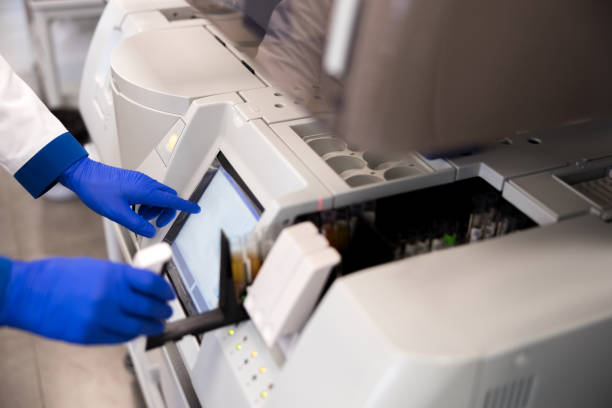
Blood gas analyzers require regular inspection to maintain operational readiness and result stability.
Analyzer Status Checks
Trained personnel should review relevant information such as:
- Sensor status.
- Cartridge condition.
- Consumable expiration dates.
- QC results.
- Calibration status.
- Waste-management system.
- Active alarms.
Sensor and Sample Pathway Maintenance
Depending on the technology, maintenance activities may include:
- Checking for blockages.
- Inspecting the sample inlet.
- Replacing cartridges.
- Inspecting the sample transport system.
- Replacing solutions.
- Checking the cleaning mechanism.
- Other maintenance activities specified by the manufacturer.
Measurement components should not be disassembled or modified unless permitted by the manufacturer.
Staff Training
For equipment used across multiple departments, an appropriate training program should address:
- Intended-use scope.
- Sample identification.
- Quality control.
- Recognition of alarms.
- Cartridge management.
- Handling of unsuitable samples.
- Result transmission and validation.
- Biosafety.
A simple user interface does not mean that all personnel can operate the equipment without training.
11. Ten Criteria for Selecting a Blood Gas Analyzer for a Healthcare Facility
Hospitals and laboratories may use the following framework when comparing systems:
| Criterion | What Should Be Evaluated? |
|---|---|
| 1. Test menu | pH, pCO₂, pO₂, and additional parameters |
| 2. Sensor technology | Measurement characteristics, accuracy, and performance-verification capability |
| 3. Sample types | Arterial, venous, and capillary blood within the stated intended use |
| 4. Sample volume | Required sample volume and compatible collection devices |
| 5. Cartridges and reagents | Shelf life, test capacity, storage, and replacement requirements |
| 6. Calibration and QC | Automated functions, QC materials, and quality management |
| 7. Throughput | Analysis time, expected sample volume, and operational readiness |
| 8. Data connectivity | LIS/HIS, barcodes, access permissions, and result traceability |
| 9. Technical service | Maintenance, spare parts, training, and support in Vietnam |
| 10. Lifecycle cost | Analyzer, cartridges, QC, consumables, software, and maintenance |
Common Investment Mistakes
Looking only at the number of parameters: Failing to distinguish directly measured parameters from calculated values.
Failing to confirm co-oximetry: Assuming that an analyzer displaying sO₂ directly measures hemoglobin fractions.
Overlooking cartridge usable life: Purchasing cartridges with high test capacity but being unable to use them fully before expiration.
Comparing only analysis time: Failing to evaluate sample transport, QC, and result-transmission time.
Inadequate quality-control assessment: Lacking a QC plan and effective management of analyzers across departments.
Failing to verify LIS connectivity: Results must be entered manually despite the analyzer's data-storage capabilities.
Overlooking consumable costs: Total operating expenses exceed the initial budget.
12. Questions to Ask Suppliers Before Purchasing a Blood Gas Analyzer
Before making an investment decision, healthcare facilities should clarify:
1. Which parameters does the analyzer measure directly, and which are calculated?
2. Which sensor technologies does the device use, and how is performance verified?
3. Which sample types and sample volumes does the analyzer support?
4. Are electrolyte, lactate, and co-oximetry functions included in the quoted configuration?
5. What time-based and test-count limitations apply to cartridges or cassettes?
6. How does the analyzer support calibration, IQC, and QC result management?
7. Under which conditions are analysis time and actual throughput determined?
8. Can the device connect to LIS/HIS and support operator management?
9. Does the supplier provide training, maintenance, and a reliable supply of consumables in Vietnam?
10. What is the total multi-year operating cost, including wasted consumables and maintenance?
Facilities should request a demonstration using the exact configuration they intend to purchase, including sample identification, testing, QC status verification, and result transmission to a compatible information system.
Frequently Asked Questions About Blood Gas Analyzers
What Is a Blood Gas Analyzer?
A blood gas analyzer is an in vitro diagnostic device used to measure parameters such as pH, pCO₂, and pO₂, together with additional analytes depending on the equipment configuration.
Which Parameters Does a Blood Gas Analyzer Commonly Measure?
The three basic parameters are pH, pCO₂, and pO₂. Some analyzers can also measure electrolytes, glucose, lactate, and hemoglobin parameters when equipped with appropriate sensors or analytical systems.
Does a Blood Gas Analyzer Measure HCO₃⁻ Directly?
In many blood gas systems, HCO₃⁻ is calculated from directly measured parameters such as pH and pCO₂ using the corresponding algorithm.
Can a Blood Gas Analyzer Measure Lactate?
Some analyzers support lactate testing, but this function is not available on every device. The test menu for the specific model should be confirmed.
Does a Blood Gas Analyzer Require Quality Control?
Yes. The equipment should be managed within an appropriate quality-control program, including calibration, IQC, relevant EQA activities, and system-status checks.
Are Cartridge-Based Blood Gas Analyzers More Cost-Effective?
This cannot be concluded in every case. Cost-effectiveness depends on actual sample volume, cartridge price, usable life, test capacity, QC consumables, and other related expenses.
Can a Blood Gas Analyzer Connect to LIS?
Many modern systems support LIS connectivity. However, communication protocols, middleware, software licenses, and compatibility with the existing system should be confirmed.
Should a Blood Gas Analyzer Be Installed in the ICU or the Laboratory?
The appropriate location depends on testing volume, turnaround-time requirements, staffing, quality-management capability, and operating conditions. Regardless of location, the system requires an appropriate quality-management and safety program.
Explore Blood Gas Analysis Technology and Laboratory Testing Solutions at Pharmedi Vietnam 2027
For hospitals, laboratories, and intensive-care units, selecting a blood gas analyzer requires evaluation of multiple factors, including sensor accuracy, test menu, cartridge technology, quality-control capability, and data connectivity.
Pharmedi Vietnam 2027, taking place from September 28–30, 2027 at the Saigon Exhibition and Convention Center (SECC), Ho Chi Minh City, provides an opportunity for businesses, professionals, and healthcare organizations to meet, explore technologies, and discuss solutions supporting laboratory testing and healthcare delivery.
For facilities planning to invest in or upgrade their blood gas testing systems, Pharmedi Vietnam 2027 offers an opportunity to explore equipment technologies, assess supplier capabilities, and establish the technical requirements that should be evaluated before selecting a solution.
Relevant technology groups include blood gas analysis systems, Point-of-Care Testing (POCT), electrochemical sensors, testing cartridges, quality-control solutions, and laboratory data-management software.
When discussing solutions with suppliers, hospitals and laboratories may focus on:
- Which parameters does the equipment measure directly, and which calculated parameters does it support?
- Are the sensor and cartridge technologies suitable for the expected testing volume?
- Which calibration, IQC, and quality-management functions does the system provide?
- Are sample-volume requirements and turnaround time compatible with the facility's workflow?
- Can the analyzer connect to LIS/HIS and support testing-data management across multiple departments?
- Does the supplier provide training, maintenance, and a reliable supply of cartridges and reagents in Vietnam?
- How are total operating costs, including consumables, QC, and maintenance, determined?
Preparing these criteria helps healthcare facilities proactively compare solutions, evaluate their suitability for testing requirements, and develop an investment plan aligned with their actual operating scale.
For blood gas analyzers, effective selection should prioritize result reliability, quality-control capability, continuity of consumable supply, and long-term data management rather than relying solely on the number of parameters or advertised analysis time.
Dates: September 28–30, 2027
Venue: Saigon Exhibition and Convention Center (SECC), Ho Chi Minh City
Exhibition Information: https://pharmed.vn/
Product Categories: https://pharmed.vn/exhibitors/products
Information about participating companies, industry networking activities, and exhibition programs will be updated according to official announcements from the Pharmedi Vietnam 2027 Organizing Committee.
This article is provided for informational purposes regarding the operating principles, technologies, and selection criteria for blood gas analyzers. It does not provide instructions for arterial blood collection, testing procedures involving individual patients, or interpretation of results for diagnosis and treatment. Testing, quality control, and result evaluation should be performed by appropriately qualified personnel in accordance with manufacturer instructions, facility procedures, and current applicable regulations.
Related post
- Pharmed & Healthcare 2019 - OVERVIEW MEDICAL DEVICES MARKET - VIETNAM HEALTHCARE 2019
- THE STRENGTH OF COMPETITION OF KOREA MEDICAL ENTERPRISES
- Une nouvelle exposition médicale internationale à Hô Chi Minh-Ville
- Vietnam is expected to have 110 million doses of Covid-19 vaccine, who is given priority?
- Overview Pharmaceutical - Vietnam Health 2019