


A coagulation analyzer is a laboratory device used to analyze parameters related to blood coagulation and hemostasis. Depending on its configuration, the equipment may perform routine tests such as PT, APTT, fibrinogen, D-dimer, and various specialized coagulation assays.
Hospitals and clinical laboratories in Vietnam can choose from a range of coagulation analyzers, from small semi-automated devices to fully automated systems capable of processing large sample volumes.
Differences between these systems extend beyond throughput and the number of supported tests. Clot-detection technology, reagent compatibility, system stability, quality-control programs, and data-connectivity capabilities all affect long-term operational efficiency.
In particular, coagulation testing has specific requirements concerning sample type, anticoagulants, processing time, and storage conditions. Even an advanced analyzer may produce unreliable results if sample quality or analytical procedures are not appropriately controlled.
This article explains the operating principles, analytical technologies, common categories of coagulation analyzers, and equipment-selection criteria for hospitals, clinics, and clinical laboratories.
What Is a Coagulation Analyzer?
A coagulation analyzer is an in vitro diagnostic (IVD) device designed to measure parameters related to blood clot formation, coagulation factor activity, and other components of the hemostatic system.
Depending on the technology and reagent menu, the equipment may perform:
- Prothrombin Time (PT) testing.
- Activated Partial Thromboplastin Time (APTT) testing.
- Fibrinogen measurement.
- Thrombin Time (TT) testing.
- D-dimer measurement.
- Antithrombin activity and certain coagulation factor assays.
- Other specialized tests when appropriately configured.
Coagulation analyzers commonly use plasma prepared from blood samples collected with sodium citrate anticoagulant.
However, not all devices use the same sample types or support the complete range of tests listed above. Their capabilities depend on the analytical technology, reagents, and functions validated by the manufacturer.
Is a Coagulation Analyzer the Same as a Hematology Analyzer?
No.
Although hematology analyzers and coagulation analyzers are both used for blood testing in hospitals, they employ different analytical principles and serve different purposes.
| Criterion | Hematology Analyzer | Coagulation Analyzer |
|---|---|---|
| Primary purpose | Analyzes blood cell counts and characteristics | Analyzes parameters related to the coagulation system |
| Common parameters | RBC, WBC, PLT, HGB, and other cellular indices | PT, APTT, fibrinogen, D-dimer |
| Common technologies | Electrical impedance, optical methods, and flow cytometry | Optical, mechanical, chromogenic, and immunological methods |
| Sample type | Typically uses EDTA-anticoagulated whole blood | Typically uses citrated plasma for plasma-based coagulation tests |
| Consumables | Hematology reagents and corresponding QC materials | Coagulation reagents, calibrators, QC materials, and cuvettes |
A hematology analyzer can count platelets, but this result does not replace tests that assess plasma coagulation processes.
Conversely, a conventional coagulation analyzer cannot replace a complete blood count system.
1. Operating Principles of Coagulation Analyzers
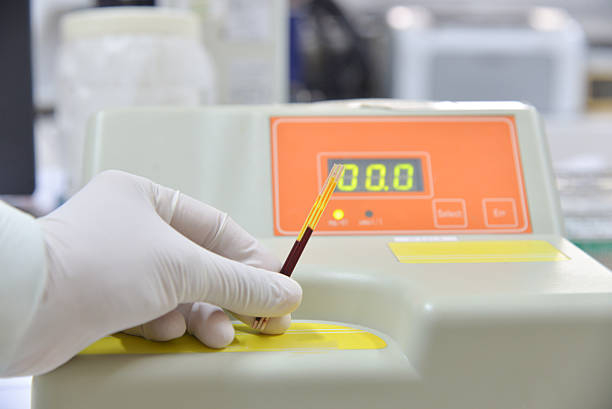
The operating principle of a coagulation analyzer depends on the analytical method used.
For many routine tests, the analyzer determines the time point or characteristic changes associated with clot formation in a plasma sample after appropriate reagents have been added.
Modern systems may also use chromogenic or immunological methods to measure analytes that are not determined directly from clot-formation time.
Three important technology groups should be distinguished:
- Optical clot-detection methods.
- Mechanical clot-detection methods.
- Chromogenic and immunological methods for appropriate assays.
Optical Clot-Detection Method
Photo-optical clot detection uses changes in the optical properties of a sample during fibrin formation to determine the clotting endpoint.
Depending on the design, the system may monitor transmitted light or scattered light.
As coagulation occurs, the sample's optical characteristics change. A sensor detects these changes, and the software processes the signals to determine the result.
Some systems use multiple wavelengths to support different analytical methods and reduce the effects of certain interfering factors.
Potential advantages of optical technology include the ability to integrate multiple testing methods and support automation.
However, results may be affected by the sample's optical characteristics or other interfering substances, depending on the assay and equipment design.
Mechanical Clot-Detection Method
Mechanical clot detection identifies clot formation through changes in the mechanical properties or viscosity of the sample.
Some systems use a mechanism that monitors the movement of a ball inside the reaction cuvette. As a clot forms, the movement changes, allowing the system to determine the reaction endpoint.
Because mechanical detection does not rely directly on changes in light transmission to detect clot formation, it may be less affected by certain optical interferences.
For example, Stago coagulation systems use clot-detection technology based on changes in viscosity.
However, mechanical methods should not automatically be considered more accurate than optical methods.
Each technology has its own characteristics. Analytical performance should be evaluated for the specific analyzer–reagent combination and conditions of use.
Chromogenic Assays
Chromogenic assays use substrates that generate a color signal when they react with the analyte or an associated reaction component.
The system measures changes in light absorbance and calculates the result using a calibration curve or an established method.
This technology may be used for assays involving:
- Antithrombin activity.
- Anti-Xa activity.
- Certain coagulation factors.
- Protein C.
- Other analytes according to the reagent menu.
Not all these assays are available on every analyzer.
Immunological Methods
Some coagulation analyzers also integrate immunological methods, such as latex-enhanced immunoturbidimetry.
When the analyte interacts with a reagent containing a specific recognition component, the reaction produces a change in the optical signal.
The analyzer detects this signal and calculates the analyte concentration or result according to the corresponding method.
A common application is D-dimer testing.
Comparison of Coagulation Testing Technologies
| Technology | Main Principle | Common Test Categories |
|---|---|---|
| Optical clot detection | Monitors changes in optical properties during clot formation | PT, APTT, fibrinogen, and compatible coagulation assays |
| Mechanical clot detection | Monitors changes in mechanical properties or viscosity | PT, APTT, fibrinogen, and other compatible assays |
| Chromogenic methods | Measures color signals generated by substrate reactions | Antithrombin, anti-Xa, and certain coagulation factors |
| Immunological methods | Measures signals generated by immunological reactions | D-dimer and other compatible analytes |
A single analyzer may use different technologies depending on the assay. Therefore, the entire system should not be classified solely by one measurement principle.
2. Common Tests Performed on Coagulation Analyzers
The test menu is one of the first considerations when selecting a coagulation analyzer.
A device that supports PT and APTT does not necessarily have the capability to perform fibrinogen, D-dimer, or specialized coagulation tests.
PT Testing
PT (Prothrombin Time) is a test that measures the time required for clot formation in plasma using appropriate reagents to initiate the reaction.
PT results may be expressed in seconds.
For appropriate methods and intended uses, the system may also calculate the INR (International Normalized Ratio) from PT results and related calibration information.
When selecting an analyzer, laboratories should evaluate:
- Compatible PT reagents.
- Repeatability.
- Calibration capability.
- ISI information relevant to the reagent and system.
- INR calculation and reporting methods.
- Reagent-lot traceability.
The ability to display INR should not automatically be considered evidence that the system has been appropriately standardized.
APTT Testing
APTT (Activated Partial Thromboplastin Time) measures clot-formation time using an appropriate activating reagent system.
Results are typically expressed in seconds.
APTT performance may be affected by reagent characteristics, clot-detection methods, sample type, and various other factors.
Therefore, when changing equipment or reagents, laboratories should evaluate the suitability of the new method before introducing it into routine testing.
Fibrinogen Testing
Fibrinogen is a protein involved in fibrin formation.
One commonly used method for quantitative fibrinogen measurement is the Clauss method.
This method is based on clot-formation time under standardized reaction conditions and uses calibration data to determine fibrinogen concentration.
It is important to distinguish between:
- Clauss fibrinogen: a quantitative assay based on clotting-time measurement.
- PT-derived fibrinogen: a value estimated from the PT assay signal on certain systems.
These results should not be considered equivalent under all conditions.
When purchasing equipment, laboratories should confirm which fibrinogen measurement methods the analyzer supports and which reagents are required.
D-dimer Testing
D-dimer is a component produced during the breakdown of cross-linked fibrin.
On many coagulation analyzers, D-dimer is measured using immunological methods, commonly latex-enhanced immunoturbidimetry.
An important consideration in D-dimer result management is the difference between reporting units:
- FEU (Fibrinogen Equivalent Units).
- DDU (D-dimer Units).
By mass convention, FEU values are often approximately twice DDU values when expressed in the same concentration units. However, differences between assay methods mean that numerical conversion cannot replace method-specific performance verification.
Laboratories should not apply the same reference limits or decision thresholds across D-dimer systems using different methods without evaluating their compatibility.
Other Specialized Coagulation Assays
Depending on the configuration, automated coagulation analyzers may also support:
- Thrombin Time (TT).
- Antithrombin activity.
- Activity assays for certain coagulation factors.
- Protein C and Protein S.
- Anti-Xa activity.
- Certain coagulation inhibitor assays.
- von Willebrand factor assays.
- Other specialized parameters.
The availability of these tests may depend on reagents, analyzer modules, and software licenses.
In particular, assays marketed by manufacturers for research purposes should not automatically be considered suitable for routine diagnostic use.
Summary of Common Coagulation Tests
| Test | Common Analytical Principle | What Should Be Verified? |
|---|---|---|
| PT/INR | Clotting endpoint detection | Reagents, ISI, calibration, and reporting |
| APTT | Clotting endpoint detection | Reagent sensitivity and repeatability |
| Fibrinogen | Clauss method or another validated method | Quantitative method and measurement range |
| D-dimer | Immunological methods, commonly latex immunoturbidimetry | Measurement range, FEU/DDU units, and reagents |
| Thrombin Time | Clotting endpoint detection | Reagents and method limitations |
| Antithrombin | Commonly chromogenic methods | Substrate, calibration, and QC |
| Anti-Xa | Commonly chromogenic methods | Specific assay scope and reagents |
| Coagulation factors | One-stage clotting, chromogenic, or other methods | Supported factor assays and corresponding functions |
3. Common Categories of Coagulation Analyzers
Based on the level of automation and analytical capabilities, coagulation analyzers can be divided into three main categories.
Semi-Automated Coagulation Analyzer
Semi-automated coagulation analyzers are generally designed for smaller-scale testing and require personnel to perform certain steps manually.
Depending on the model, operators may need to prepare and dispense samples or reagents and perform steps associated with the analytical reaction.
Important characteristics to evaluate include:
- Supported test menu.
- Number of measurement positions.
- Accuracy and repeatability.
- Reaction-temperature control capability.
- Manual operating requirements.
- Result storage and export capabilities.
Facilities with limited testing volumes may consider this configuration.
However, staff competency and the ability to standardize procedures should be carefully evaluated before selection.
Automated Coagulation Analyzer
Automated coagulation analyzers can perform multiple operations, including sample aspiration, reagent dispensing, reaction control, clotting endpoint detection, and result processing.
Depending on the design, the system may support:
- Barcode-based sample identification.
- Continuous sample loading.
- Automated reagent dispensing.
- Management of multiple testing methods.
- Sample dilution and repeat testing.
- Detection of certain sample abnormalities.
- QC data storage.
- LIS connectivity.
This equipment category includes various throughput levels, from benchtop systems to high-capacity analyzers.
Not every automated analyzer supports the full range of optical, chromogenic, immunological, and specialized coagulation testing methods.
High-Throughput Coagulation Testing System
High-throughput systems are designed for laboratories processing large sample volumes or requiring a broad test menu.
For example, according to specifications published by Sysmex Vietnam, the CN-6000 system has a nominal maximum throughput of approximately 450 PT tests per hour or 401 tests per hour when performing a combination of PT and APTT under the stated conditions.
The system also supports multiple analytical methods, including clot detection, chromogenic assays, and immunological methods.
This example illustrates differences in throughput and does not represent the standard performance of all automated coagulation analyzers.
Actual throughput also depends on:
- Number of test types being performed.
- Reaction times.
- Number of measurement positions.
- Number of urgent samples.
- Tests requiring repeat analysis.
- QC and calibration time.
- Sample and reagent loading capabilities.
Comparison of Coagulation Analyzer Categories
| Criterion | Semi-Automated | Medium-Throughput Automated | High-Throughput Automated |
|---|---|---|---|
| Manual operations | Generally requires more manual steps | Reduces manual work across multiple stages | Provides a higher level of automation |
| Sample volume | May suit limited testing volumes depending on configuration | Suitable for moderate workloads | Designed for high-volume testing |
| Test menu | May focus on basic tests | Often supports multiple methods | May integrate routine and specialized testing |
| Reagent management | May depend heavily on manual operations | Automated functions vary by model | May manage multiple reagent positions |
| LIS connectivity | Depends on the model | Commonly supported | May integrate with centralized laboratory management systems |
| Costs | Equipment and manual labor costs should be considered | Depend on throughput and functions | Include equipment, consumables, infrastructure, and maintenance |
The most appropriate choice is not necessarily the analyzer with the highest throughput, but rather the system that meets actual testing requirements at a sustainable cost and resource level.
4. Main Components of a Coagulation Analyzer
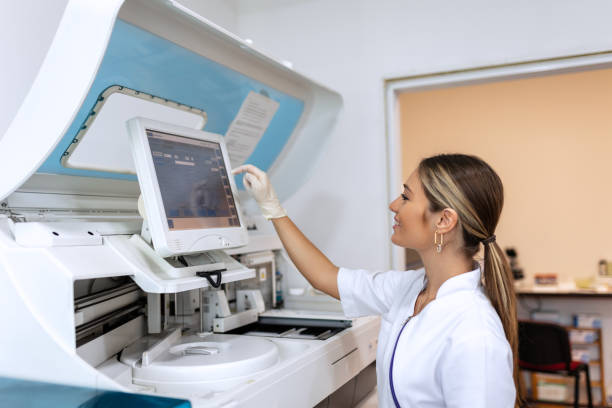
An automated coagulation analyzer may include the following components:
| Component | Function |
|---|---|
| Sample loader | Receives and manages sample tubes |
| Sample aspiration probe | Aspirates and dispenses sample volumes according to system design |
| Reagent tray | Stores reagents under appropriate conditions |
| Reaction chamber | Contains samples and reagents during analysis |
| Temperature-control system | Maintains reaction conditions |
| Signal-detection system | Analyzes optical, mechanical, or other signals |
| Processor and software | Calculate, display, and store results |
| QC system | Monitors and manages testing quality |
| Waste-management components | Collect consumables and waste according to system design |
| Connectivity interfaces | Exchange data with LIS and related systems |
Sample Loading and Identification System
Depending on the model, the analyzer may support sample tubes of different sizes.
Functions worth evaluating include:
- Barcode reading.
- Continuous sample loading.
- Sample-position identification.
- Insufficient-volume detection.
- Priority sample handling.
- Alerts for abnormal sample characteristics.
These functions should be evaluated using the exact equipment configuration being considered for purchase.
Reagent Dispensing System
Reagent dispensing directly affects the stability of analytical reactions.
When selecting an analyzer, laboratories should check:
- Number of reagent positions.
- Refrigeration capability.
- Lot-identification functions.
- Expiration-date monitoring.
- Reagent-mixing mechanisms.
- Level of automation.
- Reagent consumption volumes.
Some analyzers use barcode-based reagent-bottle identification to support monitoring of reagent lots and consumable status.
Reaction Chamber and Detection System
Reaction cuvettes, temperature-control components, and signal-detection systems are important factors affecting result stability.
Depending on the design, the analyzer may use disposable cuvettes or other specialized consumables.
During equipment evaluation, laboratories should assess cuvette costs, supply availability, and maintenance requirements for the reaction system.
5. The Role of Reagents in Coagulation Testing
For coagulation analyzers, reagents are an important part of the complete testing system rather than simply consumable supplies.
Different reagent kits for the same parameter may have different analytical characteristics and intended uses.
PT and APTT Reagents
PT and APTT reagent kits differ in composition, reaction characteristics, and sensitivity depending on the product.
When selecting reagents, laboratories should evaluate:
- Analyzer compatibility.
- Stated analytical performance.
- Calibration conditions.
- Repeatability.
- Shelf life.
- Storage conditions.
- Interference characteristics.
- Reagent-lot information.
In particular, changing PT reagents may affect method characteristics and the INR standardization process.
Fibrinogen and D-dimer Reagents
For fibrinogen testing, facilities should determine which quantitative method is used.
For D-dimer testing, important factors include:
- Immunological assay principle.
- Measurement range.
- Method-specific detection or quantification limits.
- FEU or DDU reporting units.
- Calibration conditions.
- QC materials.
- Limitations of use.
Reagent kits from different manufacturers should not automatically be assumed to share the same reference limits or decision thresholds for D-dimer testing.
Closed and Open Reagent Systems
Some analyzers use closed reagent systems that prioritize or require reagents specified by the manufacturer.
Other systems may support a broader range of reagent kits.
However, the ability to configure an analyzer for a particular reagent does not mean that the reagent has been validated for the intended use.
When evaluating an open reagent system, laboratories should clarify:
- List of validated reagents.
- Responsibility for method setup.
- Warranty conditions.
- QC requirements.
- Technical-support availability.
- Responsibility when results fail to meet requirements.
Should New Reagent Lots Be Evaluated?
Yes.
Switching to a new reagent lot may cause changes in analytical performance.
According to 2023 guidance from the International Council for Standardization in Haematology (ICSH), laboratories should establish procedures for evaluating the performance of new reagent lots, calibrators, and control materials before using them in applicable routine testing.
This is particularly important for laboratories that frequently change reagent lots.
6. Sample Quality and Pre-Analytical Factors
This is one of the important characteristics that distinguishes coagulation testing from many other laboratory test categories.
For plasma-based methods, results can be significantly affected by collection devices, anticoagulants, the blood-to-anticoagulant ratio, and sample-processing conditions.
Sodium Citrate Collection Tubes
Plasma-based coagulation tests commonly use collection tubes containing 3.2% sodium citrate anticoagulant (0.109 mol/L).
For many routine tests, the nominal blood-to-citrate solution ratio is 9:1.
This ratio should be maintained within the requirements of the analytical method because changes in the relative amount of anticoagulant may affect test results.
Special situations, such as samples with high hematocrit, may require evaluation and adjustment according to professional procedures.
Underfilled Sample Tubes
If a tube contains less blood than required, the citrate-to-blood ratio may change.
This can potentially affect coagulation test results.
Therefore, laboratories should establish criteria for checking tube fill levels and handling unsuitable samples.
Some automated analyzers provide sample-volume checks, but these functions should not be considered a complete replacement for pre-analytical quality-control procedures.
Clotted Samples
Clot formation in an anticoagulated blood sample is an important issue that must be identified.
Clotting can change sample composition and affect results.
Laboratories should establish procedures for detecting and handling unacceptable samples according to professional guidance.
Centrifugation and Plasma Preparation
Many coagulation tests require plasma prepared using an appropriate method, such as platelet-poor plasma.
However, centrifugation conditions, processing times, and residual platelet requirements may differ between assays.
A single sample-processing procedure should not be applied to every coagulation testing method.
HIL Interference Factors
Three commonly discussed types of interference in laboratory testing are:
- Hemolysis: breakdown of red blood cells in the sample.
- Icterus: elevated bilirubin levels affecting sample coloration.
- Lipemia: elevated lipid content causing sample turbidity.
These factors may affect certain methods, particularly optical measurements.
However, the degree of interference depends on the assay, reagents, and analyzer.
According to 2021 ICSH recommendations, interference should be evaluated based on the analytical method and performance evidence rather than automatically rejecting every hemolyzed, deeply icteric, or lipemic sample.
Some automated coagulation analyzers provide HIL checks to help laboratory personnel assess sample quality.
Sample Storage Time and Conditions
The activity of coagulation factors may change over time or under different storage conditions.
Therefore, the interval between sample collection and analysis, as well as plasma preparation, should be controlled.
A single universal time limit should not be applied to all coagulation assays.
Conditions should be determined according to the method, sample type, manufacturer instructions, and the laboratory's quality-management program.
CLSI H21, 6th edition, published in April 2024, is an important reference for collecting, transporting, and processing specimens for plasma-based coagulation testing.
This edition replaces the 2008 H21-A5 guideline and updates several aspects of sample quality, storage conditions, and interfering factors.
7. Calibration and Quality Control of Coagulation Analyzers
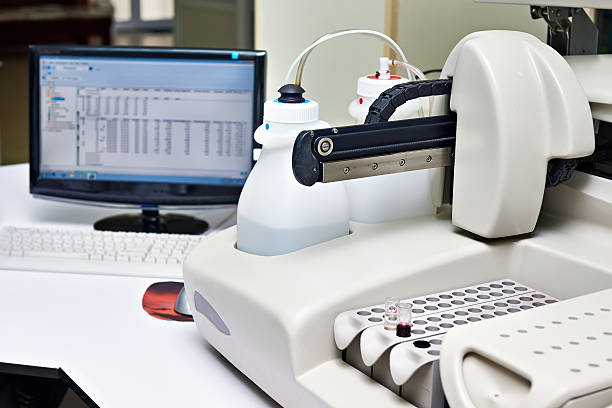
For clinical laboratories, consistent result quality should be maintained through an appropriate quality-management program.
Calibration and Internal Quality Control (IQC) are related but distinct activities.
Equipment and Method Calibration
Calibration establishes the relationship between a measured signal and the corresponding result value using appropriate reference materials or methods.
Depending on the assay, the analyzer may require:
- Establishing calibration curves.
- Calibration verification.
- Management of calibrator information.
- Evaluation after reagent-lot changes.
- Recalibration under appropriate conditions.
Not every parameter is calibrated in the same way.
For example, certain assays use clotting-time measurements, while other quantitative methods may require concentration-based calibration curves.
Internal Quality Control
IQC supports monitoring of analytical system stability during testing.
An internal quality-control program may include:
- Using QC materials at appropriate levels.
- Monitoring results over time.
- Evaluating trends and deviations.
- Checking results outside acceptance limits.
- Maintaining records.
- Evaluating reagent-lot changes.
- Troubleshooting failed QC results.
Some automated systems include software that stores Levey–Jennings charts to support monitoring and evaluation of QC data.
However, an analyzer with automated QC functions does not eliminate the need for laboratory personnel to manage quality.
External Quality Assessment
External Quality Assessment (EQA) evaluates laboratory performance through an external program within the applicable scope.
EQA results can help laboratories assess analytical performance and method suitability.
IQC and EQA serve complementary purposes.
Quality-Management Standards in Vietnam
An important reference for medical laboratories in Vietnam is:
TCVN ISO 15189:2025 – Medical laboratories: Requirements for quality and competence.
This Vietnamese national standard is technically identical to ISO 15189:2022 and replaces TCVN ISO 15189:2014.
Requirements related to equipment management, personnel, method verification, quality control, and result management can serve as references when developing a quality-management system for coagulation laboratories.
The applicability of standards and accreditation requirements should be determined according to regulations, the facility's scope of activities, and its quality-management objectives.
8. Testing Throughput and STAT Sample Handling
When investing in an automated coagulation analyzer, manufacturers commonly specify throughput as the number of tests performed per hour.
However, testing throughput is not equivalent to the number of samples or patients processed per hour.
A single sample may require multiple tests.
For example, throughput when performing only PT may differ from throughput when PT, APTT, and other assays are performed simultaneously.
Factors Affecting Throughput
- Reaction time for each assay.
- Number of measurement channels or positions.
- Test menu being performed.
- Number of samples loaded simultaneously.
- Continuous sample-loading capability.
- QC and calibration time.
- Tests requiring dilution or repeat analysis.
- Reagent-management capabilities.
- Frequency of priority samples.
Therefore, two systems should not be compared using only their maximum stated throughput.
Priority Sample Handling
Some analyzers provide functions for identifying and processing priority or urgent (STAT) samples.
During equipment evaluation, facilities should confirm:
- Is there a dedicated STAT sample-loading position?
- Can the analyzer process priority samples while routine testing is underway?
- What is the turnaround time for PT/APTT under these conditions?
- Does inserting a priority sample affect ongoing operations?
- Are appropriate sample alerts and result-transmission functions supported?
For hospitals with Emergency Departments and ICUs, coordination among the analyzer, sample-reception workflow, and LIS can significantly affect turnaround time.
Nominal Versus Actual Throughput
Facilities should request throughput data from suppliers under multiple operating scenarios rather than relying solely on throughput for a single assay.
Examples include:
- PT testing only.
- Combined PT and APTT testing.
- Combined PT, APTT, fibrinogen, and D-dimer testing.
- Workflows involving STAT samples.
- Workflows requiring repeat testing.
- QC activities during the operating shift.
This evaluation helps laboratories plan equipment allocation and staffing more effectively according to their actual workloads.
9. Consumables and Total Operating Costs
Reagents and consumables represent a major operating expense for coagulation analyzers.
Depending on the technology and configuration, the system may require:
| Consumable Category | Purpose |
|---|---|
| PT/APTT reagents | Perform routine coagulation assays |
| Fibrinogen reagents | Quantitative fibrinogen measurement |
| D-dimer reagents | Testing using an appropriate immunological method |
| Calibrators | Calibration of methods that require it |
| QC materials | Quality control |
| Reaction cuvettes | Contain samples and reagents during analysis |
| Wash and system solutions | Support operation according to system design |
| Replacement parts | Equipment maintenance and repair |
Reagent Stability After Opening
A reagent kit may have several time-related limitations that should be considered:
- Shelf life before opening.
- Stability after opening or reconstitution.
- Onboard stability after loading onto the analyzer.
- Storage conditions.
These factors directly affect the amount of reagent that can be used.
For example, a laboratory with a low sample volume may need to discard part of a reagent kit once its stability period expires, even if reagent remains in the bottle.
Reagent Cost per Test Result
When evaluating investment efficiency, facilities should consider:
- Reagent volume consumed per test.
- Reagents used for QC.
- Reagents used for calibration.
- Tests requiring repeat analysis.
- Expired or unused reagents.
- Cuvettes and other consumables.
- Technical service costs.
This helps distinguish the nominal reagent price from the actual cost of producing a valid laboratory result.
Supply Arrangements in Vietnam
In addition to consumable prices, facilities should evaluate:
- Availability of genuine reagents.
- Transportation conditions.
- Refrigerated storage requirements.
- Regular delivery capability.
- Remaining shelf life upon delivery.
- Contingency plans for supply interruptions.
- Availability of replacement consumables and spare parts.
A system with a low initial purchase price but an unreliable consumable supply chain may negatively affect laboratory operations over time.
10. LIS Connectivity for Coagulation Analyzers
A Laboratory Information System (LIS) supports test-order reception, sample tracking, result storage, and the management of related laboratory workflows.
For automated coagulation analyzers, LIS connectivity can reduce manual data entry and support centralized data management.
Depending on the model, the analyzer may support:
- Sample barcode reading.
- Test-order reception.
- Result transmission.
- Sample-status recording.
- Reagent-lot information retrieval.
- QC result storage.
- Abnormal-data alerts.
- User-access permissions.
- Activity-log storage.
Unidirectional and Bidirectional Connectivity
In some systems, the analyzer only sends test results to the LIS.
Other systems can receive test orders from the LIS and subsequently transmit results back to it.
The scope of connectivity should be verified for the specific model and software configuration supplied.
Reporting Units and Format Control
Coagulation analyzers may generate results in different formats:
- PT in seconds.
- INR.
- APTT in seconds.
- Fibrinogen in concentration units.
- D-dimer in the units specified by the assay.
- Other specialized parameters.
When integrating with an LIS, laboratories should verify test names, units, reference limits, and accompanying alerts.
In particular, FEU and DDU units for D-dimer must not be confused during data transmission or report configuration.
Managing Results Requiring Review
Some analyzers can generate flags, automatically repeat tests, or suggest additional testing based on predefined rules.
However, the ability to transmit results automatically does not mean that all results are eligible for automatic validation.
Laboratories should establish and validate appropriate result-management rules.
11. Maintenance and Operational Requirements for Coagulation Analyzers
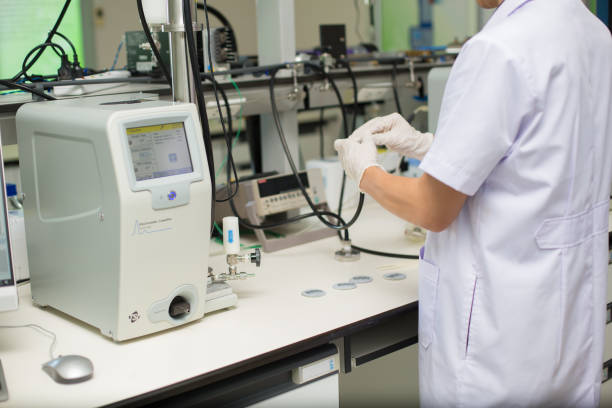
To maintain stable performance, coagulation analyzers should be managed through an appropriate maintenance program.
Maintenance activities may include:
Sample Aspiration System Inspection
Sample probes and transport components should be inspected according to manufacturer instructions.
Potential issues to monitor include:
- Blockages.
- Volume-dispensing consistency.
- Contamination.
- Technical alarms.
- Errors affecting sample aspiration.
Signal-Detection System Inspection
Depending on the technology, relevant components may include:
- Light sources.
- Optical sensors.
- Mechanical detection mechanisms.
- Reaction chambers.
- Temperature-control capability.
- Processing software.
After major components are repaired, appropriate quality checks should be performed before the analyzer is returned to use.
Reagent System Maintenance
For analyzers with refrigerated reagent trays, the ability to maintain storage conditions should be checked according to manufacturer instructions.
In addition, systems with reagent-mixing or reagent-management functions should be monitored for proper operation.
Personnel Training
Personnel using the equipment should receive appropriate training in:
- Analytical principles.
- Sample management.
- Quality control.
- Reagents and calibration.
- Alarm recognition.
- Consumable management.
- Troubleshooting.
- Result retrieval and validation.
For laboratories operating across multiple shifts, handover and recordkeeping procedures should be established to ensure consistent equipment management.
12. Ten Criteria for Selecting a Coagulation Analyzer for a Laboratory
Hospitals and laboratories may use the following evaluation framework when preparing procurement documentation:
| Criterion | What Should Be Evaluated? |
|---|---|
| 1. Test menu | PT, APTT, fibrinogen, D-dimer, and necessary specialized assays |
| 2. Analytical technology | Optical, mechanical, chromogenic, immunological, and supporting methods |
| 3. Result reliability | Repeatability, measurement limits, interference, and assay-specific performance |
| 4. Reagent system | Compatibility, shelf life, calibration, and supply availability |
| 5. Quality control | IQC, EQA, lot management, and data-storage functions |
| 6. Testing throughput | Actual throughput across the test menu and STAT sample-handling capability |
| 7. Sample management | Barcodes, insufficient-volume detection, HIL flags, and workflow support |
| 8. LIS connectivity | Test-order reception, result transmission, status management, and reporting units |
| 9. Technical service | Installation, training, warranty, spare parts, and local support in Vietnam |
| 10. Lifecycle cost | Analyzer price, reagents, QC, calibration, cuvettes, software, and maintenance |
Common Investment Mistakes
Comparing only the number of supported tests: Failing to assess analytical stability and method suitability.
Selecting equipment solely based on optical or mechanical technology: Overlooking the actual performance of the analyzer–reagent system.
Failing to evaluate reagents: The analyzer may meet technical requirements but be difficult to operate sustainably due to cost or supply limitations.
Overlooking citrate sample requirements: Failing to establish pre-analytical sample-quality control procedures.
Comparing only maximum PT throughput: Failing to evaluate actual capacity when multiple assays are performed simultaneously.
Failing to verify D-dimer reporting units: Creating a risk of errors when configuring reports or changing systems.
Failing to confirm LIS connectivity: Additional integration costs may arise, or results may need to be entered manually.
Excluding QC and calibration costs: Actual operating expenses may exceed the initial budget.
13. Questions to Ask Coagulation Analyzer Suppliers
Before making a purchasing decision, laboratories should clarify:
1. Which assays are supported in the standard equipment configuration?
2. Which clot-detection technology does the analyzer use, and does it support chromogenic and immunological methods?
3. Which documentation and methods are used to verify the performance of each assay?
4. Does the analyzer use a closed reagent system, or can it support multiple validated reagent types?
5. How are calibration, IQC, and reagent-lot changes managed?
6. What is the throughput when PT, APTT, fibrinogen, and D-dimer are performed simultaneously?
7. Can the analyzer detect underfilled samples or interfering factors?
8. Does the system support bidirectional LIS connectivity and appropriate reporting-unit management?
9. Does the supplier provide training, quality testing, and maintenance support in Vietnam?
10. How is the total long-term operating cost calculated, including reagents, QC materials, calibration, and spare parts?
In addition to reviewing technical specifications, facilities should request a demonstration using the exact analyzer configuration and reagent kits intended for purchase.
The evaluation should cover sample handling, QC programs, alert functions, and result transmission to the existing LIS.
Frequently Asked Questions About Coagulation Analyzers
What Is a Coagulation Analyzer?
A coagulation analyzer is an in vitro diagnostic device used to analyze parameters related to blood coagulation, including PT, APTT, fibrinogen, D-dimer, and other tests depending on its configuration.
What Types of Coagulation Analyzers Are Available?
Common categories include semi-automated analyzers, medium-throughput automated analyzers, and high-throughput automated coagulation systems. Each category has different automation levels, test menus, and operating requirements.
Can an Automated Coagulation Analyzer Measure D-dimer?
Some systems support D-dimer testing using immunological methods, but this function is not available on every automated analyzer. The test menu and compatible reagents should be confirmed.
Which Is Better for Coagulation Testing: Optical or Mechanical Technology?
There is no universal answer. Each technology has its own advantages and limitations. Facilities should evaluate assay-specific performance, reagent characteristics, sample quality, and actual operating conditions.
Do PT and APTT Tests Use the Same Reagents?
No. PT and APTT are different analytical methods and use their corresponding reagent systems. Laboratories should confirm reagent type and analyzer compatibility.
Does a Coagulation Analyzer Require Internal Quality Control?
Yes. Laboratories should establish an appropriate quality-control program that includes IQC, reagent-lot evaluation, calibration, and relevant EQA activities.
Can an Automated Coagulation Analyzer Connect to LIS?
Many systems support LIS connectivity. However, data transmission and reception capabilities depend on the communication protocols, software, licenses, and specific configuration.
Should a Laboratory Choose a Semi-Automated or Automated Coagulation Analyzer?
The choice depends on sample volume, test menu, staffing, turnaround-time requirements, and operating costs. Automated analyzers may be appropriate for high testing volumes but are not automatically the optimal solution for every laboratory.
Explore Coagulation Testing Technology and Laboratory Management Solutions at Pharmedi Vietnam 2027
For hospitals and clinical laboratories, investing in a coagulation analyzer requires careful evaluation of multiple factors, including clot-detection technology, test menu, result reliability, reagent systems, and quality-control capabilities.
In addition to the analyzer configuration, the availability of reagents and QC materials, maintenance services, and LIS connectivity directly affects long-term operational efficiency.
Pharmedi Vietnam 2027, taking place from September 28–30, 2027 at the Saigon Exhibition and Convention Center (SECC), Ho Chi Minh City, provides an opportunity for businesses, professionals, and healthcare organizations to meet, explore technologies, and discuss solutions supporting laboratory testing and healthcare delivery.
For facilities planning to invest in or upgrade their coagulation testing systems, Pharmedi Vietnam 2027 offers an opportunity to explore laboratory technologies, assess supplier capabilities, and prepare technical requirements before selecting equipment.
Relevant solution categories include automated coagulation analyzers, optical and mechanical clot-detection technologies, coagulation reagent systems, quality-control solutions, and laboratory data-management software.
When discussing solutions with suppliers, hospitals and laboratories may focus on:
- Which PT, APTT, fibrinogen, D-dimer, and specialized coagulation assays does the system support?
- How are the analytical technology and performance of each method verified?
- Are reagents, calibrators, and QC materials reliably available in Vietnam?
- Which sample-quality control and result-flagging functions does the analyzer provide?
- Is actual throughput appropriate for the expected sample volume and STAT testing requirements?
- Can the equipment connect to LIS and support centralized data management?
- Does the supplier provide training, maintenance, and long-term operational support?
Preparing these criteria helps healthcare facilities take a more proactive approach when exploring technologies, comparing solutions, and developing investment plans suited to their operating conditions.
For coagulation analyzers, effective selection should prioritize result reliability, compatibility between the analyzer and reagents, quality-control capabilities, and operating costs throughout the equipment lifecycle rather than focusing solely on maximum throughput or initial purchase price.
Dates: September 28–30, 2027
Venue: Saigon Exhibition and Convention Center (SECC), Ho Chi Minh City
Exhibition Information:https://pharmed.vn/
Product Categories:https://pharmed.vn/exhibitors/products
Information about participating companies, industry networking activities, and exhibition programs will be updated according to official announcements from the Pharmedi Vietnam 2027 Organizing Committee.
This article is provided for informational purposes regarding the operating principles, technologies, and selection criteria for coagulation analyzers. It does not provide instructions for collecting samples from individual patients, interpreting laboratory results for diagnosis, or establishing treatment protocols. Testing, quality control, and result evaluation should be performed by appropriately qualified personnel in accordance with manufacturer instructions, facility procedures, and current applicable regulations.
Related post
- Leading Vietnam’s Healthcare sectors for US Exports and Investments
- 1.37 billion medical masks will be exported in 2020
- Breakthrough Stem Cell Therapy Offers Hope for Parkinson’s Patients
- Khám bệnh miễn phí tại Triển lãm Y tế Quốc tế lớn nhất ở Sài Gòn
- 2024 Vietnam Medical Device Regulations: Streamlined Efficiency and Enhanced Safety