


A urine analyzer is a laboratory device used to examine the chemical and physical properties of urine, as well as the formed elements present in urine samples. Depending on the technology, the equipment may read reagent strips, identify cells and sediment components, or combine multiple analytical methods within an automated system.
Hospitals, clinics, and clinical laboratories in Vietnam can choose from a range of configurations, from semi-automated urine test strip readers to fully automated urinalysis systems capable of processing large sample volumes.
However, selecting a urine analyzer involves more than comparing the number of test parameters or turnaround time. Healthcare facilities should also evaluate analytical technology, sample quality, result reliability, quality-control capabilities, consumables, and connectivity with the Laboratory Information System (LIS).
This article distinguishes the main categories of urine analyzers, explains their operating principles, and outlines the technical criteria to consider when investing in laboratory equipment.
What Is a Urine Analyzer?
A urine analyzer is an in vitro diagnostic (IVD) device designed to analyze one or more characteristics of a urine sample.
In practice, urinalysis generally involves three main categories:
- Physical examination: assessment of color, clarity, specific gravity, and related characteristics.
- Chemical analysis: testing parameters such as protein, glucose, ketones, pH, nitrite, leukocytes, and other indicators depending on the reagent strip.
- Urine sediment analysis: detection or counting of components such as red blood cells, white blood cells, epithelial cells, urinary casts, crystals, and bacteria.
A urine analysis system may perform only one of these functions or combine several analytical methods.
Therefore, the term "automated urine analyzer" alone is insufficient to determine whether a device can perform both urine chemistry testing and sediment analysis.
Is a Routine Urinalysis Analyzer the Same as a Urine Sediment Analyzer?
Not exactly.
In laboratory practice in Vietnam, the term "routine urinalysis" is commonly used for testing multiple urine parameters. Depending on the facility's test menu, the workflow may include both chemical analysis and sediment examination.
However:
- Urine test strip analyzers primarily analyze chemical reactions or related sample characteristics.
- Urine sediment analyzers focus on detecting and classifying formed elements.
- Integrated systems may perform both testing categories within a single workflow.
When purchasing equipment, laboratories should therefore confirm the actual testing capabilities of each model rather than relying solely on its commercial name.
1. Common Types of Urine Analyzers
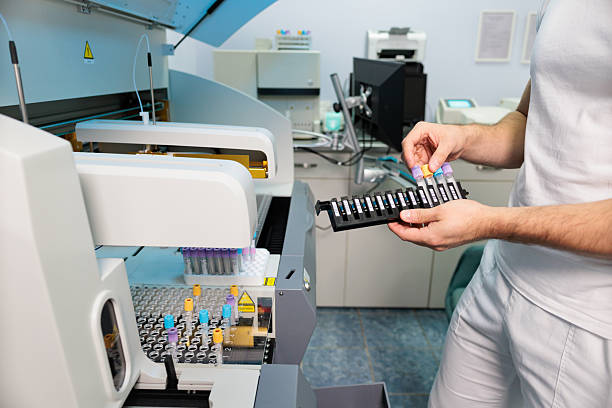
Based on analytical principles and levels of automation, urine analyzers can be divided into three main categories.
Urine Test Strip Analyzer
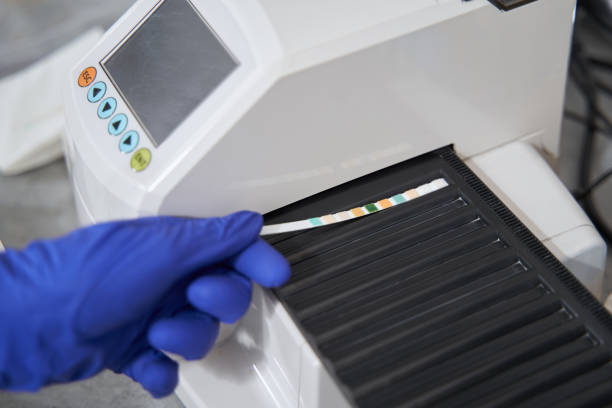
A urine test strip analyzer uses an optical system to read color reactions on chemical reagent strips.
Test strips commonly contain multiple reagent pads, each designed to detect a specific parameter.
After the strip comes into contact with a urine sample according to the manufacturer's instructions, the reagent pads change color. The analyzer measures the optical signals to determine the results.
Depending on the device, results may be displayed as:
- Negative or positive findings.
- Semiquantitative levels.
- Values or units defined by the testing method.
- Additional measurements obtained from other sensors.
This equipment category offers a relatively simple configuration and may be suitable for laboratories performing routine urine chemistry testing.
However, a test strip analyzer cannot replace urine sediment analysis when the laboratory needs to count or classify cells and other formed elements.
Urine Sediment Analyzer
A urine sediment analyzer is designed to detect, count, or classify formed elements in urine samples.
Commonly assessed components include:
- Red blood cells.
- White blood cells.
- Epithelial cells.
- Urinary casts.
- Crystals.
- Bacteria.
- Yeast.
- Other components within the manufacturer's stated scope.
These analyzers may use digital imaging technology or flow cytometry.
Not every urine sediment analyzer can accurately identify all these components. Some results serve as flags indicating that further examination using an appropriate method is required.
Integrated Automated Urinalysis System
Integrated systems can combine multiple workflow stages, such as:
- Sample identification.
- Urine chemistry analysis.
- Urine sediment analysis.
- Data correlation.
- Abnormal-result flagging.
- Result transmission to laboratory management software.
Some systems feature a modular design that allows urine chemistry analyzers to be connected to urine sediment analyzers.
For example, the Roche cobas 6500 system combines the cobas u 601 urine test strip analyzer with the cobas u 701 urine sediment analyzer.
This example illustrates an integrated system architecture and does not constitute a recommendation for a specific product.
Comparison of Three Urine Analyzer Categories
| Criterion | Test Strip Analyzer | Urine Sediment Analyzer | Integrated System |
|---|---|---|---|
| Primary function | Chemical analysis | Analysis of formed elements | Combines multiple testing categories |
| Common technology | Reflectance photometry | Digital imaging, flow cytometry | Combination of analytical technologies |
| Results | Qualitative, semiquantitative, or method-specific measurements | Counting, classification, or component flagging | Chemistry and sediment results |
| Consumables | Test strips, QC solutions | Reagents, cuvettes, or model-specific consumables | Consumables required by individual modules |
| Level of automation | Semi-automated or automated | Automated, with varying requirements for result review | May automate multiple workflow stages |
| Suitable requirements | Routine urine chemistry testing | Dedicated sediment analysis | Laboratories with appropriate testing volumes and integration needs |
Selection should be based on the actual laboratory test menu and sample volume. A system with the highest level of automation should not automatically be considered the most cost-effective investment.
2. Operating Principle of a Urine Test Strip Analyzer
Test strip analyzers are among the most commonly used technologies in routine urinalysis.
Most devices in this category use reflectance photometry.
Test Strip Structure and Reading Principle
Urine test strips contain reagent pads designed to react with specific components in a sample.
When a reaction occurs, the color of the corresponding pad changes according to the characteristics of the analyte.
The analyzer uses a light source and optical sensors to measure light reflected from the reagent pad.
The technical process can be summarized as follows:
1. The test strip comes into contact with the urine sample according to the instructions for use.
2. The reagent pads undergo color reactions.
3. The optical system measures reflected light.
4. The software processes the signals using the manufacturer's analytical method.
5. The device displays and stores the results.
Some analyzers also include functions for recognizing test strips, checking reagent-pad conditions, or detecting abnormalities during the reading process.
Commonly Analyzed Urine Parameters
Depending on the test strip and analyzer, supported parameters may include:
| Parameter | Common Abbreviation | Testing Characteristics |
|---|---|---|
| pH | pH | Assesses the acidity or alkalinity of the sample |
| Protein | PRO | Detects protein according to the reagent strip's reaction principle |
| Glucose | GLU | Detects glucose |
| Ketones | KET | Detects ketone bodies within the scope of the reagent reaction |
| Blood | BLD | Detects components with activity associated with hemoglobin |
| Leukocytes | LEU | Commonly based on leukocyte esterase activity |
| Nitrite | NIT | Detects nitrite in the sample |
| Bilirubin | BIL | Analyzes bilirubin using the corresponding reagent method |
| Urobilinogen | URO | Detects urobilinogen |
| Specific gravity | SG | Assesses characteristics related to dissolved-solute concentration using the supported method |
Some test strips also include reagent pads for vitamin C, creatinine, albumin, or additional parameters.
However, laboratories should clearly identify which parameters are determined using reagent strips and which are measured by separate sensors.
For example, some systems use a refractometer to measure urine specific gravity instead of determining it through a chemical reagent pad.
Limitations of Test Strip Technology
Color reactions are not precise quantitative methods for every analyte.
Results may be affected by:
- Other chemical components in the sample.
- Urine concentration.
- Sample storage time.
- Test strip storage conditions.
- Substances that interfere with reagent reactions.
- Compatibility between the test strip and analyzer.
One notable example is vitamin C (ascorbic acid), which may interfere with certain test strip reactions and cause false-negative results depending on the parameter and technology.
In addition, the routine urine protein reagent pad is not equivalent to a highly sensitive quantitative urinary albumin test.
According to the EFLM European Urinalysis Guideline 2023, published in 2024, laboratories should pay attention to analytical characteristics, interference factors, and quality-control programs for urine test strip testing.
3. Automated Urine Sediment Analysis Technologies
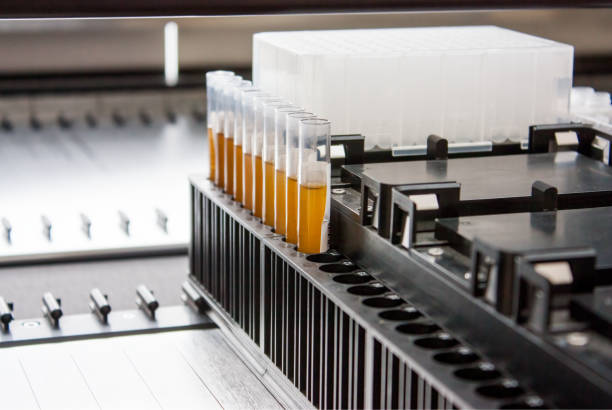
Unlike test strip analyzers, urine sediment analyzers focus on detecting and classifying formed elements.
Two important technologies are digital image analysis and flow cytometry.
Digital Image Analysis Technology
Digital image analysis uses optical systems and cameras to capture images of components present in urine samples.
Depending on the model, the device may use an observation chamber, flow system, or sample-processing mechanism before image acquisition.
Image-analysis software may support:
- Component detection.
- Cell classification.
- Component counting.
- Identification of morphological characteristics.
- Image storage for subsequent review by laboratory personnel.
For example, the cobas u 701 analyzer uses digital microscopy technology and software to identify urine sediment components.
Some Beckman Coulter systems use digital flow morphology technology to capture and classify images of urine components.
Advantages and Limitations
Digital imaging technology can help standardize image acquisition and storage.
Laboratory personnel can review captured images for quality assessment or result verification.
However, identification performance depends on:
- Image quality.
- Sample-preparation method.
- Classification algorithms.
- Validated component categories.
- Morphological similarities between components.
- Configured flagging rules.
Components with complex or atypical morphology may require microscopic review according to laboratory procedures.
Flow Cytometry Technology
Flow cytometry analyzes components as they move through a detection region within a flow system.
In some urine sediment analyzers, this technology is combined with fluorescence and light-scattering signals.
The analytical process may include:
1. The sample passes through the flow system.
2. Sample components enter the detection region.
3. The optical system collects light-scattering and fluorescence signals.
4. The software analyzes signal characteristics.
5. The analyzer counts or classifies components within its stated capabilities.
For example, the Sysmex UF-5000 system uses fluorescence flow cytometry to support counting and classification of urine components.
This technology may provide quantitative data for supported cell or particle categories.
However, instrument-generated flags are not always equivalent to direct morphological identification under a microscope.
Comparison of Urine Sediment Analysis Technologies
| Criterion | Digital Image Analysis | Flow Cytometry |
|---|---|---|
| Principle | Captures and processes images of sample components | Analyzes optical signals from components passing through a detection region |
| Primary data | Images, counts, and component categories | Counts, classifications, and characteristic signals |
| Morphological review | Direct image review may be available if supported | Additional imaging equipment may be required |
| Consumables | Depend on measurement chambers, cuvettes, and system design | May require reagents, sheath fluids, and control materials |
| Challenging cases | May require image review | May require confirmatory microscopy or additional methods |
| Evaluation factors | Image quality, algorithms, and review rate | Counting accuracy, classification performance, and flagging quality |
Neither technology can be considered universally superior for every laboratory. Selection should be based on sample characteristics, the components requiring analysis, validated performance, and operational capabilities.
4. How Does an Automated Urinalysis System Work?
The level of system automation depends on the configuration and connectivity between individual modules.
An automated workflow may include the following stages:
Sample reception → Barcode identification → Urine chemistry analysis → Sediment analysis → Flag review → Result validation → Data transmission to LIS
In integrated systems, certain stages may be performed continuously without manually transferring samples between analyzers.
Sample Identification and Management
The analyzer may use barcodes to associate urine samples with their corresponding laboratory information.
Functions to evaluate include:
- Barcode-reading capability.
- Invalid-sample identification.
- Number of sample positions.
- Continuous sample-loading capability.
- Priority sample handling.
- Management of samples requiring review.
Depending on the model, the system may require dedicated sample tubes or racks.
Integration of Chemistry and Sediment Results
Some systems allow urine chemistry results to be linked with sediment analysis results.
This helps laboratory personnel review complementary information from the same sample.
For example, a positive blood reagent-pad result and the red blood cell count obtained from a sediment analyzer represent two different types of data.
When results are inconsistent or flags are generated, the laboratory should apply established review and verification rules according to its professional procedures.
Can All Results Be Released Automatically?
Some systems support autoverification based on predefined rules.
However, automation does not completely eliminate the need for personnel review.
Cases involving flags, inconsistent data, or components that are difficult to classify may still require image review, microscopic examination, or additional testing methods.
Autoverification rules should be evaluated and validated by the laboratory before implementation.
5. How Does Sample Quality Affect Urinalysis Results?
The pre-analytical phase is an important factor affecting urinalysis result quality.
Even a high-performing analyzer may produce unreliable data if the sample is unsuitable.
Sample Container Type
Sample tubes or containers must be compatible with the analytical method and equipment.
When establishing procedures, laboratories should confirm:
- Sample container type.
- Minimum sample volume.
- Compatibility with sample racks.
- Cap requirements.
- Transport conditions.
- Whether preservatives may be used.
The same container or preservative should not automatically be used for every urinalysis method.
Time Between Collection and Analysis
Urine components may change over time.
For example, certain cells and sediment components may be affected by storage conditions. Changes in microbial activity or chemical reactions may also influence some parameters.
Facilities should therefore establish appropriate storage times and conditions for the testing methods used.
A single universal storage period should not be applied to every sample type and analytical technology.
When refrigeration or preservatives are required, procedures should be validated according to professional guidance and the compatibility of the consumables used.
Nonhomogeneous Samples and Abnormal Components
Several issues may affect automated sample aspiration:
- Uneven distribution of sediment.
- Aggregated components.
- Samples containing substantial mucus.
- Insufficient sample volume.
- Unsuitable sample or container conditions.
Depending on its design, the analyzer may provide sample-mixing functions, error detection, or warning messages.
However, automated functions cannot completely replace incoming sample-quality control.
Management of Unacceptable Samples
Laboratories should establish procedures for identifying and handling unsuitable samples, including:
- Sample acceptance criteria.
- Identification information.
- Sample volume.
- Transport conditions.
- Storage duration.
- Container condition.
- Procedures for handling abnormalities.
The EFLM European Urinalysis Guideline 2023, published in 2024, emphasizes the importance of sample quality, pre-analytical procedures, and method control in urinalysis.
6. Quality Control (QC) for Urine Analyzers
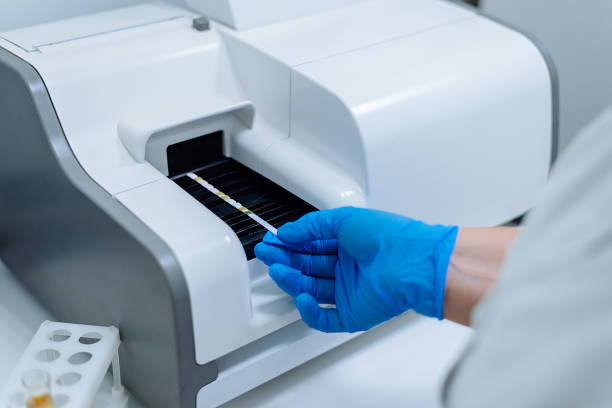
A urinalysis system should have a quality-control program appropriate to the technology used.
Internal Quality Control (IQC) monitors analytical performance using control materials and predefined criteria.
QC for Urine Test Strip Analyzers
Common areas to evaluate include:
- QC materials compatible with the test strips.
- Required control levels.
- Result stability.
- Acceptance limits.
- Condition of the light source and sensors.
- Compatibility between the analyzer and test strip lots.
- Procedures for handling failed QC results.
QC frequency should be consistent with manufacturer instructions and the laboratory's quality-management program.
Some systems automatically store QC results or generate alerts when results exceed acceptable limits.
QC for Urine Sediment Analyzers
For systems analyzing cells and other formed elements, laboratories should assess:
- Counting accuracy.
- Repeatability.
- Classification performance.
- Stability of the detection system.
- Image quality, where applicable.
- Flagging rate.
- Sample review rate.
Some QC materials are specifically designed for individual analytical platforms.
Therefore, control materials used with one analyzer should not automatically be considered suitable for another.
Performance Verification Before Routine Use
Before implementing new equipment, laboratories should verify performance within the intended scope of use.
Evaluation may include:
- Repeatability.
- Comparability with the existing method.
- Suitability of reporting units.
- Detection capability for relevant components.
- Flagging system.
- Data-connectivity testing.
- Result traceability.
For urine sediment analyzers, performance evaluation should include samples containing components that are difficult to identify, rather than only routine samples.
Role of ISO 15189:2022
ISO 15189:2022 – Medical laboratories: Requirements for quality and competence specifies requirements related to the quality and competence of medical laboratories.
Requirements concerning method verification, equipment management, quality control, personnel, and result reliability are directly relevant to urinalysis operations.
Referring to ISO 15189 can help laboratories establish appropriate quality-management systems, but it does not automatically mean that every healthcare facility in Vietnam must obtain accreditation under this standard.
7. Testing Throughput and Sample-Processing Capacity
When selecting a urine analyzer, throughput is an important specification but should not be evaluated in isolation.
Manufacturers may specify throughput in samples per hour under defined conditions.
However, actual throughput also depends on:
- Types of tests performed.
- Number of samples requiring sediment analysis.
- QC time.
- Consumable-replacement time.
- Continuous sample-loading capability.
- Number of flagged samples.
- Time required for personnel to review results.
- Data-connectivity systems.
Why Does Nominal Throughput Not Reflect Overall Efficiency?
An analyzer with high nominal throughput may not deliver the expected efficiency if a large proportion of samples require manual review.
Conversely, a laboratory with moderate sample volumes may not require a large automated system.
Facilities should therefore evaluate:
Analyzer throughput: the number of samples the device can process under specified conditions.
Turnaround time (TAT): the time from sample reception to completion of the workflow and reporting, according to the facility's measurement method.
Manual workload: the number of samples requiring manual processing or review.
Operational continuity: equipment availability and downtime.
Is a High-Throughput Integrated System Necessary?
This depends on laboratory size and operational requirements.
Facilities may consider an integrated system when they need to:
- Process large sample volumes.
- Combine chemistry and sediment testing within a single workflow.
- Reduce manual sample transfers.
- Improve consistency in result management.
- Establish centralized LIS connectivity.
However, laboratories should also account for installation space, technical personnel, consumable supply, and maintenance costs.
8. Consumables and Operating Costs
Investment in a urine analyzer involves more than the initial equipment purchase price.
Depending on the configuration, laboratories may require several categories of consumables.
| Consumable Category | Common Application |
|---|---|
| Urine test strips | Chemical analysis |
| QC solutions | Quality control |
| Calibration solutions | Used according to the technology and instructions |
| Sediment analysis reagents | Certain flow cytometry systems |
| System solutions | Cleaning or maintenance of the measurement pathway |
| Cuvettes and single-use consumables | Certain digital imaging systems |
| Sample tubes and accessories | Sample reception and processing |
| Replacement parts | Equipment maintenance |
Urine Test Strip Costs
When evaluating urine test strips, facilities should confirm:
- Number of parameters.
- Number of strips per box or cassette.
- Shelf life before and after opening.
- Storage conditions.
- Analyzer compatibility.
- Availability in Vietnam.
Some systems require proprietary test strips and do not support products from other suppliers.
Therefore, strip pricing should be considered alongside the supplier's long-term supply capability.
Reagent and Cuvette Costs
For urine sediment analyzers, consumable requirements can vary considerably.
For example:
- Flow cytometry systems may use specialized solutions and reagents.
- Digital imaging systems may use dedicated measurement chambers or cuvettes.
- Some modules are designed without analytical reagents but still require disposable consumables.
A reagent-free analytical design does not necessarily mean that the system has no consumable costs.
Cost per Valid Test Result
For procurement planning, laboratories should estimate total costs per valid test result.
Relevant expenses may include:
- Test strips and reagents.
- QC materials.
- Repeated tests.
- Expired or unused consumables.
- Maintenance costs.
- Replacement parts and software.
- Personnel and other operating expenses.
This approach provides a more realistic assessment of operational efficiency than comparing only analyzer prices or the cost of individual test strips.
9. LIS Connectivity and Laboratory Data Management
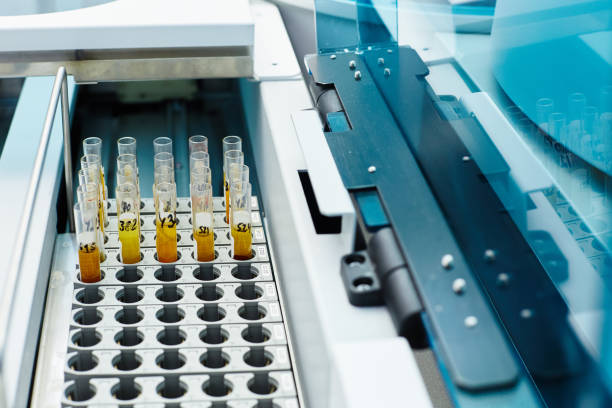
Data management and exchange capabilities are increasingly important criteria when investing in laboratory analyzers.
A Laboratory Information System (LIS) supports test-order reception, sample management, results, and related laboratory workflows.
Depending on the model, a urine analyzer may support:
- Barcode-based sample identification.
- Storage of urine chemistry results.
- Storage of sediment analysis results.
- Storage of sediment images.
- Abnormal-result flagging.
- QC status management.
- Data transmission to LIS.
- Operator-access permissions.
Issues to Confirm Before Integration
When evaluating equipment, laboratories should clarify:
Connectivity method: Which communication protocols and interfaces does the analyzer support?
Data scope: Can the system transmit both chemistry and sediment results?
Reporting units: Which units are used for exported results, and are they compatible with the existing LIS?
Result status: Does the system distinguish between unvalidated and validated results?
Image storage: Are sediment images stored and retrievable?
Connection interruptions: Can the system temporarily store and retransmit results after connectivity is restored?
Considerations Regarding Reporting Units
Some urine sediment analyzers report component counts in cells/µL, while microscopic methods may report findings per high-power field (HPF) or low-power field (LPF).
These reporting methods are based on different measurement principles.
Therefore, a single fixed conversion factor should not automatically be applied across all devices.
If a laboratory changes analytical methods or reporting units, it should evaluate result comparability, supported conversion rules, and how data are displayed in the LIS.
This is particularly important for facilities upgrading from manual urine sediment microscopy to automated analysis.
10. Ten Criteria for Selecting a Urine Analyzer for a Laboratory
Hospitals and laboratories may use the following framework when preparing equipment evaluations.
| Criterion | What Should Be Evaluated? |
|---|---|
| 1. Testing scope | Chemistry testing, sediment analysis, or an integrated system |
| 2. Analytical technology | Reflectance photometry, digital imaging, or flow cytometry |
| 3. Test menu | Parameters actually measured or analyzed by the equipment |
| 4. Result reliability | Repeatability, classification performance, and agreement with comparison methods |
| 5. Sample quality | Required volume, tube type, sample limitations, and flagging mechanisms |
| 6. Actual throughput | Samples per hour, QC time, and review rate |
| 7. Quality control | IQC, alerts, method verification, and record storage |
| 8. LIS connectivity | Barcodes, result transmission, data storage, and security |
| 9. Technical service | Training, maintenance, spare parts, and consumable supply in Vietnam |
| 10. Total lifecycle cost | Analyzer price, test strips, reagents, QC, maintenance, and software |
Common Mistakes When Selecting Equipment
Focusing only on the number of parameters: Failing to distinguish chemistry parameters, sediment components, and functions that provide only warning flags.
Confusing test strip analyzers with sediment analyzers: Purchasing equipment that does not provide all the functions required by the laboratory's test menu.
Comparing only samples-per-hour throughput: Overlooking result-review time and manual workflow stages.
Failing to evaluate classification performance: An analyzer may count certain components effectively but have limitations with rare components or complex morphology.
Overlooking QC procedures: Failing to prepare appropriate control materials or a performance-verification procedure.
Failing to assess consumable supply: Testing continuity may be affected if test strips or reagents are not consistently available.
Failing to verify LIS connectivity: Results may require manual entry or additional integration costs.
Considering only the initial purchase price: Failing to evaluate consumables, maintenance, and equipment downtime.
11. Equipment Evaluation Process Before Investment
To select an appropriate solution, laboratories should evaluate equipment based on their actual operational requirements.
Define the Laboratory Test Menu
First, the facility should determine:
- Will urine chemistry testing be performed?
- Is sediment analysis required?
- Which sediment components must be reported?
- Is image storage necessary?
- How might future testing requirements change?
This step helps identify the equipment categories that should be considered.
Evaluate Actual Sample Volumes
Facilities should compile:
- Average daily sample volume.
- Peak-hour sample volume.
- Proportion of samples requiring sediment analysis.
- Proportion requiring manual review.
- Expected increases in sample volume.
Evaluation should be based on actual laboratory operational data rather than solely on maximum throughput advertised by the manufacturer.
Performance Evaluation Requirements
In addition to reviewing specification sheets, laboratories should examine performance-evaluation documentation or conduct appropriate verification testing.
Important factors include:
- Repeatability.
- Detection capability for relevant components.
- Agreement with comparison methods.
- Handling of flagged samples.
- Image quality, where applicable.
- Stability during continuous analysis.
Assess Implementation Feasibility in Vietnam
For healthcare facilities in Vietnam, additional practical factors should be considered:
- Regulatory status and equipment documentation under applicable requirements.
- Distributor representation and technical-support capability.
- Availability of test strips, reagents, and accessories.
- Consumable-storage conditions during transportation.
- Instructions for use and training materials.
- Spare-parts availability.
- Equipment fault-response arrangements.
- Compatibility with existing information systems.
These factors can directly affect the sustainability of long-term laboratory operations.
12. Questions to Ask Urine Analyzer Suppliers
When working with suppliers, laboratories can use the following questions to evaluate the proposed solution:
1. Does the equipment perform only urine chemistry testing, or does it also support sediment analysis?
2. Does the analyzer use reflectance photometry, digital imaging, or flow cytometry?
3. Which parameters are measured or counted directly, and which are reported only as warning flags?
4. Which sediment components can the device identify, and which findings require confirmatory microscopy?
5. What is the actual throughput when QC time and abnormal-sample processing are included?
6. What are the shelf life and storage requirements for test strips, reagents, cuvettes, and QC materials?
7. Which IQC functions, result-storage capabilities, and image-retrieval functions are supported?
8. Can the analyzer connect to the existing LIS, and are middleware or additional licenses required?
9. Does the supplier support performance verification, training, and maintenance in Vietnam?
10. How is the total multi-year cost of ownership calculated, including consumables and maintenance expenses?
Facilities should request a demonstration using the exact analyzer configuration, test strips, consumables, and software they intend to purchase.
For sediment analysis systems, the evaluation should include both routine and flagged samples to assess how effectively the analyzer supports personnel during result review.
Frequently Asked Questions About Urine Analyzers
What Is a Urine Analyzer Used For?
A urine analyzer is used to analyze chemical parameters, physical characteristics, or formed elements in urine samples, depending on the device's technology and functional scope.
Can a 10-Parameter Urine Analyzer Perform Sediment Analysis?
Not necessarily. A 10-parameter urine analyzer commonly refers to a device that reads a chemical test strip containing 10 parameters. Sediment analysis requires an appropriate separate method and equipment.
Does Automated Urinalysis Still Require Microscopic Examination?
This depends on the system and laboratory procedures. Certain abnormal findings, flags, or components that are difficult to classify may still require confirmation using an appropriate microscopic method.
Can a Urine Sediment Analyzer Detect Bacteria?
Some systems can detect, count, or flag bacteria in urine samples. However, these results do not completely replace bacterial culture and identification when such testing is clinically required.
Does a Urine Analyzer Require Internal Quality Control?
Yes. The equipment should be managed through a QC program appropriate to its analytical technology, manufacturer instructions, and the laboratory's quality-management procedures.
Can a Urine Analyzer Connect to LIS?
Many systems support LIS connectivity. However, communication protocols, software, reporting units, and compatibility with existing infrastructure should be verified.
Should a Small Laboratory Choose a Semi-Automated or Fully Automated Analyzer?
The decision depends on sample volume, test menu, data-management needs, consumable costs, and staffing. A semi-automated analyzer may be suitable for certain operating scales, while automated systems may offer advantages as testing volumes and integration requirements increase.
Explore Urinalysis Technology and Laboratory Automation Solutions at Pharmedi Vietnam 2027
For hospitals and laboratories, selecting a urine analyzer should be based on the compatibility of urine chemistry technology, sediment-identification capabilities, sample-processing capacity, and quality-management systems.
In addition to equipment performance, the availability of test strips, reagents, and QC materials, together with LIS connectivity, directly affects operating costs and long-term reliability.
Pharmedi Vietnam 2027, taking place from September 28–30, 2027 at the Saigon Exhibition and Convention Center (SECC), Ho Chi Minh City, provides an opportunity for businesses, professionals, and healthcare organizations to meet, explore technologies, and discuss solutions supporting laboratory testing and healthcare delivery.
For facilities planning to invest in or upgrade urinalysis systems, Pharmedi Vietnam 2027 provides an opportunity to explore technological developments, assess supplier capabilities, and establish technical requirements before selecting equipment.
Relevant technology categories include urine test strip analyzers, automated urine sediment analysis systems, digital imaging technology, flow cytometry, and laboratory data-management solutions.
When discussing solutions with suppliers, hospitals and laboratories may focus on:
- Does the equipment support urine chemistry, sediment analysis, or both testing categories?
- Are the acquisition and analytical technologies suitable for the facility's test menu?
- How is the identification capability for cells, bacteria, and other sediment components verified?
- Which quality-control, flagging, and data-storage functions does the analyzer provide?
- Can the system connect to LIS and support automated sample-processing workflows?
- Does the supplier provide training, maintenance, and a reliable supply of consumables in Vietnam?
- How are total investment and long-term operating costs determined?
Preparing these criteria helps healthcare facilities proactively compare laboratory solutions and select configurations aligned with actual sample volumes, staffing, and operating conditions.
For urine analyzers, investment efficiency should be assessed based on result reliability, quality-control capability, an appropriate level of automation, and continuity of consumable supply rather than solely on the number of parameters or advertised maximum throughput.
Dates: September 28–30, 2027
Venue: Saigon Exhibition and Convention Center (SECC), Ho Chi Minh City
Exhibition Information: https://pharmed.vn/
Product Categories: https://pharmed.vn/exhibitors/products
Information about participating companies, industry networking activities, and exhibition programs will be updated according to official announcements from the Pharmedi Vietnam 2027 Organizing Committee.
This article is provided for informational purposes regarding the technologies, operating principles, and selection criteria for urine analyzers. It does not provide instructions for interpreting laboratory results for self-diagnosis or treatment. Testing, quality control, and result evaluation should be performed by appropriately qualified personnel in accordance with manufacturer instructions, facility procedures, and current applicable regulations.
Related post
- Pharma, healthcare exhibition to attract over 500 exhibitors
- What are the differences between 3-channel and 6-channel ECG machines? Key factors to consider when making a choice
- MỚI: VIỆT NAM LÀ NƯỚC ĐẦU TIÊN TRÊN THẾ GIỚI NỘI SOI TUYẾN GIÁP MỘT LỖ THÀNH CÔNG
- 5 Reasons Why PHARMEDI & HEALTHCARE VIETNAM 2026 Remains the Premier Meeting Point for the Healthcare Industry
- Vietnam starts COVID-19 vaccine trials on monkeys