


A Class II Biological Safety Cabinet (BSC) is protective equipment used in laboratories to reduce the risk of exposure to biological agents that may become airborne as aerosols. The cabinet combines controlled airflow with High-Efficiency Particulate Air (HEPA) filtration to help protect personnel, laboratory samples, and the surrounding environment when properly installed, tested, and operated.
In hospitals, diagnostic laboratories, and research facilities across Vietnam, Class II Biological Safety Cabinets are important components of laboratory biosafety programs. However, not all cabinet types have the same design or installation requirements.
What Is a Class II Biological Safety Cabinet?
A Class II Biological Safety Cabinet is a biological containment device that uses directional airflow and high-efficiency filtration to limit the release of potentially hazardous biological aerosols.
- Personnel protection: Helps prevent aerosols generated inside the work area from escaping toward the operator.
- Product and sample protection: Provides HEPA-filtered downward airflow over the work area to reduce the risk of contamination from the surrounding environment.
- Environmental protection: Filters particles from exhaust air before the air is discharged into the laboratory or outdoors, depending on the configuration.
However, the cabinet's protective performance can only be maintained when airflow, filters, and related components operate within the required technical specifications.
Is a Class II Biological Safety Cabinet the Same as a Biosafety Level 2 Laboratory?
No.
Having a Class II cabinet does not automatically mean that a laboratory meets all Biosafety Level 2 (BSL-2) requirements.
1. Main Components of a Class II Biological Safety Cabinet
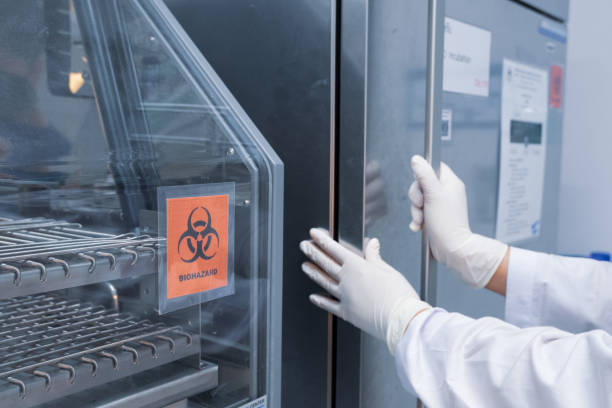
| Component | Function |
|---|---|
| Work chamber | Provides the enclosed work area inside the cabinet |
| Front sash | Provides visibility and defines the working opening |
| Fan system | Generates and maintains airflow |
| Supply HEPA filter | Filters the downward airflow entering the work area |
| Exhaust HEPA filter | Filters particles from air leaving the system |
| Front and rear air grilles | Collect airflow from the work area |
| Air plenums | Distribute and direct airflow |
| Sensors and controllers | Monitor operating parameters according to the cabinet design |
| Alarm system | Provides warnings when operating conditions fall outside specified limits |
| Work-area lighting | Provides illumination inside the work chamber |
The specific components depend on the cabinet type, manufacturer design, and performance requirements.
Work Chamber
The work chamber is the area where materials are placed and laboratory activities are performed inside the cabinet.
- Working-space dimensions.
- Accessibility and ease of cleaning.
- Design of corners and joints.
- Removability of components approved for disassembly.
- Materials and resistance to cleaning chemicals.
- Locations of air intake grilles.
A larger work chamber does not automatically provide greater protection if the airflow system is not appropriately designed and maintained.
Front Sash
Many Class II cabinets use a sliding front window, commonly referred to as a sash.
Some models include sensors or alarms that activate when the sash is outside its specified operating position.
- Manufacturer-specified working position.
- Visibility.
- Ease of operation.
- Sash-position alarms.
- Protective mechanisms for abnormal operating conditions.
Fan and Control System
The fan system creates pressure differences and maintains the required airflow patterns.
- Fan operating status.
- Air velocity or airflow volume.
- Sensor-related readings.
- Sash position.
- Technical alarms.
- Operating hours.
However, automatic fan-speed adjustment does not replace the need for actual cabinet performance testing.
2. Airflow Principles of Class II Biological Safety Cabinets
Airflow design is the most important characteristic distinguishing biological safety cabinets from other laboratory enclosures.
- Inflow: Air drawn into the cabinet through the front opening.
- Downflow: HEPA-filtered air directed downward into the work area.
- Exhaust airflow: Air routed through the exhaust filtration system.
Inflow
Protective performance depends on the front-opening design, inflow velocity, airflow stability, and surrounding environmental conditions.
If airflow is significantly disturbed, the cabinet's ability to contain aerosols within the work chamber may be reduced.
Downflow
Air passes through the supply HEPA filter before flowing downward into the work area.
However, airflow uniformity depends on cabinet design, fan configuration, filter condition, and the materials positioned inside the cabinet.
Exhaust Airflow
- Discharged back into the laboratory.
- Directed outside the building through an appropriate exhaust system.
- Distributed according to the specific cabinet type.
This is one of the important distinctions among Types A1, A2, B1, B2, and C1.
Example of Airflow Patterns in a Class II Type A2 Cabinet
1. Room air is drawn into the cabinet through the front opening.
2. Air from the work chamber is collected through the air grilles.
3. The airflow system directs air into the appropriate processing pathways.
4. Most of the air passes through HEPA filtration and recirculates as downward airflow.
5. The remaining air passes through the exhaust HEPA filter before being discharged into the room or an appropriate exhaust system.
According to the World Health Organization (WHO), Type A2 cabinets typically recirculate approximately 70% of their air and exhaust approximately 30%.
Why Must Air Grilles Remain Unobstructed?
The front and rear air grilles play an important role in maintaining the intended airflow pathways.
Reference: WHO – Laboratory Biosafety Manual, 4th edition, and the associated monograph on biological safety cabinets and other primary containment devices.
3. The Role of HEPA Filters in Biological Safety Cabinets
HEPA (High-Efficiency Particulate Air) filters are designed to capture particles from an airflow stream.
How Do HEPA Filters Work?
A HEPA filter does not function simply as a mesh with openings smaller than the particles being filtered.
- Inertial impaction.
- Interception.
- Diffusion.
- Other interactions depending on particle size and characteristics.
Therefore, healthcare facilities should evaluate filter standards, testing methods, and performance certification rather than relying only on an advertised filtration percentage.
Can HEPA Filters Capture Microorganisms?
HEPA filters can capture particles, including aerosols carrying microorganisms, within their validated performance and operating conditions.
However, HEPA filtration is not equivalent to sterilizing all air by killing every microorganism captured by the filter.
Can HEPA Filters Remove Chemical Vapors?
HEPA filters are designed to capture particles, not to effectively remove chemical gases and vapors.
When Should HEPA Filters Be Replaced?
HEPA replacement should not be determined solely by a fixed schedule applied to every cabinet.
- Filter performance.
- Leakage condition.
- System characteristics.
- Airflow resistance.
- Operating conditions.
- Technical inspection results.
- Manufacturer instructions.
4. Classification of Class II Biological Safety Cabinets: A1, A2, B1, B2, and C1
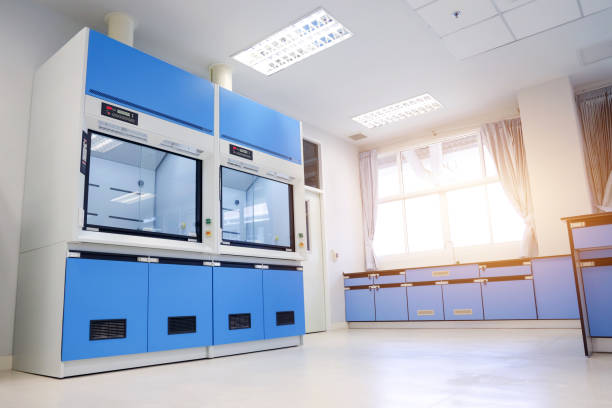
Under the classification system commonly used in NSF/ANSI standards and CDC/NIH guidance, Class II Biological Safety Cabinets include Types A1, A2, B1, B2, and C1.
Class II Type A1 Biological Safety Cabinet
- Draws air inward through the front opening.
- Provides HEPA-filtered downward airflow.
- Recirculates a portion of the air inside the cabinet.
- Filters exhaust air through HEPA filtration before discharge according to the configuration.
Under the NSF/ANSI classification, Type A1 cabinets have a lower minimum average inflow velocity than Type A2 cabinets.
Therefore, the specific design documentation and installation requirements should be reviewed during equipment evaluation.
Class II Type A2 Biological Safety Cabinet
- Inward airflow through the front opening.
- HEPA-filtered downward airflow.
- Approximately 70% air recirculation.
- Approximately 30% HEPA-filtered exhaust air.
- Airflow pathways designed to improve the control of potential leakage risks.
Under the NSF/ANSI standard, Type A2 cabinets have a minimum average inflow velocity of 100 feet per minute, equivalent to approximately 0.51 m/s, under specified test conditions.
If a procedure involves chemicals that may generate vapors, the cabinet type and exhaust arrangement must be evaluated separately.
Class II Type B1 Biological Safety Cabinet
Type B1 cabinets use airflow and exhaust configurations that differ from Type A2 designs.
- A portion of the air is recirculated.
- Most of the air is directed through an external exhaust system.
- The cabinet requires connection to a dedicated exhaust system.
- Protective performance depends on proper coordination between the cabinet and the building ventilation system.
Type B1 may be considered for applications involving specific biological containment requirements and the control of small quantities of chemical vapors under validated conditions.
Class II Type B2 Biological Safety Cabinet
Type B2 cabinets are designed to exhaust all system air outdoors without recirculating air within the work chamber under the standard configuration.
- Incoming air is processed and directed through the system's airflow pathways.
- No air is recirculated into the work chamber under the Type B2 design.
- All exhaust air is directed outside the building.
- Appropriate exhaust ductwork and fan systems are required.
- Specific interlock and safety-control requirements apply.
However, HEPA filtration still provides particle removal only. Exhausting air outdoors does not mean that every chemical hazard has been eliminated.
Class II Type C1 Biological Safety Cabinet
Type C1 is a configuration included in the NSF/ANSI classification system and referenced in CDC/NIH documentation.
- Which operating modes does the system support?
- How do recirculation and exhaust airflow rates change between modes?
- Is an exhaust duct connection required?
- Which chemical-safety conditions have been validated by the manufacturer?
- Under which configurations must the system be tested?
Type C1 cabinets should not be evaluated solely by their classification name without considering the actual installation configuration.
Comparison of Class II Biological Safety Cabinet Types
| Cabinet Type | Airflow Characteristics | Exhaust Requirements |
|---|---|---|
| A1 | Air recirculation with HEPA-filtered downflow | May discharge filtered air into the room or through an approved configuration |
| A2 | Typically approximately 70% recirculation and 30% exhaust | May discharge into the room or use an appropriate canopy connection |
| B1 | Partial recirculation, with most air exhausted outdoors | Requires a dedicated exhaust system |
| B2 | No air recirculation within the cabinet | All air is exhausted outdoors through an appropriate system |
| C1 | Specialized airflow configuration according to the design | Depends on the certified operating mode and configuration |
This table summarizes general classification principles only. Equipment selection must be based on risk assessment and manufacturer-specified technical characteristics.
5. How Do Biological Safety Cabinets Differ from Clean Benches and Chemical Fume Hoods?
Some laboratory enclosures have similar appearances but serve different protective purposes.
Biological Safety Cabinet (BSC)
Designed to reduce the risk of exposure to potentially hazardous biological aerosols.
Clean Bench or Laminar Flow Clean Bench
Therefore, this equipment should not be considered a substitute for a biological safety cabinet when work involves the risk of generating infectious aerosols.
Chemical Fume Hood
A conventional chemical fume hood is not designed to provide a clean work zone that protects samples from contamination using the same mechanism as a Class II BSC.
Comparison of Three Laboratory Enclosure Types
| Criterion | Class II Biological Safety Cabinet | Laminar Flow Clean Bench | Chemical Fume Hood |
|---|---|---|---|
| Protection of personnel from biological aerosols | Yes, within the validated scope | Not a primary protective function | Not designed to replace a BSC |
| Protection of samples from environmental particle contamination | Yes | Yes | Not a primary function |
| Environmental protection from biological aerosols | Yes | Not designed for this purpose | Not a primary function |
| Chemical vapor control | Depends on cabinet type and configuration, with limitations | Not suitable | Primary function |
| HEPA filtration | Yes | Commonly used for supply air | Not necessarily included |
| Primary applications | Work involving biological hazards based on risk assessment | Work requiring a clean environment for sample protection | Work involving hazardous chemical gases or vapors |
A laminar flow clean bench should not be used as a substitute for a biological safety cabinet. Likewise, a conventional Type A2 BSC should not be used as a replacement for a chemical fume hood.
6. Site Selection and Installation Requirements for Biological Safety Cabinets
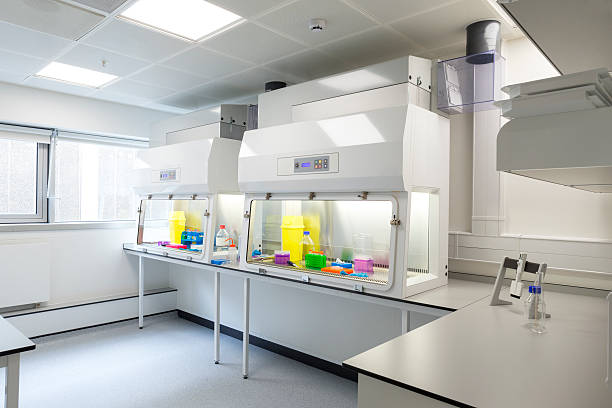
According to WHO guidance, inflow at the front opening of a BSC can be affected by air movement in the surrounding environment.
Avoid Areas with Disturbed Airflow
- Doorways.
- Windows.
- Air-conditioning supply outlets.
- Airflow generated by fans or other equipment.
- High-traffic corridors.
- Areas where strong air currents may occur.
A cabinet that meets technical performance requirements under standard testing conditions may still be affected if installed in an environment with significant airflow disturbances.
Maintenance Clearance
- Filter inspection.
- Access to technical components.
- Exhaust airflow inspection.
- Removal and installation of components permitted by the manufacturer.
- Routine maintenance activities.
A single fixed installation clearance should not be applied to every cabinet type.
Electrical Power and Ventilation Systems
- Electrical power supply.
- Power consumption.
- Grounding requirements.
- Laboratory ventilation conditions.
- Ability to connect to an exhaust system when required.
- Alarm mechanisms for power loss or airflow failure.
- Response arrangements for ventilation-system malfunctions.
For Type A2 cabinets, direct rigid connection to the building exhaust system should not be made unless it is compatible with the certified cabinet design.
Cabinet Dimensions
- Work surface area.
- Work chamber depth.
- Working height.
- Overall dimensions.
- Installation space.
- Transportation and delivery requirements.
- Number of operators permitted under the design.
A wider cabinet should not automatically be prioritized over airflow requirements, laboratory layout, and operating costs.
7. Technical Testing and Performance Certification of Biological Safety Cabinets
According to the CDC/NIH Biosafety in Microbiological and Biomedical Laboratories (BMBL) guidance, biological safety cabinets should be tested upon installation, at least annually, and after significant changes such as relocation, HEPA filter replacement, or repairs to components affecting performance.
Common Performance Tests
| Test Item | Purpose |
|---|---|
| Inflow velocity | Evaluates airflow characteristics at the cabinet opening |
| Downflow velocity | Evaluates the distribution of supply airflow |
| HEPA filter leak test | Detects leaks in filters and related locations |
| Airflow pattern test | Observes the direction and movement characteristics of airflow |
| Alarm verification | Confirms system responses to unacceptable operating conditions |
| Sash inspection | Evaluates the operating position and associated alarms |
| Exhaust system inspection | Confirms conditions appropriate to the exhaust connection configuration |
| Electrical and related functional checks | Evaluates operating condition using the applicable test methods |
The specific test requirements depend on the applicable standard, cabinet type, and testing method.
HEPA Filter Leak Testing
- Damaged filters.
- Incorrect installation.
- Leaks at gaskets or frames.
- Defects at connection points.
Therefore, the filtration system should be tested after installation rather than relying solely on certification documents for the individual filter.
Airflow Pattern Testing
Some testing methods use specialized smoke to visualize airflow movement.
- Airflow direction at the front opening.
- Downflow characteristics.
- Areas with abnormal airflow patterns.
- Ability to maintain the protective zone under the test method.
When Should a Biological Safety Cabinet Be Retested?
- After installation.
- Periodically, at least annually according to BMBL guidance.
- After relocation.
- After HEPA filter replacement.
- After major repairs affecting airflow or protective systems.
- When abnormal operation indicates the need for evaluation.
The actual testing frequency and scope should comply with the applicable standards, manufacturer instructions, and the facility's biosafety program.
8. NSF/ANSI 49 and Other Relevant Technical References
When selecting a Class II Biological Safety Cabinet, hospitals should refer to relevant international standards and technical guidance.
NSF/ANSI 49:2026
NSF/ANSI 49:2026 – Biosafety Cabinetry: Design, Construction, Performance, and Field Certification is the standard edition published by NSF in September 2026.
- Personnel protection.
- Product and environmental protection.
- Airflow performance.
- Filtration systems.
- Structural stability.
- Cleanability.
- Noise levels.
- Vibration.
- Lighting.
- Performance of fans and related components.
When evaluating technical documentation, facilities should confirm which edition of the standard the specific cabinet model complies with and which supporting certification documents are available.
WHO Laboratory Biosafety Manual – 4th Edition
WHO provides guidance on biosafety management, risk assessment, and the selection of protective measures for laboratories.
CDC/NIH BMBL – 6th Edition
Biosafety in Microbiological and Biomedical Laboratories (BMBL) is a laboratory biosafety practice guide issued by the CDC and NIH.
Regulations in Vietnam
When purchasing and operating biological safety cabinets, facilities should review current regulations concerning laboratory biosafety.
- Decree No. 103/2016/ND-CP: Regulations on ensuring biosafety in laboratories.
- Circular No. 37/2017/TT-BYT: Regulations on biosafety practices in laboratories.
Purchasing a cabinet that meets an international standard does not replace the obligation to assess laboratory conditions or comply with applicable legal requirements.
9. Operation and Maintenance Requirements for Biological Safety Cabinets
Important operational considerations extend beyond HEPA filters to include the fan system, sensors, sash, work surfaces, and installation conditions.
Checking Operating Status
Before using the cabinet, trained personnel should verify its operating status according to facility procedures and manufacturer instructions.
- System operating status.
- Sash position.
- Airflow alarms.
- Condition of the work surface.
- Visible abnormalities.
- Validity of performance certification.
- Surrounding environmental conditions.
Cleaning and Decontamination
- Type of laboratory work.
- Biological hazards.
- Surface materials.
- Manufacturer instructions.
- Approved cleaning and decontamination chemicals.
- Personnel safety requirements.
Therefore, chemical compatibility should be confirmed before selecting a decontamination agent.
Can UV Lamps Replace Cleaning and Decontamination?
No.
According to WHO guidance, the use of UV lamps inside biological safety cabinets should not be considered a substitute for fundamental biological risk-control measures.
Maintenance and Component Replacement
- Fans and motors.
- Sensors.
- Control systems.
- Sash.
- Gaskets.
- HEPA filters.
- Lighting.
- Alarm systems.
- Exhaust connection components.
The cabinet should be appropriately decontaminated before maintenance activities that may involve contact with contaminated components, particularly before HEPA filter replacement.
Why Should HEPA Filters Not Be Replaced Solely According to a Fixed Schedule?
If a filter is replaced before replacement is technically necessary, the facility may incur unnecessary costs.
Therefore, HEPA replacement decisions should be based on inspection results and relevant technical requirements.
10. Ten Criteria for Selecting a Class II Biological Safety Cabinet for a Laboratory
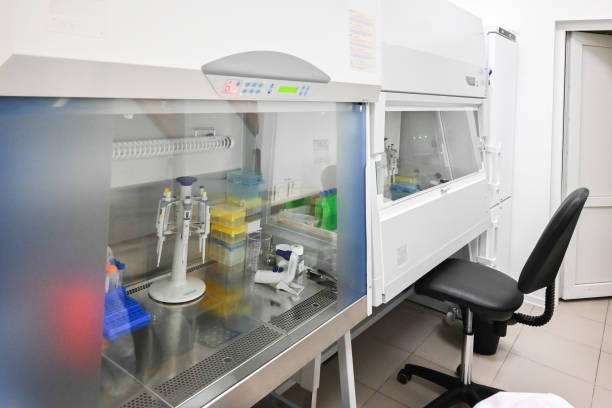
For hospitals, diagnostic laboratories, and research facilities in Vietnam, equipment selection should begin with risk assessment and an evaluation of intended use.
| Criterion | What Should Be Evaluated? |
|---|---|
| 1. Intended use | Type of work, aerosol hazards, and protection requirements |
| 2. Cabinet classification | A1, A2, B1, B2, or C1 according to the appropriate configuration |
| 3. Airflow system | Inflow, downflow, recirculation, and exhaust airflow |
| 4. HEPA filters | Filtration standards, leak testing, and replacement availability |
| 5. Work chamber dimensions | Suitability for available space and workload |
| 6. Alarm system | Monitoring of airflow, sash position, and operating status |
| 7. Installation conditions | Location, power supply, ventilation, and maintenance clearance |
| 8. Performance testing | Certification records, acceptance testing, and periodic verification |
| 9. Technical service | Installation, training, HEPA replacement, and maintenance in Vietnam |
| 10. Total lifecycle cost | Cabinet price, electricity, testing, filters, maintenance, and infrastructure |
Common Mistakes When Purchasing Biological Safety Cabinets
Selecting equipment solely based on the Class II designation: Failing to confirm whether the cabinet is Type A2, B1, B2, or another specific configuration.
Using a Type A2 cabinet instead of a chemical fume hood: Overlooking hazards associated with chemical or solvent vapors.
11. Questions to Ask Suppliers Before Investing
1. Is the equipment classified as A1, A2, B1, B2, or C1, and which intended uses does it support?
2. Does the cabinet have documentation demonstrating compliance with NSF/ANSI 49 or other relevant standards?
3. How are inflow velocity, downflow velocity, and air recirculation designed?
4. Which standards apply to the HEPA filters, and how is filter leakage tested?
5. Does the equipment require connection to the building exhaust system?
6. What are the electrical, air-conditioning, location, and maintenance-clearance requirements?
7. Does the system provide airflow or sash-position alarms?
8. Does the supplier perform post-installation performance testing and provide the relevant certification records?
9. How are periodic testing, HEPA replacement, and maintenance services provided in Vietnam?
10. How is the total multi-year operating cost calculated, including electricity, spare parts, filters, and technical testing?
Facilities should request a supplier site assessment before finalizing the equipment configuration and clarify responsibilities for acceptance testing and technical support after handover.
Frequently Asked Questions About Class II Biological Safety Cabinets
What Is a Class II Biological Safety Cabinet?
It is a protective laboratory device that uses directional airflow and HEPA filtration to help protect operators, samples, and the environment from the release of biological aerosols.
Are Class II Biological Safety Cabinets and BSL-2 Laboratories the Same?
No. Class II refers to a classification of protective equipment, while BSL-2 refers to a laboratory biosafety level.
What Types of Class II Biological Safety Cabinets Are Available?
Under the NSF/ANSI classification system, commonly referenced types include A1, A2, B1, B2, and C1. They differ in airflow characteristics, recirculation, and exhaust arrangements.
Does a Class II Type A2 Cabinet Require an External Exhaust Duct?
Not every Type A2 cabinet requires connection to an external exhaust duct. Some models may discharge HEPA-filtered air back into the room, while other configurations use an appropriate canopy connection.
Can a Biological Safety Cabinet Remove Chemical Vapors?
HEPA filters primarily capture particles and do not effectively remove chemical gases and vapors. The suitability of a cabinet for work involving chemicals must be assessed according to the cabinet type, exhaust system, and specific safety conditions.
Does a Class II Biological Safety Cabinet Require Periodic Testing?
Yes. According to CDC/NIH BMBL guidance, the cabinet should be tested upon installation, at least annually, and after significant changes that may affect performance.
Can a Biological Safety Cabinet Replace a Chemical Fume Hood?
The two types of equipment should not be considered equivalent. A BSC is designed to control biological hazards, while a chemical fume hood is primarily designed to control exposure to chemical gases and vapors.
When Should HEPA Filters Be Replaced?
Replacement depends on filtration performance, filter condition, technical inspection results, and manufacturer instructions. A single fixed replacement schedule should not be applied to every cabinet.
Explore Class II Biological Safety Cabinets and Laboratory Protection Solutions at Pharmedi Vietnam 2027
For hospitals, diagnostic laboratories, and research facilities, selecting a Class II Biological Safety Cabinet involves more than purchasing equipment with HEPA filtration. Airflow design, personnel protection, installation conditions, and performance-testing programs all directly affect safety during operation.
Pharmedi Vietnam 2027, taking place from September 28–30, 2027 at the Saigon Exhibition and Convention Center (SECC), Ho Chi Minh City, provides an opportunity for equipment suppliers, specialists, and healthcare organizations to meet, explore technologies, and discuss solutions supporting laboratory operations.
Relevant solution categories include Class II Biological Safety Cabinets, HEPA filtration technology, airflow-control equipment, alarm systems, and solutions supporting laboratory performance testing.
- Which Class II cabinet type is appropriate for the facility's risk assessment and intended use?
- What are the technical characteristics of the airflow design and HEPA filtration system?
- Which standards have been used to evaluate or certify the equipment?
- What location, electrical, and ventilation conditions must the laboratory provide?
- Does the supplier offer performance testing after installation and periodically thereafter?
- Are filters, fans, sensors, and spare parts reliably available in Vietnam?
- How are total investment, testing, and long-term maintenance costs determined?
Dates: September 28–30, 2027
Venue: Saigon Exhibition and Convention Center (SECC), Ho Chi Minh City
Exhibition Information: https://pharmed.vn/
Product Categories: https://pharmed.vn/exhibitors/products
This article is provided for informational purposes regarding the operating principles, classifications, and selection criteria for Class II Biological Safety Cabinets. Risk assessment, equipment selection, performance testing, and the development of operating procedures should be carried out by appropriately qualified personnel in accordance with manufacturer instructions and applicable regulations.
Related post
- Người có nhóm máu nào có nguy cơ nhiễm SARS-CoV-2 cao hơn?
- Triển lãm Y tế Việt Nam lần thứ 12 chính thức khởi động
- Hospital Medical Equipment Procurement Process: From Needs Assessment to Acceptance
- Quarantine procedure according to the People's Committee of Ho Chi Minh City for international entry at Tan Son Nhat airport
- Việt Nam succeeds in isolating coronavirus, faster detection kits and treatment expected