


An electrosurgical unit (ESU) uses high-frequency electrical current to produce controlled thermal effects in tissue, supporting functions such as tissue cutting and coagulation for hemostasis during surgery. The equipment is used across many specialties, from general surgery and obstetrics and gynecology to more specialized surgical disciplines.
In practice, an ESU may also be described as an electrosurgical generator, high-frequency surgical unit, or electrosurgery system. A typical system consists of a high-frequency generator, electrosurgical handpieces, electrodes, controls, and the corresponding safety accessories.
Modern devices may support monopolar and bipolar modes, cutting, coagulation, or specialized vessel-sealing technologies. However, not every electrosurgical unit includes all these functions.
For hospitals, selecting an electrosurgical unit involves more than comparing output power. Facilities should also evaluate energy-control technology, accessory compatibility, return-electrode monitoring, alarm functions, and operating-room safety requirements.
This article explains the principles of electrosurgery, system components, operating modes, risks that must be controlled, and criteria for selecting electrosurgical equipment for healthcare facilities in Vietnam.
What Is an Electrosurgical Unit (ESU)?
An electrosurgical unit (ESU) is a medical electrical device that generates high-frequency electrical current to produce effects on tissue through surgical electrodes.
When high-frequency current passes through tissue, electrical energy is converted into heat due to the tissue's resistance to current flow. Depending on the energy characteristics and contact conditions, this thermal effect can be used for tissue cutting or coagulation to achieve hemostasis.
Unlike a mechanical scalpel, an electrosurgical unit does not primarily create an incision with a sharp blade. Instead, it uses thermal effects generated within the tissue exposed to electrical current.
An electrosurgical system may support:
- Tissue cutting using high-frequency electrical energy.
- Coagulation for hemostasis.
- Adjustment of output-energy characteristics.
- Monopolar operation.
- Bipolar operation.
- Connection to compatible surgical instruments.
- Monitoring of certain operating-safety parameters.
The available functions depend on the design, power capabilities, and technology of the specific model.
According to the Association of periOperative Registered Nurses (AORN), an electrosurgical system generally includes an energy generator, instruments that deliver energy to tissue, and the accessories needed to establish an appropriate electrical circuit.
Is Electrosurgery the Same as Electrocautery?
Not exactly.
Two terms that are often used interchangeably are electrosurgery and electrocautery.
- Electrosurgery: High-frequency electrical current passes through tissue to produce a thermal effect.
- Electrocautery: Electrical energy heats a component of an instrument, and heat is transferred from that component to tissue, rather than requiring surgical electrical current to pass through the tissue by the same mechanism.
In Vietnamese, both may be referred to generically as an electric cautery device or electric scalpel. When developing technical specifications and procurement documentation, however, healthcare facilities should clearly distinguish the operating principles.
1. Operating Principles of High-Frequency Electrosurgery
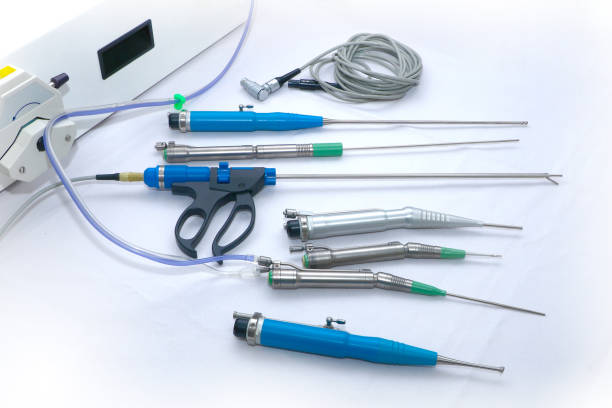
Electrosurgery is based on the conversion of electrical energy into heat within biological tissue.
A high-frequency generator produces electrical current at a frequency appropriate to the system design. The current is delivered to tissue through a surgical electrode or instrument.
Why Is High-Frequency Current Used?
Low-frequency electrical current can stimulate nerves and muscles.
In electrosurgery, using high-frequency current helps limit the direct neuromuscular stimulation commonly associated with lower frequencies.
However, this does not mean that high-frequency current is completely free of risk.
Thermal effects, unintended current paths, and accessory-related problems can still cause injury if the equipment is used under inappropriate conditions.
How Does Electrical Current Generate Heat in Tissue?
As electrical current passes through tissue, heat is generated through the interaction between current and tissue impedance.
In principle, the amount of thermal energy produced is related to factors such as:
- Current intensity.
- Duration of energy application.
- Tissue impedance.
- Electrode contact area.
- Waveform characteristics.
- Energy-control technology.
The waveform and method of energy delivery can produce different effects on tissue.
Consequently, the same power setting displayed on a generator does not necessarily produce the same effect when different electrodes or operating modes are used.
Does an Electrosurgical Unit Use Direct Current?
High-frequency electrosurgical systems use high-frequency alternating electrical energy generated according to the design of the generator.
Frequency, voltage, power, and waveform characteristics may vary from one device to another.
A system's cutting or coagulation capability should not be determined from its frequency alone.
2. What Is the Difference Between Monopolar and Bipolar Electrosurgery?
The two most common methods of electrosurgery are monopolar and bipolar.
The key differences involve the electrical current path and instrument configuration.
Monopolar Electrosurgery
In monopolar mode, high-frequency current is delivered from the generator to the active electrode at the surgical site.
The current passes through the patient's tissue and returns to the generator through an appropriately designed return electrode.
In principle, the electrical circuit is:
High-frequency generator → Active electrode → Patient tissue → Return electrode → Generator
The return electrode is commonly called the neutral electrode or patient return electrode.
In practice, it may sometimes be called a “grounding pad,” but that term can be misleading.
The primary function of the return electrode is to provide a suitable path for current to return to the generator, not simply to conduct current into the ground.
Characteristics of Monopolar Mode
- Can support multiple cutting and coagulation modes.
- Can use handpieces and electrodes in different shapes.
- Generally requires a compatible return electrode.
- The current path includes a portion of the patient's tissue.
- Requires control of burn risks and unintended current paths.
Bipolar Electrosurgery
In bipolar mode, both electrical poles are integrated into the same instrument, such as bipolar electrosurgical forceps.
Current flows primarily through the tissue between the two instrument poles before returning through the system.
Conventional bipolar electrosurgery therefore does not require a separate return electrode attached to the patient.
Common characteristics include:
- A more localized current path.
- Suitability for a range of coagulation and hemostasis applications.
- No separate patient return-electrode path as used in monopolar operation.
- Performance dependent on the forceps, electrode tips, and generator technology.
However, bipolar operation does not eliminate the risk of thermal injury.
Energy may still affect unintended tissue when operating conditions are inappropriate.
Comparison of Monopolar and Bipolar Electrosurgery
| Criterion | Monopolar Electrosurgery | Bipolar Electrosurgery |
|---|---|---|
| Current path | Through tissue to a separate return electrode | Primarily through tissue between two instrument poles |
| Separate return electrode | Generally required | Not required in conventional bipolar configurations |
| Common instruments | Electrosurgical pencils; needle, loop, ball, or specialized electrodes | Bipolar forceps and instruments |
| Functions | Cutting, coagulation, and configuration-specific modes | Coagulation, tissue sealing, or other functions depending on the design |
| Safety considerations | Return-current path, electrode contact, and insulation | Insulation, extent of thermal effects, and instrument compatibility |
| Applications | Multiple surgical specialties | Applications requiring appropriate control of the treatment area |
Bipolar mode cannot be considered universally superior to monopolar mode. Each method has its own intended uses, advantages, and limitations.
The choice should be based on clinical requirements and the capabilities of the system.
3. Cutting and Coagulation Modes of Electrosurgical Units
An electrosurgical generator may provide several different energy-delivery modes.
These modes are commonly distinguished by waveform characteristics, voltage, energy duty cycle, and control technology.
Cut Mode
Cut mode is designed to produce a tissue-cutting effect.
In many systems, cutting mode uses a relatively continuous waveform.
Thermal energy concentrated in an appropriate tissue region can cause intracellular water to vaporize, helping create an incision.
However, specific energy characteristics vary by device.
Coagulation Mode
Coagulation mode is designed to produce tissue coagulation for hemostasis or tissue modification according to the intended clinical application.
Some systems use interrupted waveforms or peak voltages different from those used in cutting mode.
Commonly marketed coagulation modes may include:
- Soft Coagulation.
- Forced Coagulation.
- Spray Coagulation.
- Other manufacturer-specific coagulation modes.
Not every model supports all these modes.
Blend Mode
Blend mode is designed to produce tissue effects with characteristics between cutting and coagulation, according to the generator design.
The term “blend” does not mean that the equipment simply adds together the power settings of Cut and Coag modes.
Waveform, voltage, and duty cycle are specifically designed by the manufacturer.
Different Blend settings are not necessarily equivalent across brands.
Comparison of Electrosurgical Modes
| Mode | Primary Purpose | Technical Consideration |
|---|---|---|
| Cut | Produces a tissue-cutting effect | Waveform characteristics vary by device |
| Blend | Combines cutting and coagulation characteristics according to the design | No universal power conversion between manufacturers |
| Coag | Produces tissue coagulation and hemostasis | Multiple energy-delivery characteristics are available |
| Bipolar Coag | Coagulates tissue using bipolar instruments | Compatible instruments and connection ports are required |
| Vessel Sealing | Seals vessels or tissue using a specialized system | Not a standard feature of all bipolar generators |
During procurement, hospitals should ask suppliers to explain the technology behind each operating mode rather than merely comparing the number of mode names displayed on the screen.
4. Common Types of Electrosurgical Units
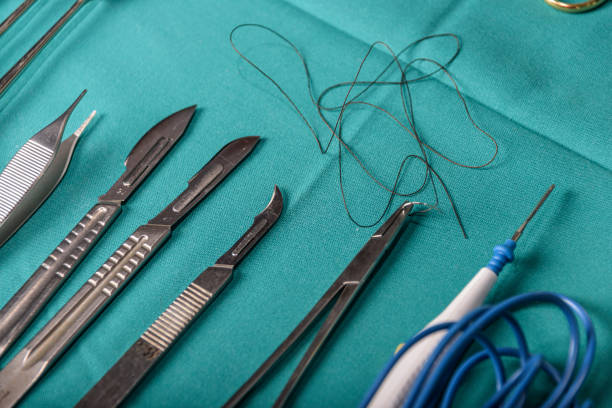
Electrosurgical equipment can be categorized according to its functions and technology.
Monopolar Electrosurgical Units
These devices deliver monopolar electrosurgical energy through the modes provided by the generator.
They must be used with appropriate active electrodes and return-current systems.
Factors to evaluate include:
- Output power and adjustable range.
- Cut and Coag modes.
- Return-electrode monitoring capability.
- Connection ports.
- Alarm functions.
- Compatible accessories.
Bipolar Electrosurgical Units
These devices provide bipolar energy, commonly used with forceps or specialized instruments.
Some systems can control output based on the electrical characteristics of tissue.
However, it should not be assumed that every bipolar generator has an automatic vessel-sealing function.
Combined Monopolar and Bipolar Electrosurgical Units
This configuration is widely used in operating rooms.
A system may incorporate:
- Monopolar output ports.
- Bipolar output ports.
- Multiple Cut and Coag modes.
- Independent controls for different output groups.
- Safety-monitoring functions.
- Settings and alarm interfaces.
Some devices can accommodate multiple connected instruments simultaneously, but the activation and control of individual ports depend on the generator design.
Electrosurgical Units with Vessel-Sealing Functions
A vessel-sealing system uses controlled energy to seal tissue or blood vessels within the intended scope confirmed by the manufacturer.
Some systems incorporate advanced bipolar technology and feedback based on tissue characteristics.
For example, Medtronic's LigaSure technology is designed for certain tissue- and vessel-sealing applications when used with compatible instruments.
However, this technology is not equivalent to conventional Bipolar Coag mode.
Before selecting such a system, facilities should confirm:
- Is vessel sealing included?
- Which instruments are supported?
- What vessel-size limits are specified by the manufacturer?
- Are the instruments single-use or reusable?
- How is the accessory cost per procedure calculated?
5. Components of an Electrosurgical System
A complete electrosurgical system generally consists of an energy generator and associated accessories.
| Component | Function |
|---|---|
| High-frequency generator | Generates and controls electrosurgical energy |
| Display or control panel | Displays operating modes, power settings, and alarms |
| Monopolar port | Connects compatible monopolar instruments |
| Bipolar port | Connects compatible bipolar instruments |
| Electrosurgical pencil | Delivers energy to the active electrode |
| Active electrode | Produces an electrosurgical effect at the target tissue |
| Return electrode | Provides the return-current path in monopolar mode |
| High-frequency cables | Connect the generator and instruments |
| Footswitch | Supports energy activation where provided |
| Alarm system | Monitors certain abnormal conditions |
High-Frequency Generator
The generator is the central component of the device.
Its main functions are to generate output energy and control operation according to the selected mode.
Some modern systems monitor the electrical characteristics of tissue and adjust energy delivery through control algorithms.
For example, Medtronic's Valleylab FT10 system supports multiple monopolar and bipolar modes as well as energy adjustment based on tissue characteristics.
This is an example of a technical capability, not a standard feature of every electrosurgical unit.
Electrosurgical Pencil and Active Electrodes
An electrosurgical pencil may be equipped with control buttons or used together with a footswitch.
Electrode tips differ in shape, material, and intended application.
Common accessories include:
- Needle electrodes.
- Blade electrodes.
- Ball electrodes.
- Loop electrodes.
- Bipolar forceps.
- Endoscopic electrosurgical instruments.
Facilities should confirm that electrodes and handpieces are compatible with the generator's connection ports, peak-voltage limits, and other technical requirements.
Footswitch
A footswitch enables the operator to activate designated functions without directly operating controls on the electrosurgical pencil.
Evaluation criteria include:
- Number of pedals.
- Function of each pedal.
- Slip resistance.
- Cleaning and disinfection requirements.
- Generator compatibility.
- Mechanical durability.
Footswitches and connection cables should not be used without confirmation of compatibility.
6. Important Technical Specifications When Selecting an Electrosurgical Unit
An electrosurgical unit may have numerous specifications. However, not every value directly reflects clinical suitability.
Output Power
Power is generally expressed in watts (W).
Manufacturers may specify separate maximum power ratings for:
- Cut mode.
- Blend mode.
- Coag mode.
- Bipolar mode.
- Other specialized modes.
A higher maximum power rating does not automatically mean the equipment is better or more suitable for every type of surgery.
Hospitals should determine the load conditions under which the power rating is specified and how the system controls output.
Peak Voltage
Peak voltage is related to waveform characteristics, the ability to produce particular tissue effects, and the insulation requirements of accessories.
Modes with different peak voltages may impose different requirements on handpieces, cables, and electrodes.
Therefore, accessories must not only fit the connection port but also comply with the voltage limits specified by the manufacturer.
Load Impedance
The output performance of an electrosurgical system may change with load impedance.
Some manufacturers provide power-versus-impedance curves.
When comparing systems, hospital procurement departments should request technical documentation showing the test conditions associated with the stated power ratings.
Energy-Control Modes
Depending on the system, control functions may include:
- Manual power adjustment.
- Programmed energy modes.
- Impedance monitoring.
- Feedback-based output adjustment.
- Accessory recognition systems.
- Other protective functions.
Automatic adjustment may help maintain the designed output characteristics, but it does not remove the need for safety controls and appropriate mode selection.
Accessory Compatibility
Compatibility with existing accessories is an important consideration that is easily overlooked when purchasing a generator.
Facilities should confirm:
- Connection-port standards.
- Types of electrosurgical pencils.
- Monopolar electrodes.
- Bipolar forceps.
- Return electrodes.
- Cables.
- Footswitches.
- Specialized endoscopic accessories.
The fact that two products have similarly shaped connectors does not establish electrical or safety compatibility.
7. Return Electrodes and Burn Risks in Monopolar Electrosurgery
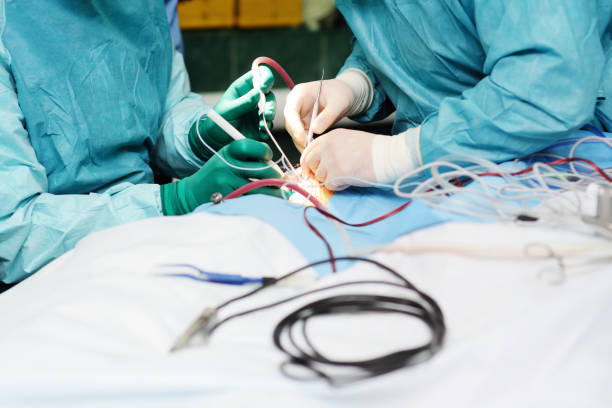
In monopolar electrosurgery, the return electrode is an important part of the safety system.
This electrode provides an appropriately sized contact area through which current can return to the generator.
Why Is a Return Electrode Needed?
At the active electrode, current is concentrated in a small area to produce the intended thermal effect.
At the return electrode, the objective is to distribute current over an appropriate contact area, thereby limiting current density and the risk of excessive heating at the contact site.
If contact is inadequate, current density may increase in certain areas.
This can lead to thermal injury.
Contact Quality Monitoring Technology
Some systems incorporate Return Electrode Contact Quality Monitoring (RECQM).
This technology helps detect abnormal changes in contact conditions when used with the types of return electrodes for which the system is designed.
Manufacturers may use different trade names for similar monitoring functions.
However, monitoring functions operate only within their specified design scope and with suitable accessories.
Not all return electrodes should be assumed to support the same contact quality monitoring functions.
Single-Pad and Split-Pad Return Electrodes
Some return electrodes are divided into two conductive sections to support contact quality monitoring.
AORN's 2026 guidance emphasizes evaluating generator–return-electrode compatibility and prioritizing electrode designs with appropriate protective features.
Facilities should ask suppliers to clarify:
- Which return-electrode types does the generator support?
- Is contact quality monitoring included?
- Under which conditions do alarms operate?
- Are the electrodes single-use or reusable?
- Which accessories are confirmed compatible by the manufacturer?
RECQM does not mean that the system can detect or prevent every electrosurgical burn hazard.
8. Safety Risks That Must Be Controlled During Electrosurgery
In addition to return-electrode site risks, electrosurgery involves other safety concerns that need to be evaluated.
Unintended Thermal Injury
Injury may occur when energy affects tissue outside the intended treatment area.
Potential causes include:
- Damaged insulation.
- Unintended current paths.
- Inappropriate contact between instruments.
- Capacitive coupling in certain configurations.
- Residual heat in instruments.
- Operating conditions outside the equipment's intended design.
These risks require particular attention when endoscopic electrosurgical instruments are used.
Insulation Damage
Electrosurgical instruments may have components covered by electrical insulation.
If the insulation is damaged, current may affect tissue outside the intended site.
Hospitals should therefore establish procedures for inspecting and managing damaged accessories.
For certain endoscopic instruments, visual inspection alone may not detect all insulation defects.
Patients with Implanted Electronic Devices
Some patients have implanted electronic devices, such as:
- Cardiac pacemakers.
- Implantable cardioverter-defibrillators (ICDs).
- Other implanted electronic devices.
Electrosurgical energy may interfere with or affect the operation of certain devices.
According to AORN's 2026 guidance, surgical teams should have appropriate evaluation and coordination procedures involving relevant specialists before using energy devices in applicable cases.
Bipolar mode should not automatically be assumed to eliminate all risks of interaction with implanted devices.
Operating-Room Fire Risks
Electrosurgery can generate heat or sparks under certain conditions.
Fire risk may increase when the following occur together:
- A heat or energy source.
- Flammable materials.
- An oxygen-enriched environment or other oxidizing gases.
Electrosurgical equipment should therefore be included in the operating room's safety-management program together with appropriate fire-prevention measures.
Choosing a generator with advanced alarms does not replace control measures for the entire operating-room environment.
9. Surgical Smoke and Dedicated Smoke Evacuation Systems
During electrosurgery, thermal effects on tissue can generate surgical smoke.
According to the US Centers for Disease Control and Prevention (CDC) and National Institute for Occupational Safety and Health (NIOSH), surgical smoke may contain very small particles, gases, chemical vapors, and biological components released from tissue.
This exposure should be considered as part of the operating room's personnel-protection program.
Why Is Surgical Smoke Evacuation Important?
Surgical smoke may cause:
- Reduced visibility at the surgical site.
- Unpleasant odors.
- Eye or respiratory irritation.
- Exposure to potentially hazardous smoke components.
Safety guidance therefore emphasizes controls and source-capture smoke evacuation systems.
Can a Medical Suction Machine Replace a Surgical Smoke Evacuator?
The two types of equipment should not be assumed to be equivalent.
Medical suction equipment is primarily designed to aspirate and collect liquids.
A surgical smoke evacuator is designed to capture smoke, aerosols, and relevant airborne constituents using a dedicated suction and filtration system.
According to NIOSH, dedicated smoke evacuation systems generally offer better source capture than conventional liquid suction equipment not designed for that purpose.
Do Electrosurgical Units Include Built-In Smoke Evacuation?
Some products support connection to smoke evacuation equipment or integrate smoke evacuation functions.
However, this is not a standard feature of every electrosurgical unit.
During procurement, facilities should check:
- Can the system connect to a smoke evacuator?
- Does it support synchronized smoke evacuation activation?
- Which electrosurgical pencils or smoke evacuation accessories are compatible?
- What are the filtration system's technical characteristics?
- What are the costs of filters and consumables?
These considerations should be included in electrosurgical equipment investment plans, particularly in operating rooms where electrosurgery is performed frequently.
10. IEC 60601-2-2 and Equipment Safety Requirements
IEC 60601-2-2 is an international standard specifying particular requirements for the basic safety and essential performance of high-frequency surgical equipment and related accessories.
As of October 2026, the current consolidated edition is:
IEC 60601-2-2:2017+AMD1:2023 – Edition 6.1, with updated corrections and clarifications in 2025.
What Does the Standard Address?
Requirements may relate to:
- Electrical safety.
- Output-energy performance.
- High-frequency current characteristics.
- Patient return-electrode systems.
- Monitoring and protective functions.
- Electrosurgical accessories.
- Technical limits.
- Related testing and safety requirements.
The 2017 edition of IEC 60601-2-2 strengthened requirements concerning contact quality monitoring for adult neutral electrodes and introduced requirements for equipment with high-current modes.
Does Compliance with IEC 60601-2-2 Mean an ESU Is Completely Safe?
No.
Conformity with the standard provides important technical evidence regarding design and performance within the evaluated scope.
However, safety during actual use also depends on:
- Compatible accessories.
- Maintenance condition.
- Technical inspection programs.
- Personnel competency.
- Operating-room procedures.
- Actual conditions of use.
During procurement, facilities should request documentation demonstrating conformity with relevant standards and identify the exact edition referenced.
Requirements for Healthcare Facilities in Vietnam
In addition to international technical standards, hospitals should review legal documentation and the marketing status of medical devices under the regulations currently applicable in Vietnam.
A manufacturer's declaration of IEC conformity does not automatically replace domestic obligations concerning medical device regulation, procurement, and use.
11. Performance Testing and Maintenance of Electrosurgical Units

Electrosurgical units should be included in a hospital's inspection and maintenance program.
Because these devices generate high-frequency energy that acts directly on tissue, performance evaluation should not be limited to checking whether the generator powers on or displays settings.
Output Power Testing
Some maintenance procedures use an electrosurgical analyzer to evaluate generator output under appropriate test conditions.
Testing may include:
- Output power.
- Load characteristics.
- Energy-delivery modes.
- Output stability.
- Other relevant functions.
Test methods and acceptance limits should be based on manufacturer instructions and the applicable technical procedure.
Return-Electrode System Testing
Where supported by the device, return-electrode monitoring and related alarm functions should be tested.
Connection cables and accessories must also be managed according to the technical instructions.
Alarm System Testing
Some devices provide alarms related to:
- Accessory connections.
- Return electrodes.
- System faults.
- Activation status.
- Other abnormal conditions.
Facilities should verify that the alarm functions continue to operate as designed.
Accessory Inspection
Inspection items may include:
- Electrosurgical pencils.
- Electrodes.
- Bipolar forceps.
- High-frequency cables.
- Footswitches.
- Connectors.
- Insulation.
- Single-use accessories.
Damaged accessories or items without confirmed compatibility should not continue to be used.
Cleaning and Reprocessing
Accessories may be categorized as:
- Single-use items.
- Items approved for reuse after appropriate reprocessing.
- Items for which cleaning is permitted only on certain surfaces or components.
Manufacturer instructions for each accessory should be followed.
It must not be assumed that every electrosurgical pencil or electrode can be steam-sterilized or reused.
Maintenance Records
Hospitals should maintain records of:
- Equipment identification code.
- Serial number.
- Installation date.
- Accessory configuration.
- Maintenance schedule.
- Performance test results.
- Fault history.
- Replaced components.
- Personnel training records.
Recordkeeping supports technical condition monitoring and lifecycle cost assessment.
12. Criteria for Selecting Electrosurgical Units for Hospitals
When preparing procurement documentation, healthcare facilities should begin with their planned surgical procedures and actual technical requirements.
| Criterion | What Should Be Evaluated? |
|---|---|
| 1. Intended use | Surgical specialties, functional scope, and clinical requirements |
| 2. Electrosurgical modes | Monopolar, bipolar, cutting, coagulation, and specialized modes |
| 3. Output characteristics | Power, peak voltage, and energy-control capability |
| 4. Safety systems | Return-electrode monitoring, alarms, and protective functions |
| 5. Accessories | Electrosurgical pencils, electrodes, forceps, cables, footswitches, and compatibility |
| 6. Additional technologies | Vessel sealing, impedance-based control, or other functions |
| 7. Surgical smoke control | Ability to connect to or integrate smoke evacuation equipment |
| 8. Technical safety | IEC 60601-2-2 documentation and relevant test records |
| 9. Technical service | Training, inspection, maintenance, and spare-parts availability in Vietnam |
| 10. Lifecycle cost | Generator price, electrodes, single-use consumables, accessories, and maintenance |
Common Mistakes When Purchasing Electrosurgical Units
Comparing only maximum output power: Failing to evaluate energy-control capabilities and suitability for the intended procedures.
Confusing monopolar and bipolar operation: Failing to prepare the correct accessories and protective systems.
Overlooking return electrodes: Failing to verify contact-monitoring technology and compatibility.
Purchasing insufficient accessories: The generator offers multiple functions but lacks the pencils, forceps, or electrodes required for use.
Assuming every bipolar system provides vessel sealing: Failing to confirm the specialized technology and associated instruments.
Overlooking surgical smoke evacuation: Failing to evaluate staff exposure-control requirements.
Considering only the generator price: Excluding the costs of electrodes, single-use accessories, and maintenance.
Failing to evaluate technical service: Encountering difficulties when output testing or repairs are needed.
13. Questions to Ask Electrosurgical Unit Suppliers
Before investing, hospitals may focus on the following questions:
- Which monopolar, bipolar, Cut, and Coag modes does the system support?
- Under which test conditions are output power and peak voltage specified for each mode?
- Does the device include return-electrode contact quality monitoring?
- Which return electrodes, electrosurgical pencils, and bipolar forceps are confirmed compatible?
- Does the system offer energy adjustment based on tissue characteristics or vessel-sealing functions?
- Can the generator connect to a surgical smoke evacuator or related accessories?
- Which edition of IEC 60601-2-2 has been used to evaluate the equipment and accessories?
- Are the accessories single-use or reusable, and what reprocessing requirements apply?
- Does the supplier provide training, performance testing, and maintenance in Vietnam?
- How is the total multi-year cost of ownership, including consumables and technical services, calculated?
Hospitals should request a demonstration using the exact generator, electrosurgical pencils, return electrodes, bipolar forceps, and other accessories they intend to purchase.
Evaluation should be conducted under safe conditions using appropriate professional procedures and test methods. Electrosurgical modes should not be tested on patients solely to assess equipment performance.
Frequently Asked Questions About Electrosurgical Units
What Is an Electrosurgical Unit?
An electrosurgical unit uses high-frequency electrical current to generate thermal effects in tissue, supporting cutting and coagulation for hemostasis within the intended use confirmed by its manufacturer.
What Is the Difference Between Monopolar and Bipolar Electrosurgery?
Monopolar operation allows current to pass through tissue and return to the generator through a separate return electrode. Bipolar operation uses two poles in the same instrument, with current passing primarily through the tissue between them.
Does an Electrosurgical Unit Require a Return Electrode Pad?
Conventional monopolar electrosurgery requires a suitable return electrode. Conventional bipolar electrosurgery does not require a separate return-electrode pad on the patient.
Which Modes Are Available on Electrosurgical Generators?
Common modes include Cut, Blend, Coag, and Bipolar. Some systems also offer vessel-sealing functions or specialized energy-control modes.
Is an Electrosurgical Unit with Higher Power Better?
Not necessarily. Quality and usability depend on factors such as output stability, energy-control capabilities, safety features, accessories, and clinical requirements.
Can Electrosurgery Cause Burns?
Yes. Unintended thermal effects or problems involving electrodes, insulation, and electrical current paths may cause thermal injury. Equipment must therefore be used within an appropriate safety-management program.
Is Surgical Smoke Evacuation Necessary When Using an ESU?
Electrosurgery can generate smoke containing potentially hazardous components. Facilities should evaluate and implement appropriate smoke-control solutions, prioritizing source capture in accordance with safety guidance.
Do Electrosurgical Units Require Periodic Performance Testing?
Yes. Equipment should be inspected and maintained appropriately, including output performance, alarm systems, safety functions, and accessory condition, in accordance with manufacturer instructions.
Explore Electrosurgical Technology and Surgical Equipment Solutions at Pharmedi Vietnam 2027
For hospitals and surgical centers, electrosurgical equipment selection should be based on energy-control technology, monopolar and bipolar functions, accessory compatibility, and protective safety systems.
Beyond generator configuration, the costs of electrodes, single-use instruments, maintenance, and surgical smoke-control solutions directly affect long-term equipment utilization.
Pharmedi Vietnam 2027, taking place from September 28–30, 2027 at the Saigon Exhibition and Convention Center (SECC), Ho Chi Minh City, provides an opportunity for businesses, healthcare professionals, and organizations to explore technology, exchange experience, and connect with medical equipment partners.
For facilities planning to equip or upgrade operating rooms, the event provides an opportunity to learn about electrosurgical technology, explore solutions, and prepare technical selection criteria for procurement.
Relevant product and technology categories include high-frequency electrosurgical generators, monopolar and bipolar energy systems, vessel-sealing technology, surgical instruments, and surgical smoke-control equipment.
When discussing solutions with suppliers, hospitals may focus on:
- Which electrosurgical modes are available, and how do they meet the facility's clinical requirements?
- What energy-monitoring and safety-protection functions does the equipment provide?
- Are electrosurgical pencils, electrodes, and bipolar forceps reliably available in Vietnam?
- Does the system support connections to surgical smoke evacuation equipment?
- Does the supplier provide performance testing, training, and periodic maintenance?
- How is the total cost of use calculated, including single-use accessories and replacement consumables?
Preparing these criteria allows healthcare facilities to compare solutions proactively, select equipment suited to their surgical needs, and minimize unexpected expenses after procurement.
For electrosurgical units, an effective solution should prioritize stable energy control, patient and staff safety, compatibility between the generator and its accessories, and sustainable performance throughout the equipment lifecycle.
Dates: September 28–30, 2027
Venue: Saigon Exhibition and Convention Center (SECC), Ho Chi Minh City
Exhibition Information: https://pharmed.vn/
Product Categories: https://pharmed.vn/exhibitors/products
Information about participating companies, event programs, and solutions presented at Pharmedi Vietnam 2027 will be updated in accordance with official announcements from the Organizing Committee.
This article is provided for informational purposes regarding the operating principles, components, safety requirements, and selection criteria for electrosurgical equipment. It does not provide instructions for setting power levels, selecting operating modes, or performing electrosurgical procedures on patients. Equipment operation, safety testing, and surgical procedures must be carried out by appropriately qualified personnel in accordance with manufacturer instructions and facility procedures.
Related post
- Vietnam’s Growing Pharmaceutical Industry
- Press Conference: Pharmed & Healthcare Vietnam 2019
- PHARMEDI & HEALTHCARE VIETNAM 2026 OFFICIALLY OPENS – KICKING OFF THREE DAYS OF HEALTHCARE CONNECTION AND INNOVATION
- Y HỌC ĐỨC VÀ CƠ HỘI TIẾP CẬN NỀN Y HỌC HIỆN ĐẠI BẬC NHẤT THẾ GIỚI
- PHARMED & HEALTHCARE VIETNAM 2017 - The Best Gateway To Potential Vietnam&South East Asia