

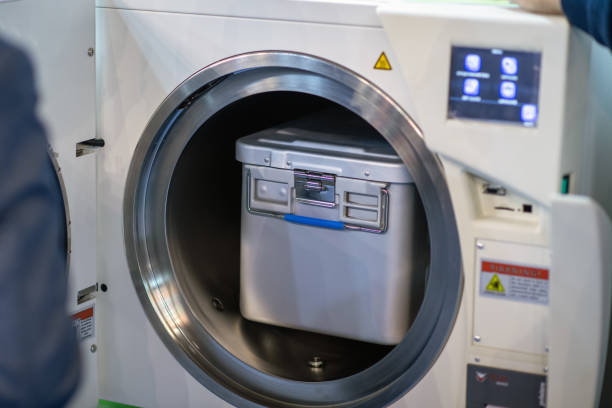
A medical washer-disinfector is a device used to clean and disinfect reusable medical instruments through a controlled cycle. The system combines the mechanical action of water, cleaning chemicals, and an appropriate disinfection method to reduce soil and microorganisms on instrument surfaces before subsequent reprocessing stages.
Compared with entirely manual cleaning, automated systems can help standardize reprocessing stages, reduce dependence on manual procedures, and support cycle documentation.
However, selecting a washer-disinfector involves more than comparing chamber capacity or the number of instruments processed per hour. Hospitals should also evaluate cleaning performance, disinfection methods, instrument compatibility, water quality, chemical dosing systems, cycle monitoring, and maintenance requirements.
What Is a Medical Washer-Disinfector?
A medical washer-disinfector (WD) is a device designed to clean and disinfect reusable medical instruments through a controlled process.
Depending on the technology, the equipment may use hot water, cleaning chemicals, thermal disinfection, or chemical disinfection.
- Wash instruments and remove soil.
- Control water and chemical delivery.
- Perform programmed washing, rinsing, and disinfection stages.
- Monitor critical cycle parameters.
- Generate alarms when faults occur.
- Store data for quality management.
- Support instrument drying when equipped with the appropriate functions.
According to ISO 15883-1:2024, washer-disinfectors are designed to clean and disinfect reusable medical devices. The standard also addresses testing, performance validation, and monitoring requirements during operation.
Is a Washer-Disinfector the Same as a Sterilizer?
No.
Cleaning is the process of removing soil, including organic and inorganic materials, to a level appropriate for subsequent processing or intended use.
Disinfection is a process that inactivates microorganisms to a defined level appropriate for the intended use.
Sterilization is a validated process intended to achieve the required sterile condition of a product.
| Criterion | Washer-Disinfector | Sterilizer |
|---|---|---|
| Primary purpose | Cleaning and disinfection | Sterilization of compatible instruments or products |
| Technology | Water, chemicals, mechanical action, heat, or chemical disinfection | Steam, hydrogen peroxide plasma, ethylene oxide gas, or other technologies |
| Position in the workflow | Decontamination and processing of soiled instruments | Sterilization after appropriate preparation |
| Outcome | Instruments are cleaned and disinfected using a validated process | Instruments are processed using a validated sterilization process |
| Are they interchangeable? | No | No |
Instruments that have completed a washer-disinfector cycle should not automatically be considered sterile.
For surgical instruments that require sterilization, cleaning and disinfection are generally preparatory stages before inspection, packaging, and sterilization.
1. The Role of Washer-Disinfectors in CSSD
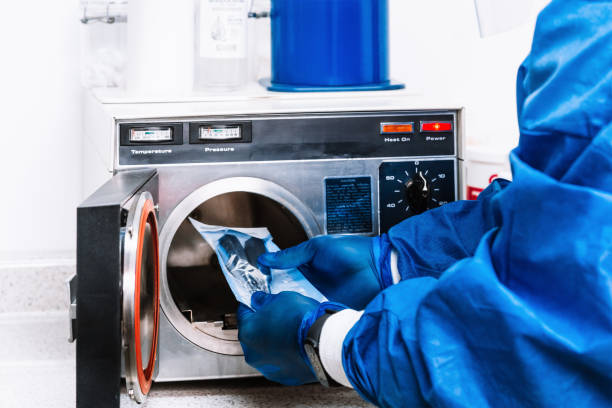
CSSD (Central Sterile Services Department) is commonly known as the central sterilization department or centralized sterile processing unit within a hospital.
According to World Health Organization (WHO) guidance, medical instrument reprocessing should be organized into successive stages, with quality-control requirements applied at each stage.
Position of Washer-Disinfectors in the Instrument Reprocessing Workflow
The general workflow can be described as follows:
Receipt of soiled instruments → Sorting and preparation → Cleaning and disinfection → Instrument inspection → Appropriate packaging → Sterilization when required → Storage and distribution
Within this workflow, washer-disinfectors are generally installed in the soiled instrument processing area or at an appropriately designed transition point.
Why Must Cleaning Be Performed Before Sterilization?
Used instruments may contain various types of soil, including:
- Blood and bodily fluids.
- Proteins.
- Tissue debris.
- Fats.
- Inorganic salts.
- Residual materials from previous use.
These contaminants may adhere to surfaces, joints, narrow grooves, or internal lumens.
If they are not adequately removed, they may prevent disinfecting or sterilizing agents from contacting the surfaces that require treatment.
According to CDC guidance on disinfection and sterilization in healthcare facilities, instruments should be thoroughly cleaned before high-level disinfection or sterilization.
Benefits of Automated Washing and Disinfection
When appropriately selected and implemented, washer-disinfectors can help:
- Standardize cleaning processes.
- Reduce the number of manual handling steps.
- Control temperature and time.
- Manage chemical consumption.
- Monitor cycle status.
- Reduce direct staff contact with contaminated instruments.
- Maintain processing records for inspection and traceability.
2. Operating Principles of Medical Washer-Disinfectors
Washer-disinfectors generally combine mechanical action, chemical action, temperature, and time to perform instrument reprocessing.
Mechanical Action of Water
Water is delivered to instrument surfaces through spray nozzles or distribution systems.
Cleaning effectiveness depends on:
- Spray nozzle design.
- Water-flow distribution.
- Rack characteristics.
- Instrument positioning.
- Accessibility of surfaces requiring cleaning.
An instrument positioned outside the effective spray pattern may not be adequately cleaned, even when the equipment has completed its cycle.
Role of Cleaning Chemicals
The equipment may use specialized detergents to support the removal of organic and inorganic materials.
Depending on the equipment and instrument requirements, chemicals may include:
- Neutral detergents.
- Alkaline detergents.
- Enzymatic detergents.
- Neutralizing agents.
- Other processing chemicals approved by the manufacturer.
Not all chemicals are suitable for every material.
In particular, certain materials, such as aluminum, specialized coatings, or sensitive components, may require specific chemicals and washing conditions.
Role of Temperature
Temperature can support the cleaning process or be used directly during thermal disinfection.
However, cycle effectiveness cannot be evaluated solely by the maximum temperature achieved.
Temperature, holding time, exposure of the load, and validated operating conditions must also be considered.
Role of Time
However, a longer cycle does not automatically mean that instruments will be cleaner.
3. Stages of a Washer-Disinfector Cycle
The number and sequence of stages depend on the equipment type, instrument category, and validated process.
Pre-Wash Stage
This stage helps remove some initial contamination and prepares the instruments for the main cleaning process.
Main Wash Stage
The system uses water and appropriate cleaning chemicals to remove soil adhering to instrument surfaces.
Cleaning effectiveness depends on the interaction of:
- Mechanical action.
- Chemicals.
- Temperature.
- Time.
- Accessibility of instrument surfaces.
Rinsing Stage
Rinsing helps remove residual materials from the cleaning process.
Depending on the procedure, the equipment may perform multiple rinses or use water of an appropriate quality for the processing stage.
Removing chemical residues is important because remaining chemicals may affect instruments or subsequent processing stages.
Disinfection Stage
In systems using thermal disinfection, the equipment controls temperature and time according to a validated cycle.
Other devices may use chemical disinfection methods appropriate for the instrument category.
Drying Stage
Some washer-disinfectors include a drying system to reduce the amount of moisture remaining on instrument surfaces after processing.
However, drying effectiveness may vary among:
- External surfaces.
- Joints.
- Lumens.
- Hard-to-reach areas.
- Structures that retain water.
The presence of a drying function should not be taken to mean that every type of instrument will be completely dried.
Summary of Processing Stages
| Stage | Purpose |
|---|---|
| Pre-wash | Supports the removal of initial contamination |
| Main wash | Removes soil through mechanical and chemical action |
| Rinsing | Removes residual chemicals and soil |
| Disinfection | Reduces microorganisms using a validated method |
| Drying | Reduces residual moisture according to equipment capability |
| Data recording | Stores cycle status and operating parameters |
4. Thermal Disinfection and the A₀ Value
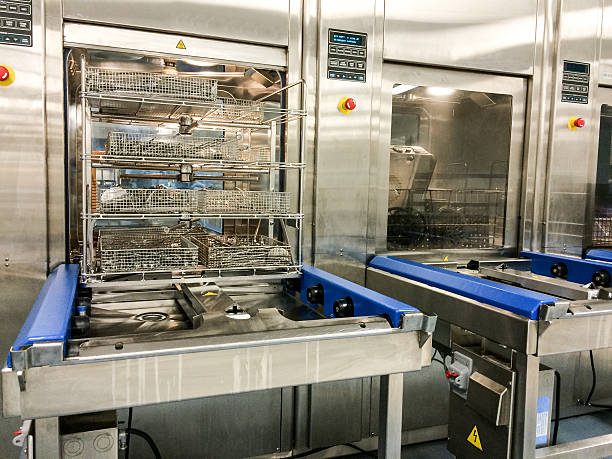
This method uses moist heat to inactivate microorganisms to a defined level appropriate for the intended use.
What Is the A₀ Value?
A₀ (A-zero) is a value used to express the equivalent lethality of a moist-heat disinfection process.
According to ISO 15883-1:2024, A₀ is expressed as the equivalent time in seconds at a reference temperature of 80°C, using a model with a z-value of 10 K.
Is A₀ a Disinfection Temperature?
No.
A₀ is neither a temperature nor the actual duration of a cycle.
Therefore, two cycles with different temperatures or durations may achieve corresponding A₀ values under the calculation model.
However, the same A₀ value should not automatically be considered suitable for every instrument type or intended use.
The required level must be based on the load type, applicable standards, and validated process.
Does the A₀ Value Prove That Instruments Are Clean?
No.
A₀ relates to thermal disinfection effectiveness. It does not directly demonstrate the removal of proteins or other soil remaining on instrument surfaces.
A cycle may meet thermal disinfection requirements while failing to provide adequate cleaning if the instruments are improperly loaded or the spray system malfunctions.
Healthcare facilities should therefore distinguish between two areas of evaluation:
- Cleaning effectiveness: The ability to remove soil.
- Disinfection effectiveness: The ability to achieve the required level of microorganism inactivation.
5. Types of Medical Washer-Disinfectors
Washer-disinfectors can be classified according to intended use, chamber design, and disinfection method.
Surgical Instrument Washer-Disinfectors
Compatible loads may include:
- Metal surgical instruments.
- Instrument trays.
- Certain anesthesia instruments.
- Hinged instruments.
- Other instruments approved by their manufacturers for machine reprocessing.
For equipment using thermal disinfection to process critical and semi-critical medical devices, ISO 15883-2:2024 is an important technical reference.
Single-Door Washer-Disinfectors
A single-door washer-disinfector uses the same side for loading and unloading instruments.
This configuration may be considered when the facility has suitable space and processing volumes.
However, the workflow must be organized to minimize the risk of recontamination after processing.
Double-Door Washer-Disinfectors
A double-door washer-disinfector has separate loading and unloading doors.
This design can support installation at the boundary between the soiled and clean areas of a CSSD.
Some systems use door interlocks to help prevent inappropriate door-opening conditions.
However, having two doors does not automatically eliminate every risk of cross-contamination.
Facilities must also control transportation, personnel movement, room layout, and procedures for receiving instruments after washing.
Washer-Disinfectors for Lumened Instruments
Some instruments have complex structures, including internal channels or narrow lumens.
For these instruments, the equipment may require:
- Specialized racks.
- Water-channel connectors.
- Lumen irrigation systems.
- Instrument-securing accessories.
- Appropriately validated programs.
Not every surgical instrument washer-disinfector should be assumed to effectively clean all lumened instruments.
Processing capabilities must be confirmed for each instrument category and accessory configuration.
Flexible Endoscope Washer-Disinfectors
Flexible endoscopes are heat-sensitive and have specific reprocessing requirements.
Automated Endoscope Reprocessors (AERs), or endoscope washer-disinfectors, may use chemical disinfection technology through a validated process.
ISO 15883-4:2018 is the standard for washer-disinfectors employing chemical disinfection for thermolabile flexible endoscopes. As of October 2026, a replacement edition was under development.
Conventional surgical instrument washer-disinfectors should not be used to process flexible endoscopes unless compatibility has been confirmed by the manufacturer.
Bedpan and Human Waste Container Washer-Disinfectors
Another equipment category includes washer-disinfectors for bedpans, urinals, and containers used to collect human waste.
These devices have specific requirements addressed in ISO 15883-3:2024.
Bedpan washer-disinfectors should not be confused with surgical instrument washer-disinfectors used in CSSDs.
Classification of Washer-Disinfector Equipment
| Equipment Category | Intended Use | Key Considerations |
|---|---|---|
| Surgical instrument washer-disinfector | Compatible reusable instruments | Cleaning, disinfection, and appropriate racks |
| Single-door washer-disinfector | Workflows with suitable loading and unloading arrangements | Cross-contamination control |
| Double-door washer-disinfector | CSSDs with separated processing areas | Door interlocks and unidirectional workflow |
| Washer-disinfector with lumen irrigation | Compatible instruments with internal channels | Connection accessories and performance validation |
| Flexible endoscope washer-disinfector | Compatible flexible endoscopes | Chemical disinfection and dedicated procedures |
| Bedpan and urinal washer-disinfector | Human waste collection containers | Specialized technology and standards |
6. Main Components of a Washer-Disinfector System
| Component | Primary Function |
|---|---|
| Washing chamber | Holds instruments during the cycle |
| Spray system | Distributes water and cleaning solutions |
| Circulation pump | Generates and maintains water flow |
| Racks and loading carts | Arrange and secure instruments |
| Chemical dosing system | Dispenses detergents and related chemicals |
| Heating unit | Supports temperature control |
| Sensors | Monitor specified operating parameters |
| Controller | Manages the cycle sequence |
| Drying system | Helps remove residual moisture when equipped |
| Data storage and connectivity | Stores records and exports data |
| Door system | Provides sealing and protection during operation |
Washing Chamber and Instrument Racks
During evaluation, facilities should consider:
- Chamber capacity.
- Number of rack levels or positions.
- Ease of cleaning.
- Accessibility.
- Drainage mechanisms.
- Ability to modify rack configurations.
A system with a large washing chamber but unsuitable racks may still fail to meet the hospital's instrument processing requirements.
Spray System
Facilities should evaluate:
- Spray nozzle distribution.
- Ability to reach concealed areas.
- Spray arm design.
- Detection mechanisms for abnormal spray arm operation, where available.
- Capability to clean specialized instruments.
Chemical Dosing System
Depending on the model, the controller may monitor:
- Amount of chemicals dispensed.
- Chemical container status.
- Low-chemical alarms.
- Dosing parameters according to the system design.
An automatic dosing system should not be assumed to be compatible with every type of chemical.
Control and Alarm System
The equipment may monitor parameters such as:
- Temperature.
- Time.
- Water supply status.
- Door status.
- Pump status.
- Technical alarms.
- Cycle results.
However, a system that records cycle parameters should be distinguished from a system or test method that independently demonstrates cleaning effectiveness.
7. Compatibility Between Washer-Disinfectors and Medical Instruments
Not all reusable instruments can withstand the same cleaning or disinfection methods.
Material Compatibility
Medical instruments may be manufactured from:
- Stainless steel.
- Aluminum.
- Titanium.
- Engineering plastics.
- Rubber.
- Composite materials.
- Specialized materials or coatings.
Therefore, instrument manufacturer instructions should be reviewed before introducing instruments into an automated reprocessing procedure.
Hinged Instruments
Instruments with hinges or joints may contain areas that are difficult to access.
Processing methods must be appropriate for their structure and the manufacturer's reprocessing instructions.
Lumened Instruments
If water cannot reach internal surfaces, cleaning effectiveness may be limited.
Facilities should confirm whether the system includes suitable connection accessories and a validated cycle for the specific instrument type.
Heat-Sensitive Instruments
Some instruments must not be exposed to high temperatures.
For these instruments, the processing method should be selected according to material limitations and manufacturer instructions.
Facilities should not switch to a thermal washing cycle simply because the equipment offers that function.
The Role of ISO 17664-1:2021
ISO 17664-1:2021 specifies requirements for information that medical device manufacturers must provide to support the processing of devices within its scope.
This information may relate to:
- Initial treatment.
- Preparation before cleaning.
- Cleaning.
- Disinfection.
- Drying.
- Inspection and maintenance.
- Packaging.
- Sterilization.
- Storage and transportation.
When selecting a washer-disinfector, CSSDs should compare the instruments' reprocessing instructions with the equipment's capabilities and validated cycles.
8. How Do Water Quality and Chemicals Affect Cleaning Performance?
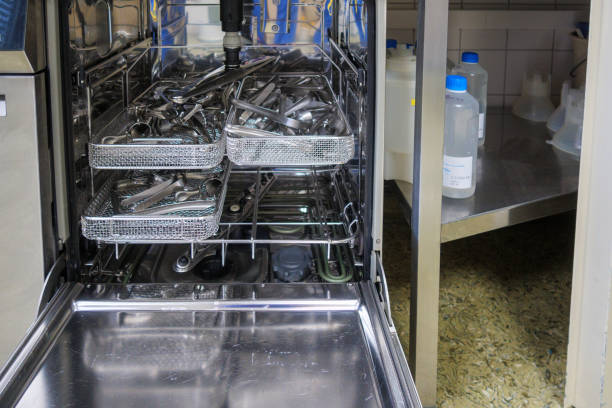
Water Quality Factors to Consider
Depending on the equipment and processing stage, facilities may need to evaluate:
- Water hardness.
- Electrical conductivity.
- Mineral content.
- Corrosive substances.
- Microbiological quality.
- Requirements related to residual contaminants.
- Water supply and drainage conditions.
Under certain conditions, high water hardness may cause deposits to form on system components or instrument surfaces.
Ordinary tap water should not automatically be considered sufficient for every washer-disinfector requirement.
Is Reverse Osmosis (RO) Water Mandatory?
There is no universal requirement applicable to every configuration.
Some systems or processing stages may require water treated using an appropriate technology, such as reverse osmosis (RO).
However, specific requirements depend on:
- Equipment type.
- Cycle stage.
- Incoming water quality.
- Instruments being processed.
- Manufacturer instructions.
- Applicable standards and procedures.
Facilities should request water-quality specifications from suppliers for incoming water and individual processing stages where necessary.
Cleaning Chemicals and Instrument Materials
Potential problems caused by incompatible chemicals include:
- Corrosion.
- Surface discoloration.
- Damage to coatings.
- Deterioration of polymer materials.
- Chemical residues.
- Reduced instrument service life.
Therefore, equipment, chemicals, and instruments should be evaluated as a complete system rather than selected independently.
9. Quality Control and Performance Validation of Washer-Disinfectors
A completed cycle without an error message only demonstrates that the system has met the conditions monitored by its controller.
IQ, OQ, and PQ Qualification Stages
Under the ISO 15883 approach, qualification activities may include:
IQ (Installation Qualification): Verification and documentation that the equipment has been installed according to specified requirements.
OQ (Operational Qualification): Evaluation of the system's ability to operate within defined limits.
PQ (Performance Qualification): Demonstration that the process, under intended operating conditions, can consistently produce results that meet established requirements.
Correct installation does not necessarily demonstrate that the system can effectively process every load configuration the hospital intends to use.
Cleaning Performance Testing
ISO 15883-5:2021 specifies test methods and criteria for demonstrating the cleaning performance of washer-disinfectors and related accessories.
Testing methods may use test soils or appropriate residual-contamination assessment techniques.
Areas to evaluate include:
- Accessibility of surfaces.
- Soil removal effectiveness.
- Difficult-to-clean areas.
- Instruments with complex structures.
- Racks and accessories.
- Conditions representative of actual use.
Residual Protein Testing
During surgical instrument reprocessing, protein residues remaining on instrument surfaces may be an important indicator of cleaning effectiveness.
Some testing methods use appropriate assays to assess residual protein.
However, visual inspection alone should not be considered sufficient to confirm that all contamination has been removed.
Conversely, a single residual protein test result does not replace the complete performance qualification program.
Thermal Disinfection Testing
For systems using thermal disinfection, testing may include:
- Temperature.
- Time.
- A₀ value.
- Temperature distribution.
- Load exposure conditions.
- Other parameters required by the validated process.
Periodic Testing
After commissioning, the equipment should continue to be evaluated through the facility's quality-management program.
Situations requiring reassessment may include:
- After major repairs.
- Following changes to the water supply system.
- After configuration changes affecting the process.
- Following changes to load-processing accessories.
- When signs of unstable performance appear.
- According to the periodic testing schedule.
Completion of maintenance should not automatically be considered proof that the equipment meets all requirements for returning to service.
10. Data Storage and Traceability of Washer-Disinfector Cycles
Depending on the model, the equipment may provide:
- Cycle identification number.
- Start and end times.
- Program used.
- Temperature data.
- Holding time.
- A₀ value, where supported.
- Alarm status.
- Operator information.
- Cycle completion result.
Is Integration with CSSD Management Software Necessary?
A system may support data exchange with CSSD management software to:
- Manage processing batches.
- Link instruments to specific cycles.
- Monitor equipment status.
- Store records.
- Support traceability when incidents occur.
Having a LAN or USB port does not mean that the washer-disinfector can directly integrate with every hospital instrument-management system.
Do Cycle Records Replace Instrument Inspection?
No.
CSSDs must still perform inspection, performance evaluation, and management of nonconforming results according to established procedures.
11. Infrastructure Requirements for Washer-Disinfector Installation
In addition to equipment configuration, hospitals should assess the building infrastructure before making an investment.
Electrical Power Supply
The following should be confirmed:
- Voltage.
- Available electrical power.
- Appropriate electrical configuration.
- Load capacity.
- Protective devices.
- Grounding.
- Response arrangements for power outages.
Washer-disinfectors equipped with pumps, heating elements, and drying systems may have substantial electrical requirements, depending on their capacity and design.
Water Supply and Drainage
Items to evaluate include:
- Water supply flow rate and pressure.
- Incoming water temperature.
- Water quality.
- Requirements for separately treated water.
- Drainage capacity.
- Wastewater treatment conditions, where required.
- Maintenance access to piping.
Ventilation and Heat Emissions
Equipment using heat may generate steam and release heat during operation.
Therefore, the installation area should be evaluated for ventilation, air conditioning, and humidity-control requirements.
Separation of Soiled and Clean Areas
For CSSDs organized around a unidirectional workflow, facilities should evaluate whether the equipment design is compatible with the actual layout.
Double-door systems may support area separation but must be coordinated with:
- Loading and unloading door positions.
- Transportation procedures.
- Space for loading carts.
- Area cleaning and hygiene.
- Personnel movement routes.
- Maintenance requirements.
The layout should minimize situations in which processed instruments must pass back through the soiled instrument reception area.
12. Criteria for Selecting Medical Washer-Disinfectors for Hospitals
| Criterion | What Should Be Evaluated? |
|---|---|
| 1. Instrument inventory | Instrument types, materials, structures, and compatibility |
| 2. Processing technology | Supported cleaning and disinfection methods |
| 3. Chamber configuration | Capacity, number of doors, and CSSD layout compatibility |
| 4. Racks and accessories | Trays, baskets, loading carts, and lumen connectors |
| 5. Cycle monitoring | Temperature, time, A₀, chemicals, and alarms |
| 6. Water quality | Water supply requirements and additional treatment systems |
| 7. Performance qualification | ISO 15883 documentation, IQ/OQ/PQ, and testing methods |
| 8. Data management | Record storage, cycle traceability, and software connectivity |
| 9. Technical service | Installation, training, testing, and maintenance in Vietnam |
| 10. Lifecycle cost | Equipment price, water, electricity, chemicals, accessories, and maintenance |
Common Mistakes When Selecting Washer-Disinfectors
Assuming a washer-disinfector can replace a sterilizer: Confusing two processing stages with different purposes.
Failing to check lumen connectors: Resulting in limitations when processing instruments with complex internal structures.
Failing to assess water quality: Leading to deposits, residues, or damage to instruments.
Failing to perform post-installation performance qualification: Equipment is handed over without demonstrating its ability to process the intended load configurations.
Overlooking CSSD infrastructure: Equipment may not be compatible with the facility layout, water supply and drainage systems, or instrument workflow.
13. Questions to Ask Suppliers Before Investment
- Which categories of medical instruments is the equipment designed to process?
- Do hinged or lumened instruments require specialized racks and connectors?
- Does the system use thermal or chemical disinfection?
- Which temperature, A₀, and other cycle parameters can the system monitor?
- Can the equipment be installed in a single-door or double-door configuration suitable for the CSSD layout?
- What are the specific electrical, water supply, drainage, and ventilation requirements?
- Which parts of ISO 15883 have been used to evaluate the equipment and accessories?
- Does the supplier support IQ, OQ, PQ, and periodic performance testing?
- Are chemicals, racks, spare parts, and maintenance services reliably available in Vietnam?
- How is the total multi-year investment and operating cost calculated?
Hospitals should request an assessment of their actual instrument inventory, CSSD layout, and infrastructure conditions before finalizing the equipment configuration.
In particular, equipment demonstrations should use representative load categories and appropriate methods for evaluating processing effectiveness rather than simply showing the completion of a sample washing cycle.
Frequently Asked Questions About Medical Washer-Disinfectors
What Is a Medical Washer-Disinfector?
A medical washer-disinfector is equipment designed to clean and disinfect reusable medical instruments through controlled cycles using water, chemicals, and appropriate disinfection methods.
Can a Washer-Disinfector Replace a Steam Sterilizer?
No. Washer-disinfectors perform cleaning and disinfection stages. Instruments requiring sterilization must still undergo an appropriate sterilization method using a validated process.
Is a Washer-Disinfector the Same as an Ultrasonic Cleaner?
No. An ultrasonic cleaner uses cavitation in liquid to support cleaning. A washer-disinfector performs cleaning and disinfection stages within a system designed for that purpose. The two types of equipment may have complementary roles depending on the workflow.
What Is A₀ in a Washer-Disinfector?
A₀ is an index expressing the equivalent thermal lethality of a moist-heat disinfection process, calculated using a standardized method. It does not directly demonstrate cleaning effectiveness or the sterile condition of instruments.
Can a Washer-Disinfector Clean Lumened Instruments?
It depends on the model and accessories. Some systems include dedicated connectors for lumened instruments, but cleaning capability must be verified for the specific instrument type.
Does a Washer-Disinfector Require RO Water?
Not every device or processing stage requires RO water. Water-quality requirements depend on equipment design, instrument type, and the applicable procedure.
Is a Double-Door Washer-Disinfector Better Than a Single-Door Model?
This cannot be concluded in every case. Double-door systems can support unidirectional instrument flow within a CSSD, but effectiveness also depends on the facility layout, processing volume, and infection-control program.
Does a Washer-Disinfector Require Periodic Performance Testing?
Yes. Equipment should undergo performance qualification during implementation and be tested throughout its service life according to manufacturer instructions, relevant standards, and the facility's quality-management program.
Explore Medical Washer-Disinfector Technology and CSSD Solutions at Pharmedi Vietnam 2027
Pharmedi Vietnam 2027, taking place from September 28–30, 2027 at the Saigon Exhibition and Convention Center (SECC), Ho Chi Minh City, provides an opportunity for equipment suppliers, specialists, and healthcare organizations to meet, explore technologies, and discuss solutions supporting infection prevention and control.
Relevant solution categories include medical washer-disinfectors, automated washing systems, specialized instrument racks, cycle-monitoring technology, and instrument reprocessing management software.
When discussing solutions with suppliers, hospitals and CSSD departments may focus on:
- Which instrument categories and load configurations is the equipment suitable for?
- Which cleaning and disinfection methods does the system use?
- Does the equipment support the processing of lumened instruments or instruments with complex structures?
- Which cycle-monitoring, alarm, and data-traceability functions are supported?
- What water-quality, electrical, chemical, and soiled/clean area layout requirements must the facility meet?
- Does the supplier provide performance qualification, training, and maintenance support in Vietnam?
- How are total investment, consumable, and long-term operating costs determined?
For washer-disinfectors, effective selection should be based on validated instrument-processing capability, cycle stability, infrastructure compatibility, and the ability to maintain the equipment throughout its service life rather than comparing only chamber capacity or maximum throughput.
Dates: September 28–30, 2027
Venue: Saigon Exhibition and Convention Center (SECC), Ho Chi Minh City
Exhibition Information: https://pharmed.vn/
Product Categories: https://pharmed.vn/exhibitors/products
Information about participating companies, industry networking activities, and exhibition programs will be updated according to official announcements from the Pharmedi Vietnam 2027 Organizing Committee.
This article is provided for informational purposes regarding the operating principles, technologies, and selection criteria for medical washer-disinfectors. It does not replace manufacturer instructions for instrument reprocessing or the facility's infection-control procedures. Performance qualification, cycle development, and equipment operation should be performed by appropriately qualified personnel in accordance with applicable standards and current regulations.
Related post
- Thiếu oxy y tế, Ấn Độ khẩn tìm công ty cung cấp từ Trung Quốc
- PHARMEDI 2016: Vietnamese exhibition, international standard
- What Systems Are Included in Smart Hospital Software, and How Do They Connect with Medical Devices?
- With double digit growth in the past few years, Việt Nam’s medical equipment and pharmaceutical markets are increasingly attractive to investors.
- Ethylene Oxide (EO) Sterilization Equipment: Applications, Safety Requirements, and Key Limitations to Consider