

Molecular diagnostic equipment is not limited to a PCR instrument. For a laboratory to implement molecular testing reliably, the facility usually needs to consider an entire workflow that includes specimen reception and preparation, nucleic acid extraction, reaction preparation, amplification and signal detection, data analysis, quality control, and connectivity with the laboratory information system.
Depending on the technology, level of automation, and test menu, these steps may be performed on several separate devices or integrated into a closed “sample-to-answer” platform.
This difference directly affects:
- Laboratory space and zoning.
- Number of manual steps.
- Risk of cross-contamination.
- Staff training requirements.
- Throughput.
- Supporting systems.
- Maintenance planning.
- Level of data integration.
WHO notes that nucleic acid amplification methods can generate large quantities of amplified product from very small amounts of starting material. This is an advantage of molecular testing but also increases the risk of amplicon contamination if laboratory space, equipment, and workflows are not organized appropriately. WHO recommends organizing molecular workflows in one direction, from clean pre-PCR areas toward post-amplification areas.
Quick Summary
- Molecular diagnostic equipment may include specimen-processing systems, nucleic acid extraction systems, reaction preparation equipment, PCR/qPCR instruments, digital PCR platforms, isothermal amplification systems, sample-to-answer platforms, and other molecular analysis systems.
- Not every molecular laboratory requires the same equipment configuration.
- For open PCR workflows, laboratory zoning and one-way workflow are particularly important for controlling cross-contamination.
- Closed-cartridge systems may reduce many manual steps but do not eliminate requirements for specimen management, biosafety, QC, maintenance, and data management.
- Nucleic acid extraction is a critical part of the workflow and should not be overlooked in favor of focusing only on amplification instruments.
- Instrument capacity should be evaluated together with extraction capacity, specimen preparation, and staffing.
- Software, barcodes, middleware, and LIS connectivity should be considered from the equipment selection stage.
- The entire workflow and lifecycle cost should be evaluated rather than comparing only the purchase price of a PCR instrument.
What Is Molecular Diagnostics?

Molecular diagnostics uses biomarkers at the molecular level, often involving DNA, RNA, or specific molecular targets, to support laboratory testing designed for particular clinical or laboratory purposes.
Platforms may use different principles, including:
- PCR.
- Real-time PCR/qPCR.
- Reverse transcription PCR for workflows involving RNA.
- Digital PCR.
- Isothermal nucleic acid amplification.
- Hybridization.
- Sequencing.
- Systems that integrate multiple steps within a cartridge.
The term “molecular diagnostic equipment” is therefore much broader than a PCR instrument alone.
The first question a facility should ask is not:
“Which PCR instrument should we buy?”
but rather:
“Which molecular workflow needs to be established, which steps will be manual, which steps will be automated, and through which systems will the data flow?”
What Steps Are Typically Included in a Molecular Diagnostic Workflow?
A general workflow can be visualized as follows:
Specimen reception → initial processing → nucleic acid extraction → reaction preparation → amplification/detection → analysis → validation and data transmission
WHO laboratory quality management guidance also views the testing process as a chain of pre-analytical, analytical, and post-analytical stages, with final quality depending on the entire process rather than only on the measurement performed by the instrument.
Pre-Analytical Stage
This may include:
- Specimen reception.
- Identification.
- Classification.
- Preparation.
- Centrifugation where required by the procedure.
- Aliquoting.
- Storage.
- Transfer of specimens to the extraction area.
Molecular Analytical Stage
This may include:
- Sample lysis.
- Nucleic acid extraction.
- Master mix preparation.
- Template addition.
- Amplification.
- Signal detection.
- Analytical data processing.
Post-Analytical Stage
This may include:
- Checking run status.
- Evaluating controls according to the laboratory procedure.
- Validating data.
- Transmitting information to LIS or other relevant systems.
- Storing data.
- Managing remaining specimens according to facility procedures.
The equipment list should be developed around this entire chain.
Common Molecular Diagnostic Equipment Groups
| Equipment Group | Role in the Workflow | Example Functions |
|---|---|---|
| Specimen preparation equipment | Processes specimens before extraction | Centrifugation, aliquoting, homogenization depending on the workflow |
| Nucleic acid extraction systems | Recover DNA/RNA suitable for downstream analysis | Manual, semi-automated, or automated extraction |
| Reaction preparation equipment | Prepares mixtures and dispenses specimens/reagents | Pipettes, workstations, liquid handlers |
| Conventional PCR instruments | Amplify nucleic acids | Thermal cycling |
| Real-time PCR/qPCR instruments | Amplify and monitor signals during the reaction | Fluorescence detection |
| Digital PCR | Partitions reactions and analyzes signals according to the system design | Partitioning + amplification + detection |
| Isothermal amplification platforms | Amplify nucleic acids without thermal cycling as used in conventional PCR | Assay-specific dedicated platforms |
| Sample-to-answer systems | Integrate multiple steps within a cartridge/closed system | Sample preparation, extraction, amplification, detection |
| Sequencing systems | Generate nucleic acid sequence data | Sequencing platforms |
| Software and data systems | Manage runs, analysis, storage, and data transmission | Workstations, middleware, LIS integration |
Not every molecular laboratory requires all of the components above.
A laboratory performing an open qPCR workflow may require multiple separate devices and work areas. By contrast, a closed-cartridge platform may integrate most of the workflow into a single system.
1. Specimen Reception and Preparation Equipment

Molecular equipment often receives attention beginning at the extraction or PCR stage, but workflow quality begins earlier.
Depending on the specimen type and procedure, the preparation area may require:
- A biological safety cabinet where required by the risk assessment.
- Centrifuges.
- Microcentrifuges.
- Vortex mixers.
- Pipettes.
- Aliquoting equipment.
- Barcode systems.
- Refrigerators or freezers.
- Racks and specimen-storage supplies.
- Equipment supporting specialized specimen processing.
Not all of the equipment above should automatically be considered necessary for every molecular assay.
The equipment list should be determined based on:
- Specimen type.
- Assay workflow.
- Risk level.
- Manufacturer instructions.
- Specimen volume.
- Level of automation.
A Biological Safety Cabinet and a PCR Workstation Are Not the Same Device
This distinction is important.
A Biological Safety Cabinet – BSC is primarily a primary containment device intended to control biological risks during appropriate procedures.
By contrast, a PCR workstation or clean workstation may be used to support contamination control during certain reagent preparation steps.
The two devices are not automatically interchangeable.
If a procedure involves specimens presenting biological risks, the selection of containment equipment should be based on risk assessment and biosafety requirements, rather than only on the objective of keeping the area “DNA-clean.”
2. Nucleic Acid Extraction Systems
Extraction is one of the most important steps but is often underestimated during investment planning.
The purpose of the system is to recover nucleic acids suitable for the downstream analytical technology.
Three common approaches may be used.
Manual Extraction
This approach depends heavily on user technique.
It may be appropriate for certain workflows or testing volumes, but facilities should consider:
- Number of steps.
- Time.
- Pipetting.
- Standardization capability.
- Staffing.
- Risk of cross-contamination.
Semi-Automated Extraction
Some steps are automated, while users still need to prepare or transfer specimens.
The facility should clearly determine:
- Which steps are performed by the user.
- Which steps are performed by the instrument.
- How many containers the specimen must be transferred through.
- At which points the system is opened.
Automated Extraction
Automated systems may process larger numbers of specimens with less manual intervention.
Evaluation should include:
- Number of specimens per batch.
- Actual throughput.
- Run time.
- Dead volume.
- Consumable types.
- Specimen traceability.
- Reagents.
- Waste.
- Connectivity.
- Procedures if the instrument stops during a run.
Extraction Capacity Should Match PCR Capacity
A common mistake is purchasing a high-capacity PCR instrument while the extraction system can process only a portion of the specimen volume.
For example, even if the PCR instrument can run many specimens, actual capacity will remain limited if:
- Aliquoting is slow.
- Extraction capacity is low.
- Users perform extensive manual pipetting.
- Reagent preparation space is insufficient.
In such cases, the theoretical capacity of the thermocycler does not become the actual capacity of the laboratory.
The facility should therefore evaluate throughput across the entire workflow, rather than only the throughput of one instrument.
3. Reaction Preparation Equipment
In open PCR workflows, reaction preparation is an area requiring strong contamination control.
Equipment may include:
- Pipettes.
- Electronic pipettes.
- Dispensing devices.
- PCR workstations.
- Liquid handlers.
- Automated plate preparation systems.
A higher level of automation is not automatically better.
Factors to consider include:
- Throughput.
- Number of assays.
- Number of reagent types.
- Frequency of assay changes.
- Cleaning requirements.
- Traceability.
- Error-handling capability.
- Maintenance staffing.
A liquid handler may help reduce repetitive manual steps at an appropriate scale, but it also introduces another system requiring:
- Programming.
- Consumable control.
- Cleaning.
- Maintenance.
- Workflow verification.
- Error management.
4. Conventional PCR Instruments
Conventional PCR uses thermal cycling to amplify nucleic acid targets.
In some workflows, amplified products may require additional analytical steps such as electrophoresis or other detection techniques.
From an implementation perspective, an important point is that post-PCR amplicons may become a contamination source for pre-amplification areas.
WHO notes that aerosolized amplicons may contaminate reagents, equipment, and surfaces, potentially affecting molecular testing results.
For open workflows involving post-PCR product handling, the post-amplification area therefore requires particularly careful consideration.
5. Real-Time PCR/qPCR Instruments
Real-time PCR combines amplification and signal detection within the same system.
From an equipment perspective, a typical system may include:
- Thermal block.
- Optical system.
- Detector.
- Software.
- Computer or workstation depending on the design.
Selection should not be based only on the question:
“How many fluorescence channels does the instrument have?”
Broader questions should include:
- Are the intended assays compatible?
- How many specimens can the instrument process per batch?
- What is the run time?
- Does it use plate or tube formats?
- What are the calibration requirements?
- Can the software manage multiple users?
- Does it provide an audit trail appropriate to the facility's needs?
- How can data be exported?
- Can it connect with LIS/middleware?
- Are reagents restricted to a proprietary ecosystem?
- What support does the supplier provide?
An instrument with more technical features is not necessarily more appropriate if the laboratory workflow cannot make practical use of those functions.
6. Digital PCR
Digital PCR is a different platform category from conventional qPCR.
The system generally divides the reaction mixture into multiple partitions before or during analysis and then evaluates signals according to the platform architecture.
From an investment perspective, facilities should treat digital PCR as a separate workflow, not simply as a “more advanced PCR instrument.”
The system may require:
- Partition generation equipment.
- Dedicated consumables.
- Amplification modules.
- Detection modules.
- Analysis software.
- Corresponding QC procedures.
If a hospital plans to implement digital PCR, it should therefore assess:
- The actual use case.
- Throughput.
- Staff capability.
- Consumable costs.
- Space.
- Software.
- Long-term consumable availability.
Investment should not be made simply because the technology is newer.
7. Isothermal Amplification Platforms
Not every molecular test uses PCR.
Some platforms use nucleic acid amplification techniques at relatively constant temperatures and may have device architectures different from conventional thermal cyclers.
Depending on the product, the system may:
- Be more compact.
- Integrate multiple steps.
- Use cartridges.
- Be deployable closer to the point of care.
However, these characteristics depend on the specific device and assay.
Facilities should not assume that every isothermal platform is:
- Faster.
- Easier to operate.
- Subject to fewer QC requirements.
- Suitable for use outside a laboratory.
Each system should be evaluated according to its instructions and intended use.
8. Sample-to-Answer Systems
An important trend in molecular diagnostics is the integration of multiple steps into a single cartridge or closed system.
A workflow may combine:
sample preparation → extraction → amplification → detection → data processing
within the same instrument.
Potential Operational Advantages
Depending on the platform:
- Less manual pipetting.
- Fewer specimen transfers.
- Simpler workflows.
- Fewer separate devices.
- Potentially shorter operator training time.
However, “Closed” Does Not Mean “No Controls Required”
Facilities still need to consider:
- Specimen reception and processing before loading into the cartridge.
- Biosafety.
- Waste.
- Consumables.
- Reagent storage.
- Barcodes.
- QC.
- Maintenance.
- Power supply.
- Data connectivity.
- Cartridge costs.
- Supply availability.
- Contingency procedures if the device fails.
A sample-to-answer system changes the structure of the workflow but does not remove quality management responsibilities.
WHO emphasizes that a quality management system should cover the entire laboratory operation to support the accuracy, reliability, and timeliness of results.
9. Sequencing Equipment in Molecular Diagnostics
Some molecular laboratories may implement sequencing.
This workflow may require more components, including:
- Specimen preparation.
- Extraction.
- Nucleic acid assessment.
- Library preparation.
- Amplification equipment where required by the workflow.
- Sequencer.
- Computing infrastructure.
- Storage.
- Analysis software.
An important point is that the sequencer is only one component of the overall system.
In many cases, requirements for:
- Data.
- Storage.
- Bioinformatics.
- Workforce.
- QC.
- Software version management.
may be just as important as the instrument that generates the sequence data.
Sequencing therefore should not appear in an investment plan as only one line stating “sequencing instrument.”
How Should a PCR Laboratory Be Organized?

This is one of the major differences between molecular laboratories and many automated clinical chemistry or hematology systems.
WHO LQSI recommends a unidirectional workflow for molecular testing to reduce cross-contamination. WHO also provides specific guidance on PCR laboratory design, describing separation of reagent preparation, specimen processing/extraction, amplification, and post-amplification areas where appropriate for the workflow.
The general principle can be visualized as:
Clean area → specimen processing area → amplification area → post-amplification area
The objective is to limit the movement of:
- People.
- Pipettes.
- Racks.
- Consumables.
- Reagents.
- Amplicons.
backward from post-PCR areas into clean areas.
This Layout Should Not Be Treated as a Fixed Rule for Every System
The actual degree of separation depends on:
- Technology.
- Workflow.
- Assay.
- Open or closed system design.
- Specimen type.
- Risk assessment.
- Equipment instructions.
A fully closed cartridge platform may have substantially different requirements from an open PCR workflow involving post-amplification handling.
Facilities should therefore design laboratory space around the specific workflow rather than copying another PCR laboratory's layout unchanged.
Why Is a Unidirectional Workflow Important?
In PCR, amplified products may be present in very large quantities.
If post-amplification material returns to areas used for:
- Reagent preparation.
- Master mix preparation.
- Extraction.
- Specimen loading.
it may contaminate the environment, equipment, or reagents.
WHO molecular testing guidance recommends organizing workspaces so that activities move from clean pre-PCR areas to post-PCR areas, while using appropriately dedicated equipment and supplies to reduce contamination risk.
This has direct implications for laboratory layout.
Facilities should not wait until after purchasing equipment to determine how to “fit” a PCR workflow into a laboratory that was not originally designed for molecular testing.
Should Equipment Be Shared Between PCR Areas?
For workflows requiring area separation, certain tools and equipment may need to be dedicated to individual zones.
Examples may include:
- Pipettes.
- Racks.
- Laboratory coats.
- Supplies.
- Supporting equipment.
The objective is to reduce the transfer of materials from areas with amplicon contamination risk into clean areas.
WHO molecular testing guidance emphasizes the organization of workspaces, equipment, and movement patterns to reduce cross-contamination.
However, the specific list of dedicated equipment should be based on the actual workflow rather than treated as a mandatory list for every molecular laboratory.
Where Should Contamination Control in a Molecular Laboratory Focus?

Contamination may originate from:
- Other specimens.
- Amplicons.
- Reagents.
- Pipettes.
- Gloves.
- Surfaces.
- Aerosols.
- Shared equipment.
- Staff movement.
- Supplies moving against the intended workflow.
WHO notes that contamination may affect reagents, equipment, and work surfaces and emphasizes Good Laboratory Practice measures to reduce this risk.
From a system design perspective, facilities should focus on:
Zoning
Clean areas, specimen-processing areas, and areas containing amplified products should be organized according to the workflow.
Material Flow
Backward movement of equipment and supplies should be limited.
Pipetting
Pipettes and tips should be appropriate for the workflow and contamination-control strategy.
Cleaning
SOPs should define:
- Surfaces.
- Equipment.
- Frequency.
- Methods.
- Cleaning agents.
- Responsible personnel.
Incident Management
If contamination is suspected, the laboratory should have a procedure for determining the affected scope, cleaning, reassessment, and control before testing resumes.
The laboratory should not simply perform a quick cleaning and immediately restart testing.
Contamination Control and Biosafety Are Different Objectives
These two concepts are often confused in molecular laboratories.
Biosafety
→ protects personnel, the environment, and other relevant individuals from biological risks.
Contamination control
→ limits unwanted DNA/RNA or amplicons from affecting the testing process.
A single measure may support both objectives, but they should not be treated as the same concept.
For example, a workstation designed to support contamination control during reagent preparation does not automatically protect the user when handling specimens that present biological risks.
Conversely, a BSC appropriate for specimen handling does not automatically address the entire amplicon contamination challenge within a PCR laboratory.
Are Power Supply, HVAC, and Environmental Conditions Important for Molecular Equipment?
Yes.
Depending on the equipment, facilities may need to consider:
- Power supply.
- UPS.
- Temperature.
- Humidity.
- Heat dissipation.
- HVAC.
- Equipment support surfaces.
- Vibration control.
- Maintenance clearance.
- Network connectivity.
- Reagent storage conditions.
There is no single fixed set of parameters for every device.
Actual requirements should be based on:
- Manufacturer documentation.
- System design.
- Reagent type.
- Risk assessment.
- Laboratory workflow.
A small thermocycler and a large sequencing platform clearly cannot be planned using the same infrastructure assumptions.
Reagent and Specimen Storage Space Should Be Planned from the Beginning
During planning, facilities often focus on instrument dimensions but may overlook:
- Refrigerators.
- Freezers.
- Reagent storage.
- Consumable storage areas.
- Areas for specimens awaiting processing.
- Specimen storage areas.
- Waste areas.
- Spare parts.
- Backup supplies.
As workload increases, these areas may become bottlenecks before the main instrument itself does.
For molecular diagnostics in particular, facilities should understand:
- Which reagents require specific storage conditions.
- Delivery frequency.
- Lot size.
- Shelf life.
- Backup stock requirements.
- Risk of power loss.
- Temperature monitoring capability.
What Competencies Do Staff Need?
An automated system does not eliminate the need for competent personnel.
Depending on the workflow, staff may need to understand:
- Specimen reception and identification.
- Biosafety.
- Pipetting.
- Extraction.
- Contamination control.
- Equipment operation.
- Alerts.
- QC.
- Software.
- Troubleshooting.
- Data management.
- When to stop and request support.
WHO emphasizes that a laboratory QMS should include not only equipment but also personnel, processes, documentation, QC, and assessment activities.
Training Should Not End When the Equipment Is Handed Over
After installation, the facility may still encounter:
- New staff.
- New assays.
- New reagents.
- New software versions.
- New firmware.
- Workflow changes.
- Increased throughput.
Competency therefore needs to be maintained and assessed based on actual work.
A record stating that staff have “completed training” does not replace competency assessment.
Where Does Quality Control Fit into Molecular Testing?
Quality does not begin at the PCR instrument and does not end when the device displays “run complete.”
WHO guidance on quality assurance for IVDs identifies important components of a QMS, including:
- Documentation.
- SOPs.
- Quality control samples.
- External quality assessment.
WHO also emphasizes that QC is used within each assay to confirm that a run is valid and that results are sufficiently reliable according to the system design.
From an equipment implementation perspective, hospitals should clarify:
- Which types of controls are supported for each assay?
- Where are controls positioned in the workflow?
- How does the software handle control status?
- Is historical control information retained?
- How is a run handled according to procedure when a control is unacceptable?
- Can data be retrieved during an audit?
This article does not provide guidance on control values or on how to validate a specific test. Those requirements should be based on the assay, SOPs, and relevant professional requirements.
LIS Connectivity Should Be Considered During Equipment Selection
A molecular system may perform well as a standalone device but still create substantial manual work if it cannot connect with the laboratory's data workflow.
A possible data flow is:
HIS → LIS → barcode/specimen → device → middleware/LIS → patient record
Facilities should determine:
- Can the instrument receive a worklist?
- How is the sample ID transmitted?
- What barcode format is used?
- How are results exported?
- Is connectivity one-way or bidirectional?
- Is middleware required?
- Is the interface included in the equipment price?
- Who performs mapping?
- Is an audit log available?
- What is the workflow during connectivity loss?
- Is there a risk of duplicate transmission when connectivity is restored?
Integration should not be postponed until the end of the project.
Purchasing a device first and discovering later that an additional gateway, middleware platform, or interface license is required may significantly affect cost and implementation timelines.
Analysis Software Is Also Part of the System
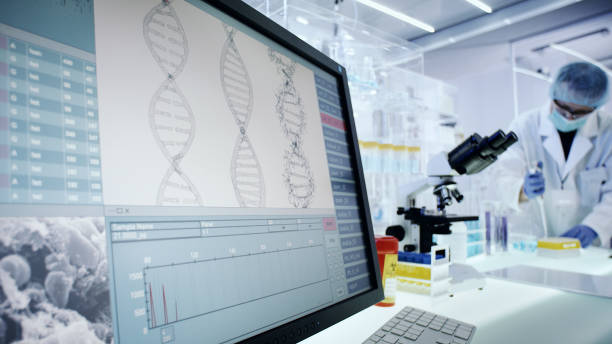
On some platforms, software may perform functions such as:
- Run control.
- Signal acquisition.
- Analysis.
- Assay management.
- User management.
- Data storage.
- Data export.
- Report generation.
When purchasing equipment, facilities should therefore consider:
- Is the license tied to the instrument or to individual users?
- Is a separate computer required?
- Is the number of workstations limited?
- How are backups performed?
- What happens if the PC fails?
- Can raw data be exported?
- Where are the data stored?
- How long will the software be supported?
- When the software version is upgraded, do relevant functions need to undergo additional validation/verification?
Particularly for sequencing or other complex analytical platforms, data infrastructure may represent a significant investment.
Which Throughput Should Be Used When Selecting Molecular Equipment?
The specification:
“X samples per hour”
should not be used alone.
Facilities should distinguish among:
Nominal Instrument Throughput
The number of specimens the instrument can process under its designed operating conditions.
Batch Throughput
The actual number of specimens that can be loaded in each run after accounting for:
- Controls.
- Calibrators where applicable.
- Unused positions.
- Repeat specimens.
- Assay requirements.
Overall Workflow Throughput
This includes:
- Reception.
- Preparation.
- Extraction.
- PCR.
- Analysis.
- Validation.
Peak-Hour Throughput
A laboratory may average 100 specimens per day while receiving most specimens within a short period.
Facilities should therefore consider:
- Peak volume.
- Batch size.
- Run time.
- Ability to run multiple assays.
- Number of instruments.
- Staffing.
- Backup capability.
How Do Batch and Random-Access Systems Differ Operationally?
Some platforms are optimized for batch processing.
This may be appropriate when:
- Specimens are accumulated before testing.
- Volume is relatively stable.
- Assays follow a fixed schedule.
Other systems allow more flexible specimen loading.
This may be appropriate when:
- Specimens arrive irregularly.
- Individual specimens need to be processed as they arrive.
- Multiple assay types are used.
No single model is inherently superior.
Facilities should evaluate:
- Specimen arrival patterns.
- Target TAT.
- Number of assays.
- Cost.
- Cartridge/reagent utilization.
- Staffing.
Should a Laboratory Choose an Open or Closed System?
More Open Systems
Potential advantages may include:
- Workflow flexibility.
- Ability to use a broader range of assays.
- Appropriate levels of customization.
However, these systems often require greater control over:
- Pipetting.
- Contamination.
- QC.
- Validation/verification.
- Space.
- Staffing.
Closed Systems
These may standardize more workflow steps and reduce manual handling.
However, facilities should assess:
- Assay menu.
- Cartridges.
- Consumable costs.
- Supply availability.
- Scalability.
- Data export.
- Vendor dependency.
Selection should not be based only on the level of automation.
How Should Backup Capacity Be Planned?
A molecular laboratory may become highly dependent on a single instrument.
If that instrument stops, the entire service may be affected.
Facilities should assess:
- Is a second instrument available?
- Can another platform handle part of the workload?
- Is a referral arrangement available?
- What is the technical response time?
- Is a loaner instrument available?
- Are commonly needed spare parts locally available?
- Can reagents be transferred to another instrument?
Purchasing two identical instruments is not always necessary.
The backup strategy should be based on:
service criticality + testing volume + acceptable downtime + ability to refer specimens.
What Is Included in the True Cost of a Molecular System?

The equipment purchase price is only one component.
Facilities should account for:
- Reagents.
- Cartridges.
- Extraction kits.
- Pipette tips.
- Tubes/plates.
- Controls.
- Consumables.
- Personal protective equipment.
- Maintenance.
- Calibration where applicable.
- Spare parts.
- Software licenses.
- Middleware.
- LIS interfaces.
- Computers.
- UPS.
- Air conditioning.
- Refrigerators/freezers.
- Training.
- QC/EQA.
- Waste management.
For systems that depend heavily on proprietary consumables, long-term operating costs may be more important than the initial equipment purchase price.
Molecular Diagnostic Equipment Selection Checklist

Clinical and Laboratory Scope
- Intended assay menu.
- Specimen types.
- Samples per day.
- Peak-hour volume.
- Target TAT.
Workflow
- Which steps are manual?
- Which steps are automated?
- Is separate extraction required?
- Is post-PCR processing required?
- Batch or random access?
- Are multiple work areas required?
Space and Infrastructure
- Floor area.
- Unidirectional workflow.
- Power.
- UPS.
- HVAC.
- Refrigerators/freezers.
- Network.
- Maintenance clearance.
Contamination and Biosafety
- Is open specimen handling involved?
- Is open amplicon generation/handling involved?
- Which areas require containment?
- Which equipment needs to be dedicated?
- What cleaning procedures are required?
Throughput
- Batch size.
- Run time.
- Extraction.
- PCR.
- Hands-on time.
- Concurrent processing capability.
Data
- Barcodes.
- LIS.
- Middleware.
- Audit logs.
- Data export.
- Backup.
- User management.
Technical Service
- Warranty.
- SLA.
- Engineers.
- Spare parts.
- Remote support.
- Replacement equipment when required.
Lifecycle Cost
- Reagents.
- Consumables.
- Controls.
- Maintenance.
- Software.
- Interfaces.
- Storage.
- Infrastructure.
Common Mistakes When Implementing Molecular Diagnostic Equipment
Buying a PCR Instrument Before Mapping the Workflow
This can result in missing extraction equipment, reagent preparation space, or storage infrastructure.
Assessing Throughput Using Only One Instrument's Specification
Actual capacity depends on the entire workflow.
Failing to Distinguish Pre-PCR and Post-PCR Areas
This may create contamination risks in open workflows.
Sharing Equipment Between Inappropriate Areas
This may undermine the intended workflow separation strategy.
Treating a BSC and a PCR Workstation as the Same Device
The two systems serve different control objectives.
Assuming Cartridge Systems Do Not Require QC
Automation does not eliminate quality management requirements.
Failing to Include the LIS Interface
This may result in manual result entry or additional integration costs after installation.
Asking Only About Reagent Prices
Facilities should also consider:
- Kits.
- Controls.
- Consumables.
- Waste.
- Service.
- Licenses.
Having No Plan for Instrument Downtime
A single instrument may become a single point of failure for the entire service.
Investing in Technology Beyond Available Workforce Capability
A powerful platform may be difficult to sustain without appropriate operators, data support, or technical service support.
Quick Comparison of Three Implementation Models
| Factor | Open PCR Workflow | Multi-Step Automation | Sample-to-Answer |
|---|---|---|---|
| Manual handling | Generally higher | Moderate to low | Generally lower |
| Zoning requirements | May be high | Depends on configuration | May be simpler |
| Assay flexibility | May be high | Depends on the system | Usually depends on the platform's menu |
| Contamination control | Highly dependent on workflow | Still requires controls | Reduces some open-handling points but does not eliminate contamination risk completely |
| Staffing | Requires appropriate molecular competency | Requires automation + molecular competency | May reduce manual steps but still requires competency |
| Consumable dependency | Depends on the assay | Depends on the platform | May be high with proprietary cartridges |
| LIS integration | Requires planning | Requires planning | Depends on platform capabilities |
| Scalability | Flexible but more complex | Depends on modularity | Depends on the number of modules and assay menu |
The table above is intended only as a general reference. Actual characteristics should be verified for each product and workflow.
Frequently Asked Questions About Molecular Diagnostic Equipment

What Does Molecular Diagnostic Equipment Include?
Depending on the workflow, it may include specimen preparation equipment, nucleic acid extraction systems, pipettes or liquid handlers, PCR/qPCR instruments, digital PCR platforms, other amplification systems, sample-to-answer platforms, sequencing equipment, software, and data systems.
Are PCR and Real-Time PCR Instruments the Same?
Both may use thermal cycling for amplification, but real-time PCR integrates signal detection during the reaction. Conventional PCR may use a different workflow and separate detection systems.
Does a PCR Laboratory Always Need Four Separate Rooms?
A fixed number should not be applied to every system. WHO recommends separating activities and maintaining a unidirectional workflow to reduce contamination risk; the actual number of work areas and degree of separation depend on the workflow, assay, equipment, and risk assessment.
Does a Sample-to-Answer System Require a Separate PCR Area?
Requirements depend on the system design, specimen handling before cartridge loading, specimen type, and risk assessment. Closed systems may reduce some zoning requirements compared with open PCR workflows, but facilities should not assume that space or biosafety requirements are eliminated.
Should a Laboratory Purchase a Separate Extraction Instrument?
It depends on the system. Some platforms integrate extraction, while other workflows require a separate extraction instrument. The decision should be based on the assay, throughput, degree of automation, and overall workflow capacity.
Is LIS Connectivity Necessary for a PCR Instrument?
The instrument may operate independently, but in higher-volume laboratories, LIS connectivity can help reduce repeated data entry, manage sample IDs, and support traceability. Integration capability should be verified for each specific system.
How Should PCR Instrument Capacity Be Calculated?
The number of positions on the block should not be used alone. Facilities should also account for actual batch size, controls, extraction capacity, run time, staffing, specimen preparation, and peak-hour volume.
Does Greater Automation Always Mean Lower Contamination Risk?
Automation and closed systems may reduce some open-handling and specimen-transfer steps, but contamination risk still depends on system design, specimen handling, cleaning, maintenance, and user practices. Automation should not be treated as the only control measure.
Should a Laboratory Invest in Digital PCR or Sequencing from the Beginning?
Only when there is a clearly defined use case, appropriate workforce, workflow, data capability, and sufficient resources. More complex technology does not automatically create greater value.
This article is provided for informational purposes regarding molecular diagnostic systems and equipment. Laboratory design, biosafety measures, validation/verification, QC, and specific testing procedures should be based on assay type, manufacturer instructions, risk assessment, and applicable requirements. This article does not instruct readers to perform or interpret a diagnostic test themselves.
Molecular Diagnostics at PHARMEDI & HEALTHCARE VIETNAM 2026
Day 1 – September 22, 2026 includes a session on hospital procurement and investment decisions, while Day 2 – September 23, 2026 focuses on Hospital Management & Operations. These perspectives may be useful when evaluating equipment, costs, infrastructure, and long-term operating capability.
B2B Matchmaking
B2B Matchmaking supports one-to-one discussions on assays, throughput, consumables, LIS connectivity, contingency planning, technical support, and long-term costs.
Dates: September 22–24, 2026
Venue: Saigon Exhibition and Convention Center (SECC), Ho Chi Minh City
Exhibitor Registration:https://pharmed.vn/exhibitor/application-form
Visitor Registration:https://ers-vn.informa-info.com/pha2026?cid=FB
Contact:
Booth Booking: [email protected] (Thanh Thuý)
Media Support: [email protected] (Anita Pham)
Visitor Support: [email protected] (Ciel Le)