


A steam sterilizer is a device that uses saturated steam under pressure to sterilize compatible instruments and supplies in healthcare facilities. It is one of the technologies commonly used in hospitals, sterile processing centers, clinics, and other organizations that reprocess medical instruments.
Medical steam sterilizers are available in a wide range of configurations, from tabletop units for clinics to large-capacity systems used in infection-control departments or Central Sterile Supply Departments (CSSDs).
However, equipment selection should not be based only on chamber capacity or maximum temperature. Facilities should also evaluate air-removal capability, steam penetration, compatible instrument types, cycle configuration, drying performance, monitoring systems, water quality, and infrastructure requirements.
In particular, reaching the set temperature does not mean that every instrument inside the chamber has been successfully sterilized. The result also depends on cleaning, packaging, load arrangement, steam contact, and cycle control.
This article focuses on the operating principles, classification, and selection criteria for medical steam sterilizers used for instruments. It does not cover bottle sterilizers or household sterilization products.
What Is a Steam Sterilizer?
A steam sterilizer, also referred to as a medical sterilizer, steam sterilizer, or autoclave, is a device that uses moist heat in the form of steam to inactivate microorganisms on items capable of withstanding the processing conditions.
According to guidance from the U.S. Centers for Disease Control and Prevention (CDC), sterilization using saturated steam under pressure is a widely used and reliable method for many heat- and moisture-resistant medical instruments.
The core principle is to bring steam into contact with the surfaces requiring sterilization under defined temperature and time conditions for an appropriate cycle.
Steam sterilizers may be used to process:
- Compatible metal surgical instruments.
- Reusable examination and procedure instruments.
- Instrument trays and containers designed for steam sterilization.
- Certain heat- and moisture-resistant supplies or devices.
- Other medical devices whose reprocessing instructions permit steam sterilization.
Not every medical instrument can be placed in a steam sterilizer. Compatibility should be confirmed according to the instructions provided by the manufacturers of the instrument, packaging system, and sterilizer.
How Does a Steam Sterilizer Work?

A steam sterilizer uses moist heat from saturated steam to act on microorganisms.
When steam contacts a surface at a lower temperature, it may condense and transfer heat to that surface. Moist heat denatures proteins and other essential microbial components, contributing to sterilization when the required conditions are met.
According to the CDC, four basic factors are involved in steam sterilization:
- Steam: must have appropriate quality and sufficient contact with the load.
- Pressure: helps create the conditions needed to achieve the required steam temperature.
- Temperature: must reach and be maintained at the level established for the cycle.
- Time: must be sufficient under the corresponding sterilization conditions.
Importantly, pressure itself is not an independent factor that kills microorganisms. Its primary role in a steam system is to help create the conditions required to achieve the necessary temperature.
Basic Stages of a Steam Sterilization Cycle
Depending on the design, a steam sterilization cycle may include the following stages:
1. Air removal: The system uses an appropriate mechanism to reduce air in the chamber and load.
2. Steam admission: Steam is introduced to establish the temperature and pressure conditions required by the cycle.
3. Sterilization phase: The required temperature, time, and steam-contact conditions are maintained according to the validated cycle.
4. Depressurization and steam handling: The system proceeds to the subsequent stages according to its design.
5. Drying and completion: Where required, the machine performs a drying phase to reduce residual moisture on instruments and packaging.
This is a general description of the operating principle and is not an instruction for operating a specific model.
Why Is Air Removal Important?
Residual air may prevent steam from directly contacting some instrument surfaces.
This is particularly important for:
- Lumen instruments.
- Multi-layer instrument trays.
- Porous materials.
- Packaged instruments.
- Loads with complex structures.
Therefore, when evaluating a steam sterilizer, facilities should review the air-removal mechanism and steam-penetration capability rather than focusing only on the displayed temperature.
1. Types of Medical Instrument Steam Sterilizers
Steam sterilizers can be classified according to air-removal mechanism, chamber size, and installation configuration.
Gravity Displacement Sterilizer
A gravity displacement sterilizer uses incoming steam to displace air from the chamber according to its design.
This method may be suitable for certain types of instruments and loads.
However, the ability to process complex instruments or packaged loads depends on the validated cycle type.
It should not be assumed that every gravity displacement sterilizer is suitable for all medical instruments.
Pre-Vacuum Steam Sterilizer
A pre-vacuum sterilizer uses a vacuum system to assist with air removal before the sterilization phase begins.
Some designs use repeated vacuum pulses and steam admission to improve air removal from the load.
This mechanism is particularly relevant for load types where steam must penetrate difficult-to-reach areas.
However, having a vacuum pump does not automatically mean that the device is suitable for every lumen instrument or every packaging configuration.
Processing capability should be confirmed for the specific load type and cycle declared by the manufacturer.
Small Steam Sterilizer
Small steam sterilizers are commonly used in clinics, dental facilities, or organizations processing moderate quantities of instruments.
EN 13060:2025 is the current European standard specifying requirements and test methods for small steam sterilizers used for medical purposes.
The standard applies to automatically controlled devices with a chamber volume below 60 liters that cannot accommodate a standard sterilization module measuring 300 × 300 × 600 mm.
Large Steam Sterilizer
Large steam sterilizers are commonly used by facilities that process high volumes of instrument sets, particularly in central sterile processing areas.
Equipment may be designed with:
- Large-capacity sterilization chambers.
- Loading and unloading trolley systems.
- Multiple processing programs.
- Integrated steam generators or external steam supplies.
- Cycle recording and management systems.
- Single-door or double-door configurations depending on the design.
EN 285:2015+A1:2021 addresses requirements and test methods for large steam sterilizers, commonly used for medical instruments and related supplies.
Quick Comparison of Sterilizer Groups
| Equipment Group | Primary Characteristics | What Should Be Evaluated? |
|---|---|---|
| Gravity displacement sterilizer | Removes air through displacement according to the design | Permitted load types and cycles |
| Pre-vacuum sterilizer | Uses a vacuum system to assist air removal | Steam penetration and relevant testing |
| Small steam sterilizer | Compact design suitable for certain operating scales | Instrument types, packaged loads, and processing capacity |
| Large steam sterilizer | Large chamber and may integrate loading/unloading systems | Capacity, infrastructure, CSSD layout, and multi-cycle management |
These categories may overlap. For example, both small and large sterilizers may use pre-vacuum technology.
2. What Is the Difference Between Class B, Class S, and Class N Sterilizers?
When evaluating small steam sterilizers, facilities may encounter terms such as Class B, Class S, or Class N.
These labels are commonly used to describe the scope of sterilization cycle types under EN 13060.
| Cycle Type | How the Intended Scope Should Be Understood |
|---|---|
| Type B | Designed to process the defined test-load groups, including solid, hollow, and porous items, whether wrapped or unwrapped, within the scope of the standard |
| Type S | Processes the load types specified and declared by the sterilizer manufacturer |
| Type N | Intended for unwrapped solid instruments within the scope of this cycle type |
Importantly, B, S, and N describe cycle types and compatible load scopes rather than simply representing three quality levels of sterilizers.
A device marketed as Class B still needs to be assessed with the actual instrument types, packaging configurations, and intended cycles.
For lumen instruments or other complex devices, facilities should compare the instrument manufacturer's reprocessing instructions with the sterilizer's capabilities.
3. Which Instruments Are Suitable for Steam Sterilization?

Steam sterilization is generally preferred for instruments that can tolerate heat and moisture.
However, instrument material is not the only criterion.
Two instruments made from the same metal may have different processing requirements because of differences in structure, joints, coatings, or internal components.
Potentially Suitable Instruments
Depending on manufacturer instructions, suitable instrument groups may include:
- Surgical forceps and scissors.
- Certain reusable dental instruments.
- Specialized instrument trays and containers.
- Metal instruments approved for steam sterilization.
- Certain instruments or accessories capable of withstanding heat and moisture.
Instruments Requiring Separate Evaluation
Some devices may be sensitive to heat or moisture, such as:
- Instruments containing electronic components.
- Optical devices.
- Certain plastics and synthetic materials.
- Instruments with complex internal structures.
- Devices with heat-sensitive coatings or adhesives.
For these instruments, the manufacturer's reprocessing instructions should be reviewed before selecting the sterilization technology.
The CDC recommends steam sterilization for suitable devices while also discussing low-temperature sterilization technologies for equipment that is sensitive to heat or moisture.
This is also a key distinction between steam sterilizers and hydrogen peroxide plasma sterilizers or ethylene oxide (EO) sterilization systems, which will be discussed in separate articles.
4. Sterilization Does Not Replace Instrument Cleaning
One misconception to avoid is the assumption that used instruments can be placed directly into a steam sterilizer to complete the entire reprocessing process.
In practice, cleaning and sterilization are separate steps.
According to the FDA, reprocessing reusable medical devices generally includes initial handling at the point of use, cleaning in the reprocessing area, and then disinfection or sterilization according to the intended use and manufacturer instructions.
Why Is Cleaning Required Before Steam Sterilization?
Residual blood, tissue, and other soil may interfere with the effectiveness of the sterilization process.
Before instruments are placed in the sterilizer, facilities should therefore have appropriate procedures for:
- Cleaning.
- Inspecting instrument condition.
- Drying where required.
- Disassembling or opening components according to instructions.
- Packaging with compatible materials.
- Arranging the sterilizer load appropriately.
A steam sterilizer does not replace a washer-disinfector or other required cleaning processes.
Packaging Also Affects Sterilization Effectiveness
Packaging should be compatible with:
- Sterilization technology.
- Instrument type.
- The cycle being used.
- Steam-penetration requirements.
- Post-processing storage conditions.
If the packaging prevents steam penetration or cannot withstand the cycle conditions, reaching the target chamber temperature does not guarantee that the load has been appropriately processed.
Facilities should therefore evaluate:
instrument + packaging material + load type + sterilization cycle.
5. Quality Control for Steam Sterilization Cycles
This is an important consideration when selecting and operating a steam sterilizer in a healthcare facility.
A system may reach the displayed temperature and pressure while still requiring additional monitoring measures to assess the sterilization process.
The CDC recommends combining mechanical monitoring, chemical indicators, and biological indicators to monitor process quality.
Mechanical Monitoring
The system may record:
- Temperature.
- Pressure.
- Time.
- Cycle stages.
- Completion or fault status.
- Other operating data depending on the design.
Information may be displayed on the screen, printed, or stored in software.
When selecting equipment, facilities should review the ability to retrieve data from individual sterilization cycles, particularly in high-throughput environments.
Chemical Indicators
A chemical indicator (CI) is used to provide information indicating that a material has been exposed to one or more sterilization-process conditions for which the indicator was designed.
Depending on the type, an indicator may be placed outside or inside a package.
The key point is:
A chemical indicator changing color does not by itself prove that an instrument or an entire sterilizer load has been successfully sterilized.
The result should be interpreted according to the function of the specific indicator and the facility's process-control procedure.
Biological Indicators
A biological indicator (BI) uses appropriately resistant indicator microorganisms to evaluate the ability of the sterilization process to inactivate microorganisms.
For steam sterilization, biological indicators commonly use spores of Geobacillus stearothermophilus.
Biological indicators provide different information from temperature records or chemical indicators, so these methods should not be considered complete substitutes for one another.
Frequency of use, indicator placement, and acceptance criteria should be based on validated procedures, relevant guidance, and the requirements applicable at the facility.
Bowie–Dick Test
The Bowie–Dick test is used to evaluate air-removal and steam-penetration performance in appropriate steam sterilization systems with active air removal.
According to the CDC, this test helps identify problems such as residual air or inadequate air removal.
However:
The Bowie–Dick test does not directly confirm that instruments have been sterilized.
Its result should not be used as a substitute for appropriate sterilization-load monitoring methods.
Comparison of Process-Control Methods
| Method | Primary Evaluation | Important Limitation |
|---|---|---|
| Mechanical monitoring | Temperature, pressure, time, and cycle status | Does not directly prove that every surface received adequate steam contact |
| Chemical indicator | Exposure to the sterilization conditions the indicator is designed to detect | Does not independently prove successful sterilization of the entire load |
| Biological indicator | Ability to inactivate indicator microorganisms under test conditions | Must be used and interpreted according to an appropriate procedure |
| Bowie–Dick | Air-removal and steam-penetration performance of an appropriate system | Not a sterilization test for the entire load |
6. Drying Performance and Load Control
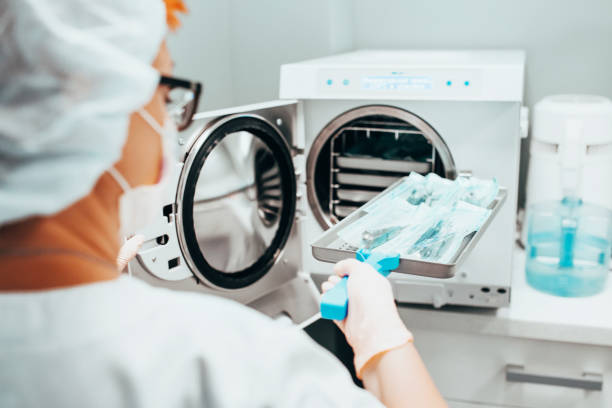
In addition to the sterilization phase, the ability to dry instruments and packaging should also be evaluated.
For packaged instruments intended for storage after processing, residual moisture may affect the integrity of the sterile barrier system.
Why Do Wet Packs Occur?
Factors that may contribute include:
- Loads that are too heavy or arranged inappropriately.
- Packaging that is not suitable for the cycle.
- Inadequate drying performance.
- Problems with steam quality.
- Inappropriate cooling conditions or post-cycle handling.
According to the CDC, packages that become wet after sterilization or during storage are considered at risk of contamination and should not be used as properly sterile packages.
How Should Drying Performance Be Evaluated?
When evaluating a sterilizer, facilities should ask suppliers to clarify:
- Which cycles include a drying phase?
- Can drying parameters be adjusted within permitted configurations?
- With which load types has drying performance been evaluated?
- How do heavy loads or multiple trays affect drying?
- Are test data available for packaged loads?
Two sterilizers with the same chamber capacity should not be assumed to provide equivalent drying results for every load configuration.
7. Infrastructure Requirements for Installing a Steam Sterilizer
A steam sterilizer involves heat, pressure, steam, and utility systems. Installation requirements should therefore be reviewed before purchase.
Water Supply and Steam Quality
Depending on the design, the sterilizer may:
- Generate steam internally using a heating system.
- Use steam from an external supply.
- Work with separate water-treatment or steam-supply components.
Facilities should determine:
- Required incoming water quality.
- Whether a water-treatment system is necessary.
- Whether the steam supply meets technical requirements.
- How drainage and condensate are managed.
- How the steam generator is inspected and maintained.
Water and steam quality may affect equipment performance, maintenance requirements, and instrument condition.
Electrical Power and Drainage
Items to clarify include:
- Voltage and power requirements.
- Power-supply location.
- Grounding requirements.
- Backup power needs for related components where applicable.
- Water-supply and drainage systems.
- Handling of wastewater or discharged steam.
- Technical service access.
Facilities should not purchase the sterilizer first and only afterward determine whether the installation area can provide the required electricity or water.
Operating Space and Single-Door vs Double-Door Layouts
Some large steam sterilizers use a double-door configuration to support one-way instrument flow between appropriate areas in a CSSD.
However, a double-door sterilizer does not automatically create a compliant infection-control workflow.
Facilities should also consider:
- Layout of clean areas and receiving areas.
- Instrument transport routes.
- Space for loading and unloading trolleys.
- Cooling and post-sterilization inspection areas.
- Maintenance space.
- Operating responsibilities across departments.
For tabletop sterilizers in clinics, space requirements may be simpler, but electrical supply, water supply, heat dissipation, and cleaning requirements still need to be met.
8. How Should Steam Sterilizer Capacity Be Selected?
Chamber volume is an important specification, but capacity in liters cannot be directly converted into the number of instrument sets that can be processed per day.
Actual throughput also depends on:
- Instrument type.
- Tray size.
- Packaging method.
- Permitted load weight.
- Number of cycles.
- Duration of each cycle.
- Preparation, cooling, and unloading time.
- Cleaning, packaging, and receiving capacity of the CSSD.
A Larger Chamber Is Not Necessarily More Efficient
A large sterilizer may process more instruments per cycle, but if the facility has relatively few instrument sets or loads are often incomplete, capacity utilization may be lower than expected.
Conversely, a small sterilizer may not be sufficient for hospitals with a high volume of surgical instruments.
Facilities should plan based on:
number of instrument sets to be processed → load type → appropriate cycle → expected number of cycles → required capacity
Scalability and contingency arrangements for periods when the sterilizer is undergoing maintenance should also be evaluated.
9. Technical Standards to Consider
When selecting a medical steam sterilizer, facilities may refer to the following international standards:
| Standard | Relevant Scope |
|---|---|
| ISO 17665:2024 | Development, validation, and routine control of moist-heat sterilization processes |
| EN 13060:2025 | Requirements and test methods for small steam sterilizers used for medical purposes |
| EN 285:2015+A1:2021 | Requirements and test methods for large steam sterilizers |
| Relevant ISO 11138 standards | Biological indicators and requirements for appropriate applications |
| Relevant ISO 11140 standards | Chemical indicators and corresponding assessment methods |
In particular, ISO 17665:2024 is the current version addressing moist-heat sterilization and replaces earlier ISO 17665 documents listed in the standard's history.
Standards should be reviewed with attention to:
- Applicable version.
- Scope of the standard.
- Equipment category.
- Cycle and load type.
- Manufacturer test documentation.
A device citing ISO or EN standards does not mean that every type of instrument can be processed in that sterilizer, nor does it mean that every international standard mentioned above automatically constitutes a mandatory legal requirement in Vietnam.
10. Ten Criteria for Selecting a Medical Instrument Steam Sterilizer
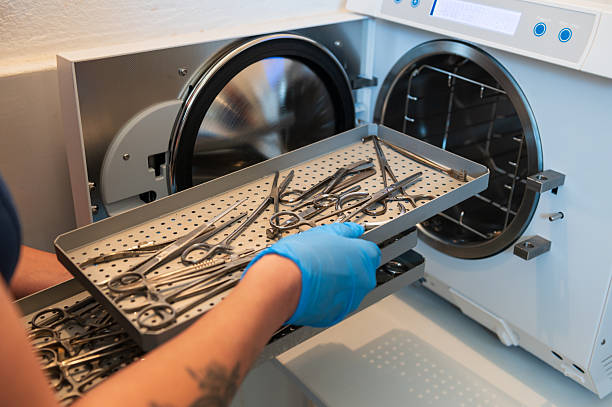
When comparing equipment, hospitals or clinics may use the following evaluation framework:
| Criterion | What Should Be Evaluated? |
|---|---|
| 1. Intended use | Expected instrument types, materials, packaging, and load configurations |
| 2. Capacity and chamber size | Chamber volume, trays, permitted load weight, and number of cycles |
| 3. Air-removal mechanism | Gravity displacement, vacuum-assisted removal, and validated cycles |
| 4. Sterilization capability | Compatible load types, cycle conditions, and supporting test data |
| 5. Drying function | Drying performance for appropriate instruments and packaged loads |
| 6. Monitoring and control | Recording of temperature, pressure, time, indicators, and relevant tests |
| 7. Infrastructure | Electricity, water, steam, drainage, and installation space |
| 8. Software and data | Cycle storage, report printing, traceability, and connectivity where required |
| 9. Maintenance and service | Warranty, test equipment, spare parts, and technical support |
| 10. Total lifecycle cost | Equipment, electricity, water, monitoring supplies, maintenance, and repairs |
Common Mistakes When Investing in a Steam Sterilizer
Looking only at chamber capacity: Failing to account for load type, cycle duration, and the actual number of instrument sets.
Assuming every instrument can tolerate steam: Failing to review the instrument manufacturer's reprocessing instructions.
Assuming that reaching the target temperature means successful sterilization: Overlooking air removal and steam contact.
Failing to evaluate drying performance: Instruments may remain wet after processing, affecting sterile storage.
Using a chemical indicator as the only evidence: Failing to combine appropriate monitoring methods according to the facility's process.
Failing to prepare infrastructure: Resulting in additional costs for water treatment, electrical work, or space renovation.
Overlooking technical service: Making it difficult to maintain equipment availability when inspection, spare parts, or repairs are required.
11. Questions to Ask Suppliers Before Purchasing a Steam Sterilizer
Before selecting equipment, facilities should clarify:
1. Which instruments, materials, and packaging configurations is the sterilizer suitable for?
2. Which air-removal mechanism does the equipment use, and which cycles are supported?
3. Are validation data available for the intended load types?
4. What are the chamber capacity, number of trays, and permitted load weight?
5. With which load configurations has drying performance been evaluated?
6. How does the machine record, print, and retrieve cycle data?
7. Which tests, indicators, and monitoring tools are required?
8. What electrical, water, steam, and drainage infrastructure is required?
9. What warranty, maintenance, spare-parts, and technical-support arrangements are available in Vietnam?
10. What costs are included in multi-year implementation and operation?
Short Checklist Before Finalizing the Equipment
- Confirm the instrument and load types to be processed.
- Check cycle compatibility.
- Evaluate the air-removal mechanism and drying function.
- Clarify monitoring and quality-control methods.
- Check capacity, electrical power, water, steam, and space requirements.
- Confirm data storage, maintenance, and spare-parts availability.
- Calculate total lifecycle cost.
Frequently Asked Questions About Steam Sterilizers
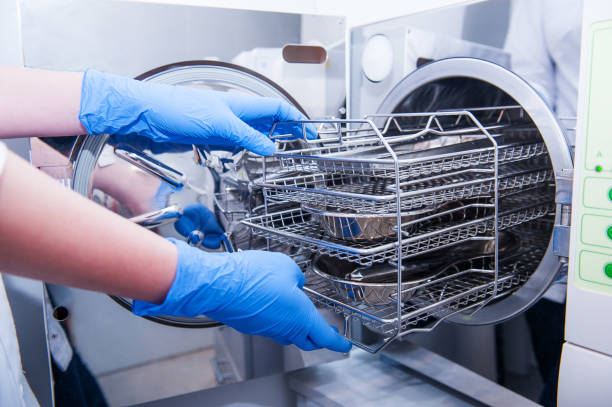
What Is a Steam Sterilizer?
A steam sterilizer is a device that uses saturated steam under pressure to sterilize compatible instruments and supplies according to a validated cycle.
Is a Medical Steam Sterilizer the Same as a Baby-Bottle Sterilizer?
They should not be considered equivalent. Medical steam sterilizers are designed for load types and process-control requirements in healthcare facilities, while bottle sterilizers are intended for household or childcare applications according to the manufacturer's stated use.
Does a Steam Sterilizer Need a Vacuum System?
This depends on the load type and required cycle. Some sterilizers use gravity displacement, while others use vacuum systems to improve air removal.
Can a Class B Sterilizer Process Every Medical Instrument?
No. A Type B cycle has a broad load scope under the relevant standard, but that does not mean every instrument can tolerate heat and moisture or is approved for steam processing. The instrument manufacturer's instructions should be reviewed.
If the Sterilizer Reaches 134°C, Does That Guarantee Successful Sterilization?
No conclusion should be made from the displayed temperature alone. The result also depends on exposure time, steam quality, load type, steam penetration, packaging, and process-control activities.
Is a Chemical Indicator Color Change Enough to Confirm a Successful Cycle?
No. A chemical indicator provides information about the conditions it is designed to detect. It should be used together with cycle data, biological indicators, and other appropriate monitoring measures according to the facility's process.
Can a Steam Sterilizer Replace an Instrument Washer?
No. Instruments must be cleaned according to their reprocessing instructions before sterilization. A steam sterilizer does not replace the removal of blood, tissue, and other soil.
This article is provided for informational purposes regarding the operating principles, classification, and selection criteria for medical instrument steam sterilizers. It does not provide sterilization cycles or process parameters for direct application to any specific instrument. Process validation, parameter selection, quality control, and release of instruments for use should follow manufacturer instructions, professional procedures, and applicable facility requirements. The international standards mentioned are technical references and do not automatically constitute mandatory legal requirements in Vietnam.
Explore Instrument Sterilization Solutions and Medical Equipment Technologies at Pharmedi Vietnam 2027
For hospitals, clinics, and central sterile processing units, selecting a steam sterilizer is an important part of planning a medical instrument reprocessing system.
In addition to equipment capacity, facilities should evaluate instrument compatibility, processing performance for different load types, cycle quality control, accessory availability, and infrastructure requirements. These factors directly affect the ability to organize and maintain long-term sterilization operations.
Pharmedi Vietnam 2027, taking place from September 28–30, 2027 at the Saigon Exhibition and Convention Center (SECC), Ho Chi Minh City, provides an opportunity for businesses, professionals, and healthcare organizations to meet, explore technologies, and discuss equipment solutions that support healthcare delivery.
For hospitals and businesses evaluating sterilization equipment, Pharmedi Vietnam 2027 provides an opportunity to explore technology solutions, identify potential suppliers, and prepare the technical requirements that should be assessed when selecting a steam sterilizer.
Before working with suppliers, healthcare facilities may proactively explore:
- Which air-removal mechanism does the sterilizer use, and which load types does it support?
- How has processing capability for lumen instruments, packaged instruments, and porous materials been validated?
- How are temperature, pressure, time, and cycle quality monitored?
- Which testing, data-storage, and traceability functions are supported?
- Is processing capacity appropriate for the number of instrument sets used by the facility?
- Which electrical, water, steam, and installation-space requirements should be prepared?
- How are spare parts, monitoring supplies, and technical services supported in Vietnam?
Preparing these criteria helps healthcare facilities compare solutions, evaluate their ability to meet sterilization requirements, and develop an investment plan suited to the actual operating scale.
For facilities upgrading their instrument-reprocessing operations, equipment selection should be based on the fit between the sterilizer, load type, control process, and actual operating capability, rather than only on chamber capacity or initial purchase price.
Dates: September 28–30, 2027
Venue: Saigon Exhibition and Convention Center (SECC), Ho Chi Minh City
Exhibition Information: https://pharmed.vn/
Exhibitor registration, visitor registration, and program information will be updated according to official announcements from the Pharmedi Vietnam 2027 Organizing Committee.