


Laboratory analyzers today differ in more than the number of samples they can process per hour. Hematology analyzers, clinical chemistry analyzers, and automated immunoassay systems also differ in measurement principles, specimen types, reagent management, level of automation, STAT sample handling, LIS connectivity, quality control requirements, and the way each system fits into the laboratory's overall workflow.
A system with very high nominal throughput may not necessarily help a laboratory return results faster if the pre-analytical stage remains a bottleneck, staff must repeatedly load samples manually, the analyzer cannot receive worklists from the LIS, or maintenance causes interruptions during peak hours. Therefore, when evaluating laboratory analyzers, facilities should consider the entire chain: specimen reception → identification → pre-processing → analysis → quality control → data validation → LIS connectivity → post-analytical specimen storage/handling.
What Is a Laboratory Analyzer?
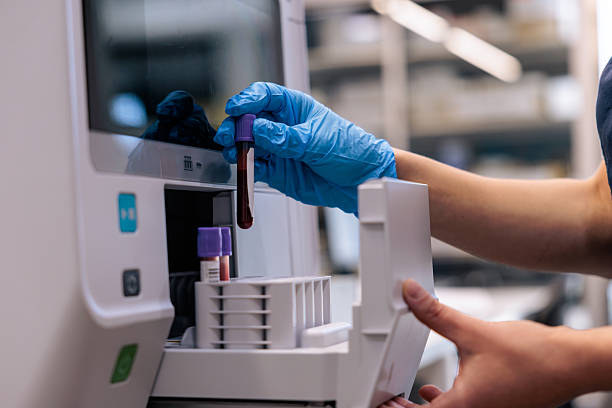
In this article, laboratory analyzers refer to systems that perform one or more measurement or analytical steps on patient specimens during the analytical stage of the laboratory workflow. Common groups include:
- Hematology analyzers.
- Clinical chemistry analyzers.
- Immunoassay analyzers.
- Coagulation analyzers.
- Urinalysis analyzers.
- Certain blood gas, electrolyte, or specialized testing systems.
- Platforms integrating multiple analytical modules.
This article focuses on three groups: automated hematology, clinical chemistry, and immunoassay systems, because these platforms can account for substantial workloads in many laboratories and clearly illustrate how automation affects workflow. It is important to note that “automated” does not mean every step of the testing process is automated. An analyzer may automatically:
- Receive samples.
- Aspirate samples.
- Dispense reagents.
- Perform reactions.
- Measure signals.
- Process data.
- Transmit results.
but still depend on people or other systems for:
- Specimen collection and reception.
- Centrifugation.
- Decapping.
- Aliquoting.
- Rack loading.
- Handling abnormal specimens.
- QC.
- Maintenance.
- Result validation.
- Reagent and waste management.
The level of automation should therefore be assessed across the entire workflow, not only within the analyzer itself.
How Do Hematology, Clinical Chemistry, and Immunoassay Analyzers Differ?
| Equipment Group | Primary Target/Measurement | Common Measurement Principles | Key Operational Considerations |
|---|---|---|---|
| Hematology analyzer | Blood cell components and related parameters | Electrical impedance, optical methods, light scatter, and cell-analysis techniques depending on the system | Specimen type, differential, flags, throughput, reagents, smear workflow |
| Clinical chemistry analyzer | Analytes in appropriate specimen types | Photometry, turbidimetry, ISE, and other methods depending on the assay | Test menu, onboard reagents, cuvettes, water system, calibration |
| Immunoassay analyzer | Analytes measured through immunological reactions | Chemiluminescence, electrochemiluminescence, and other detection systems | Assay menu, incubation, reagents, throughput, time to first result |
1. Automated Hematology Analyzers
Automated hematology analyzers are used to measure blood cells and generate parameters according to the test menu of each system. Modern platforms may combine multiple measurement principles.
Electrical Impedance
Electrical impedance may be used to count and classify cells based on changes in electrical signals as cells pass through a sensing zone. This is one of the foundational principles used in automated cell counting systems.
Optical Methods
Some systems use light and scattering characteristics to assess cellular features. The information obtained may relate to:
- Size.
- Structure.
- Optical characteristics.
Different platforms may combine impedance, optical methods, and additional techniques according to their specific design.
What Is the Role of Hematology Analyzer Flags?
In addition to quantitative parameters, analyzers may generate:
- Flags.
- Histograms.
- Scattergrams.
- Warning information.
- Indicators that certain specimens require review according to laboratory procedures.
Importantly, a flag should not be interpreted as an automated diagnosis. The laboratory should establish procedures defining:
- Which flags require review.
- When additional actions are required.
- When the specimen should be moved to another workflow.
- Who is authorized to validate the result.
- Which data must be retained.
This article does not provide guidance on interpreting CBCs, differentials, or specific clinical flags.
2. Automated Clinical Chemistry Analyzers
Automated clinical chemistry analyzers can perform multiple tests on specimen types appropriate to the system's test menu. A single platform may combine several measurement methods.
Photometry
Many clinical chemistry assays use reactions that produce optical changes. The analyzer measures the signal at the appropriate stage, and software processes the data according to the assay design.
Turbidimetry
Certain measurements may be based on changes in the turbidity of the reaction mixture.
Ion-Selective Electrodes – ISE
ISE may be used on systems equipped with appropriate electrolyte modules. Direct or indirect measurement architectures may be used depending on the device design, so facilities should not assume that all clinical chemistry analyzers measure electrolytes in the same way.
How Do Onboard Reagents Affect Operations?
Facilities should not ask only how many tests an analyzer supports in its catalog. They should also examine:
- How many actual reagent positions are available?
- What preparation is required before reagents are loaded?
- Under what conditions are reagents stored onboard?
- What is the onboard stability according to product instructions?
- Can reagents be replaced while the analyzer is running?
- What actions are required when changing reagent lots?
- How does the analyzer monitor reagent volume?
- Does it provide low-reagent alerts?
If the test menu is extensive but onboard reagent capacity is limited, staff may need to replace reagents frequently, reducing the practical benefits of automation.
3. Automated Immunoassay Analyzers
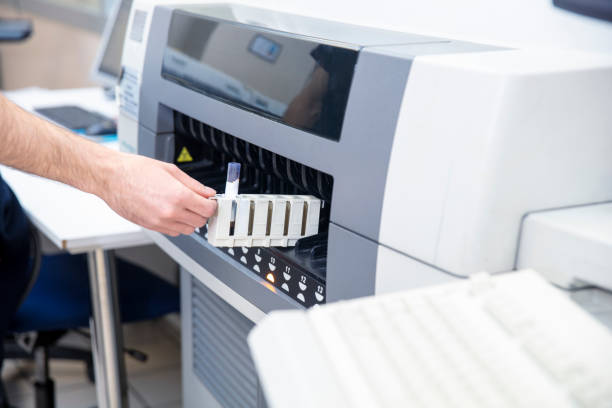
Automated immunoassay systems rely on specific recognition reactions between biological components and then use detection mechanisms appropriate to the assay. Modern platforms may include:
- Chemiluminescence immunoassays.
- Electrochemiluminescence.
- Automated enzyme immunoassays.
- Other specialized signal-detection methods.
Some chemiluminescence systems use light signals generated by chemical reactions to quantify assay signals. Platforms may support sandwich, competitive, or other assay architectures depending on the test.
How Does the Workflow of an Immunoassay Analyzer Differ from a Clinical Chemistry Analyzer?
Both types of analyzers may use:
- Serum/plasma.
- Barcodes.
- Racks.
- LIS.
but their operational characteristics may differ. For immunoassay systems, facilities often need to review:
- Incubation time.
- Reagent packs.
- Calibration.
- Number of assays onboard.
- Ability to process multiple assays simultaneously.
- Time to first result.
- Throughput when running mixed assay menus.
- Priority sample positions.
- Consumables.
- Waste.
An analyzer advertised with high throughput may not achieve that rate in practice when the actual workflow includes multiple assays with different reaction times.
Time to First Result Can Be as Important as Throughput
Two systems may both have a throughput of 200 tests per hour but provide very different operational performance if:
- Analyzer A requires samples to be accumulated into batches.
- Analyzer B continuously accepts samples.
- Some assays on Analyzer A have longer reaction times.
- Analyzer B can handle priority specimens more flexibly.
Facilities should therefore assess: throughput + time to first result + priority sample handling capability + actual specimen arrival patterns.
4. Integrated Clinical Chemistry–Immunoassay Systems
Some platforms combine clinical chemistry and immunoassay modules within the same ecosystem or use a shared sample transport line. Depending on the model, this approach may help:
- Reduce the number of times staff transfer tubes.
- Manage sample routing.
- Share certain pre-analytical components.
- Centralize data.
- Optimize laboratory space in some settings.
However, “integration” also raises additional questions:
- If the sample transport system fails, are both modules affected?
- Can the modules operate independently?
- Does maintenance on one module require the entire system to stop?
- Is backup capacity available if one component fails?
- Does the service cost change?
How Do Standalone, Random Access, and Continuous Access Differ?
These terms are often used when comparing analyzers.
Standalone Analyzer
The analyzer operates as an independent device. Samples are loaded directly into the instrument and removed after analysis. Whether this model is appropriate depends on:
- Testing volume.
- Test types.
- Required level of automation.
- Available space.
Random Access
Random access allows the system to process different tests on different samples without necessarily grouping them into a uniform batch. This can be useful for laboratories with broad test menus and continuously arriving specimens.
Continuous Access
Depending on the design, some systems allow users to continue loading:
- Samples.
- Reagents.
- Consumables.
while the analyzer is operating. This capability may help reduce downtime, but the facility should verify exactly which actions the system permits during operation.
What Are Automation Lines and Total Laboratory Automation?
As testing volume increases, automation may extend beyond individual analyzers. An automation line may combine: tube reception → barcode identification → centrifugation → decapping → aliquoting → sorting → analyzer → storage. Depending on the solution, these steps may be connected through:
- Tracks.
- Robots.
- Sample handlers.
- Middleware.
This level of automation may be described using terms such as:
- Laboratory automation.
- Integrated automation.
- Total Laboratory Automation – TLA.
Facilities should assess:
- Sample volume.
- Degree of testing centralization.
- Available space.
- Number of analyzers.
- Workflow patterns.
- Cost.
- Backup capability.
- Technical capability.
The Pre-Analytical Stage Should Often Be Reviewed Before Purchasing Another Analyzer
When TAT becomes prolonged, the first reaction may sometimes be: “We need a faster analyzer.” However, the bottleneck may actually be in:
- Specimen reception.
- Barcode handling.
- Centrifugation.
- Decapping.
- Aliquoting.
- Rack sorting.
- Transport between areas.
If the analyzer is using only 50% of its capacity because samples are not reaching it quickly enough, purchasing a higher-throughput system may not solve the problem. Time should be measured at each stage: specimen arrival → ready for analysis → loaded onto the analyzer → analysis completed → data validated.
Nominal Throughput and Actual Throughput Are Not the Same
Manufacturer throughput specifications are typically measured under defined conditions. In real-world operations, capacity may be affected by:
- Assay mix.
- Repeat specimens.
- QC.
- Calibration.
- Priority samples.
- Reagent replacement.
- Consumable replacement.
- Maintenance.
- Alerts.
- Specimens requiring manual handling.
It is therefore useful to distinguish among:
Nominal Throughput
The processing capacity stated in the equipment specifications.
Effective Throughput
The actual number of specimens or tests the laboratory can complete under its own operating conditions.
Peak Throughput
The system's ability to respond during periods of highest sample volume. For capacity planning, peak demand may be more important than the 24-hour average.
5. Barcodes and Specimen Identification Are Foundations of Automation

Automation is safe only when the system can accurately identify which specimen each tube belongs to. Barcodes may support:
- Specimen identification.
- Linking specimens with test orders.
- Routing.
- Location tracking.
- Reducing manual ID entry.
However, facilities should review:
- Barcode type.
- Print quality.
- Label placement.
- Readability.
- ID rules.
- Specimens with unreadable barcodes.
- Tubes without barcodes.
- STAT specimens that have not yet been fully registered.
When a barcode cannot be read, the laboratory needs a clear exception workflow. If each employee handles the situation differently, the benefits of automation will be reduced.
6. LIS Should Be Considered Part of the Analyzer Workflow
An analyzer may operate independently, but a high-volume laboratory may generate substantial manual work if:
- Staff manually enter sample IDs.
- Test orders have to be re-entered.
- Results have to be copied manually.
- Flags must be checked separately on each analyzer.
- Centralized status data are unavailable.
An integrated workflow may be: HIS → LIS → analyzer → LIS → relevant system/patient record. However, this flow needs to be defined in detail for each project.
What Should Be Asked When Evaluating an LIS Interface?
Which standard or protocol does the interface use?
- Is connectivity one-way or bidirectional?
- Does it support host query?
- Is middleware required?
- Is the interface license included in the quotation?
- Who performs mapping?
- Who is responsible for testing?
- Is a test environment available?
- Are transaction logs retained?
- Where are data stored during connectivity loss?
- Are data automatically retransmitted when connectivity is restored?
- How are duplicate results prevented?
- Are flags transmitted completely?
- Can QC data be exported?
These questions should be asked before the contract is signed, not after the analyzer has already been delivered.
7. What Is the Role of Middleware?
When a laboratory has multiple analyzers, middleware may sit between the analyzers and the LIS. Depending on the solution, middleware may support:
- Connectivity management.
- Routing.
- Data-processing rules.
- Status monitoring.
- Flag management.
- QC.
- Autoverification according to appropriately established policies.
- Operational dashboards.
However, middleware also introduces additional requirements for:
- Licenses.
- Servers.
- Backups.
- Maintenance.
- User management.
- Configuration.
- Testing.
8. Quality Control Remains Necessary Even with Highly Automated Analyzers
Automation does not replace the quality management system. For analyzers, the laboratory should establish appropriate processes for:
- QC.
- Calibration.
- Reagent lots.
- Maintenance.
- Alarms.
- Nonconforming events.
- Documentation.
- Competency.
QC should not be viewed simply as the task of “running controls at the beginning of the day.” The facility should clarify:
- Where are QC data stored?
- Does the analyzer provide QC charts?
- Does middleware receive QC data?
- Who reviews the data?
- If QC is not acceptable, how does the analyzer handle specimens waiting to be processed?
- Do previous results need to be assessed according to laboratory procedures?
9. Analyzer Alerts Must Be Integrated into the Workflow
Analyzers may generate multiple categories of alerts.
| Category | Operational Examples |
|---|---|
| Specimen | Not recognized, insufficient volume, aspiration error |
| Reagent | Low level, depleted, not recognized, inappropriate status |
| QC/calibration | Status requiring assessment according to laboratory procedures |
| Equipment | Mechanical, temperature, sensor, or fluidics issues |
| Data | LIS/middleware connectivity, memory, or transaction issues |
| Waste | Container, waste line, or related consumable issues |
If an analyzer produces many alerts but users do not understand:
- Which alerts they may resolve themselves.
- Which alerts require the analyzer to be stopped.
- Which alerts require technical support.
- Which alerts affect specimens currently being processed.
then a high level of automation will not necessarily make the workflow safer.
10. Maintenance Must Be Included in Actual Capacity Calculations
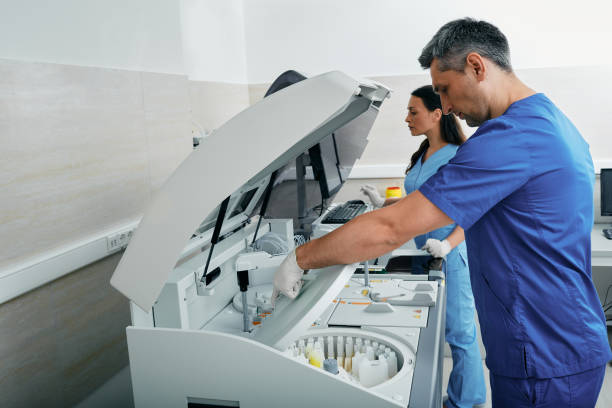
An analyzer marketed as capable of 24/7 operation may still require:
- Daily maintenance.
- Weekly maintenance.
- Monthly maintenance.
- Cleaning.
- Reagent priming.
- Probe cleaning.
- Water system maintenance.
- Consumable replacement.
depending on the platform. When calculating capacity, facilities should ask both: “How many hours can the analyzer operate?” and “How many hours is it actually available for specimen analysis after maintenance is taken into account?” If a system must be stopped for routine maintenance during peak hours, workflow may be significantly affected.
12. Consumables and Waste Can Determine Operating Costs
In addition to reagents, analyzers may use:
- Cuvettes.
- Tips.
- Reaction vessels.
- Probe wash solutions.
- Trigger/pre-trigger solutions.
- Diluent.
- Cleaner.
- Waste containers.
- Filters.
depending on the system. When evaluating costs, facilities should ask:
- Which consumables are mandatory?
- Are they single-use or reusable?
- Does the analyzer automatically track inventory?
- How frequently must they be replaced?
- Are there coding restrictions or dependencies on a proprietary ecosystem?
- Is a backup supply source available?
An analyzer with a low purchase price but high consumable costs may result in a substantially different total lifecycle cost.
14. Space and Infrastructure Directly Affect Analyzer Selection
A laboratory analyzer may require:
- Power.
- UPS.
- Water.
- Purified water.
- Drainage.
- Air conditioning.
- Heat dissipation.
- Gas or other supporting utilities depending on the system.
- Network connectivity.
- Maintenance clearance.
Facilities should check:
- Equipment dimensions.
- Required rear clearance.
- Service-panel access.
- Equipment delivery route.
- Floor load.
- Reagent location.
- Waste location.
- Distance to the water system.
If laboratory space is limited, a smaller analyzer that is easier to maintain may be more appropriate than a high-throughput system without sufficient technical clearance.
16. Backup Systems Should Be Designed According to Service Criticality
A single analyzer may become a single point of failure. Facilities should assess:
- Is a second analyzer available?
- Do both analyzers support the same test menu?
- Can reagents be transferred?
- Can the LIS route specimens to another analyzer?
- Is another backup platform available?
- Can specimens be referred to another facility?
- Does the supplier provide a loaner analyzer?
- What is the technical response SLA?
Not every laboratory requires two identical analyzers. The backup strategy should be based on: service criticality + workload + acceptable downtime + ability to transfer specimens.
18. Criteria for Selecting Laboratory Analyzers

Test Menu
Is the test menu appropriate?
- Are the key assays available?
- Are there too many unnecessary functions?
- Is future expansion possible?
Testing Volume
Samples per day.
- Tests per day.
- Peak-hour volume.
- STAT samples.
- Repeat rate.
Workflow
Batch or random access.
- Continuous loading.
- STAT handling.
- Sample routing.
- Pre-analytical workflow.
- Post-analytical workflow.
Reagents and Consumables
Onboard positions.
- Stability.
- Replacement frequency.
- Supply availability.
- Waste.
- Total cost.
Quality Management
QC.
- Calibration.
- Lot management.
- Audit logs.
- Maintenance records.
Data
Barcodes.
- LIS.
- Middleware.
- Interfaces.
- Backups.
- Data export.
- User management.
Infrastructure
Power.
- UPS.
- Water.
- Air conditioning.
- Network.
- Space.
- Waste.
Service
Warranty.
- SLA.
- Local engineers.
- Spare parts.
- Remote support.
- Backup or loaner equipment.
Comparison Framework for Three Analyzer Groups
| Factor | Hematology | Clinical Chemistry | Immunoassay |
|---|---|---|---|
| Primary workflow | Cell counting/analysis | Chemical reactions and signal measurement | Immunological reactions and signal detection |
| Specimens | According to assay/system | According to assay/system | According to assay/system |
| Common bottlenecks to assess | Flags, smear workflow, abnormal specimens | Reagents, water, cuvettes, capacity | Incubation, reagents, assay mix |
| Automation | May range from standalone to integrated systems | May integrate modules/tracks | Often random/continuous access depending on platform |
| LIS | Important for sample IDs, results, and flags | Important for worklists/results | Important for worklists/results |
| QC/calibration | According to system and laboratory procedures | According to assay/system | According to assay/system |
| Backup planning | Assess how CBC testing will continue if the analyzer is unavailable | Assess alternative test-menu coverage | Assess which assays have a backup platform |
The table is intended only to support question-setting and should not replace evaluation of each specific model.
Common Mistakes When Investing in Automated Laboratory Analyzers
Selecting the Analyzer with the Highest Throughput
If workload is low or the pre-analytical stage is slow, excess analyzer capacity may provide limited value.
Comparing Only Tests per Hour
This may overlook:
- Time to first result.
- Peak load.
- Assay mix.
- Maintenance.
- QC.
- Reagent loading.
Failing to Demonstrate Priority-Sample Workflows
STAT capability described in a brochure may not fully reflect the actual workflow.
Asking Only About Reagent Prices
Facilities should also account for consumables, QC, calibration, service, water, waste, interfaces, and middleware.
Failing to Account for Maintenance Time
Required downtime still affects capacity even when maintenance is partially automated.
Waiting Until After Purchase to Connect the Analyzer to LIS
Additional licenses, middleware, mapping, and testing time may be required.
Having No Backup Plan
A single analyzer may interrupt an entire group of laboratory tests if it becomes unavailable.
Assuming Automation Will Eliminate Staffing Needs
Automation changes the nature of work more than it completely eliminates the need for people.
Building an Automation Line Without Measuring the Pre-Analytical Workflow
The bottleneck may exist before the track or analyzer.
Frequently Asked Questions About Laboratory Analyzers

What Types of Laboratory Analyzers Are Commonly Used?
Common groups include hematology, clinical chemistry, immunoassay, coagulation, urinalysis, and other specialized analyzers. This article focuses on automated hematology, clinical chemistry, and immunoassay systems.
Is a 5-Part Differential Hematology Analyzer Always Better Than a 3-Part Analyzer?
No. The appropriate configuration depends on the testing scope, patient population, workload, flag-management workflow, and resources of the facility.
Can Clinical Chemistry and Immunoassay Analyzers Be Integrated?
Yes. Some platforms integrate chemistry and immunoassay modules or connect multiple modules through a shared sample transport system. Specific capabilities depend on the product.
What Does Random Access Mean?
In general, a random-access system can process different combinations of tests on different samples without requiring all specimens to be grouped into one uniform batch. The exact implementation depends on the analyzer.
Is Higher Throughput Always Better?
No. Throughput should match workload, peak demand, assay mix, pre-analytical capacity, staffing, and backup capability.
Do Automated Analyzers Still Require QC?
Yes. Automation does not eliminate quality management requirements. QC, calibration, maintenance, and management of nonconforming events still need to be handled according to laboratory procedures.
If an Analyzer Connects to LIS, Is Middleware Still Necessary?
Not always. Middleware may be useful when a laboratory operates multiple analyzers or needs additional capabilities for data management, routing, or workflow control. The need should be determined based on the actual system architecture.
Should a Laboratory Purchase Two Identical Analyzers for Backup?
There is no universal answer. The decision should be based on workload, service criticality, acceptable downtime, ability to transfer specimens, and cost.
Is Total Laboratory Automation Necessary?
Not for every facility. TLA is more appropriate when the scale and workflow create sufficient value to justify the system's cost, complexity, and maintenance requirements.
This article is provided for informational purposes regarding laboratory equipment and operations. System selection, QC setup, calibration, method validation, and operating procedures should be based on the facility's scope of clinical or laboratory practice, manufacturer instructions, quality management system, and applicable requirements. This article does not provide guidance on interpreting laboratory results or self-diagnosis.
Compare Laboratory Analyzers and Automation Solutions at PHARMEDI & HEALTHCARE VIETNAM 2026
When a laboratory needs to increase capacity, the question is not simply which hematology, clinical chemistry, or immunoassay analyzer has higher throughput. A system is truly appropriate only when its capacity, assay mix, priority-sample handling capability, LIS connectivity, maintenance requirements, and operating costs fit the facility's existing workflow.
At PHARMEDI & HEALTHCARE VIETNAM 2026, the Product Showcase Area includes diagnostic and laboratory technologies, alongside medical devices and supplies and digital health solutions. This provides hospitals and laboratories with opportunities to explore different technology options, compare system configurations, and discuss implementation capabilities under their actual operating conditions.
For facilities considering investment in laboratory analyzers or expanded laboratory automation, exploration at PHARMEDI VIETNAM 2026 can focus on:
- Comparing hematology, clinical chemistry, and immunoassay analyzers according to actual workload rather than only tests per hour.
- Evaluating priority sample handling, random access, continuous loading, and time to first result.
- Clarifying how analyzers connect with existing LIS, middleware, barcode, and pre-analytical systems.
- Assessing the ability to expand from standalone analyzers to integrated modules or automation lines as testing volume increases.
- Discussing reagents, consumables, QC, calibration, and other factors affecting long-term operating costs.
- Reviewing electricity, water, air conditioning, network, waste, and maintenance-space requirements before selecting a configuration.
- Clarifying warranty policies, SLAs, spare parts, and support options when an analyzer is unavailable.
- Reviewing backup strategies to prevent a single analyzer from becoming a point of disruption for an entire testing group.
Compare More Than Equipment: Consider Investment and Operations as Well
Questions raised in the exhibition area can be considered within a broader context through the International Conference Series on Investment and Innovation in Healthcare, taking place on September 22–23, 2026.
During Day 1 – September 22, the session addressing hospital supply procurement and investment decisions is particularly relevant to analyzer selection. Instead of comparing only equipment prices or throughput, facilities can consider the broader picture, including lifecycle costs, scalability, supporting infrastructure, consumables, technical services, and backup strategies.
On Day 2 – September 23, the focus shifts to Hospital Management & Operations. This is the next step after the investment decision: even a highly automated laboratory still needs to operate within the hospital's broader system, from service continuity, resource management, and quality to the ability to adapt when testing volume changes.
For laboratory analyzers, the appropriate question is therefore not only:
“Which analyzer is faster?”
but also:
“Which configuration helps the laboratory manage its current workload more effectively while remaining stable as demand increases?”
Bring Workload Data to B2B Matchmaking
If the facility already has data on samples per day, tests per day, peak hours, STAT rates, assay mix, or the condition of existing equipment, these data can provide a useful basis for B2B Matchmaking discussions at PHARMEDI.
Instead of discussing catalogs in general terms, hospitals and laboratories can address specific questions directly with potential partners: how many analyzers should be selected, whether chemistry–immunoassay integration or an automation line is needed, how much backup capacity is appropriate, how LIS/middleware should be implemented, and which configuration best supports expansion plans over the coming years.
In this way, PHARMEDI & HEALTHCARE VIETNAM 2026 can provide healthcare facilities with an opportunity not only to explore newer analyzer technologies but also to identify which configurations are appropriate for current testing volumes and can scale as future laboratory demand changes.
Dates: September 22–24, 2026
Venue: Saigon Exhibition and Convention Center (SECC), Ho Chi Minh City
Exhibitor Registration:https://pharmed.vn/exhibitor/application-form
Visitor Registration:https://ers-vn.informa-info.com/pha2026?cid=FB
Contact
Booth Booking: [email protected] (Thanh Thuý)
Media Support: [email protected] (Anita Pham)
Visitor Support: [email protected] (Ciel Le)