


A syringe pump is commonly used in areas where the delivery of fluids or medications from a syringe into the patient needs to be controlled according to programmed parameters. The device is particularly suitable for situations involving small volumes, low infusion rates, or the need for tighter flow control than manual administration.
However, syringe pump selection should not be based only on:
- The stated infusion-rate range.
- Screen size.
- Number of syringe types supported by the device.
- Initial purchase price.
In actual operation, performance also depends on syringe compatibility, continuity of flow, startup characteristics, occlusion-detection time, alarm systems, battery performance, syringe-loading workflow, the ability to organize multiple pumps at the bedside, software, connectivity, and after-sales technical service.
The FDA defines a syringe infusion pump as a type of external infusion pump that uses a syringe with a plunger as the fluid reservoir and controls fluid delivery. The FDA has also identified real-world infusion pump issues related to software, alarms, user interfaces, mechanical components, and batteries.
Therefore, the key question when selecting a syringe pump is not only:
“What is the minimum and maximum infusion rate in mL/h?”
but also:
“Can the device maintain appropriate performance with the syringe types, operating procedures, and clinical environment used by the hospital?”
What Is a Syringe Pump?
A syringe pump, also referred to as a syringe infusion pump, is a type of infusion pump that uses a syringe as the fluid reservoir.
The basic principle can be visualized as:
the syringe is secured on the device → the drive mechanism acts on the plunger → the plunger moves in a controlled manner → fluid is delivered through the infusion line
IEC 60601-2-24:2012 specifies basic safety and essential performance requirements for infusion pumps and controllers, including syringe or container pumps and volumetric infusion pumps.
This means a syringe pump should be evaluated as a system consisting of:
device + syringe + infusion line/accessories + software + user interaction
rather than by considering only the motor or infusion rate.
How Is a Syringe Pump Different from a Volumetric Infusion Pump?
Both belong to the infusion pump category, but the two terms should not be used interchangeably.
| Factor | Syringe Pump | Volumetric Infusion Pump |
|---|---|---|
| Primary fluid reservoir | Syringe | Bag/bottle or another container connected to an infusion set |
| Common mechanism | Pushes the syringe plunger | Acts on the infusion tubing or a dedicated administration set |
| Working volume | Limited by syringe capacity | Better suited to larger-volume containers |
| Important accessories | Syringe, extension line, mounting system | Infusion set, tubing, cassette depending on the system |
| Key considerations | Syringe compatibility, low-flow performance, startup, occlusion | Administration-set compatibility, air-in-line detection, free-flow prevention, volume control |
| Scope of use | According to the intended use of each model | According to the intended use of each model |
This article focuses on syringe pumps. Volumetric infusion pumps require additional evaluation of administration sets, air-in-line detection, free-flow prevention mechanisms, and volume control.
1. How Does the Syringe Pump Drive Mechanism Work?

After the syringe is correctly positioned, the device secures components such as:
- Syringe barrel.
- Syringe flange.
- Plunger.
according to the design of the specific model.
The motor and drive mechanism then move the plunger according to the programmed control settings.
Depending on the device, the pump may:
- Detect certain syringe sizes.
- Require the user to confirm the syringe type.
- Allow selection of the syringe manufacturer or product line from a list.
- Support only syringe types that the manufacturer has confirmed as compatible.
This is why syringe compatibility should be assessed during the procurement stage.
Why Are Syringe Type and Size Important?
The pump does not simply determine fluid delivery by “looking” at the fluid inside the syringe.
The system controls delivery based on factors such as:
- Syringe geometry.
- Barrel diameter.
- Plunger position.
- Mechanical characteristics.
- Device algorithms.
If a syringe has dimensions or characteristics different from those for which the pump was designed or validated, performance may change.
The FDA has previously warned about certain Cardinal Health Monoject syringes following manufacturing changes. When used with some syringe pumps, dimensional changes could create identification or compatibility issues, over- or under-delivery, and delayed occlusion alarms.
Therefore, it should not be assumed that:
“Any 20 mL syringe will work.”
The facility should confirm:
manufacturer + syringe product line + syringe size + pump configuration
according to the manufacturer's instructions for use or compatibility list.
2. Infusion-Rate Range Alone Is Not Enough to Evaluate a Syringe Pump
Brochures often present a very wide infusion-rate range.
However, when comparing two devices, the facility should not ask only:
“What is the minimum and maximum infusion rate in mL/h?”
It should also evaluate:
- Infusion-rate accuracy.
- Test conditions.
- Syringe type and size used during testing.
- Continuity of flow.
- Startup characteristics.
- Occlusion-detection performance.
- Extension lines and related accessories.
3. What Is Startup Delay?
After the user presses Start, it should not be assumed that flow at the distal end of the infusion line immediately reaches the programmed steady rate.
The system may require time to:
- Bring the drive mechanism fully into contact with the plunger.
- Take up mechanical slack.
- Generate the required pressure within the infusion line.
- Compensate for the compliance of the syringe and tubing.
This is commonly described as startup behavior or startup delay.
For environments where low infusion rates are frequently used, hospitals may request that suppliers provide:
- Performance data.
- Startup characteristics.
- Trumpet curves where applicable.
- Test conditions.
- Syringe types used during testing.
A single fixed startup-time requirement should not be applied to every syringe pump without an appropriate technical basis.
4. Occlusion and Occlusion-Detection Time
Occlusion is a condition in which flow is restricted or blocked within the infusion system.
Syringe pumps commonly monitor pressure or mechanical load to detect certain occlusion conditions and generate alarms.
However:
The start of an occlusion does not mean the alarm will occur immediately.
Detection time may depend on:
- Infusion rate.
- Syringe size.
- Configured occlusion-pressure level.
- Syringe compliance.
- Infusion tubing.
- Long extension lines.
- Other components in the infusion pathway.
The FDA has previously noted with certain syringe pumps that large syringes combined with low infusion rates may increase the time required to detect downstream occlusion.
Therefore, when comparing devices, facilities should ask:
- How does the occlusion-detection mechanism work?
- Which pressure levels are available?
- How does detection time vary with infusion rate?
- How does syringe size affect performance?
- Does the manufacturer provide corresponding performance data?
It is not sufficient to simply check:
“Occlusion alarm: Yes.”
5. Alarms and Human Factors Should Be Evaluated Together
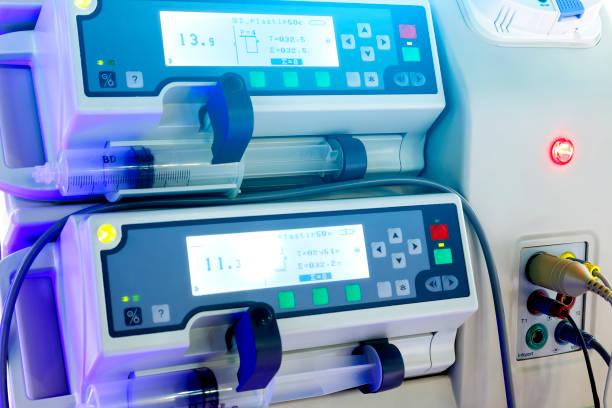
The pump may generate alarms or notifications when:
- The infusion line is occluded.
- The syringe is not loaded correctly.
- The syringe is nearly empty.
- The infusion is complete.
- Battery level is low.
- There is a power-supply problem.
- The drive mechanism is not correctly positioned.
- A system fault occurs.
- Other model-specific conditions occur.
The FDA has identified infusion-pump issues such as:
- Alarms not functioning correctly.
- False or unnecessary alarms.
- Confusing user interfaces.
- Incorrect entry of parameters or units.
- Software errors.
- Battery failures.
Therefore, the alarm system should be evaluated together with human factors and usability rather than simply by counting the number of alarm types.
During demonstrations, facilities should review:
- Are alarm priorities clear?
- Are audible and visual alarms easy to distinguish?
- Are alarm messages easy to understand?
- Does the user know the next action to take?
- Is alarm history available?
- Are alarms transmitted to a central system when connectivity is available?
6. Smart Infusion Pumps and Drug Libraries
Some systems may include:
- Drug library.
- Software designed to reduce medication-related programming errors.
- Department-specific profiles.
- Soft and hard limits depending on the design.
- Centralized configuration management.
- Event logs.
- Data analytics.
- Connectivity.
The FDA defines a smart pump as an infusion pump with software intended to help prevent medication-related errors and that may provide alerts when programmed parameters fall outside predefined limits.
However:
Having a drug library does not mean the system automatically eliminates every error.
The value of this functionality also depends on:
- Governance mechanisms.
- How the library is developed.
- Profiles.
- Update procedures.
- User compliance.
- Integration capability.
- Change management.
This article does not recommend specific dose limits, infusion rates, or drug-library configurations.
7. Connectivity and Centralized Management
Depending on the ecosystem, syringe pumps may support:
- Ethernet or Wi-Fi.
- Docking systems.
- Centralized infusion management.
- Drug-library distribution and updates.
- Device-status monitoring.
- Event-log collection.
- Data analytics.
- Certain forms of hospital-system integration.
However, it is important to distinguish:
A pump with Wi-Fi
from:
A pump that can automatically integrate with HIS/EMR.
Additional components may be required, such as:
- Server.
- Gateway.
- Middleware.
- Interface.
- License.
- Data-mapping configuration.
When deploying large numbers of pumps, hospitals should ask:
- What is the maximum number of pumps the system can manage?
- What does the server architecture include?
- Is licensing calculated per pump, per bed, or for the entire facility?
- How is the drug library updated?
- What happens if the pump loses network connectivity?
- If the server stops, does the bedside pump continue operating?
- Which data are collected?
- Are access and event logs available?
8. Battery, Mounting, Docking, and Accessories
In practice, syringe pumps may be used:
- Individually.
- With multiple pumps on one pole.
- On dedicated mounting systems.
- Within docking systems.
- In modular configurations.
Usability should therefore be assessed in the actual bedside configuration.
Battery
Facilities should review:
- Battery runtime.
- Test conditions used for the stated runtime.
- Charging time.
- Service life.
- Battery replacement capability.
- Battery cost.
- Ability to display battery status.
Battery performance is particularly important during:
- Patient transport.
- Transfers between departments.
- Temporary interruptions to mains power.
9. Changes in Syringe Supply Should Be Managed

Syringe supply may change over the lifecycle of the pump.
The FDA has shown that changes in syringe dimensions or design may affect syringe-pump recognition, compatibility, and performance.
Facilities should therefore maintain:
- A list of confirmed compatible syringes.
- Supply-item code management.
- Coordination among procurement, biomedical engineering, and user departments.
- An evaluation process when changing syringe suppliers or product lines.
Supplies should not be changed simply because:
“They have the same capacity and the same connector type.”
10. Cleaning, Maintenance, and Technical Service
Cleaning
Syringe pumps are frequently touched at:
- Display.
- Keys/buttons.
- Handle.
- Clamp.
- Housing.
- Power cable.
Cleaning agents and methods should follow the manufacturer's instructions for use (IFU).
It should not be assumed that the same disinfectant can be used for every pump because incompatible materials may affect:
- Housing.
- Labels.
- Display.
- Connectors.
- Mechanical components.
Maintenance
Depending on the model, the program may include:
- Visual inspection.
- Functional checks.
- Verification of infusion performance.
- Alarm and occlusion-detection checks.
- Battery checks.
- Drive-mechanism inspection.
- Electrical safety testing according to the facility's program.
- Software/firmware updates.
- Calibration or verification where required by the manufacturer.
The same maintenance schedule should not automatically be applied to every device.
The schedule should be based on:
- Manufacturer recommendations.
- Risk level.
- Frequency of use.
- Incident history.
- The hospital's equipment-management program.
Technical Service Capability
Before purchasing large quantities, hospitals should ask:
- Are engineers trained for the exact model available in Vietnam?
- Is appropriate test equipment available?
- Where are spare parts stored?
- What are the lead times?
- Are batteries readily available?
- Are temporary replacement pumps available during repairs?
- How long does one preventive-maintenance cycle take?
- Can maintenance be performed at the hospital, or must the device be sent off-site?
When a hospital uses dozens or hundreds of pumps, maintenance-related downtime becomes a capacity-management issue for the entire department.
11. Should Cybersecurity Be Considered?
If the pump is fully standalone, its cybersecurity scope will differ from that of a system using:
- Wi-Fi.
- Servers.
- Drug libraries.
- Remote support.
- HIS/EMR integration.
For connected devices, facilities should review:
- Authentication mechanisms.
- Wireless network security.
- Firmware/software lifecycle.
- Vulnerability-management process.
- Remote access.
- System logs.
- Network segmentation.
- Server lifecycle.
The question should not only be:
“Does the pump have Wi-Fi?”
but rather:
“What is the connection used for, what data are transmitted, and how is that connectivity governed?”
12. Ten Criteria for Selecting a Syringe Pump

1. Intended Use and Deployment Area
Determine whether the device is intended for use in:
- ICU.
- Operating room.
- Emergency department.
- NICU/PICU where appropriate to the intended use of the model.
- Transport.
- Other areas.
2. Syringe Compatibility
Review:
- Manufacturer.
- Syringe product line.
- Size.
- Compatibility list.
- Long-term availability.
3. Infusion Performance
Evaluate:
- Accuracy.
- Flow continuity.
- Startup characteristics.
- Performance under intended operating conditions.
4. Occlusion Detection
Review:
- Pressure levels.
- Detection and alarm time.
- Effect of syringe size.
- Characteristics at low infusion rates.
- Information on post-occlusion release behavior.
5. Alarms and Usability
Review:
- Alarm priority.
- Displayed information.
- Number of programming steps.
- Syringe-loading workflow.
- Mechanisms designed to reduce incorrect entry.
6. Battery and Mobility
Evaluate:
- Runtime.
- Charging.
- Battery replacement.
- Mounting.
- Transport workflow.
7. Mounting, Docking, and Scalability
Review:
- Number of pumps.
- Power management.
- Network connectivity.
- Ability to remove/replace individual pumps.
- Scalability.
8. Connectivity and Software
Clarify:
- Drug library.
- Centralized management.
- Server.
- Wi-Fi.
- Gateway/middleware.
- HIS/EMR integration.
9. Technical Service and Spare Parts
Evaluate:
- Warranty.
- SLA.
- Engineers.
- Batteries.
- Spare parts.
- Preventive maintenance.
- Temporary replacement pumps.
10. Total Lifecycle Cost
Include:
- Device.
- Syringes.
- Accessories.
- Mounting/docking systems.
- Batteries.
- Software.
- Server.
- Licenses.
- Integration.
- Maintenance.
How Do Standalone Pumps Differ from Centrally Managed Systems?
| Factor | Standalone Pump | Centrally Managed/Connected System |
|---|---|---|
| Bedside operation | Yes | Yes |
| Central server | May not be required | May be required |
| Drug library | Depends on the model | Often an important function to evaluate |
| Configuration updates | May be performed on each individual pump | May support centralized management |
| Logs/data analytics | May be limited or stored locally | May be more centralized |
| Integration | May be limited | May be supported but often requires an interface |
| Infrastructure cost | Usually simpler | May require servers, networks, licenses, and middleware |
| Governance | Simpler at small scale | Requires stronger system governance |
The table is intended as general guidance; actual configurations depend on the specific product.
12 Questions to Ask Suppliers Before Shortlisting
1. Which syringe manufacturers, product lines, and sizes are compatible with the device?
2. Does the pump automatically detect the syringe, or must the user confirm it?
3. Under what conditions were infusion accuracy and flow continuity evaluated?
4. How do startup characteristics and occlusion-detection time vary with syringe size and infusion rate?
5. What are the main technical alarms supported by the device?
6. Under what operating conditions is the stated battery runtime measured?
7. Does the device support mounting systems, docking, or modular configurations?
8. Are the drug library and centralized management functions optional features that require additional purchase?
9. If HIS/EMR integration is required, which additional servers, gateways, or middleware are needed?
10. Which syringes and accessories must be purchased separately?
11. What SLA, spare-parts availability, and technical service capability are available in Vietnam?
12. What items are included in the total cost required to put one pump fully into operation?
Short Checklist Before Purchasing a Syringe Pump
Device
- Model and intended use are clearly defined.
- Syringe compatibility has been confirmed.
- Appropriate performance data are available.
- Alarm and occlusion-detection performance have been evaluated.
- The user interface has been demonstrated.
Operations
- Battery capability is appropriate.
- Mounting/docking is appropriate.
- Syringe loading is convenient.
- The device fits the bedside environment.
- A transport plan is available where required.
System
- Drug library where required.
- Centralized management where required.
- Server and network requirements are clear.
- Integration responsibilities are defined.
- Cybersecurity has been assessed by IT.
Service and Cost
- Warranty/SLA.
- Spare parts and batteries.
- Maintenance and software support.
- Temporary replacement equipment where required.
- Syringes and accessories.
- Mounting systems, servers, licenses, and integration costs.
Frequently Asked Questions About Syringe Pumps
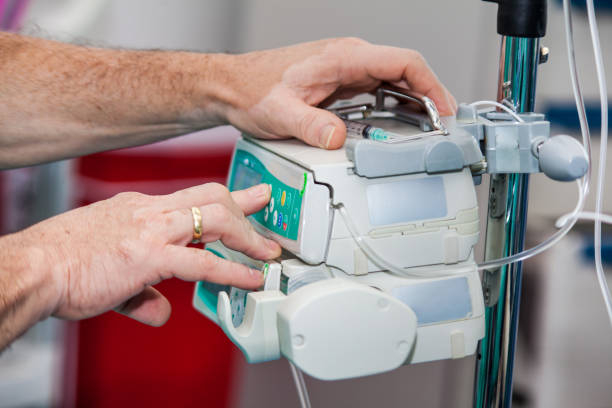
How Does a Syringe Pump Work?
The device secures the syringe and uses a drive mechanism to move the plunger according to programmed settings, thereby controlling fluid flow through the infusion line.
Are a Syringe Pump and a Volumetric Infusion Pump the Same?
No. A syringe pump uses a syringe as the fluid reservoir, while a volumetric infusion pump generally uses a bag or bottle and an administration set with a different pumping mechanism.
Can Any Syringe of the Same Capacity Be Used?
This should not be assumed. The syringe type should be confirmed as compatible with the specific pump model.
Why Does Syringe Size Affect Performance?
The geometry and mechanical characteristics of the syringe may affect how the pump controls flow, startup characteristics, and occlusion-detection performance.
Does a Syringe Pump Require a Centralized Management System?
Not every facility requires one. For large pump fleets or smart infusion systems, centralized management may be useful but will require additional infrastructure and governance.
Can a Syringe Pump Connect to HIS/EMR?
Some systems support integration, but appropriate servers, gateways, middleware, or interfaces are often required.
Should a Syringe Pump Be Selected Based on Device Price Alone?
No. Facilities should also account for syringes, accessories, batteries, mounting systems, software, servers, integration, maintenance, and long-term supply availability.
This article is provided for informational purposes regarding the principles, operation, and selection of syringe pumps. Infusion rates, doses, medication types, alarm limits, and patient-specific settings should be determined by qualified professionals according to clinical orders, manufacturer instructions, and facility procedures. This article does not provide instructions for self-programming or treatment.
Evaluate Syringe Pumps Within the Broader Medical Equipment System at PHARMEDI & HEALTHCARE VIETNAM 2026
When a hospital uses only a small number of syringe pumps, evaluation may focus on individual devices. However, as the number of pumps increases across the ICU, operating rooms, emergency department, or other departments, the challenge expands to syringe compatibility, batteries, mounting/docking, alarms, software, connectivity, maintenance, and standardization across multiple devices.
At PHARMEDI & HEALTHCARE VIETNAM 2026, the Product Showcase Area includes medical devices and supplies, alongside Digital Health and Smart Healthcare. This provides a relevant setting for healthcare organizations to explore solutions, compare technologies, and evaluate options that may fit their investment or upgrade plans.
For hospitals preparing to invest in or standardize infusion equipment, exploration at PHARMEDI VIETNAM 2026 can focus on:
- Which syringe manufacturers, product lines, and sizes does the device support?
- What data are used to evaluate performance at low infusion rates?
- How does the device manage startup behavior and occlusion detection?
- Can the pumps be deployed using mounting or docking systems?
- How are battery requirements and patient-transport workflows supported?
- Are the drug library and centralized management functions optional features that require additional purchase?
- What server and network infrastructure is required when many pumps are deployed?
- Which additional interfaces or middleware are needed for HIS/EMR integration?
- How are syringes, batteries, and spare parts supplied in Vietnam?
- How are warranty, SLA, and preventive maintenance organized?
The points above are a question framework suggested by this article, not a mandatory list of topics for exhibitors at the event.
From Selecting Individual Pumps to Investing in an Entire System
This issue can also be considered within the broader International Conference Series on Investment and Innovation in Healthcare, taking place on September 22–23, 2026.
During Day 1 – September 22, the program addresses industry growth, investment, and hospital supply procurement and investment decisions. For syringe pumps, this perspective helps facilities look beyond the price of each individual device and consider deployment quantities, standardization, docking, accessories, consumables, software, connectivity infrastructure, maintenance, and total lifecycle cost.
On Day 2 – September 23, the focus shifts to Hospital Management & Operations. As the number of pumps increases across multiple departments, the value of a system also depends on its ability to manage equipment, maintain sufficient pump availability, organize alarms, update configurations, provide technical support, and integrate devices into bedside operating workflows.
Viewed this way, the syringe pump investment decision is not only:
“Which model should we buy?”
but also:
“How should the entire pump system be organized to fit the hospital's scale and operating model?”
B2B Matchmaking – Bring Real-World Configurations into Partner Discussions
If a project requires more in-depth discussion, B2B Matchmaking at PHARMEDI provides opportunities for one-to-one connections between professional visitors and companies based on needs and potential fit.
For syringe pumps, hospitals can prepare information in advance such as the number of pumps currently in use, departments using them, syringe types currently purchased, docking requirements, battery requirements, required level of connectivity, and standardization plans so that discussions can focus directly on practical configurations.
Topics to clarify may include supply compatibility, docking configurations, servers and licenses, drug libraries, HIS/EMR integration, spare parts, temporary replacement equipment during repairs, SLA arrangements, and the cost of expanding the system in the future.
For syringe pumps, the ultimate goal is not to identify the device with the greatest number of features, but to select a system that fits bedside workflows, remains compatible with the supplies being used, can be maintained effectively, and can scale with the size of the facility.
Dates: September 22–24, 2026
Venue: Saigon Exhibition and Convention Center (SECC), Ho Chi Minh City
Exhibitor Registration:https://pharmed.vn/exhibitor/application-form
Visitor Registration:https://ers-vn.informa-info.com/pha2026?cid=FB
Contact
Booth Booking: [email protected] (Thanh Thuý)
Media Support: [email protected] (Anita Pham)
Visitor Support: [email protected] (Ciel Le)
Related post
- Vietnam’s Healthcare Sector Targets 75.5-Year Life Expectancy by 2030
- Chương trình Tư vấn Trực tuyến " Ứng dụng Kỹ thuật cao trong điều trị u não và ung thư tiêu hóa
- Bộ Y tế cho phép xuất khẩu trở lại thuốc phục vụ điều trị Covid-19
- Vietnam drops COVID-19 test requirement for foreign arrivals from May 15
- Digital Transformation in Healthcare: Connecting a Smart Ecosystem with Patient-Centered Care