


An AED is an automated external defibrillator designed to analyze cardiac rhythm and support delivery of a defibrillation shock in cases of cardiac arrest with an appropriate shockable rhythm. The device is typically compact, battery-powered, and equipped with voice or visual prompts to guide users during an emergency.
Unlike manual defibrillators intended for healthcare professionals with advanced training, many AEDs are designed so that people with limited medical experience can access and use them by following the device instructions. As a result, AEDs may be placed in hospitals, healthcare facilities, airports, schools, shopping centers, sports venues, and other appropriate public locations.
However, deploying an AED involves more than simply purchasing the device and placing it in a cabinet. Organizations also need to consider placement, accessibility, compatible electrodes, battery and electrode expiration, self-test functions, responsible-person training, and a program for maintaining readiness.
This article focuses on the technical characteristics, types of AEDs, management requirements, and equipment-selection criteria. It does not replace CPR/AED training or emergency-response procedures.
What Is an AED?
AED (Automated External Defibrillator) is the abbreviation for an automated external defibrillator.
According to the U.S. Food and Drug Administration (FDA), an AED is a defibrillator with an electronic processor designed to automatically analyze the cardiac rhythm of a person experiencing sudden cardiac arrest. When the device identifies a rhythm for which defibrillation is appropriate, it may recommend or automatically deliver an electrical shock depending on its design.
A typical AED system may include:
- Main device unit.
- ECG signal-analysis system.
- Defibrillation pulse circuitry.
- Battery.
- Adhesive electrode pads.
- Audio or visual guidance system.
- User controls.
- Self-test and status-indicator functions.
Some devices also include a display, CPR guidance, event-data storage, or remote readiness-management capability.
IEC 60601-2-4:2010, including Amendment 1:2018 and Amendment 2:2026, is an international standard specifying particular requirements for the basic safety and essential performance of cardiac defibrillators. The consolidated version currently published by IEC is IEC 60601-2-4:2010+AMD1:2018+AMD2:2026.
How Does an AED Work?
An AED uses electrodes placed on the body to acquire cardiac electrical signals. These data are sent to the processor, which analyzes the rhythm and determines whether it falls within a category for which defibrillation is indicated according to the device algorithm.
From a technical perspective, device operation can be summarized in four stages.
1. Signal acquisition: The electrodes transmit information about the heart's electrical activity to the processor.
2. Rhythm analysis: The algorithm evaluates the signal to determine whether defibrillation is advised within the intended scope of the device.
3. User guidance: The AED provides audio or visual instructions for the corresponding steps.
4. Shock delivery when appropriate: If a shockable rhythm is detected, the device supports defibrillation through either a semi-automatic or fully automatic mechanism.
An AED does not automatically deliver a shock in every situation.
In particular, a “no shock advised” message does not mean the person is safe or no longer requires emergency care. The AED only determines whether a defibrillation shock is indicated by its algorithm at the time of analysis.
In practice, AED use should be combined with recognition of the emergency, activation of emergency medical services, and appropriate cardiopulmonary resuscitation (CPR). An AED does not replace the entire emergency-response process.
1. What Is the Difference Between Semi-Automatic and Fully Automatic AEDs?
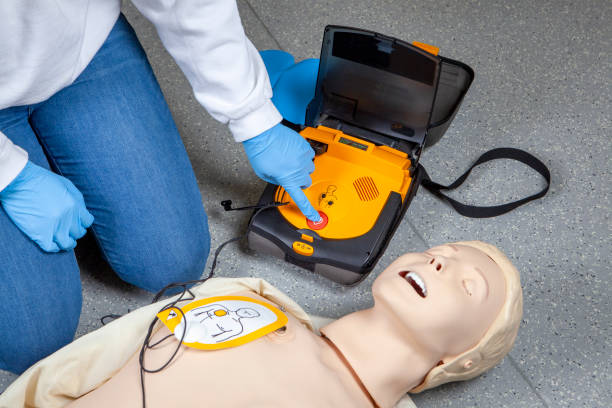
The FDA distinguishes two main groups based on how the defibrillation shock is delivered: semi-automatic AEDs and fully automatic AEDs.
Semi-Automatic AED
A semi-automatic AED analyzes the cardiac rhythm and determines when a shock should be advised.
If the algorithm detects an appropriate rhythm, the device instructs the user to activate the shock button.
Common characteristics include:
- Automatic rhythm analysis.
- Voice or visual guidance.
- A shock button that the user presses when instructed.
- CPR guidance depending on the model.
The requirement for the user to press the shock button does not mean that the user must independently determine whether the rhythm is shockable. Rhythm analysis is still performed by the AED algorithm.
Fully Automatic AED
A fully automatic AED also analyzes the cardiac rhythm using an algorithm.
The difference is that when defibrillation is indicated, the device may automatically deliver the shock after providing an appropriate warning, rather than requiring the user to press a shock button.
For this type of device, the clarity of the warnings provided before shock delivery is an important factor to evaluate.
Comparison of Semi-Automatic and Fully Automatic AEDs
| Criterion | Semi-Automatic AED | Fully Automatic AED |
|---|---|---|
| Cardiac rhythm analysis | Automatic | Automatic |
| Determination of shockable rhythm | According to the device algorithm | According to the device algorithm |
| Shock activation | User presses the button when instructed | Device automatically activates according to its design |
| User guidance | Audio/visual prompts depending on the model | Audio/visual prompts depending on the model |
| Basic accessories | Compatible battery and electrodes | Compatible battery and electrodes |
| Periodic checks | According to manufacturer instructions | According to manufacturer instructions |
A fully automatic AED should not automatically be considered better than a semi-automatic AED. Selection should be based on the intended users, placement environment, guidance functions, and training plan of the organization.
In addition to this classification, the FDA also distinguishes AEDs intended for public access from those intended for professional emergency responders. This grouping is based on the intended user population and is not the same as the semi-automatic versus fully automatic classification.
2. How Is an AED Different from a Manual Defibrillator?
Both AEDs and manual defibrillators belong to the cardiac-defibrillation equipment category, but they differ in design and operation.
| Factor | AED | Manual Defibrillator |
|---|---|---|
| Rhythm analysis for shock decision | Automatic algorithm supports the decision | Trained healthcare personnel assess and control the device |
| Intended users | Some models are designed for users with basic training or limited medical experience | Primarily intended for healthcare professionals with advanced training |
| Shock control | Automatic or semi-automatic | Manual control according to the configuration |
| Synchronized cardioversion | Not a typical function of public-access AEDs | May be supported |
| Transcutaneous pacing | Not a typical function | May be integrated |
| Monitoring of multiple physiological parameters | Usually not a primary function | May be integrated in a monitor-defibrillator system |
| Use environment | Healthcare facilities and appropriate public locations | Emergency, intensive care, and other professional clinical units |
Some professional defibrillators may integrate both manual and AED modes. The exact manufacturer configuration should therefore be reviewed.
The key point is that AEDs are designed to simplify rhythm analysis and provide user guidance, rather than to provide the full range of electrical-therapy functions available on a manual defibrillator.
3. Important Components of an AED
When selecting an AED, procurement teams should evaluate the main device together with all essential accessories.
| Component | Function | What Should Be Checked? |
|---|---|---|
| Processor | Analyzes ECG signals and controls device operation | Intended use, prompts, and supported functions |
| Electrodes | Acquire signals and deliver the electrical pulse | Compatibility, expiration date, and supported patient groups |
| Battery | Powers the device | Battery type, shelf life, and replacement method |
| Guidance system | Provides audio or visual instructions | Language, clarity, and usability |
| Status indicator | Shows readiness status | How status is displayed and how faults are handled |
| Memory | Stores event data where supported | Capacity and data-extraction method |
| Housing and carrying case | Protect the device | Storage conditions and suitability for the intended environment |
AED Electrodes
Adhesive electrode pads are important consumables because they are used both to acquire cardiac electrical signals and to deliver the defibrillation pulse.
The electrodes typically include conductive gel and are packaged according to manufacturer requirements.
According to the AHA's guidance on implementing AED programs, the conductive gel may deteriorate over time. Managing electrode expiration dates and storage conditions is therefore important.
Facilities should check:
- Electrode part number compatible with the specific AED.
- Expiration date.
- Storage-temperature requirements.
- Package integrity.
- Whether the electrodes are intended for adults or pediatric patients.
- Supply availability and replacement lead time.
Electrodes should not be used simply because the connector looks similar or because they are marketed as compatible with multiple brands. Compatibility should be confirmed through manufacturer instructions and documentation.
AED Battery
AEDs are often maintained in standby mode for long periods. The battery therefore powers not only shock delivery but also monitoring and self-test functions according to the device design.
Some devices use non-rechargeable batteries, while others may use rechargeable batteries.
When selecting a system, facilities should review:
- Battery type.
- Stated shelf life or service life.
- Storage conditions.
- Battery-status indication.
- Replacement method.
- Replacement-battery cost.
- Long-term supply availability.
Battery standby life should not be confused with continuous operating time or the number of shocks the device can deliver.
These specifications are assessed under different conditions.
4. What Should Be Considered for Adult and Pediatric AED Use?
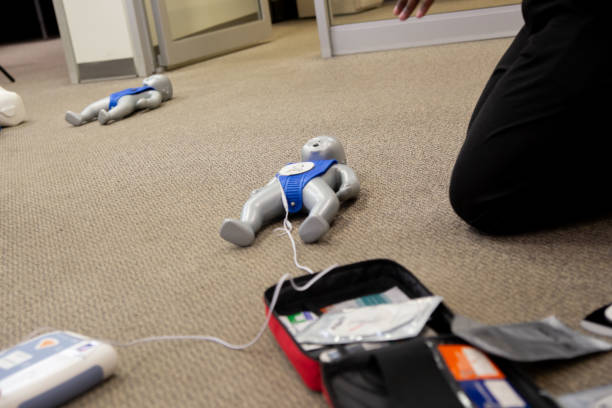
Some AEDs are designed to support both adult and pediatric use within the manufacturer's stated intended use.
Depending on the model, the system may use:
- Separate pediatric electrodes.
- A pediatric mode.
- Accessories or energy-adjustment mechanisms according to the design.
- Shared electrodes with an appropriate configuration where permitted by the manufacturer.
Not every AED uses the same method for switching between adult and pediatric configurations.
Procurement teams should confirm:
- Which age or weight groups is the device approved for according to the manufacturer?
- Are separate electrodes required?
- Is an additional component required to switch modes?
- Which electrode types should the facility keep in stock?
- Are staff trained to use the pediatric configuration?
In particular, having a pediatric defibrillation function does not mean that any electrode set can be used for all patient groups.
When AEDs are deployed in schools, childcare facilities, or locations serving multiple age groups, this requirement should be included in the selection criteria from the beginning.
5. User-Support Functions of an AED
AEDs are designed to support users during emergencies. The quality of the user interface and guidance functions is therefore important.
Voice and Visual Guidance
Depending on the model, an AED may use:
- Voice prompts.
- Indicator lights or illustrated icons.
- Display screen.
- Audible signals.
- Status notifications.
- CPR guidance.
When evaluating equipment for use in Vietnam, the language available on the exact supplied configuration should be confirmed.
A device advertised as supporting multiple languages does not necessarily include all of those languages in the configuration supplied to the Vietnamese market.
Organizations should directly evaluate:
- Is the voice guidance clear?
- Are the instructions easy to understand?
- Can they be heard in the intended environment?
- Are the symbols easy to recognize?
- Can users quickly identify device status?
CPR Guidance
Some AEDs provide CPR guidance through audio or visual prompts.
Other systems may integrate sensors that provide feedback on chest-compression quality according to the system design.
However, having CPR guidance does not mean that every AED can measure and provide feedback on chest-compression quality.
Facilities should distinguish between basic instructional prompts and feedback systems that use dedicated sensors.
Event-Data Storage
Some devices can record:
- Device activation time.
- Rhythm-analysis information.
- Times when the device advised or delivered a shock.
- ECG waveforms.
- Other operational events.
This capability may support equipment management and review of emergency-response activities according to the organization's procedures.
If data export is required, the supported formats, software, and related accessories should be confirmed.
6. Where Should AEDs Be Placed?

Selecting an AED placement location is an important part of the deployment plan.
A device with appropriate technical capabilities may still fail to meet emergency-response objectives if it is located in an area that is difficult to find or access.
Locations That May Be Considered
Depending on facility size and level of use, AED placement may be considered in:
- Hospital lobbies and public areas.
- Clinics and healthcare facilities.
- Schools.
- Shopping centers.
- Airports and transport stations.
- Office buildings.
- Factories and industrial parks.
- Sports centers.
- Other locations with large concentrations of people.
This list is illustrative. Not every location has the same equipment or quantity requirements.
Accessibility Matters More Than Simply Having an AED
When determining placement, organizations should assess:
- Is the device easy to see?
- Is signage clear?
- Is it locked in a room known to only a few people?
- Can it be accessed outside normal business hours?
- Does access require passing through controlled doors or multiple floors?
- Do responsible personnel know the exact location of the device?
- Is there a contingency plan when the AED at that location is undergoing maintenance?
In its guidance for establishing community cardiac-emergency response plans, the AHA provides a reference goal of placing enough AEDs so that a device can ideally be brought to the emergency location within approximately 3 minutes of notification.
This is a reference target in the AHA's AED program implementation guidance and is not a mandatory time requirement for every location in Vietnam.
For multi-story buildings or sites with multiple separate areas, management teams should assess actual access routes rather than relying only on map distance.
Storage Cabinets and Signage
An AED may be placed in a cabinet, protective enclosure, or suitable mounting system.
When selecting storage equipment, organizations should consider:
- Does the cabinet make the AED easy to identify?
- Is it easy to open and retrieve the device?
- Does the cabinet require a separate power source?
- Is an opening alarm appropriate or available?
- Is the AED protected from the surrounding environment?
- Can the readiness indicator still be observed?
AEDs should not be placed in locked cabinets that prevent timely access during an emergency.
7. Temperature, Humidity, and AED Storage Environment
AEDs may be deployed in many different environments, from climate-controlled offices to factories, sports venues, or semi-outdoor areas.
Organizations should therefore evaluate environmental conditions before selecting and installing the device.
Specifications to Review
- Storage-temperature range.
- Operating-temperature range.
- Humidity limits.
- Protection against dust and water.
- Impact resistance where specified.
- Separate requirements for batteries and electrodes.
A device suitable for indoor environments may not be appropriate for a location frequently exposed to high temperatures, high humidity, or rain.
In particular, facilities should review the limitations of the entire system, including the device, battery, and electrodes, rather than only the enclosure protection rating of the AED itself.
The FDA previously reported a recall involving certain Powerheart G5 devices because of the risk that the unit might fail its self-test after prolonged exposure to extreme temperature or humidity conditions.
This example illustrates that environmental conditions can affect AED readiness and should be managed according to manufacturer instructions.
8. Periodic Inspection and Maintaining AED Readiness
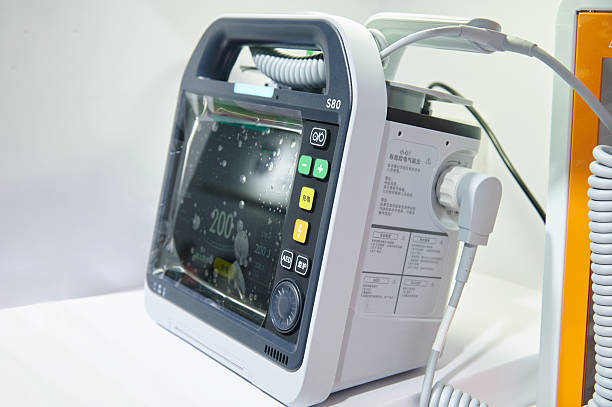
This is one of the most important aspects of an AED program.
Unlike equipment that is used every day, an AED may remain in standby mode for a long period. However, when an emergency occurs, the device needs to be ready to operate for its intended purpose.
Organizations should therefore establish a clear inspection process and assign responsibility.
Is the Self-Test Function Enough?
Many modern AEDs include a self-test function.
Depending on the device, the self-test may check:
- Power status.
- Battery.
- Electronic circuitry.
- Certain components of the defibrillation system.
- Electrode status where supported.
Results may be displayed through indicator lights, symbols, or messages.
However, self-testing does not replace visual inspection, electrode-expiration checks, or review of storage conditions.
The entire system should not be assumed to be ready simply because a status light appears normal.
Items That Should Be Checked Periodically
The AHA provides an AED checklist updated in 2025 that includes installation location, device enclosure, battery expiration, adult/pediatric electrodes, readiness indicators, and associated supplies.
Based on manufacturer instructions, organizations may develop a checklist such as the following:
| Item | What Should Be Checked? |
|---|---|
| Device location | Correct location, easy to find, and accessible |
| Device condition | No unusual visible damage |
| Readiness indicator | No fault warning requiring action |
| Battery | Battery status and replacement date |
| Electrodes | Correct type, within expiration date, and packaging intact |
| Accessories | All required supplies are present according to the configuration |
| Cabinet/protective enclosure | Does not obstruct access and is suitable for the environment |
| Inspection records | Date, inspector, and corrective actions are documented |
The AHA provides a monthly checklist template, but the actual inspection frequency should be determined according to the instructions for the specific model and the organization's management program. A single schedule should not automatically be applied to every AED.
What Should Be Done After an AED Has Been Used?
After an AED has been used, it should undergo an inspection and readiness-restoration process.
This may include:
- Visual inspection.
- Replacement of used electrodes.
- Evaluation of battery status.
- Review of fault messages.
- Event-data extraction where required.
- Cleaning according to manufacturer instructions.
- Confirmation of readiness before returning the AED to its designated location.
Replacement of electrodes and batteries should follow manufacturer instructions; it should not be assumed that all components have the same replacement interval.
A Responsible AED Manager Should Be Assigned
Organizations should clearly define:
- Who is responsible for inspections?
- Who tracks battery and electrode expiration dates?
- Who contacts the supplier when a fault warning appears?
- Who updates equipment records?
- Who organizes training and refresher training for users?
- Is there a contingency plan when an AED is temporarily out of service?
If an organization operates multiple AEDs across different locations, it may maintain a centralized register containing device ID, location, inspection date, and replacement due dates for consumables.
9. Ten Criteria for Selecting an AED for Healthcare Facilities and Public Locations
When comparing devices, procurement teams may use the following evaluation framework:
| Criterion | What Should Be Evaluated? |
|---|---|
| 1. Intended use | AED intended for public use or professional responders according to manufacturer documentation |
| 2. AED type | Semi-automatic or fully automatic |
| 3. User guidance | Language, audio prompts, symbols, and CPR-guidance capability |
| 4. Electrodes | Compatibility, expiration date, and adult/pediatric configuration |
| 5. Battery | Battery type, lifespan, status indication, and replacement cost |
| 6. Self-test | Scope of testing, readiness indicator, and fault notifications |
| 7. Use environment | Temperature, humidity, protection rating, and installation conditions |
| 8. Deployment | Size, weight, cabinet, and signage |
| 9. Technical service | Training, warranty, spare parts, and support in Vietnam |
| 10. Lifecycle cost | Device, battery, electrodes, cabinet, training, and maintenance |
Common Mistakes When Deploying AEDs
Buying the device without developing a placement plan: The AED is located in an area that is difficult to find or access quickly.
Failing to check the guidance language: Users may have difficulty hearing or understanding prompts during an emergency.
Overlooking electrode expiration: The AED may remain powered and ready while the electrode pads have already expired or are no longer suitable.
Confusing battery lifespan with operating time: Failing to review the manufacturer's stated test conditions and replacement process.
Relying only on self-test functions: No one is assigned to inspect placement, accessories, and device records.
Failing to account for long-term consumable costs: The device may be affordable while batteries, electrodes, or accessories are expensive or difficult to source.
Failing to provide training: Although the AED provides automated guidance, staff may not know where the device is located, how to coordinate emergency activation, or how to follow the response procedure.
10. Questions to Ask Suppliers Before Purchasing an AED
Before selection, hospitals or facility managers may prepare the following questions:
1. Is the AED semi-automatic or fully automatic, and who is the intended user?
2. Does the device provide Vietnamese-language guidance, and what types of guidance are included?
3. How does the device support adult and pediatric use according to manufacturer documentation?
4. Which electrode part numbers are available, what are their expiration periods, and how are they supplied in Vietnam?
5. What type of battery is used, what is its stated lifespan, and what is the replacement cost?
6. Which components are covered by the self-test function, and how does the device indicate that inspection or action is required?
7. Is the AED suitable for the expected temperature, humidity, and installation environment?
8. Are cabinets, signage, accessory kits, and training programs available?
9. How does the supplier handle warranty, maintenance, and fault notifications?
10. What items are included in the total multi-year cost of maintaining the device?
Short Checklist Before Deploying an AED
- Define the intended users and appropriate AED type.
- Check audio/visual guidance and available language options.
- Confirm electrodes, pediatric configuration, and consumable supply.
- Evaluate the battery, self-test function, and storage conditions.
- Determine installation location, signage, and accessibility.
- Assign a responsible manager and establish an inspection schedule.
- Clarify training, warranty, and total lifecycle cost.
Frequently Asked Questions About AEDs

What Is an AED?
An AED is an automated external defibrillator that analyzes cardiac rhythm and supports delivery of a defibrillation shock when the algorithm determines that a shock is appropriate.
Does an AED Deliver a Shock Automatically?
It depends on the type. A semi-automatic AED requires the user to press the shock button when instructed, while a fully automatic AED may deliver the shock automatically according to its design.
Can Someone Who Is Not a Healthcare Professional Use an AED?
Many AEDs are designed for public-access use, including by people with limited medical experience. However, CPR/AED training is strongly encouraged, and users should follow device instructions and applicable local requirements.
Can an AED Be Used for Pediatric Patients?
Some devices support pediatric use through appropriate electrodes, operating modes, or accessories. The intended use of the exact model should be confirmed from manufacturer documentation.
Do AED Batteries and Electrodes Need Periodic Replacement?
Yes. Batteries and electrodes should be managed according to their type, expiration or replacement period, and manufacturer instructions. Used electrodes generally need to be replaced with a new compatible set.
Does an AED Need Inspection Even If It Has Never Been Used?
Yes. Device readiness, battery, electrodes, placement, and accessories should be checked according to the organization's management program.
Should an AED Be Selected Based on the Lowest Purchase Price?
No. Facilities should also consider the cost of batteries, electrodes, storage cabinets, signage, training, inspections, and long-term consumable availability.
This article is provided for informational purposes regarding the design, functions, and selection criteria for AEDs. It does not replace CPR/AED training, emergency-response guidance, or professional procedures. When cardiac arrest is suspected, the emergency response system should be activated and assistance provided according to emergency-service guidance, device instructions, and the responder's training. The IEC standards and international guidance mentioned in this article do not automatically constitute mandatory legal requirements in Vietnam.
From AED Selection to Building a Ready Emergency-Response System at Pharmedi Vietnam 2027
For hospitals, schools, businesses, and organizations managing public locations, AED deployment is an important part of preparing for sudden cardiac arrest emergencies.
However, the effectiveness of an AED program also depends on device accessibility, battery and electrode status, user training, and periodic inspection procedures.
Pharmedi Vietnam 2027, taking place from September 28–30, 2027 at the Saigon Exhibition and Convention Center (SECC), Ho Chi Minh City, provides an opportunity for businesses, professionals, and healthcare organizations to meet, explore technologies, and discuss medical equipment solutions that support healthcare delivery.
For organizations researching or preparing to invest in emergency equipment, Pharmedi Vietnam 2027 provides an opportunity to explore technology solutions, identify potential suppliers, and prepare the technical requirements that should be evaluated when selecting AEDs.
When discussing solutions with suppliers, organizations may proactively explore:
- Is the device a semi-automatic or fully automatic AED?
- Does it provide Vietnamese-language guidance, and what level of CPR support is included?
- How are adult and pediatric electrodes and batteries supplied?
- Is the AED suitable for installation in schools, factories, or buildings?
- How do the self-test and readiness-warning functions operate?
- Does the supplier provide storage cabinets, signage, and training support?
- What are the long-term costs of replacing electrodes, batteries, and maintaining the device?
Preparing these criteria helps organizations compare solutions, evaluate their ability to meet emergency-response needs, and develop a deployment plan suited to each use environment.
When evaluating an AED, an appropriate choice goes beyond technical specifications. The goal is to build a system that is easy to access, regularly inspected, and ready for use when needed.
Dates: September 28–30, 2027
Venue: Saigon Exhibition and Convention Center (SECC), Ho Chi Minh City
Exhibition Information: https://pharmed.vn/
Exhibitor registration, visitor registration, and program information will be updated according to official announcements from the Pharmedi Vietnam 2027 Organizing Committee.