


Dental instruments are instruments used directly during oral examinations, assessments, and dental procedures. Depending on their function, they may support visualization of the oral cavity, examination of teeth and periodontal tissues, scaling, restorative procedures, endodontic treatment, or appropriate oral surgical procedures.
In practice, the range of dental instruments is highly diverse. A basic dental examination set commonly includes a dental mirror, explorer, and cotton pliers, while restorative, periodontal, and extraction sets use more specialized components.
However, dental instrument management involves more than simply identifying names and quantities. Healthcare facilities should also consider intended use, material, reprocessing capability, infection-risk classification, instrument condition, organization into sets, and replacement-supply availability.
This article summarizes common groups of dental instruments, their basic functions, and key requirements to consider when selecting and managing them in hospitals or dental clinics.
What Are Dental Instruments?
Dental instruments are specialized instruments used for examinations and procedures in dentistry and oral healthcare.
Within the scope of this article, the term mainly refers to hand instruments and accessories directly used for examination and treatment, rather than the entire range of dental-clinic equipment such as dental units, X-ray systems, air compressors, or central suction systems.
Dental instruments can be classified in several ways:
- By function: examination, periodontal care, restorative procedures, endodontics, tooth extraction, minor surgery, and other specialties.
- By form of use: single-use or reusable.
- By material: stainless steel, alloys, or other specialized materials.
- By reprocessing requirement: sterilization or disinfection depending on intended use and manufacturer instructions.
- By configuration: individual instruments or instrument sets intended for a particular group of procedures.
Not every instrument with the same general name has the same shape, size, or reprocessing requirements.
For example, extraction forceps are available in multiple designs for different tooth positions and professional purposes. Likewise, periodontal curettes are manufactured with different working-end configurations.
Therefore, when developing a procurement list, facilities should clearly specify the instrument name, type, specification, and intended use, rather than using only a generic name.
1. What Are the Basic Types of Dental Instruments?
The table below summarizes common groups of dental instruments.
| Instrument Group | Common Examples | Primary Function |
|---|---|---|
| Dental examination instruments | Dental mirror, explorer, cotton pliers, periodontal probe | Support visualization, examination, and assessment of oral conditions |
| Periodontal instruments | Scalers, periodontal curettes | Support cleaning and periodontal procedures |
| Restorative instruments | Excavators, placement instruments, condensers, carvers, mixing spatulas | Support preparation, placement, and finishing of restorative materials |
| Endodontic instruments | Endodontic files, endodontic explorers, isolation instruments, pluggers | Support stages of endodontic treatment according to professional indications |
| Extraction instruments | Extraction forceps, dental elevators | Support appropriate tooth-extraction procedures |
| Minor surgical instruments | Scalpel handles, tissue forceps, surgical scissors, needle holders, dissecting instruments | Support surgical procedures within the oral cavity |
| Prosthodontic instruments | Impression trays, material-mixing spatulas, prosthetic handling instruments | Support impression-taking and prosthetic procedures |
| Orthodontic instruments | Orthodontic pliers, wire cutters, wire-holding pliers | Support manipulation of archwires and orthodontic accessories |
This table provides a general overview. Some instruments may be used across multiple specialties, while others are appropriate only for specific procedures.
2. Basic Dental Examination Instrument Set
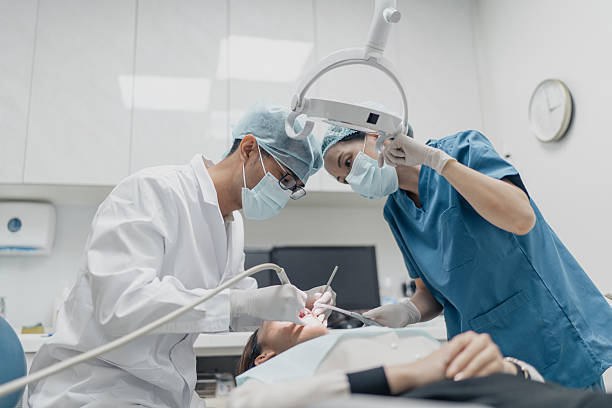
A dental examination instrument set is a group of instruments prepared to support visualization and examination of oral conditions.
A common set may include a dental mirror, explorer, and cotton pliers. Depending on the examination purpose, the facility may also add a periodontal probe or other instruments.
There is no single fixed instrument set that is suitable for every clinic and every type of examination.
Dental Mirror
A dental mirror (mouth mirror) is an instrument with a small mirror head, typically attached to a handle.
It may support:
- Indirect visualization of areas that are difficult to see directly.
- Reflection of light.
- Gentle retraction or repositioning of soft tissue to improve the field of view according to professional technique.
When selecting a dental mirror, facilities should review mirror-head size, reflection quality, replaceability of the mirror head, and permitted reprocessing methods.
Dental Explorer
A dental explorer typically has a fine working end and is used to support examination of tooth surfaces, restoration margins, or other relevant characteristics according to professional purpose.
Dental explorers are available with different tip designs, angles, and lengths.
When purchasing, facilities should consider:
- Working-end shape.
- Material.
- Surface finish.
- Grip and handling.
- Durability of the working end.
The use of an explorer to assess dental lesions should follow appropriate professional examination methods. It should not be assumed that every exploratory technique requires applying force to the tooth surface.
Dental Cotton Pliers
Cotton pliers, also known as college tweezers, support the handling and transfer of small items such as cotton, gauze, or appropriate materials during examinations and procedures.
They may have straight, curved, or other specialized tip designs.
When selecting them, facilities should check jaw alignment, spring action, handling characteristics, and the condition of the working tips.
Periodontal Probe
A periodontal probe is an instrument with a working end marked with graduations to support assessment of characteristics related to periodontal tissues.
Depending on the type, it may have:
- Different working-end shapes.
- Different marking patterns.
- Different handle designs.
- Configurations intended for specific professional purposes.
When evaluating periodontal probes, facilities should consider the clarity of the markings, condition of the working end, and suitability for the facility's examination method.
How Many Instruments Should a Basic Dental Examination Set Include?
The answer depends on each facility's workflow.
A reference configuration may include:
| Instrument | Role in the Examination Set |
|---|---|
| Dental mirror | Visualization and support in creating a clear field of view |
| Explorer | Supports examination of surfaces and relevant features |
| Cotton pliers | Hold and move small materials |
| Periodontal probe | Added when periodontal assessment is part of the examination workflow |
This is a reference set for procurement planning, not a mandatory list for every dental examination.
3. Periodontal Instruments and Tooth-Surface Cleaning Instruments
Periodontal instruments are used in professional activities involving periodontal tissues and tooth-surface cleaning.
Two common groups of hand instruments are dental scalers and periodontal curettes.
Dental Scaler
A manual dental scaler is designed with different working-end configurations to support removal of hard deposits or calculus at appropriate locations.
These instruments are available in multiple shapes, sizes, and tip designs.
When selecting them, facilities should review:
- Type of working end.
- Material.
- Sharpness and ability to maintain the working characteristics of the tip.
- Handle design.
- Cleaning and sterilization capability.
Manual dental scalers should be distinguished from ultrasonic scalers. Ultrasonic scalers are equipment systems with their own technical and maintenance requirements and are not the main focus of this article on hand instruments.
Periodontal Curette
A periodontal curette is designed in different configurations for different locations and procedural purposes.
Commonly referenced types include:
- Universal curettes.
- Gracey curettes.
- Other specialized designs.
When managing these instruments, facilities should distinguish specific instrument types and product codes because curettes with similar appearances may be designed for different sites of use.
Working ends that are worn, deformed, or damaged should be inspected and managed according to the facility's instrument-management process.
4. Dental Instruments Used in Restorative Procedures
Restorative instruments support preparation, material placement, shaping, and finishing during restorative procedures according to professional indications.
Excavator
An excavator is available in various designs, commonly including spoon-shaped working ends.
The instrument is used in procedures involving removal of dental tissue requiring treatment or other preparation steps according to the professional workflow.
When selecting excavators, facilities should consider working-end size, handle design, and surface-finish quality.
Instruments for Placement and Shaping of Restorative Materials
Common terms include:
- Placement instrument: supports placement of material in the area requiring restoration.
- Condenser/plugger: used with appropriate restorative materials according to the intended function of the instrument.
- Burnisher: supports smoothing or shaping of the surface during corresponding procedural stages.
- Carver: supports shaping of restorative material.
- Spatula: supports mixing or handling of appropriate materials.
Not every restorative instrument should be assumed to be suitable for every dental material.
For example, instruments designed for amalgam may differ in shape or intended use from instruments designed for composite restorations.
Matrix and Contouring Accessories
Some restorative procedures may require:
- Matrix bands.
- Matrix retainers.
- Dental wedges.
- Other accessories.
These components should be managed according to material type, size, single-use or reusable status, and manufacturer instructions.
5. Endodontic Instruments
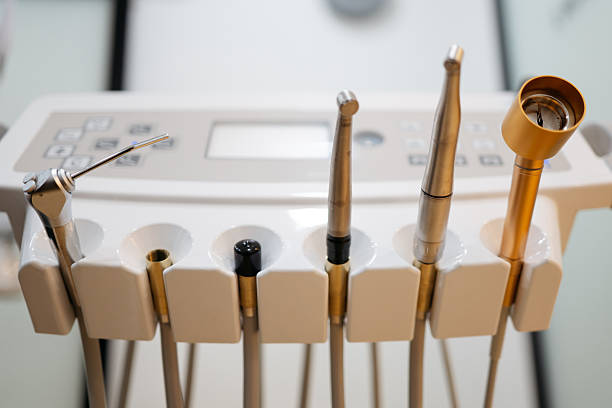
Endodontic instruments are used during treatment stages involving the root canal system according to professional procedures.
Common instruments include:
- Endodontic files.
- Reamers.
- Endodontic explorers.
- Filling or compaction instruments.
- Rubber-dam placement instruments.
- Other specialized accessories.
Endodontic Files
Endodontic files may be classified by shape, size, material, and intended use.
Examples include:
- K-files.
- H-files.
- Other specialized file systems.
When developing a procurement list, facilities should clearly specify file type, size, length, and instructions for use.
In particular, not every endodontic file should be assumed to be suitable for repeated reuse. Single-use or reusable status depends on manufacturer labeling and facility procedures.
Rubber-Dam Isolation Instruments
Some endodontic workflows use instruments and accessories such as:
- Rubber-dam clamps.
- Clamp forceps.
- Rubber-dam frames.
- Rubber-dam punch.
- Rubber-dam sheets and related accessories.
Reusable components should be distinguished from single-use supplies, and the appropriate reprocessing method should be confirmed for each item.
6. Tooth Extraction and Minor Oral Surgery Instruments
Tooth-extraction and oral-surgery procedures may require dedicated instrument sets.
Extraction Forceps
Extraction forceps are instruments designed to support tooth-extraction procedures according to professional use.
They are available in multiple designs for different tooth positions and tooth groups.
When purchasing extraction forceps, facilities should check:
- Forceps type.
- Working-end design.
- Handle shape.
- Material.
- Quality of the joint mechanism.
- Sterilization method.
The procurement list should not simply state “extraction forceps” if the facility requires multiple designs for different functions.
Dental Elevator
Dental elevators are also available in multiple shapes and sizes.
They are used for procedures appropriate to their design and professional indication.
Because there are many working-end designs, managing instruments by code can help reduce errors when preparing procedure sets.
Minor Surgical Instruments
A minor oral surgery instrument set may include:
- Scalpel handle.
- Appropriate scalpel blades.
- Tissue forceps.
- Dissecting instruments.
- Surgical scissors.
- Needle holders.
- Suturing instruments.
- Other specialized accessories.
Instruments capable of penetrating soft tissue or bone are considered higher-risk items from an infection-control perspective and require corresponding reprocessing procedures.
Facilities should also distinguish reusable instruments from single-use supplies such as many scalpel blades or needles.
7. Prosthodontic and Orthodontic Instruments
In addition to the instrument groups above, specialty dental clinics may also use dedicated prosthodontic and orthodontic instrument sets.
Prosthodontic Instruments
These may include:
- Impression trays.
- Material-mixing spatulas.
- Wax-handling instruments.
- Instruments supporting removal or adjustment of prostheses according to their intended design.
- Related accessories.
For reusable impression trays, facilities should review material, cleaning capability, and reprocessing methods between patients.
Orthodontic Instruments
Common orthodontic instruments include:
- Wire-holding pliers.
- Wire cutters.
- Forming pliers.
- Pliers for manipulating archwires or specialized accessories.
When selecting orthodontic instruments, facilities should consider precision of the working tips, joint mechanism, wear resistance, and reprocessing instructions.
The term “orthodontic pliers” should not be used as a single product code because each type may serve a different function.
8. Classification of Dental Instruments by Infection Risk
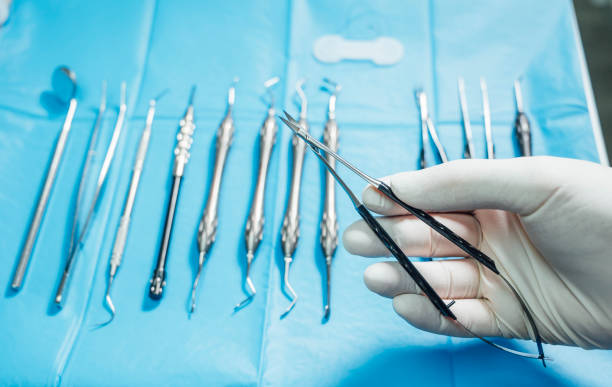
This is an important consideration when managing instruments in dental facilities.
According to the CDC, instruments and equipment that come into contact with patients can be classified into three groups based on infection-transmission risk and intended use.
| Risk Group | Characteristics | Examples | CDC Reprocessing Requirement |
|---|---|---|---|
| Critical | Penetrates soft tissue or bone | Surgical instruments, extraction forceps, appropriate periodontal instruments | Heat sterilization for reusable heat-tolerant instruments |
| Semicritical | Contacts mucous membranes or non-intact skin without intentionally penetrating tissue | Dental mirrors, some restorative instruments, reusable impression trays | Most should be heat sterilized; heat-sensitive items should receive at least high-level disinfection where permitted |
| Noncritical | Contacts only intact skin | Certain components or equipment located outside the oral cavity | Cleaning and disinfection as required according to use characteristics |
Why Should Instruments Not Be Classified Only by Name?
The same type of instrument may have different designs or intended uses.
Classification should therefore be based on:
- Actual intended use.
- Type of tissue contact.
- Infection risk.
- Manufacturer reprocessing instructions.
In particular, classifying an instrument as semicritical does not mean that routine surface disinfection alone is sufficient.
The CDC recommends that heat-tolerant semicritical dental instruments also be heat sterilized between patients. For heat-sensitive items, an alternative or an appropriate high-level reprocessing method should be considered where permitted.
For dental handpieces and certain related accessories, the CDC also emphasizes heat sterilization between patients. Although this equipment group is discussed in detail in another article, the requirement should be considered when developing an infection-control program for dental clinics.
9. Dental Instrument Management and Reprocessing Workflow
Reusable dental instruments should be processed according to procedures developed and confirmed as appropriate by the facility.
The FDA describes medical-device reprocessing as a multi-stage process that begins with initial handling at the point of use and continues through cleaning, disinfection, or sterilization according to device characteristics.
For dental instruments, the management process may be organized as follows:
Collection of used instruments → transport to the reprocessing area → cleaning → inspection → packaging → appropriate sterilization or disinfection → storage → distribution
This is a general management workflow and does not replace the manufacturer's reprocessing instructions for individual instruments.
Cleaning Before Sterilization
Used instruments may retain blood, saliva, or other contaminants.
If they are not appropriately cleaned, these materials may interfere with disinfection or sterilization.
Facilities should therefore control:
- Safe collection.
- Transport in appropriate containers.
- Separation of dirty and clean areas.
- Compatible cleaning methods.
- Inspection of instrument condition after cleaning.
The CDC recommends considering appropriate mechanical cleaning equipment, such as ultrasonic cleaners or washer-disinfectors, to support cleaning effectiveness and reduce direct staff exposure to contaminated instruments.
Inspection Before Packaging
After cleaning and drying as required, instruments should be inspected for:
- Residual contamination.
- Rust or corrosion.
- Worn working ends.
- Cracks, bending, or deformation.
- Abnormal joint function.
- Other damage affecting performance.
A damaged instrument should not continue to be used simply because it has been sterilized.
Packaging and Sterilization
Instruments may be packaged in pouches, trays, or specialized containers compatible with the sterilization method.
Facilities should confirm:
- Packaging suitability for the instrument.
- Compatibility of packaging material with the cycle.
- Ability of steam or another sterilizing agent to contact the instrument.
- Cycle-monitoring method.
- Storage conditions after processing.
The CDC recommends using a combination of mechanical monitoring, chemical indicators, and biological indicators according to appropriate guidance to control sterilization processes.
A chemical indicator changing color does not by itself prove that the entire instrument load has been successfully sterilized.
Storage and Distribution
Processed instruments should be stored under appropriate conditions to reduce the risk of recontamination.
Facilities should check:
- Is the package intact?
- Is it wet, torn, or punctured?
- Does the label contain the required management information?
- Are instruments organized by set or by type?
- Can the related sterilization cycle be identified when necessary?
The CDC recommends that sterilized packages be stored in covered or closed cabinets and that packaging integrity be checked before use.
If packaging integrity is compromised, the instrument should be evaluated and reprocessed according to the appropriate procedure.
10. Organization and Inventory Management of Dental Instrument Sets
For clinics with multiple dental chairs or hospitals with oral and maxillofacial departments, managing every individual instrument separately can be difficult.
One approach is to organize instruments into sets according to function or procedure group.
Examples include:
- Dental examination set.
- Periodontal instrument set.
- Restorative instrument set.
- Endodontic instrument set.
- Extraction instrument set.
- Minor surgery instrument set.
The exact contents of each set should be confirmed by the relevant clinical department.
What Information Should Be Managed for Each Instrument Set?
A tracking table may include:
| Information | Management Purpose |
|---|---|
| Instrument-set name | Identify the intended use group |
| Set code | Distinguish between sets of the same type |
| Component list | Confirm instrument completeness |
| Quantity of each item | Support inventory control |
| Manufacturer/product code | Manage compatibility and replacement |
| Condition | Track damage and wear |
| Reprocessing instructions | Ensure each instrument is processed appropriately |
| Sterilization records | Support traceability when required |
| Responsible person or department | Define management responsibility |
Not every small instrument necessarily needs to be managed using an individual asset code.
Facilities may choose to track items by set, by instrument type, or individually for higher-value instruments and those requiring special management.
How Many Instrument Sets Should Be Prepared?
The required quantity should be based on:
- Expected number of examinations and procedures.
- Reprocessing and sterilization time.
- Storage and distribution time.
- Number of dental chairs or procedure stations.
- Simultaneous-use requirements.
- Backup needs when instruments are damaged or undergoing reprocessing.
Quantities should not be calculated simply by assigning one instrument set to each dental chair.
If reprocessing time is long or multiple procedures occur simultaneously, additional backup sets may be required to maintain operational continuity.
11. Criteria for Selecting Dental Instruments for Healthcare Facilities

When selecting instruments, hospitals and clinics may use the following criteria:
| Criterion | What Should Be Evaluated? |
|---|---|
| 1. Intended use | Suitability for the intended examination or procedure |
| 2. Working-end design | Shape, size, and functional characteristics |
| 3. Material | Material type, corrosion resistance, and durability |
| 4. Handling | Handle design, stability, and grip |
| 5. Reprocessing capability | Permitted cleaning, sterilization, or disinfection methods |
| 6. Form of use | Single-use or reusable |
| 7. Set compatibility | Ability to organize into sets and compatibility with related accessories |
| 8. Supply availability | Product codes, spare items, and replacement availability |
| 9. Product documentation | Instructions for use, technical documentation, and other required information |
| 10. Lifecycle cost | Purchase, reprocessing, maintenance, and replacement costs |
Common Mistakes When Purchasing Dental Instruments
Selecting based only on price: Failing to assess finish quality, durability, or reprocessing capability.
Failing to specify instrument type and dimensions: Increasing the risk of purchasing instruments with working ends or sizes that do not match actual needs.
Purchasing reusable instruments without reprocessing instructions: Making it difficult to develop an appropriate infection-control workflow.
Failing to distinguish single-use supplies: Creating a risk of managing products incorrectly with respect to their permitted form of use.
Insufficient backup instruments: Operations may be interrupted while one set is undergoing sterilization or when a component is damaged.
Failing to inspect instrument condition: An instrument may have been sterilized but still be unsuitable for use because the working end is worn or deformed.
12. Questions to Ask Dental Instrument Suppliers
Before purchasing, facilities should clarify:
1. What intended use is the instrument designed for?
2. Which working-end designs, sizes, and product codes are available?
3. What material and corrosion-resistance characteristics are declared?
4. Is the instrument single-use or permitted for reuse?
5. Which cleaning and sterilization methods does the manufacturer specify?
6. Are there any limitations or special conditions for reprocessing?
7. Can individual instruments within a set be purchased separately for replacement?
8. Is the instrument compatible with existing trays, containers, or instrument-management systems?
9. What warranty and defective-product procedures are available?
10. What is the total long-term cost of purchasing and maintaining the instrument sets?
Short Checklist Before Finalizing the Instrument List
- Confirm the name and function of each instrument.
- Check the type, size, material, and product code.
- Distinguish single-use from reusable instruments.
- Confirm appropriate cleaning, sterilization, or disinfection instructions.
- Develop a component list for each set.
- Calculate backup quantities and reprocessing time.
- Clarify replacement supply and total cost of use.
Frequently Asked Questions About Dental Instruments

What Are Common Dental Instruments?
Dental instruments include many groups used for examinations and procedures, such as dental mirrors, explorers, cotton pliers, periodontal probes, scalers, restorative instruments, endodontic instruments, extraction forceps, and minor surgical instruments.
What Is Included in a Basic Dental Examination Set?
A common set includes a dental mirror, explorer, and cotton pliers. Depending on the workflow, the facility may also include a periodontal probe or other instruments.
Do Stainless-Steel Dental Instruments Need to Be Sterilized?
Yes, if the instrument is reusable and falls within a category requiring sterilization according to its intended use. Being made of stainless steel does not mean that the instrument is inherently sterile.
Can Single-Use Dental Instruments Be Reused?
Instruments labeled by the manufacturer for single use should not be reused. Facilities should follow product labeling, instructions for use, and applicable requirements.
Does a Dental Mirror Need to Be Sterilized After Each Patient?
A dental mirror that contacts mucous membranes is generally classified as a semicritical instrument. The CDC recommends heat sterilization of heat-tolerant semicritical dental instruments between patients according to appropriate guidance.
Can a Steam Sterilizer Replace Instrument Cleaning?
No. Instruments should be cleaned before sterilization or disinfection according to a validated process.
Should Dental Instruments Be Purchased as Sets or Individually?
This depends on the operating model. Purchasing by set may simplify standardization and inventory control, but facilities should still be able to replace individual instruments that are lost, worn, or damaged.
This article is provided for informational purposes regarding the names, classification, functions, and management requirements of dental instruments. It does not provide instructions for performing dental procedures or replace professional clinical protocols. Instrument use, cleaning, disinfection, sterilization, and reuse should follow manufacturer instructions, infection-control procedures, and applicable facility requirements. CDC and FDA recommendations cited in this article are used as professional references and do not automatically constitute mandatory legal requirements in Vietnam.
Standardize Dental Instrument Lists and Explore Infection-Control Solutions at Pharmedi Vietnam 2027
For hospitals and dental clinics, developing an appropriate dental instrument list is an important part of operational planning.
In addition to selecting instruments according to function, facilities should consider reprocessing capability, organization into instrument sets, condition monitoring, and replacement-supply availability. These factors directly affect management efficiency and the continuity of examination and treatment activities.
Pharmedi Vietnam 2027, taking place from September 28–30, 2027 at the Saigon Exhibition and Convention Center (SECC), Ho Chi Minh City, provides an opportunity for businesses, professionals, and healthcare organizations to meet, explore technologies, and discuss medical devices, instruments, and infection-control solutions.
For hospitals and dental clinics preparing to upgrade their instrument inventories, Pharmedi Vietnam 2027 provides an opportunity to explore product categories, identify suppliers, and define the requirements that should be evaluated when selecting dental instruments and supporting reprocessing solutions.
When discussing solutions with suppliers, healthcare facilities may proactively explore:
- How are examination and procedural instrument sets classified by function?
- Can individual instruments within a set be purchased separately for replacement?
- Which materials are used and what reprocessing instructions are provided?
- Which instruments are single-use and which are reusable?
- Are trays, containers, or systems available to support instrument-set management?
- How are packaging materials, indicators, and sterilization-control solutions supplied?
- Does the supplier support instrument-list standardization, training, and long-term replacement supply?
Preparing these criteria helps healthcare facilities compare solutions, evaluate their ability to meet dental examination and treatment needs, and develop a procurement plan aligned with actual operating scale.
When selecting dental instruments, facilities should evaluate procedural suitability, instrument quality, reprocessing capability, and long-term management efficiency together. This approach can support standardization of procurement lists and make inventory control, maintenance, and professional operations more manageable.
Dates: September 28–30, 2027
Venue: Saigon Exhibition and Convention Center (SECC), Ho Chi Minh City
Exhibition Information: https://pharmed.vn/
Exhibitor registration, visitor registration, and program information will be updated according to official announcements from the Pharmedi Vietnam 2027 Organizing Committee.
Related post
- Vietnam drops COVID-19 test requirement for foreign arrivals from May 15
- Vietnam reaches tech transfer agreement on US Covid-19 vaccines
- AI and IoT in Healthcare: How Are Connected Devices Changing Hospital Operations?
- Vietnam – France Medical Cooperation Promotes the Advancement of Vietnam’s Healthcare Services