


Dental equipment refers to the group of medical devices used for oral examinations, diagnosis, treatment, and dental healthcare. Depending on the operating model, a dental clinic may use dental units, compressed-air systems, suction systems, X-ray equipment, scaling equipment, endodontic systems, and cleaning and sterilization equipment.
However, investing in dental equipment involves more than purchasing individual machines. Many systems need to be connected to electrical power, compressed air, water, suction lines, drainage systems, and management software to operate as an integrated system.
For example, a dental unit may have an appropriate configuration, but if the compressed-air supply does not meet requirements or the waterline quality is not properly controlled, operational difficulties may still occur. Similarly, installing diagnostic imaging equipment requires appropriate conditions for space, radiation safety, and data management.
Therefore, when developing an equipment list for a dental clinic, facilities should evaluate professional requirements, expected workload, compatibility, installation conditions, infection control, maintenance, and total investment cost together.
This article summarizes the main dental equipment systems and the factors that should be considered when investing in a new dental clinic or upgrading an existing facility.
What Equipment Is Used in a Dental Clinic?
Dental equipment can be grouped according to function and its role in clinic operations.
| Equipment Group | Common Equipment | Primary Function |
|---|---|---|
| Dental unit | Patient chair, control unit, dental operating light, instrument tray | Provides the examination position and supports treatment procedures |
| Compressed-air system | Air compressor, air receiver, filters, air dryer | Supplies compressed air to compatible equipment |
| Suction system | Dental suction unit, suction tips, piping, collection components | Supports removal of saliva, fluids, and liquid waste |
| Treatment equipment | Dental handpieces, ultrasonic scalers, curing lights, endodontic systems | Supports specific stages of dental treatment |
| Diagnostic equipment | Intraoral X-ray systems, panoramic X-ray systems, CBCT, intraoral cameras | Acquires images and supports professional assessment |
| Sterilization equipment | Instrument washers, ultrasonic cleaners, steam sterilizers | Supports reprocessing of reusable devices and instruments |
| Digital dental equipment | Intraoral scanners, imaging software, CAD/CAM systems | Acquires and processes digital data |
| Management systems | Computers, clinic-management software, data storage | Manages patient information and results |
The actual equipment list depends on the professional scope of the facility. General dentistry, orthodontic, prosthodontic, and oral and maxillofacial surgery clinics may require different equipment configurations.
It is important to distinguish dental equipment from handheld dental instruments such as dental mirrors, explorers, extraction forceps, and periodontal instruments. These instruments are discussed separately in the article What Are Dental Instruments? Classification by Function and Management Requirements.
1. Dental Units and the Central Treatment System
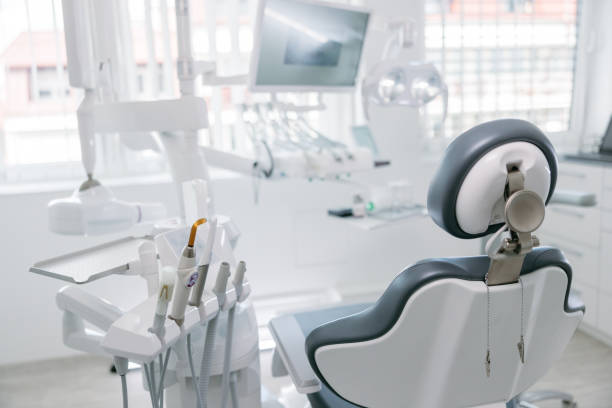
A dental unit is typically the central system at a dental treatment station, combining the patient chair with components that support the dentist and other healthcare personnel.
Depending on the configuration, the system may include:
- An adjustable patient chair.
- Control unit.
- Instrument tray.
- Dental operating light.
- Air and water outlets.
- Handpiece connections.
- Suction pump or connected suction lines.
- Cuspidor and associated water system.
- Foot control.
Not every dental unit is supplied with all of the components above. Some accessories may be optional.
Key Criteria to Evaluate
Chair adjustability: Review the range of movement, patient accessibility, and convenience for clinical personnel.
Outlet configuration: Check the number of connections, compatible handpiece types, air and water supplies, and devices that can be integrated.
Control design: Evaluate the location of the control panel and foot control, display capability, and ease of operation.
Cleanability: Give preference to designs with surfaces, joints, and contact components that facilitate appropriate cleaning procedures.
Maintenance: Review access to technical components, accessory replacement, and troubleshooting requirements.
A dental unit with more functions is not automatically more suitable for every clinic. The key consideration is whether the configuration supports the actual services provided by the facility.
Relevant Technical Standards
ISO 7494-1:2018 specifies general requirements and test methods for stationary dental patient chairs and dental units.
ISO 7494-2:2022 addresses air, water, suction, and wastewater systems associated with stationary dental units.
In addition, ISO 9680:2026 is the current international standard for dental operating lights, published in May 2026.
2. Dental Compressed-Air and Water-Supply Systems
Dental units typically require appropriate compressed-air and water supplies to support treatment equipment.
These infrastructure systems should be planned during the clinic-design stage.
Dental Air Compressor
A dental air compressor supplies compressed air to devices that use air according to the system configuration.
When selecting a compressor, facilities should review:
- Air-flow capacity.
- Required operating pressure.
- Ability to support multiple dental units simultaneously.
- Output-air quality.
- Filtration and moisture-control systems.
- Noise level.
- Maintenance conditions.
- Contingency arrangements in the event of equipment failure.
Facilities should pay particular attention to compressed-air quality and dryness.
Air containing excessive moisture, oil, or contaminants may affect connected equipment.
Therefore, compressed-air systems and related air-treatment components should be selected according to the requirements of the dental unit and connected devices, rather than by comparing motor power alone.
Dental Unit Waterlines
Dental unit waterlines are tubing systems that deliver water to components such as dental handpieces, air-water syringes, or ultrasonic scalers.
These tubes often have small internal diameters, intermittent water flow, and periods of stagnation.
According to the CDC, these characteristics may promote the formation of biofilm, which can affect the quality of water used during dental treatment.
The CDC recommends that water used for routine dental treatment meet microbiological standards for drinking water, with a reference level of no more than 500 CFU/mL of heterotrophic bacteria under U.S. standards.
This is a CDC reference level and does not automatically constitute a legal limit applicable in Vietnam.
Is a Separate Water Bottle Enough?
No.
Some dental units use independent water reservoirs or dedicated water-treatment systems. However, using a separate bottle does not by itself ensure that the internal waterlines consistently meet appropriate microbiological quality.
Facilities should evaluate:
- Incoming water source.
- Water-treatment system.
- Potential for biofilm formation.
- Waterline-maintenance procedures.
- Quality-monitoring methods.
- Dental-unit manufacturer instructions.
The CDC notes that untreated dental unit waterline systems cannot reliably maintain water quality at the recommended level.
For oral surgical procedures requiring sterile water or sterile irrigating solutions, an appropriate sterile-fluid delivery system should be used according to professional procedures. Water from conventional dental unit waterlines should not automatically be considered suitable for this purpose.
3. Dental Suction Systems and Wastewater Management
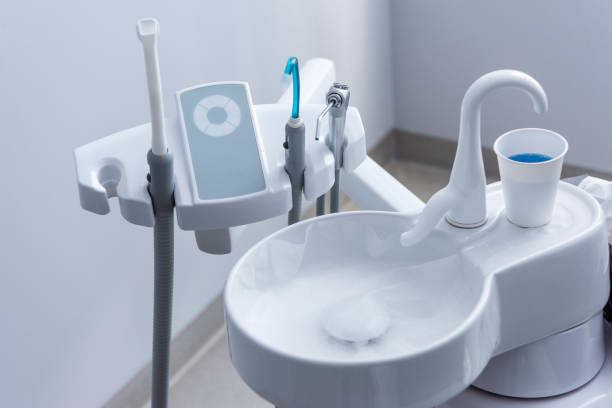
A dental suction system supports removal of saliva, cooling water, and other liquids generated during examinations and treatment.
A system may include:
- Vacuum-generating unit.
- Suction piping.
- Suction tips.
- Collection or liquid-separation components.
- Appropriate filtration and wastewater-treatment components.
Depending on the design, a clinic may use an individual suction system for each dental unit or a centralized system supporting multiple treatment stations.
Is a Central Suction System Suitable for Every Clinic?
Not necessarily.
For a small clinic, an independent suction configuration may be sufficient. Facilities with multiple dental units should evaluate simultaneous-use capacity, piping layout, and continuity arrangements.
When selecting the system, facilities should review:
- Number of dental units supported.
- Suction capability when multiple units operate simultaneously.
- Piping requirements.
- Noise level.
- Accessibility for cleaning and maintenance.
- Waste collection and treatment requirements.
- Scalability when more dental units are added.
In particular, the suction system should not be selected only on electrical power or purchase price while overlooking flow performance and the actual operating conditions of the complete system.
Can the Suction System Replace Clinic Ventilation?
No.
Dental suction systems support removal of liquids and, depending on the configuration, may contribute to local control of fluids or aerosols at the treatment site.
Clinic ventilation and indoor-air-quality systems serve different functions.
The two systems should be evaluated as part of the overall infrastructure plan and should not be considered direct substitutes for one another.
4. Common Dental Treatment Equipment
In addition to dental units and infrastructure, clinics use specialized devices for different groups of procedures.
| Equipment | Primary Function | What Should Be Evaluated? |
|---|---|---|
| Dental handpiece | Supports treatment procedures according to its design | Speed, torque, connection, cooling, reprocessing |
| Ultrasonic scaler | Supports calculus removal and appropriate treatment procedures | Technology, working tips, cooling water, maintenance |
| Dental curing light | Provides light for polymerization of compatible materials | Wavelength range, irradiance, operating modes |
| Apex locator | Supports position determination during appropriate endodontic procedures | Scope of use, display, accessories |
| Endodontic motor/system | Supports operation of compatible endodontic file systems | Motion modes, compatibility, maintenance |
| Dental surgical equipment | Supports appropriate specialized procedures | Intended use, accessories, sterilization requirements |
Dental Handpieces
Dental handpieces are important devices in many treatment activities.
Common groups include high-speed handpieces, low-speed handpieces, and systems driven by electric motors.
When selecting them, facilities should check:
- Motor type.
- Compatible connections.
- Cooling mechanism.
- Compatibility with the dental unit.
- Required accessories.
- Cleaning, lubrication, and sterilization methods.
The CDC recommends that dental handpieces and related components that can be removed from the air and water lines be cleaned and heat sterilized between patients according to the manufacturer's validated reprocessing instructions.
Surface wiping or high-level disinfection alone is not considered an appropriate substitute for reprocessing these handpieces.
Ultrasonic Scaler
Ultrasonic scalers use vibrational energy to support appropriate cleaning or periodontal procedures.
Some systems are integrated into the dental unit, while others operate independently.
When evaluating them, facilities should review the working tips, water supply, accessory replacement, cleaning requirements, and maintenance needs.
Dental Curing Light
A dental curing light is used with compatible light-sensitive dental materials.
When selecting a curing light, facilities should consider:
- Emission wavelength range.
- Declared light irradiance.
- Operating modes.
- Light-source stability.
- Light guide.
- Performance-checking and maintenance arrangements.
The device should not be assessed only by advertised output power. Compatibility with the restorative material system and actual conditions of use should also be evaluated.
5. Dental Diagnostic Imaging Equipment
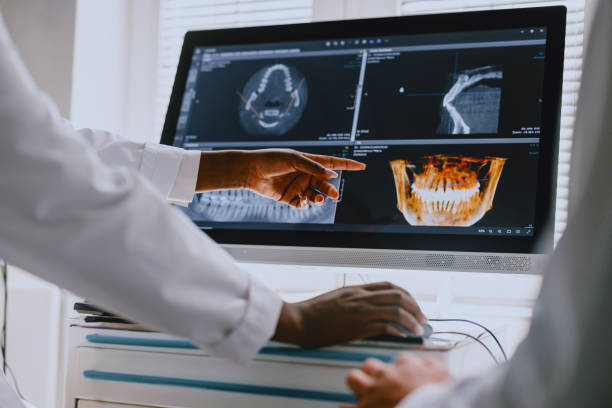
Diagnostic imaging should be evaluated separately because it involves clinical purpose, radiation safety, installation conditions, and data management.
Systems may include intraoral X-ray equipment, panoramic X-ray systems, cephalometric imaging systems, and CBCT equipment.
Intraoral X-Ray System
This equipment is used to produce dental X-ray images within appropriate professional applications.
The system may be used with:
- Film or digital sensors.
- Image receptors.
- Image display and storage software.
- Computer systems.
When investing in the system, facilities should clarify compatibility between the X-ray generator, image receptor, and software.
Panoramic X-Ray System
A panoramic X-ray system produces an overview image of the teeth, jaws, and related structures within the technical capabilities of the device.
Some systems may also include cephalometric imaging or other modules depending on the configuration.
It should not be assumed that all panoramic systems provide the same functions.
CBCT System
CBCT (Cone Beam Computed Tomography) is a tomographic imaging technology that uses a cone-shaped X-ray beam to generate three-dimensional image data within a defined field of view.
The equipment may support diagnostic and treatment-planning needs according to professional indications.
However, not every dental clinic needs to invest in CBCT from the beginning.
The 2026 joint recommendations from the American Dental Association (ADA) and the American Academy of Oral and Maxillofacial Radiology (AAOMR) emphasize selecting 2D or 3D diagnostic imaging according to individual patient needs and clinical indications.
Therefore, when investing in CBCT, facilities should evaluate:
- Scope of clinic services.
- Actual demand for use.
- Field of view and imaging modes.
- Image quality.
- Processing software.
- Storage capability.
- Radiation-safety conditions.
- Capability to operate the system and interpret results.
Intraoral Camera
An intraoral camera captures images of tooth surfaces and visible structures within the oral cavity.
The device may support image storage, communication, and monitoring of appropriate findings during examinations.
An intraoral camera should be distinguished from X-ray or CBCT equipment. The camera does not generate X-ray images and does not replace indicated diagnostic imaging modalities.
6. Cleaning and Sterilization Equipment in Dental Clinics
A dental clinic should establish a reprocessing workflow appropriate to its inventory of reusable instruments and devices.
Related systems commonly include:
- Instrument-cleaning equipment.
- Ultrasonic cleaners.
- Washer-disinfectors where appropriate.
- Steam sterilizers.
- Packaging equipment.
- Cycle-monitoring systems.
- Cabinets or storage areas for processed instruments.
Steam Sterilizer
Steam sterilizers are commonly used for instruments that can tolerate heat and moisture.
When selecting a system, facilities should check:
- Types of instruments to be processed.
- Supported cycles.
- Capacity and load type.
- Drying capability.
- Quality-control methods.
- Capacity to support the number of treatment stations.
Sterilizer capacity should not be determined solely by the number of dental units. Facilities should also account for the number of instrument sets used each day and the reprocessing turnaround time.
Infection Control on Dental Equipment
In addition to handheld instruments, frequently touched surfaces such as light handles, treatment trays, control panels, and components of the dental unit should also be included in the infection-control program.
According to the CDC, clinical contact surfaces in dental treatment areas should either be protected with appropriate barriers or cleaned and disinfected between patients according to applicable guidance.
In particular, the reprocessing method should be compatible with the materials and design of the equipment. A single chemical product should not be used indiscriminately on every surface.
7. Digital Dental Equipment and Data Management

Many clinics are increasingly interested in digitalizing images, treatment information, and restorative workflows.
Digital dental equipment may include:
- Intraoral scanners.
- Image-management software.
- Treatment-planning software.
- Computer-aided design and manufacturing systems for dental restorations.
- Data-storage and exchange solutions.
Intraoral Scanner
An intraoral scanner acquires surface-shape data from teeth and related structures according to its design.
The data may be used in appropriate digital restorative or orthodontic workflows.
When evaluating an intraoral scanner, facilities should review:
- Declared accuracy.
- Data-acquisition capability.
- Scope of applications.
- Included software.
- Data-export formats.
- Compatibility with laboratories or other systems.
- Software licensing and update costs.
A more expensive scanner should not automatically be considered more appropriate for every clinic model.
Connectivity and Storage
When multiple devices generate digital data, facilities need to manage:
- Patient ID.
- Diagnostic images.
- Scan data.
- Reports.
- Access permissions.
- Data backup and recovery.
Having USB, LAN, or Wi-Fi connectivity does not mean that devices can automatically exchange data with one another.
If the clinic plans to use centralized management software, data formats and connectivity methods for each system should be confirmed before purchase.
8. Infrastructure Requirements for Dental Clinic Implementation
Some dental equipment depends directly on infrastructure design.
Installation planning should therefore be completed before equipment selection and handover.
| Infrastructure Item | What Should Be Prepared? |
|---|---|
| Electrical power | Power capacity, outlets, grounding, backup power where required |
| Compressed air | Flow, pressure, air quality, compressor location |
| Water | Supply source, water quality, waterline-treatment system |
| Suction and drainage | Piping, suction unit, waste collection and treatment |
| Treatment space | Dental unit position, working clearance, equipment layout |
| Reprocessing area | Appropriate separation of dirty and clean instrument flow |
| Diagnostic imaging | Space, radiation safety, and applicable legal conditions |
| Information technology | Network, computers, software, storage, and backup |
Plan for Future Expansion
If a clinic expects to expand from one dental unit to several, compressed-air, suction, and waterline infrastructure should be assessed based on the expected simultaneous operating capacity.
A system that adequately supports one dental unit should not automatically be assumed to support multiple units without upgrades.
Similarly, maintenance arrangements should be planned so that servicing one component does not unnecessarily interrupt the entire clinic.
Layout of the Instrument-Reprocessing Area
The reprocessing area should be organized according to the size and operating model of the clinic.
Facilities should consider:
- Receiving area for used instruments.
- Cleaning area.
- Inspection and packaging area.
- Sterilizer location.
- Storage area for processed instruments.
- Instrument movement between areas.
The objective is to support a clear reprocessing workflow and reduce the risk of cross-contamination.
9. In What Order Should Dental Equipment Be Purchased?
There is no single procurement list suitable for every dental clinic.
Investment priorities should be based on the authorized professional scope, number of dental units, patient demand, and financial capacity.
The investment plan can be divided into three priority groups.
| Investment Group | Systems to Consider | Principle |
|---|---|---|
| Core infrastructure and operations | Dental units, electrical power, compressed air, water, suction, reprocessing equipment | Must support the services the clinic plans to provide |
| Professional treatment equipment | Handpieces, scalers, curing lights, diagnostic equipment according to need | Select according to workflow and professional staffing |
| Expansion and digital equipment | CBCT, intraoral scanners, CAD/CAM systems, advanced software | Invest when there is sufficient demand and the capability to use the technology effectively |
This grouping is intended for investment planning and is not a regulatory minimum-equipment list for licensing purposes.
What Should a New Dental Clinic Prioritize?
The clinic should first determine which services it plans to provide and the corresponding legal, staffing, and facility requirements.
The equipment configuration should then be developed accordingly.
Expensive systems should not all be purchased at the beginning if demand, operating costs, and the ability to use them effectively have not yet been clearly established.
Where Should an Existing Clinic Begin When Upgrading?
The assessment can begin by asking:
- Which equipment frequently fails?
- Is compressed-air capacity or suction performance insufficient?
- Are the waterlines being appropriately managed?
- Does the sterilizer have sufficient capacity for the instrument workload?
- Which equipment is slowing down the workflow?
- Is demand for diagnostic imaging or digital data increasing?
This approach helps identify items that genuinely need investment instead of replacing equipment based only on age.
10. Criteria for Selecting Dental Equipment for a Clinic

When comparing systems, facilities may use the following evaluation framework:
| Criterion | What Should Be Evaluated? |
|---|---|
| 1. Professional scope | Equipment suitability for the services the clinic plans to provide |
| 2. Scale of use | Number of dental units, patient volume, and simultaneous operating capacity |
| 3. Compatibility | Connections among dental units, compressed air, water, suction, and accessories |
| 4. Technical quality | Specifications, performance, test documentation, and limitations of use |
| 5. Infection control | Cleaning, reprocessing, waterline quality, and consumables |
| 6. Installation conditions | Electricity, space, ventilation, water, and drainage |
| 7. Usability | Interface, convenience, and suitability for daily use |
| 8. Data connectivity | Software, images, storage, and backup where required |
| 9. Technical service | Warranty, maintenance, spare parts, and training |
| 10. Total lifecycle cost | Purchase price, installation, consumables, software, utilities, and repairs |
Common Investment Mistakes
Considering only equipment price: Failing to budget for installation, accessories, and maintenance.
Purchasing dental units before checking infrastructure: Creating problems with air, water, suction, or installation location.
Failing to check compatibility: Handpieces, connections, or software may not be compatible with the existing system.
Failing to account for infection-control costs: Overlooking waterline treatment, instrument reprocessing, and associated supplies.
Investing in advanced imaging without sufficient demand: Equipment utilization may not justify the purchase and operating costs.
Lacking a maintenance plan: Equipment may become unavailable without spare parts, engineers, or contingency arrangements.
11. Questions to Ask Suppliers Before Investing
Before finalizing a dental equipment list, clinics should clarify:
1. Which services and scale of use is the equipment designed to support?
2. Which components, accessories, and software are included in the quoted configuration?
3. What electrical, compressed-air, water, suction, and drainage requirements does the system have?
4. Are the devices compatible with the facility's existing infrastructure and systems?
5. Are appropriate instructions available for cleaning, sterilization, waterline management, and maintenance?
6. How can images or patient information be exported and stored?
7. Does the supplier support installation, acceptance, training, and warranty service?
8. What costs are included in multi-year procurement and operation?
Checklist Before Finalizing Equipment Selection
- Confirm the equipment list according to professional scope and clinic scale.
- Evaluate electrical power, compressed air, water, suction, and space.
- Check compatibility among systems.
- Clarify infection-control and reprocessing requirements.
- Evaluate diagnostic imaging and software according to actual needs.
- Confirm warranty, training, maintenance, and spare-parts support.
- Calculate total lifecycle cost before selection.
Frequently Asked Questions About Dental Equipment
What Types of Dental Equipment Are Commonly Used?
Dental equipment may include dental units, compressed-air systems, suction systems, handpieces, ultrasonic scalers, curing lights, endodontic equipment, X-ray systems, intraoral scanners, and cleaning and sterilization equipment.
Does a Dental Clinic Need a Dedicated Air Compressor?
This depends on the dental-unit design and the available air supply. The clinic should ensure that compressed air meets the technical, quality, and capacity requirements of the connected devices.
Can One Suction System Serve Multiple Dental Units?
Yes, if the system is designed and confirmed to have sufficient capacity for the number of units operating simultaneously and also meets piping, waste-management, and maintenance requirements.
Do Dental Unit Waterlines Need Periodic Monitoring?
Yes. The system should be managed, treated, and monitored according to appropriate guidance. Using clean source water or a separate water bottle alone does not automatically ensure appropriate microbiological quality at the outlet.
Is Every Dental Clinic Required to Purchase CBCT?
It should not be assumed that every clinic needs CBCT. Investment should be based on professional scope, diagnostic needs, operating capability, and applicable legal conditions.
Can a Dental Unit Connect to Any Type of Handpiece?
No. Compatibility depends on the connection type, air or electrical supply, water system, control method, and manufacturer technical requirements.
Should Dental Equipment Be Purchased as a Package or as Separate Systems?
Either approach may be appropriate. However, facilities should confirm the actual configuration, connectivity, installation responsibilities, warranty arrangements, and replacement costs among the different systems.
This article is provided for informational purposes regarding the classification, functions, and investment criteria for dental equipment. It does not replace equipment operating instructions, treatment procedures, or legal requirements governing the operation of healthcare facilities. Equipment selection, installation, and use should follow manufacturer instructions, professional requirements, and applicable regulations. The ISO standards and CDC and ADA guidance mentioned are international technical references and do not automatically constitute mandatory legal requirements in Vietnam.
Explore Dental Equipment Systems and Diagnostic Solutions at Pharmedi Vietnam 2027
Investing in dental equipment requires coordination across multiple technology groups, from dental units, compressed air, suction systems, and water management to diagnostic imaging, infection control, and data management.
For clinics being newly developed or upgraded, exploring supplier solutions can help facilities compare integration capability, infrastructure requirements, and operating costs before implementation.
Pharmedi Vietnam 2027, taking place from September 28–30, 2027 at the Saigon Exhibition and Convention Center (SECC), Ho Chi Minh City, provides an opportunity for businesses, professionals, and healthcare organizations to meet, explore technologies, and discuss equipment solutions that support healthcare delivery.
According to the product-category list on the Pharmedi Vietnam website, groups relevant to dental-clinic investment include diagnostic and medical imaging equipment, infection-control and sterilization equipment, and technology and management systems. These are relevant areas for dental facilities researching diagnostic equipment, instrument reprocessing, and operational management.
For organizations preparing procurement plans, Pharmedi Vietnam 2027 provides an opportunity to explore technology solutions, identify suppliers, and define the technical requirements that should be evaluated when investing in dental equipment systems.
Before discussing solutions with suppliers, dental clinics may proactively explore:
- Is the equipment system appropriate for the clinic's size and planned dental services?
- How can dental units, compressed air, suction systems, and waterlines be integrated?
- Which professional needs are supported by the diagnostic imaging equipment?
- Does the system provide appropriate support for infection control and instrument reprocessing?
- Can the software centrally manage images, data, and reports?
- Does the supplier support infrastructure assessment, installation, training, and maintenance?
- What are the total long-term implementation, operating, and expansion costs?
Preparing these criteria helps dental facilities compare solutions, evaluate integration among equipment groups, and develop an investment plan suited to their actual operating scale.
When investing in dental-clinic equipment, the objective is not to own as many technologies as possible, but to build a system that matches professional requirements, operates as an integrated whole, is easy to maintain, and can support long-term expansion.
Dates: September 28–30, 2027
Venue: Saigon Exhibition and Convention Center (SECC), Ho Chi Minh City
Exhibition Information: https://pharmed.vn/
Product Categories: https://pharmed.vn/exhibitors/products
Exhibitor registration, visitor registration, and program information will be updated according to official announcements from the Pharmedi Vietnam 2027 Organizing Committee.
Related post
- Safety in the use of testing equipment: Points to control in operation
- Improve regulations on the registration for circulation of traditional medicines
- Test kit xét nghiệm COVID-19 do Việt Nam sản xuất bán tự do ở châu Âu và Anh
- 400 Doanh nghiệp tham gia Triển lãm Y tế Quốc tế Lần thứ 12
- Hy vọng mới với xét nghiệm COVID-19 bằng công nghệ số