


A medical ventilator is a device that supports or controls a patient's ventilation by delivering a respiratory gas mixture under established conditions. The equipment plays an important role in Intensive Care Units (ICUs), Emergency Departments, and other treatment areas where mechanical respiratory support is required.
Hospital ventilators are now available in many configurations, ranging from critical-care systems with advanced ventilation modes and monitoring functions to compact ventilators designed for patient transport. Some devices support both invasive and non-invasive ventilation, but their intended scope and operating capabilities vary by model.
Ventilator selection should not be based only on the number of ventilation modes or screen size. Healthcare facilities should also evaluate ventilation-control capability, sensor accuracy, alarm systems, oxygen and compressed-air requirements, backup battery, breathing circuits, accessories, and technical-service capability.
In addition, a ventilator may function as life-support equipment, so system reliability and readiness for operation should be considered from the procurement stage.
This article focuses on the classification, components, functions, and selection criteria for medical ventilators used in hospitals. It does not provide instructions for setting ventilation parameters or treating respiratory failure.
What Is a Medical Ventilator?
A medical ventilator is a device designed to support or provide ventilation for patients when respiratory assistance is required according to professional indications.
Depending on its design, the ventilator may control or support factors such as pressure, flow, gas volume, and the timing of transitions between different phases of the respiratory cycle.
A hospital ventilator system commonly includes:
- Gas-generation and flow-control system.
- Oxygen-control system.
- Pressure, flow, and other sensors.
- Controller and software.
- Display screen.
- Alarm system.
- Breathing circuit and connectors.
- Appropriate humidifier or heat and moisture exchanger.
- Power supply, battery, and accessories.
Not all ventilators have the same configuration. Some devices use compressed air and oxygen supplied by a central medical gas system, while other models may integrate a turbine or another mechanism for generating airflow.
Is a Ventilator the Same as an Oxygen-Supply Device?
No.
Ventilators and oxygen concentrators are two different categories of equipment with different functions.
An oxygen concentrator generates oxygen-enriched gas according to the characteristics of the device, while a ventilator supports or controls the movement of gas into and out of the respiratory system.
Some ventilators require oxygen from an external source, while other systems include dedicated gas-mixing configurations.
A ventilator does not automatically generate oxygen. Likewise, an oxygen concentrator does not replace the ventilation functions of a critical-care ventilator.
According to ISO 80601-2-12:2023, critical-care ventilators are designed for intensive-care environments where patients may require life-support ventilation and continuous monitoring.
1. Operating Principle of a Medical Ventilator
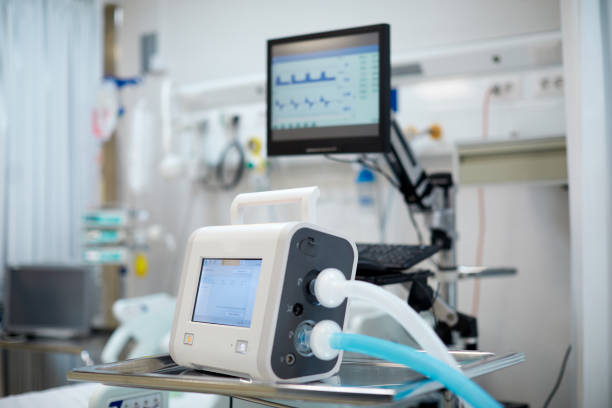
In principle, a ventilator generates and controls respiratory gas flow according to the selected ventilation mode while collecting information related to system operation.
This process can be summarized in four stages.
1. Gas intake and preparation: The device receives air, oxygen, or another gas source appropriate to its design.
2. Ventilation control: The controller works with valves, sensors, and airflow-generation mechanisms to support the inspiratory and expiratory phases.
3. Measurement and feedback: Sensors collect information such as pressure, flow, and volume so the system can monitor its operation.
4. Display and alarms: The ventilator presents parameters and waveforms and generates alarms when it detects conditions outside defined limits or other abnormalities according to its design.
These stages describe the technical operating principle and are not a clinical operating procedure.
Role of the Sensor System
Sensors are important because the ventilator needs to measure and provide feedback during operation.
Depending on the model, the system may use:
- Pressure sensors.
- Flow sensors.
- Oxygen-concentration sensors or modules.
- Other additional sensors.
Sensor accuracy, measurement location, and the ability to detect sensor faults may affect the quality of system monitoring.
Therefore, when evaluating a critical-care ventilator, facilities should assess not only the parameters that can be configured but also the parameters the machine actually measures, displays, and controls.
2. Common Types of Medical Ventilators Used in Hospitals
Ventilators may be classified according to their use environment, ventilation-support purpose, and technical configuration.
Critical-Care Ventilator
A critical-care ventilator is designed for intensive-care environments where patients may require prolonged ventilatory support and continuous monitoring.
These systems commonly emphasize:
- Multiple ventilation-control or support methods.
- Pressure, flow, and volume monitoring.
- Respiratory waveform display.
- Alarm systems.
- Compatibility with medical gas supplies.
- Support for patient groups within the stated intended use.
- Data management and connectivity where supported.
A critical-care ventilator is not automatically suitable for every age group. Functions intended for neonatal or pediatric patients should be confirmed for the exact configuration.
Transport Ventilator
A transport ventilator is designed to provide ventilatory support while a patient is being moved.
Some devices may be used for intrahospital transport or in out-of-hospital emergency environments according to the intended use stated by the manufacturer.
Compared with stationary ICU systems, transport ventilators typically place greater emphasis on:
- Size and weight.
- Battery operation.
- Ability to withstand appropriate environmental conditions.
- Oxygen-supply connections.
- Device mounting or securing methods.
- Monitoring and alarms during transport.
ISO 80601-2-84:2023 is an international standard addressing the basic safety and essential performance of ventilators used in emergency medical services environments, including suitable devices that may be used during patient transport within healthcare facilities.
Ventilators Supporting Non-Invasive Ventilation
Some systems are designed specifically for non-invasive ventilation (NIV), while other critical-care ventilators may integrate NIV modes.
Non-invasive ventilation uses an appropriate external interface, commonly a mask, rather than an invasive artificial airway.
When selecting equipment, facilities should review:
- Scope of NIV support.
- Leak-compensation capability according to the design.
- Compatible masks and breathing circuits.
- Monitoring functions.
- Alarm system.
- Limitations of use stated by the manufacturer.
A device with an NIV mode should not automatically be considered a replacement for a critical-care ICU ventilator.
Dedicated Neonatal and Pediatric Ventilators
Some ventilators are specifically designed or configured to support pediatric and neonatal patient groups.
These systems may require:
- Dedicated sensors.
- Measurement and control capabilities within appropriate ranges.
- Corresponding breathing circuits and accessories.
- Declared ventilation modes.
- Appropriate monitoring and alarm systems.
An adult ventilator should not be assumed to be suitable for neonatal use simply by replacing the breathing circuit.
Comparison of Ventilator Groups
| Equipment Group | Primary Intended Use | What Should Be Evaluated? |
|---|---|---|
| Critical-care ventilator | Ventilatory support in intensive-care environments | Ventilation functions, monitoring, alarms, and continuous operating capability |
| Transport ventilator | Ventilatory support during patient transport | Battery, oxygen source, mobility, and environmental conditions |
| NIV-support ventilator | Non-invasive ventilation within the stated intended use | Mask, leak management, monitoring, and alarms |
| Pediatric/neonatal ventilator | Ventilatory support for appropriate patient groups | Technical range, sensors, accessories, and limitations of use |
These categories may overlap. A critical-care ventilator may support NIV, while some transport ventilators may also support both invasive and non-invasive ventilation.
3. What Is the Difference Between Invasive and Non-Invasive Ventilation?

These are two commonly discussed forms of ventilatory support when evaluating hospital ventilators.
Invasive Ventilation
Invasive ventilation provides ventilatory support through an artificial airway, such as an endotracheal tube or tracheostomy tube.
The ventilator and related accessories should be appropriate for the manufacturer's stated intended use.
Depending on the system, the device may support different ventilation-control or assistance modes together with monitoring of relevant parameters.
Non-Invasive Ventilation
Non-invasive ventilation (NIV) provides ventilatory support through an external interface, commonly a compatible mask.
One important technical consideration in NIV is the device's ability to identify and manage leaks according to its design.
Facilities should therefore evaluate:
- Leak-management algorithms or mechanisms.
- Synchronization between the ventilator and the patient's respiratory activity.
- Supported mask types.
- Breathing-circuit characteristics.
- Monitoring and alarm functions.
Can One Ventilator Support Both Forms?
Yes. Some critical-care ventilators support both invasive ventilation and NIV.
However, facilities should confirm whether this functionality is included in the standard configuration or requires additional modules or accessories.
The ability to switch between invasive and non-invasive ventilation should not be evaluated only by the mode name shown on the screen.
Hospitals should review the stated intended use, breathing-circuit type, sensor requirements, and corresponding technical limitations.
4. Ventilation Modes and Support Functions
Modern ventilators may be described as supporting multiple ventilation modes, such as:
- VCV: volume-controlled ventilation.
- PCV: pressure-controlled ventilation.
- PSV: pressure-support ventilation.
- SIMV: synchronized intermittent mandatory ventilation.
- CPAP: continuous positive airway pressure in appropriate configurations.
In addition, some manufacturers use proprietary names for advanced control or support modes.
Are More Ventilation Modes Always Better?
Not necessarily.
A larger number of ventilation modes may reflect greater system versatility, but it does not by itself prove that the device is more suitable for every clinical department.
When evaluating a mode, facilities should ask:
- What intended use does the mode support?
- Does the facility actually need to use it?
- Have staff received appropriate training?
- Does the device require additional sensors or accessories?
- How do monitoring and alarms operate in the corresponding mode?
In particular, modes with similar names from different manufacturers should not be assumed to use identical control algorithms.
Hospitals should ask suppliers to explain the functions using technical documentation and provide an appropriate demonstration rather than relying only on a list of mode names.
5. Parameters That a Ventilator May Monitor
A critical-care ventilator generally displays parameters related to ventilation and system operation.
| Parameter | Basic Technical Meaning |
|---|---|
| Tidal volume (VT) | Gas volume in one respiratory cycle |
| Respiratory rate (RR) | Number of respiratory cycles per minute |
| Minute ventilation (MV/VE) | Total volume of gas ventilated in one minute |
| Airway pressure | Information about pressure within the airway system |
| Positive end-expiratory pressure (PEEP) | Pressure maintained at the end of expiration according to the selected mode |
| Fraction of inspired oxygen (FiO₂) | Proportion of oxygen in the inspired gas mixture |
| Gas flow | Movement of gas through the system |
| Ventilation waveforms | Changes in pressure, flow, or volume over time |
These parameters may be measured directly or calculated by the system using its own methods.
Therefore, facilities should distinguish set values from values actually measured or estimated by the device.
Waveforms and Respiratory Loops
Some ventilators provide:
- Pressure-time waveform.
- Flow-time waveform.
- Volume-time waveform.
- Pressure-volume loop.
- Flow-volume loop.
These displays support professional personnel in observing system activity.
However, a ventilator with more graphs does not automatically provide better ventilation quality.
When selecting equipment, facilities should evaluate display clarity, screen customization, sensor reliability, and data-retrieval capability.
Can a Ventilator Replace a Patient Monitor?
They should not be considered equivalent.
A ventilator primarily monitors parameters related to ventilation, while a multiparameter patient monitor may support ECG, SpO₂, blood pressure, and other physiological parameters.
Some ventilators may be able to connect to or display data from external devices, but this depends on the configuration.
Ventilators and patient monitors are complementary systems and do not automatically replace each other's full functionality.
6. Alarm Systems and Safety Functions
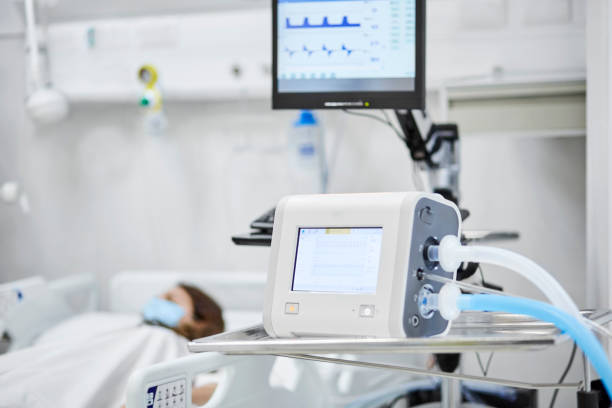
Critical-care ventilators may serve as life-support devices, so the alarm system is an important component that should be carefully evaluated.
Depending on the model, alarms may relate to:
- High airway pressure.
- Low pressure or low volume.
- Disconnection or air leakage.
- Apnea within the monitoring scope of the ventilator.
- Oxygen concentration outside defined limits.
- Gas-supply failure.
- Power failure.
- Low battery.
- Sensor or system faults.
More Alarms Do Not Necessarily Mean a Better System
A system with many alarm types is not automatically safer if the notifications are difficult to distinguish or recognize.
Facilities should evaluate:
- Alarm priority classification.
- Audible and visual detectability.
- Display of alarm causes.
- Alarm history.
- Ability to identify active alarms.
- System response to loss of electrical power or gas supply.
Hospitals should request demonstrations of test scenarios permitted by the manufacturer under safe test conditions.
Self-Test Functions
Some ventilators include self-test programs designed to verify relevant components before the device is placed into use.
Depending on the system, self-testing may involve sensors, valves, breathing-system tightness, or other components.
However, self-test functions should not be assumed to replace the entire pre-use inspection and periodic maintenance process.
Facilities should clarify the scope of self-testing, conditions for performing the test, and the actions required when the device reports an error.
7. Oxygen Supply, Compressed Air, and Backup Battery
Hospital ventilators depend on a stable supply of respiratory gases and electrical power.
Infrastructure requirements should therefore be confirmed before purchasing the equipment.
Oxygen and Medical Gas Supply
Depending on the design, a ventilator may require:
- Oxygen from a central supply system.
- Medical compressed air.
- Compatible oxygen cylinders.
- An integrated turbine or another airflow-generation mechanism.
- Appropriate gas-supply connectors and accessories.
Not every ventilator should be assumed to require both oxygen and compressed air from a central pipeline system.
Some models can use ambient air and supplement it with oxygen according to the configuration.
When selecting equipment, facilities should confirm:
- Type of gas supply required.
- Required supply pressure and flow.
- Compatible connectors.
- Oxygen consumption under expected operating conditions.
- Backup gas-supply arrangements.
- How the system generates alarms when there is a gas-supply problem.
WHO published Technical specifications for health facility based medical oxygen systems in December 2024, addressing quality, safety, and performance requirements for oxygen sources and oxygen storage and distribution systems used in healthcare facilities.
Battery and Backup Power
Ventilators may use an integrated battery or additional battery packs depending on the design.
Items to evaluate include:
- Battery runtime under expected operating conditions.
- Charging time.
- Replacement capability.
- Battery-status display.
- Low-battery alarms.
- Device operation during interruption of mains power.
Facilities should not rely only on the maximum battery runtime stated by the manufacturer without understanding the test conditions.
In particular, stationary ICU ventilators and transport ventilators may have different mobility and backup-power requirements.
8. Breathing Circuits, Filters, and Humidification Systems
In addition to the main device, breathing circuits and related accessories directly affect the operation of the complete system.
A configuration may include:
- Breathing circuit.
- Connectors.
- Expiratory valve.
- Flow sensor.
- Appropriate filters.
- Humidifier.
- Heated tubing where supported.
- Compatible mask or patient interface.
Can the Same Breathing Circuit Be Used with Every Ventilator?
No.
Breathing circuits may differ in:
- Single-limb or dual-limb configuration.
- Connectors.
- Size.
- Sensor position.
- Expiratory components.
- Compatibility with humidification systems.
- Supported patient groups.
Facilities should therefore check the list of breathing circuits and accessories permitted by the manufacturer for the exact ventilator model.
Humidifiers and Heat and Moisture Exchangers
Humidity management in ventilatory-support systems may use solutions such as:
- Active humidifier: uses an appropriate device to add moisture to respiratory gas.
- Heat and moisture exchanger (HME): helps retain heat and moisture from exhaled gas according to its design.
These two methods operate on different principles and should not be considered interchangeable in every situation.
Some accessories combine heat and moisture exchange with filtration capability, but not every HME provides the same filtration function.
When purchasing these components, facilities should evaluate compatibility, performance, consumable requirements, and manufacturer instructions.
Infection Control for Breathing Circuits
Breathing circuits and components that contact respiratory gases may need to be cleaned, disinfected, sterilized, or replaced depending on their intended use.
Facilities should distinguish:
- Single-use accessories.
- Accessories permitted for reuse.
- Components requiring reprocessing between patients.
- Parts maintained according to the manufacturer's program.
According to CDC guidance on prevention of healthcare-associated pneumonia, breathing circuits used for the same patient should not be routinely changed solely according to a fixed time interval if they are not visibly contaminated or mechanically malfunctioning, unless another appropriate requirement applies.
This guidance does not mean that breathing circuits can be used indefinitely. Replacement and reprocessing should follow the product type, manufacturer instructions, and the facility's infection-control procedures.
9. Ventilator Implementation and Maintenance Requirements in Hospitals
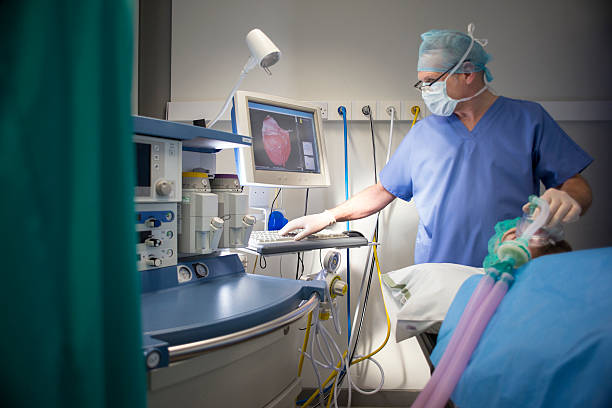
A critical-care ventilator should not be viewed as an independent device.
Operational effectiveness also depends on gas supplies, accessories, personnel, infrastructure, and technical-support capability.
Pre-Use Checks
Healthcare facilities should establish checking procedures based on manufacturer instructions and professional requirements.
Management items may include:
- External physical condition.
- Electrical power and battery.
- Gas supply.
- Tubing and connectors.
- Sensors.
- Alarm functions.
- Self-test functions.
- Required accessories and supplies.
Technical tests should be performed under safe conditions using appropriate test equipment.
Maintenance and Technical Testing
The maintenance program may include:
- Functional testing of the ventilator.
- Testing of pressure and flow sensors.
- Verification of oxygen-delivery functions.
- Alarm testing.
- Battery checks.
- Power-supply checks.
- Inspection of mechanical components.
- Replacement of accessories where required.
- Software updates where supported by the manufacturer.
- Electrical safety testing.
A single fixed maintenance schedule should not be applied to every ventilator.
The inspection schedule should be developed according to manufacturer instructions, level of use, incident history, and the hospital's equipment-management program.
Software and Data Storage
Some ventilators may support storage of:
- Operating parameters.
- Ventilation trends.
- Alarm logs.
- Monitoring data.
- Technical information.
If the hospital needs connectivity with HIS/EMR or a centralized monitoring system, the supported protocols, available data, middleware requirements, and security requirements should be confirmed.
Having a network port does not mean that the device can automatically integrate with every hospital information system.
Technical Support Capability in Vietnam
Hospitals should clarify:
- Does the supplier have engineers trained for the exact model?
- Is dedicated ventilator test equipment available?
- Are sensors, valves, batteries, and spare parts available?
- Is technical support available when a fault occurs?
- What is the repair and post-repair testing process?
- Is backup equipment available when required?
For life-support systems, maintenance capability and time to restore equipment operation are important investment criteria and should not be evaluated only in terms of the initial purchase price.
10. Technical Standards Related to Medical Ventilators
Depending on the device category, healthcare facilities may refer to different international standards.
| Standard | Relevant Scope |
|---|---|
| ISO 80601-2-12:2023 | Critical-care ventilators |
| ISO 80601-2-84:2023 | Ventilators used in emergency medical services environments |
| ISO 80601-2-80:2024 | Ventilatory-support equipment for patients with ventilatory impairment within the scope of the standard |
| ISO 80601-2-90:2026 | High-flow respiratory therapy equipment |
In particular, ISO 80601-2-90:2026, published in April 2026, applies to high-flow respiratory therapy equipment and accessories within the scope of the standard.
This standard distinguishes high-flow respiratory therapy equipment from critical-care ventilators, although some modern ventilators may integrate high-flow support modes.
It is important to note that these standards have different scopes of application. A standard for ICU ventilators should not be used to evaluate every respiratory-support device or home-use ventilator.
Citing an international standard also does not automatically mean that the standard constitutes a mandatory legal requirement in Vietnam.
11. Ten Criteria for Selecting a Medical Ventilator for a Hospital
When comparing systems, hospitals may use the following evaluation framework:
| Criterion | What Should Be Evaluated? |
|---|---|
| 1. Intended use | ICU, emergency care, transport, pediatrics, or other appropriate patient groups |
| 2. Ventilation capability | Invasive ventilation, NIV, and supported modes |
| 3. Technical accuracy | Pressure, flow, oxygen sensors, and control capability |
| 4. Parameter monitoring | Measured values, waveforms, trends, and data |
| 5. Alarm system | Pressure, disconnection, gas supply, power, and fault alarms |
| 6. Gas and power supply | Oxygen, compressed-air, turbine, and backup-power requirements |
| 7. Breathing circuits and accessories | Compatibility, humidifiers, filters, and consumables |
| 8. Operation and connectivity | User interface, self-testing, data storage, and integration |
| 9. Maintenance and service | Engineers, spare parts, test equipment, and technical support |
| 10. Total lifecycle cost | Main device, sensors, breathing circuits, batteries, consumables, and maintenance |
Common Selection Mistakes
Looking only at the number of ventilation modes: Failing to evaluate sensor quality, alarms, and actual intended-use scope.
Failing to check supported patient groups: Assuming an adult ventilator is suitable for young children or neonatal patients.
Overlooking medical gas infrastructure: The equipment may require gas supplies that are incompatible with the existing system.
Failing to account for breathing circuits and accessories: Additional costs may arise for sensors, humidifiers, filters, or circuits after purchase.
Considering only maximum battery runtime: Failing to review test conditions or actual transport requirements.
Failing to evaluate maintenance capability: Limited spare parts or engineering support may result in prolonged downtime when a fault occurs.
12. Questions to Ask Suppliers Before Purchasing a Ventilator
Before selection, hospitals should clarify:
1. For which use environment and patient groups is the device designed?
2. Which ventilation methods and modes does it support?
3. How are pressure, flow, volume, and oxygen parameters measured and controlled?
4. Which alarm and self-test functions are available?
5. What oxygen, compressed-air, and electrical-power requirements does the ventilator have?
6. Under what conditions are battery runtime and transport capability evaluated?
7. Which breathing circuits, sensors, filters, and humidification systems are compatible?
8. Does the ventilator support data storage or connectivity with hospital systems?
9. Does the supplier have the capability to inspect, maintain, and repair the exact model?
10. What costs are included in multi-year implementation and maintenance?
Short Checklist Before Finalizing the Equipment
- Confirm the intended use, patient groups, and scope of ventilatory support.
- Evaluate sensors, monitored parameters, and the alarm system.
- Check oxygen, compressed-air, electrical-power, and battery requirements.
- Confirm compatible breathing circuits, humidifiers, filters, and consumables.
- Demonstrate the interface and checking functions under appropriate test conditions.
- Clarify maintenance capability, spare parts, and technical support.
- Evaluate total lifecycle cost before investment.
Frequently Asked Questions About Medical Ventilators

What Is a Medical Ventilator Used For?
A medical ventilator supports or controls a patient's ventilation according to professional indications by delivering respiratory gas under established modes and conditions.
How Does an ICU Ventilator Differ from a Transport Ventilator?
An ICU ventilator is designed for critical-care environments, while a transport ventilator emphasizes operation during patient movement, backup power, and mobility. Specific functions depend on the model.
Can a Medical Ventilator Be Used for Both Adults and Children?
Some systems support multiple patient groups, but not all do. The intended-use range, sensors, and appropriate accessories should be confirmed from manufacturer documentation.
Does a Ventilator Generate Its Own Oxygen?
Not necessarily. Many ventilators use oxygen from an external source and mix gases according to their design. An oxygen concentrator is a different device from a ventilator.
Is a Ventilator the Same as an HFNC Device?
Not exactly. High-flow respiratory therapy equipment has its own operating principles and intended scope. Some ventilators may integrate high-flow modes, but this does not make the two device categories equivalent.
Does a Ventilator Require Periodic Maintenance?
Yes. Inspection and maintenance should be organized according to manufacturer instructions and the facility's equipment-management program, including sensors, alarm systems, power supply, and related components.
Should a Ventilator Be Selected Based on the Number of Ventilation Modes?
No. Selection should also consider intended use, technical accuracy, monitoring capability, gas supply, accessories, technical service, and total long-term cost.
This article is provided for informational purposes regarding the classification, components, functions, and selection criteria for medical ventilators used in healthcare facilities. It does not provide instructions on ventilation indications, mode selection, adjustment of pressure, volume, oxygen concentration, or management of respiratory failure. Ventilator use and adjustment should be performed by trained professionals according to the patient's condition, manufacturer instructions, and facility procedures. The international standards mentioned are technical references and do not automatically constitute mandatory legal requirements in Vietnam.
Explore Critical-Care Ventilators and Respiratory Support Solutions at Pharmedi Vietnam 2027
For hospitals and critical-care units, investing in medical ventilators involves more than selecting equipment with numerous ventilation modes. System reliability, monitoring and alarm capability, medical gas supply, compatible accessories, and maintenance capability all directly affect long-term operation.
Pharmedi Vietnam 2027, taking place from September 28–30, 2027 at the Saigon Exhibition and Convention Center (SECC), Ho Chi Minh City, provides an opportunity for businesses, professionals, and healthcare organizations to meet, explore technologies, and discuss equipment solutions that support healthcare delivery.
For hospitals preparing to procure ICU ventilators or upgrade respiratory-support systems, Pharmedi Vietnam 2027 provides an opportunity to explore technology solutions, identify suppliers, and define the technical requirements that should be evaluated when selecting critical-care equipment.
Technology groups worth exploring include critical-care ventilators, transport ventilators, non-invasive ventilation equipment, and respiratory-monitoring systems. Reviewing these solutions can help facilities assess their ability to meet professional requirements and their compatibility with hospital infrastructure.
When discussing solutions with suppliers, healthcare facilities may proactively explore:
- Which patient groups and ventilation methods does the device support?
- How are the sensors, monitored parameters, and alarm system designed?
- What oxygen, compressed-air, and electrical-power requirements does the ventilator have?
- Which breathing circuits, humidifiers, sensors, and filters are compatible?
- How are continuous operation and backup power supported?
- Does the supplier provide technical testing, training, maintenance, and spare-parts support in Vietnam?
Preparing these criteria helps hospitals compare solutions, evaluate compatibility with existing medical gas infrastructure, and develop an investment plan suited to actual critical-care needs.
For critical-care ventilators, an appropriate choice should be based on the ability to meet professional requirements, technical safety, compatibility with hospital infrastructure, and the capacity to maintain the device throughout its lifecycle.
Dates: September 28–30, 2027
Venue: Saigon Exhibition and Convention Center (SECC), Ho Chi Minh City
Exhibition Information: https://pharmed.vn/
Product Categories: https://pharmed.vn/exhibitors/products
Exhibitor registration, visitor registration, and program information will be updated according to official announcements from the Pharmedi Vietnam 2027 Organizing Committee.
Related post
- Digital Health Records on VNeID Officially Replace Paper Books
- PERFECT COMBINATION BETWEEN MANUFACTURING EQUIPMENT AND HIGH QUALITY HEALTH SERVICES FROM TAIWAN
- Việt Nam tổng hợp thành công thuốc điều trị Covid-19
- What Should a Medical Equipment Tracking Log Include? A Guide to Building and Managing Equipment Records