


Patient monitors are commonly used in intensive care units, emergency departments, operating rooms, recovery areas, and other settings where physiological parameters need to be monitored continuously or periodically.
However, two monitors that both display ECG, SpO₂, and blood pressure may not necessarily be suitable for the same environment. Differences may lie in supported modules, sensor types, expandability, alarm systems, batteries, accessories, central monitoring, data connectivity, and the ability to integrate into the hospital's workflow.
The FDA currently recognizes IEC 80601-2-49 Edition 1.1:2024 in part for multifunction patient monitors. Individual functions such as ECG monitoring, pulse oximetry, non-invasive blood pressure, and invasive blood pressure also have corresponding specialized technical standards.
Therefore, when selecting a patient monitor, the key question is not only:
“How many parameters can the device measure?”
but also:
“Is that configuration appropriate for the patient population, area of use, and monitoring system currently operated by the facility?”
What Is a Patient Monitor?
A patient monitor is a device used to acquire, process, and display one or more physiological parameters during patient monitoring.
A system may include:
- Display.
- Processor.
- Measurement modules.
- Battery.
- Alarm system.
- Memory and software.
- Sensors and cables.
- Connectivity ports.
- Network or central-station connectivity.
Depending on the design, common configurations may include:
- Bedside monitor.
- Transport monitor.
- Modular monitor.
- Monitor with integrated telemetry.
- Monitor connected to a central monitoring station.
Commercial terms such as “5-parameter monitor” or “7-parameter monitor” should not be considered sufficient for comparing two products.
Common Parameters on Patient Monitors
| Parameter/Function | General Technical Role | Commonly Related Accessories or Modules |
|---|---|---|
| ECG/Heart Rate | Monitors cardiac electrical signals and heart-rate information | ECG cable, lead wires, electrodes |
| SpO₂ | Estimates arterial oxygen saturation of hemoglobin and pulse rate | SpO₂ sensor/cable |
| NIBP | Measures non-invasive blood pressure | Cuff, hose |
| IBP | Monitors invasive blood pressure through a pressure transducer | IBP cable, transducer |
| Respiration | Monitors respiratory rate or waveform depending on the method | ECG impedance or another module |
| Temperature | Monitors temperature through a compatible probe | Temperature probe |
| EtCO₂/CO₂ | Monitors end-tidal CO₂ or CO₂ waveform | Mainstream/sidestream accessories |
| Advanced modules | Depends on the device and intended environment | Dedicated modules |
The actual configuration should be confirmed for the exact model and options.
1. ECG and Heart Rate

ECG is one of the foundational signals used by many patient monitors.
The device may use electrodes and lead wires to:
- Display waveforms.
- Calculate heart rate.
- Generate algorithm-based alarms.
- Store trends or events where supported.
ECG Monitoring Does Not Automatically Mean Diagnostic ECG
Bedside monitors are generally designed for:
- Continuous monitoring.
- Detecting changes.
- Alarms.
- Trends.
Dedicated diagnostic ECG systems have different purposes, configurations, and requirements.
Therefore, it should not be assumed that:
“A monitor with ECG can replace a diagnostic ECG machine.”
The intended use, number of leads, algorithms, and documentation for the specific device should be reviewed.
Cables and Electrodes Also Affect Signal Quality
Noise may be related to:
- Electrodes.
- Lead wires.
- Cables.
- Movement.
- Skin contact.
- Sources of electrical interference.
Therefore, demonstrations should evaluate the monitor + accessories + workflow, rather than only the waveform displayed using a simulator.
2. SpO₂
Pulse oximetry uses optical principles to estimate arterial oxygen saturation of hemoglobin and pulse rate.
When evaluating SpO₂ functionality, facilities should consider:
- Technology/module.
- Compatible sensor types.
- Sensors for different user groups where required.
- Reusable or disposable sensors.
- Cable durability.
- Replacement costs.
- Performance specifications for the exact configuration.
It should not be assumed that a sensor from one manufacturer can be used with another monitor simply because the connector appears similar.
This article does not provide SpO₂ thresholds for diagnosis, intervention, or oxygen-use guidance. Those decisions fall within the scope of clinical professional judgment.
3. How Are NIBP and IBP Different?
NIBP – Non-Invasive Blood Pressure
Patient monitors typically use a cuff, hose, and automated measurement module.
When purchasing, facilities should review:
- Cuff sizes.
- Intended user groups.
- Reusable or disposable cuffs.
- Connectors.
- Cleaning requirements.
- Price and replacement availability.
A facility serving multiple patient groups should not purchase a monitor with only one standard cuff size without assessing actual needs.
IBP – Invasive Blood Pressure
IBP has a different workflow and commonly involves:
- Pressure transducer.
- Tubing.
- Cable.
- Monitor module.
- Other components according to the specific system.
When evaluating a monitor with IBP, the facility should review:
- How many channels?
- Integrated or plug-in module?
- Compatible transducers?
- Waveforms?
- Trends?
- Alarms?
- Are accessories readily available?
A specification line stating “IBP: Yes” is not enough to confirm that the device is appropriate.
4. Respiration, Temperature, and EtCO₂
Respiration
Not all monitors measure respiratory rate using the same principle.
Some systems may use:
- Thoracic impedance through ECG electrodes.
- Capnography.
- Other modules or sensors.
When a brochure states “RESP,” the facility should determine the actual signal source.
Temperature
Review:
- Number of channels.
- Probe type.
- Connector.
- Reusable or disposable design.
- Cleaning method.
- Replacement cost.
If the workflow requires simultaneous monitoring at two temperature sites, a monitor with only one temperature channel may not be sufficient.
EtCO₂
Two main architectures are commonly encountered:
Mainstream
→ the sensor is positioned at the airway circuit.
Sidestream
→ a gas sample is drawn through a sampling line to the analysis module.
The facility should also evaluate:
- Sampling line.
- Water trap.
- Adapter.
- Consumables.
- Maintenance.
- Operating costs.
Two monitors should not be compared only by stating:
“Both have EtCO₂.”
5. Are Advanced Modules Necessary?
Depending on the segment, a monitor may also support:
- Cardiac output.
- Anesthetic gas monitoring.
- Neuromuscular monitoring.
- EEG-derived monitoring.
- Advanced hemodynamic parameters.
Not every department requires these functions.
A higher-end monitor does not necessarily create greater value if the facility must pay additional costs for:
- Modules.
- Hardware.
- Licenses.
- Service.
that are rarely used in the actual workflow.
6. Connectivity and Central Monitoring Systems
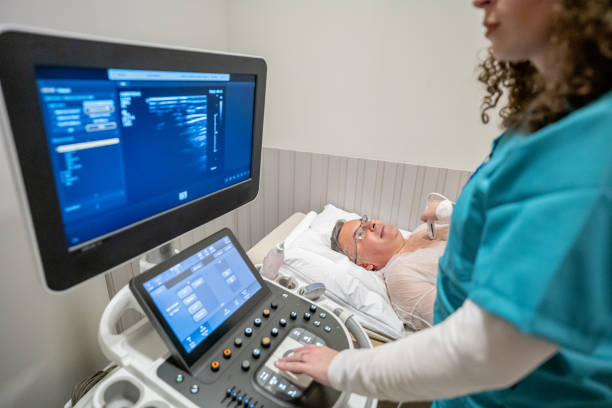
When a hospital deploys many monitors, the challenge is no longer limited to individual screens.
Monitors may connect to a Central Monitoring Station, allowing multiple beds to be observed from a centralized location.
Depending on the system, the central station may display:
- Waveforms.
- Numeric values.
- Alarms.
- Trends.
- Events.
- Patient information.
However, a central station does not replace bedside monitoring and response procedures.
The facility should determine:
- Who monitors the central station?
- How many beds does one station manage?
- Who responds when an alarm occurs?
- How does the bedside monitor operate if the network is unavailable?
- What is the contingency workflow if the central station fails?
Connecting Patient Monitors to HIS/EMR
Some facilities may want to establish a data flow such as:
Monitor → central/server → middleware/interface → HIS/EMR
However, the facility should determine:
- Which data are transmitted?
- How frequently are data sent?
- Numeric values or waveforms?
- Is confirmation required before data are entered into the record?
- How is the Patient ID mapped?
- What happens when the patient changes beds?
- How are data handled during network outages?
Having Ethernet connectivity does not mean the device can automatically integrate with the EMR.
Some ecosystems may also require:
- Gateway.
- Middleware.
- Dedicated server.
- Proprietary protocol.
- Interface license.
This is why interoperability should be assessed during the procurement stage.
7. Alarm Management Should Be Treated as Part of the Workflow
Patient monitors may generate:
- Physiological alarms.
- Technical alarms.
- System messages.
IEC 60601-1-8 is an FDA-recognized standard related to alarm systems and alarm signals in medical electrical equipment and systems.
When evaluating a device, facilities should review:
- Alarm priority.
- Audible and visual presentation.
- Acknowledgement.
- Pause/silence functions.
- Alarm history.
- Technical alarms.
- Central-station behavior.
More alarms are not necessarily better.
If alarm volume becomes excessive or difficult to manage, staff may need to process many signals that provide limited corresponding value.
Facilities should therefore review the system's ability to:
- Configure department-specific profiles where supported.
- Manage permissions for changes.
- Restore default settings.
- Review alarms/events.
- Synchronize with central monitoring.
This article does not recommend a single set of alarm limits for all patients.
8. Cybersecurity Should Be Assessed When Monitors Are Network-Connected
A monitor using Ethernet, Wi-Fi, servers, or remote service also becomes an endpoint within the hospital's IT environment.
The FDA previously issued a Safety Communication concerning Contec CMS8000 and Epsimed MN-120 patient monitors, in which certain vulnerabilities could potentially allow unauthorized access or control and could enable patient data to leave the healthcare environment when affected devices were connected to the Internet.
This does not mean that every connected patient monitor presents the same risk.
It does show that when evaluating a product, hospitals should ask:
- What operating system and version are used?
- What is the patch process?
- How long will the software be supported?
- Are default accounts present?
- What is the password policy?
- Which network ports are used?
- How is remote access handled?
- Is encryption supported?
- What logging is available?
- What is the process for vulnerability disclosure and remediation?
If the supplier requires Internet connectivity for remote service or updates, IT should determine:
- Destination.
- Protocol.
- Authentication.
- Access permissions.
- Logging.
- Network segmentation.
Cybersecurity should be incorporated into procurement rather than addressed only after the device has already been connected to the network.
9. Battery, Accessories, and Practical Operating Capability
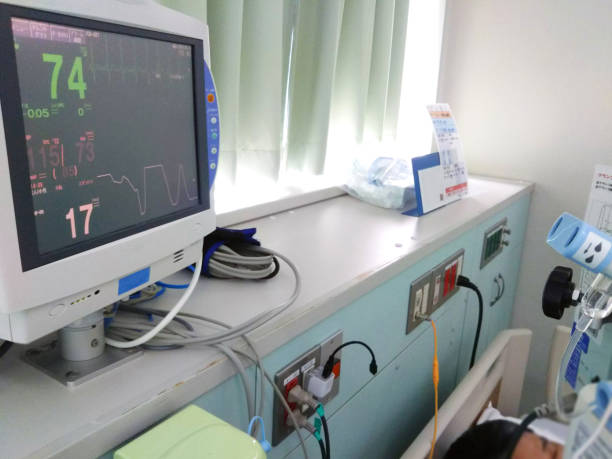
The monitor itself is only one part of the system.
Components that frequently affect workflow include:
- ECG cable.
- Lead wires.
- SpO₂ sensor.
- NIBP cuff and hose.
- Temperature probe.
- CO₂ accessories.
- IBP cable.
- Battery.
- Mount/trolley.
Battery
Facilities should review:
- Battery runtime for the specific configuration.
- Charging time.
- Expected service life.
- Removable or integrated battery.
- Hot-swap capability where available.
- Replacement cost.
- Battery-health monitoring.
Actual battery runtime may vary depending on:
- Screen brightness.
- Wi-Fi.
- Modules.
- NIBP interval.
- Battery age.
The nominal runtime stated in the brochure therefore should not be used as the only basis for assessment.
Mounting
Monitors may be installed on:
- Trolley.
- Wall mount.
- Bed rail.
- Pendant.
- Transport dock.
An appropriate mounting system should support:
- Cable management.
- Mobility.
- Ease of operation.
- Storage of sensors and cuffs.
- Space management around the bed.
10. Cleaning, Maintenance, and Technical Support
Patient monitors and accessories are frequently touched and may be used across multiple patients.
The facility should review the IFU for:
- Compatible cleaning agents.
- Approved disinfectants.
- Whether cables and sensors may be immersed.
- How cuffs may be cleaned or washed.
- Which accessories are reusable.
The same chemical should not be used for every device without first confirming compatibility.
Maintenance
Depending on the model, the program may include:
- Visual inspection.
- Cable inspection.
- Battery check.
- Functional testing.
- NIBP verification.
- Alarm checks.
- Electrical safety testing according to the facility's program.
- Calibration/verification where appropriate.
- Software updates.
The same maintenance schedule should not automatically be applied to every monitor.
In addition to the monitor itself, many technical support tickets may originate from:
- Cables.
- Sensors.
- Hoses.
- Cuffs.
- Batteries.
- Connectors.
The SLA should therefore cover both the device and its accessories.
11. Ten Criteria for Selecting a Patient Monitor

1. Fit with the Area of Use
Clearly determine whether the device will be used in:
- ICU.
- OR.
- ED.
- Recovery.
- Ward.
- Transport.
2. Required Parameters
Distinguish between:
- Core parameters.
- Optional parameters.
- Expansion modules.
Do not select a monitor based only on the total number of parameters.
3. Alarm System
Assess:
- Priority.
- History.
- Profiles.
- Central alarms.
- Adjustment permissions.
4. Central Monitoring
Clarify:
- Number of beds.
- Server.
- License.
- Network.
- Scalability.
5. Integration
Review:
- HIS/EMR.
- Gateway.
- Middleware.
- Interfaces.
- Data export.
6. Mobility
Review:
- Battery.
- Weight.
- Mount.
- Dock.
- Trolley.
7. Accessories
Assess:
- Cables.
- Sensors.
- Cuffs.
- Probes.
- Interchangeability.
- Cost.
8. Cybersecurity
Review:
- Software lifecycle.
- Patching.
- Accounts.
- Remote access.
- Vulnerability support.
9. Service and Maintenance
Review:
- Warranty.
- SLA.
- Engineers.
- Spare parts.
- Loaner equipment.
- Preventive maintenance.
10. Total Lifecycle Cost
Include:
- Monitor.
- Modules.
- Central station.
- Server.
- Licenses.
- Cables.
- Sensors.
- Batteries.
- Mounts.
- Integration.
- Service.
Comparing Configurations by Area of Use
| Factor | Advanced Bedside Monitor | Transport Monitor | Basic/Step-Down Monitor |
|---|---|---|---|
| Number of waveforms | Generally more, depending on configuration | Prioritizes information required during transport | Depends on the model |
| Expansion modules | May offer extensive expansion | May be more limited | Depends on need |
| Size | Generally larger | Smaller and more compact | Moderate |
| Battery | Available, but not always the primary criterion | Very important | Depends on workflow |
| Central monitoring | Often an important consideration | May be supported | May be supported |
| Mounting | Wall/pendant/trolley | Handle/dock/transport mount | Wall/trolley |
| Primary objective | Advanced monitoring | Maintaining monitoring during transport | Monitoring appropriate to the level of care |
The table is intended as general guidance. The configuration should be confirmed for the exact model.
12 Questions to Ask Suppliers Before Shortlisting
1. Which parameters and modules are included in the quoted configuration?
2. Which functions require additional licenses?
3. Which sensors, cuffs, cables, and mounting accessories are included?
4. Which accessories are interchangeable across models?
5. Which user groups is the device intended for according to its intended use?
6. Under what conditions is the stated battery runtime measured?
7. What is the maximum number of beds supported by central monitoring?
8. Which server, network, and licenses are required for the central station?
9. What gateway or middleware is required for HIS/EMR integration?
10. How long will software and cybersecurity updates be supported?
11. How are SLA coverage and spare-parts availability organized in Vietnam?
12. What items are included in the total cost of a complete monitoring setup for one bed?
Short Checklist Before Purchasing a Patient Monitor
Device
- Model and configuration are clearly defined.
- Core parameters are sufficient.
- Expansion modules are appropriate.
- Alarm functionality has been demonstrated.
- Battery capability fits the workflow.
Accessories
- ECG cable.
- SpO₂ sensor.
- NIBP cuff.
- Temperature probe.
- Advanced modules/accessories where required.
- Mount/trolley.
System
- Central monitoring.
- Server/license.
- Network.
- HIS/EMR integration.
- Cybersecurity.
Service
- Warranty.
- SLA.
- Software support.
- Spare parts.
- Battery.
- Cables/sensors.
- Preventive maintenance.
Cost
- Monitor.
- Modules.
- Accessories.
- Central station.
- Licenses.
- Integration.
- Service.
Frequently Asked Questions About Patient Monitors

What Parameters Does a Patient Monitor Commonly Measure?
Depending on the configuration, parameters may include ECG/heart rate, SpO₂, NIBP, respiration, temperature, and additional parameters such as IBP or CO₂.
What Are the Five Parameters in a 5-Parameter Monitor?
A common configuration may include ECG/HR, SpO₂, NIBP, respiration, and temperature, but terminology may differ across products, so the exact model should always be checked.
Can a Patient Monitor Replace a Diagnostic ECG Machine?
This should not be assumed. ECG functionality on a bedside monitor is primarily intended for monitoring according to the device's intended use.
Is Central Monitoring Necessary?
Not every facility requires it. Its value depends on the number of beds, level of monitoring, staffing, network infrastructure, and alarm-response workflow.
Is a Monitor Better If It Has Wi-Fi?
Not necessarily. Wireless connectivity may be useful in some mobile workflows, while fixed monitors may be more appropriately connected through wired networks.
Can a Patient Monitor Send Data to the Electronic Medical Record?
Some systems can be integrated, but this often requires a server, gateway, middleware, or interface. Ethernet connectivity alone does not mean automatic EMR integration.
Should a Hospital Compare the Price of the Monitor or the Cost of the Entire System?
The total cost should include the monitor, modules, sensors, cables, cuffs, batteries, mounting systems, central station, servers, licenses, integration, and service.
This article is provided for informational purposes regarding patient monitoring equipment and system selection. Measurement values, alarm limits, monitoring indications, and clinical management decisions should be determined by qualified professionals based on the patient, the device's intended use, manufacturer instructions, and facility procedures.
From Bedside Monitors to Centralized Monitoring Systems at PHARMEDI & HEALTHCARE VIETNAM 2026
As the number of monitored beds increases, selecting patient monitors is no longer a decision involving individual devices alone. Hospitals also need to consider accessory standardization, central monitoring, networks, alarms, data, batteries, software, and system scalability.
At PHARMEDI & HEALTHCARE VIETNAM 2026, the Product Showcase Area announced by the Organizing Committee includes medical devices and supplies, while also expanding into Digital Health and Smart Healthcare. This provides a relevant setting for hospitals to evaluate patient monitoring in relation to digital infrastructure and broader operational models.
For facilities preparing to purchase new equipment or standardize their patient monitoring systems, exploration at PHARMEDI VIETNAM 2026 can focus on:
- Which configuration is appropriate for the ICU, emergency department, operating room, or transport?
- Are ECG, SpO₂, NIBP, IBP, temperature, and CO₂ modules integrated or purchased separately?
- Can sensors, cuffs, and cables be shared across models?
- What server, license, and network architecture does central monitoring require?
- To what extent can alarm profiles be managed by department?
- Does the monitor integrate directly with HIS/EMR, or does it require a gateway/middleware?
- Which batteries, trolleys, wall mounts, and accessories are included in the quoted configuration?
- How long will software and cybersecurity updates be supported?
- How are SLA coverage and the supply of sensors, cables, and batteries organized?
From Device Configuration to a System-Level Investment Decision
Before moving deeper into operating models, Day 1 – September 22, 2026 of the International Conference Series on Investment and Innovation in Healthcare provides additional perspectives on industry growth and hospital procurement and investment.
For patient monitoring, this is a relevant approach because the cost of a project is not limited to the monitor installed at each bed. Facilities also need to account for modules, accessories, central stations, servers, licenses, networks, integration, replacement batteries, maintenance, and the ability to expand the number of monitored beds in the future.
The investment question therefore should not only be:
“How much does one monitor cost?”
but should be expanded to:
“What is the total cost of establishing and maintaining an appropriate monitoring system for the entire department?”
On Day 2 – September 23, 2026, the program includes the session “The Hospital of the Future: Smart, Sustainable, and Patient-Centered” from 10:00 AM–10:45 AM.
This is not a session specifically dedicated to patient monitoring, but it provides a broader context for facilities to consider the role of connected monitors within hospital data infrastructure and operating models, rather than comparing individual devices only by the number of parameters or screen size.
When monitors are connected to central stations or other digital systems, the question shifts from “Can the device measure the parameter?” to “How are data, alarms, and response responsibilities organized across the entire care workflow?”
B2B Matchmaking – Compare Configurations by Department, Not Only by Catalogue
For hospitals that have already identified the number of beds, deployment areas, or monitor-standardization requirements, B2B Matchmaking at PHARMEDI provides additional opportunities for one-to-one discussions with companies based on needs and potential fit.
Instead of requesting only a general quotation, facilities can present specific scenarios such as 20 ICU beds requiring central monitoring, an emergency department requiring transport-capable monitors, operating rooms requiring expansion modules, or a hospital seeking to standardize accessories across multiple departments to discuss suitable configurations.
Topics to clarify may include the number of monitors and modules required, central-station architecture, servers and licenses, scalability in the number of beds, HIS/EMR integration, alarm workflows, shared accessories, SLA arrangements, and the total cost of a complete system.
In this way, PHARMEDI & HEALTHCARE VIETNAM 2026 provides hospitals with additional opportunities to evaluate patient monitoring at two levels: monitoring effectiveness at each bedside and stable system operation when multiple monitors are connected across a department or the entire hospital.
Dates: September 22–24, 2026
Venue: Saigon Exhibition and Convention Center (SECC), Ho Chi Minh City
Exhibitor Registration:https://pharmed.vn/exhibitor/application-form
Visitor Registration:https://ers-vn.informa-info.com/pha2026?cid=FB
Contact
Booth Booking: [email protected] (Thanh Thuý)
Media Support: [email protected] (Anita Pham)
Visitor Support: [email protected] (Ciel Le)