


An anesthesia machine is one of the key equipment systems used in operating rooms. It is designed to deliver and control gas mixtures for inhalational anesthesia while also supporting ventilation and monitoring relevant parameters during use.
Modern anesthesia machines may integrate multiple components, including gas-supply systems, flow-control systems, anesthetic vaporizers, anesthesia ventilators, breathing systems, monitoring equipment, and safety alarm mechanisms.
Therefore, anesthesia machine selection should not be based only on the number of ventilation modes, screen size, or purchase price. Hospitals should also evaluate compatibility with the medical gas infrastructure, ventilator configuration, monitoring functions, protective mechanisms, accessories, maintenance requirements, and suitability for intended patient groups according to the manufacturer's stated use.
This article focuses on the components, functions, and selection criteria for anesthesia systems in healthcare facilities. It does not provide guidance on selecting anesthetic agents or setting ventilation parameters for treatment.
What Is an Anesthesia Machine?
An anesthesia machine, also referred to as an anesthesia machine with ventilator, anesthesia workstation, or anaesthetic workstation, is an equipment system designed to deliver medical gases and inhalational anesthetic agents under continuous supervision by qualified personnel.
Within the scope of this article, an anesthesia machine primarily refers to an inhalational anesthesia system that integrates components for gas control and ventilation.
A system may include:
- Medical gas receiving and regulation components.
- Gas-flow control system.
- Anesthetic vaporizer.
- Anesthesia breathing system.
- Anesthesia ventilator.
- Gas and respiratory monitoring equipment.
- Alarm and protective systems.
- Anaesthetic Gas Scavenging System.
- Control display, power supply, and backup battery.
Not every device has the same configuration or level of integration. Some functions may require additional modules or accessories.
ISO 80601-2-13:2022, now including Amendment 1:2026, is an international standard specifying particular requirements for the basic safety and essential performance of anaesthetic workstations. Amendment 1:2026 was officially published by ISO on August 13, 2026.
The standard addresses the complete anesthesia workstation and its constituent components, including gas-delivery systems, breathing systems, anesthesia ventilators, anesthetic vapor-delivery systems, waste-gas scavenging, monitoring equipment, and protective mechanisms.
How Does an Anesthesia Machine Work?
At a general technical level, an anesthesia machine receives medical gases from an appropriate supply source, regulates and controls the gas flow, and then directs the gases through the components of the anesthesia system.
Depending on the configuration and intended use, the system may combine medical gases with anesthetic vapor and then deliver the resulting gas mixture through the breathing system.
The operating process can be summarized as follows:
1. Gas supply: The system receives oxygen and other supported medical gases from an appropriate source.
2. Gas control: Pressure-regulation, measurement, and flow-control components manage gas delivery.
3. Anesthetic vapor delivery: The vaporizer or another vapor-delivery system operates according to the configuration designed by the manufacturer.
4. Ventilation support: The breathing system and anesthesia ventilator deliver the gas mixture to the patient and control ventilation according to the mode in use.
5. Monitoring and protection: Sensors, measurement devices, and alarm systems monitor parameters related to system operation.
6. Waste-gas management: The scavenging system collects excess or waste anesthetic gas according to the system design.
The stages above describe general technical principles and are not a clinical operating sequence. Actual gas pathways and control methods depend on the specific system.
1. Main Components of an Anesthesia Machine System

A modern anesthesia system consists of multiple components working together.
| Component | Primary Function |
|---|---|
| Medical gas supply system | Receives gas from the supply source and delivers it into the machine |
| Gas-flow control system | Controls gas flow according to the system design |
| Anesthetic vaporizer | Delivers anesthetic vapor according to the configured system |
| Anesthesia breathing system | Conducts gases and manages inspired and expired gas pathways |
| Anesthesia ventilator | Supports or controls ventilation |
| Monitoring system | Monitors gas and respiratory parameters |
| Alarm system | Notifies users of abnormal conditions |
| Anaesthetic Gas Scavenging System | Collects and removes waste anesthetic gases according to the design |
| Display and software | Display, control, and store information |
| Power supply and battery | Provide power to applicable system components |
These components may be integrated into a single machine or assembled from multiple components confirmed by the manufacturer as compatible.
Medical Gas Supply System
Anesthesia machines may be designed to use:
- Oxygen (O₂).
- Medical air.
- Nitrous oxide (N₂O) where supported and required.
- Other gas sources according to the stated configuration.
Gas may be supplied from a central pipeline system or appropriate cylinders compatible with the machine design.
When selecting equipment, hospitals should confirm:
- Which gases are required by the equipment?
- Are the gas connectors compatible with the existing infrastructure?
- What supply-pressure range is required according to the documentation?
- Is a backup gas source supported?
- How does the machine respond and generate alarms if gas pressure or supply is interrupted?
It should not be assumed that all anesthesia machines use the same gas types or have the same backup-source switching mechanisms.
Gas-Flow Regulation and Control
The flow-control system regulates the amount of gas delivered to downstream components.
Depending on the design, the machine may use:
- Mechanical flow measurement and control.
- Electronic control systems.
- Flow sensors.
- Gas-monitoring and control software.
Some systems may also include functions that support management of fresh gas flow or display tools related to gas-use efficiency.
However, automated control functions should be evaluated according to the intended use and limitations stated by the manufacturer.
2. Anesthetic Vaporizers and Vapor-Delivery Systems
An anesthetic vaporizer is a component used to introduce anesthetic vapor into the gas system according to the machine design.
Depending on the technology, vaporizers may operate through mechanical or electronic mechanisms.
When evaluating a system, facilities should clarify:
- Which types of vaporizers does the machine support?
- Which anesthetic agents are compatible with the vaporizer according to the manufacturer?
- How many vaporizers can be installed?
- Does the system include mechanisms intended to reduce incorrect configurations?
- Does it support vaporizer identification or status monitoring?
- How should the vaporizer be inspected and maintained?
Compatibility Involves More Than the Mounting Position
It should not be assumed that a vaporizer can be used with every anesthesia machine simply because its shape or connector appears similar.
Facilities should confirm:
machine model + vaporizer type + mounting interface + supported anesthetic agent
according to official manufacturer documentation.
A quoted configuration may not include a vaporizer or may include only certain components. Hospitals should therefore clarify this from the beginning to avoid additional costs after equipment purchase.
3. What Functions Does an Anesthesia Machine with Ventilator Provide?

One of the key components of the system is the anesthesia ventilator.
This component supports or controls ventilation within the intended design of the anesthesia system.
Depending on the device, the machine may support different ventilation modes, pressure sensors, flow sensors, and related monitoring functions.
When evaluating the ventilator, facilities should review:
- Which ventilation modes are supported?
- Is the system suitable for the intended patient groups according to the manufacturer's stated use?
- Which sensors and monitoring parameters are included?
- How are ventilation waveforms and information displayed?
- Does the system support manual ventilation or other methods where applicable to its design?
- If electrical power or gas supply is interrupted, which functions remain available?
The number of ventilation modes alone should not be used to determine the suitability of the system.
How Is an Anesthesia Machine with Ventilator Different from an ICU Ventilator?
These are two equipment categories designed for different intended uses.
| Factor | Anesthesia Machine with Ventilator | ICU Ventilator |
|---|---|---|
| Primary purpose | Supports inhalational anesthesia and ventilation in appropriate environments | Provides ventilatory support according to the intended use of the device |
| Anesthetic vapor delivery | May integrate a dedicated vapor-delivery system | Not a standard function |
| Breathing system | Integrated into the anesthesia configuration and may include gas recirculation and CO₂ absorption | Depends on the design and intended use |
| Waste anesthetic gas scavenging | May be part of the system | Not a standard component |
| Monitoring | Anesthetic gas and respiratory parameters depending on the configuration | Ventilation and respiratory parameters according to the system design |
| Use environment | Operating rooms and other appropriate anesthesia areas | ICU or other areas permitted by the manufacturer |
An anesthesia machine with ventilator should not be treated as a direct replacement for an ICU ventilator.
Likewise, a conventional ICU ventilator does not normally include a complete system for delivering and controlling inhalational anesthetic agents.
Selection should be based on the intended use, stated configuration, and professional requirements of the facility.
4. Anesthesia Breathing System and CO₂ Absorber
An anesthesia breathing system is a group of components that conducts gases between the machine and the patient connection.
Depending on the design, the system may include:
- Breathing circuit tubing.
- Connectors.
- Valves.
- Reservoir bag.
- CO₂ absorber.
- Appropriate filters and accessories.
- Related sensors.
Some systems use a circle breathing system, in which exhaled gas may pass through a CO₂ absorber and be partially reused according to the system design.
What Is the Role of the CO₂ Absorber?
The CO₂ absorber uses an appropriate absorbent material to remove carbon dioxide from gas passing through the system according to its design.
When selecting a system, facilities should review:
- Which absorber canister type does the machine use?
- Does the absorbent material have specific requirements?
- What are the canister capacity and design?
- How is its usage status checked?
- Can it be removed and replaced conveniently?
- Are compatible accessories available in Vietnam?
It should not be assumed that all CO₂ absorbent materials or absorber canisters are compatible with every anesthesia machine.
Breathing Circuits and Accessories Also Affect the System
Components such as breathing circuits, filters, reservoir bags, and connectors may affect operating characteristics.
Hospitals should therefore use accessories confirmed by the manufacturer as compatible with the exact configuration.
Consumable requirements should be incorporated into the procurement plan from the beginning rather than considering only the price of the main unit.
5. Monitoring and Safety Alarm Systems
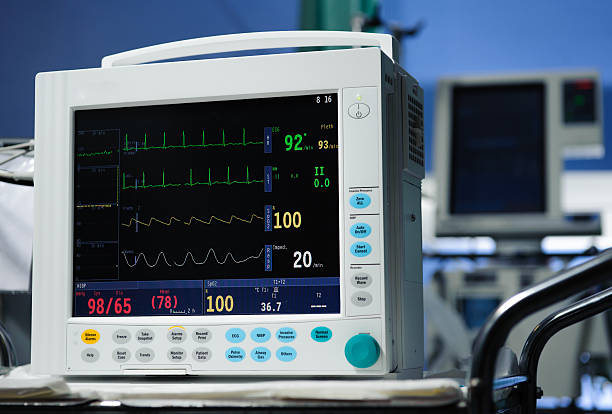
A modern anesthesia machine may integrate multiple monitoring functions.
Depending on the configuration, the system may monitor:
- Oxygen concentration.
- Airway pressure.
- Gas volume and flow.
- Ventilation parameters.
- CO₂.
- Anesthetic agent concentration.
- Gas-supply status.
- Power-supply and battery status.
- Other supported parameters or system states.
Not every parameter is included as standard in every machine.
Gas and Respiratory Monitoring
Some systems support analysis of anesthetic-agent concentration, oxygen, and CO₂ while also displaying related parameters or waveforms.
Facilities should determine:
- Which gases can the equipment measure?
- Where are the sensors located?
- Is a separate gas-analysis module required?
- Are a sampling line or water trap required?
- Which components require periodic replacement?
- Are measurement data stored?
The WHO–WFSA International Standards for a Safe Practice of Anesthesia emphasize continuous monitoring, oxygen supply, appropriate monitoring equipment, and the continued presence of trained anesthesia personnel during anesthesia care.
The machine's monitoring functions do not replace professional monitoring responsibilities.
Alarms That Should Be Evaluated
Depending on the model, an anesthesia machine may generate alarms when:
- There is a problem with the oxygen or other gas supply.
- Airway pressure is abnormal.
- The system detects certain disconnection or leakage conditions.
- Ventilation abnormalities occur.
- Electrical power is interrupted.
- Battery level is low.
- A sensor or another system component fails.
However, having more alarms does not automatically mean the device is safer.
Facilities should also evaluate how the alarm system operates:
- Are priority levels clear?
- Are audible and visual notifications easy to identify?
- Can the user determine which component is involved?
- Is alarm history available?
- How is information displayed when multiple alarms occur simultaneously?
Evaluation should involve both anesthesia personnel and the biomedical or clinical engineering team.
6. Anaesthetic Gas Scavenging System
The Anaesthetic Gas Scavenging System (AGSS) is designed to collect and remove waste anesthetic gases from the working area according to the system design.
This is an important component to evaluate when a facility uses inhalational anesthesia techniques that generate relevant waste gases.
A system may include:
- Waste-gas connector.
- Tubing.
- Receiving unit.
- Regulation or protective components.
- Appropriate waste-gas conveyance and disposal infrastructure.
Why Should AGSS Not Be Overlooked?
If a facility purchases an anesthesia machine without checking its waste-gas scavenging infrastructure, difficulties may arise when attempting to put the equipment into operation in the intended configuration.
Facilities should determine:
- Does the machine require an AGSS connection?
- Which connector type is supported?
- Is the hospital's waste-gas scavenging system compatible?
- Are additional pipelines or intermediate components required?
- Which supplier is responsible for verifying connectivity?
AGSS should not be treated as a conventional fluid-suction system. The two systems have different functions and technical requirements.
7. Infrastructure Requirements for Installing an Anesthesia Machine
Anesthesia machines depend heavily on operating-room infrastructure. A device may be suitable in terms of functionality but still be difficult to deploy if the facility has not prepared the correct technical conditions.
Medical Gas Supply
Before purchasing, facilities should confirm:
- The gas types required by the equipment.
- Existing central gas supplies.
- Compatible connectors.
- Required supply pressure and flow according to the documentation.
- Backup arrangements.
- Responsibility for checking the gas system before handover.
ISO 7396-1:2016 is an international reference standard for pipeline systems for compressed medical gases and vacuum, including aspects related to design, installation, testing, and commissioning.
However, citing this standard does not mean that all of its specific requirements automatically constitute mandatory legal requirements in Vietnam.
Electrical Power and Backup Battery
Facilities should review:
- Power consumption.
- Power-supply requirements.
- Outlet location.
- Operating-room backup power system.
- Battery runtime.
- Which functions remain available during mains-power failure.
Some machines include backup batteries, but it should not be assumed that every function continues to operate normally for the same duration when electrical power or gas supply is interrupted.
This should be confirmed for the exact model.
Space and Layout
When positioning the machine, facilities should account for:
- Dimensions and weight.
- Mobility.
- Access direction for gas connectors.
- Power-cable position.
- Breathing-circuit position.
- Visibility of the display.
- Space for replacing consumables.
- Maintenance clearance.
It is not sufficient to check only whether the device physically fits in the room.
Facilities should evaluate the actual operating space when the machine is used together with the operating table, patient monitor, and other relevant equipment.
8. Pre-Use Checks and Technical Acceptance
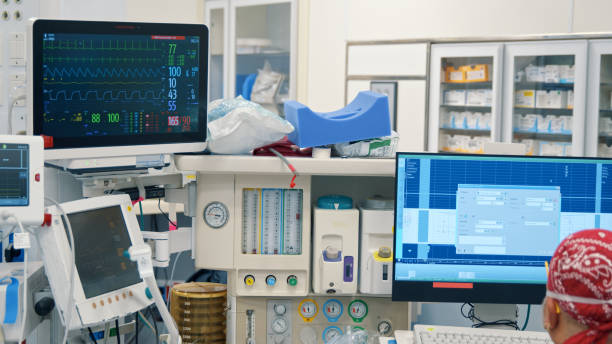
An anesthesia machine includes multiple components directly related to safety. Checking should therefore not be performed only once at installation.
Two activities should be distinguished:
Acceptance at equipment handover: Confirms configuration, accessories, installation conditions, documentation, functions, and requirements agreed in the contract.
Pre-use check: Performed according to facility procedures and manufacturer instructions to confirm that the equipment is ready for its intended operation.
Can the Self-Test Function Replace the Pre-Use Check Procedure?
Some anesthesia machines include automated self-test functions that help detect certain problems related to sensors, gas pathways, or other system components according to their design.
However, facilities should clarify:
- Which components are covered by the self-test?
- Which items still require separate inspection by staff?
- Are test results stored?
- How does the equipment notify the user when an error is detected?
- Does the manufacturer provide specific instructions for each type of check?
The machine's self-test function should not be assumed to replace the entire pre-use checking procedure.
Materials from the American Society of Anesthesiologists (ASA) concerning anesthesia system checks also emphasize combining manufacturer instructions with appropriate facility-specific checkout procedures.
9. Cleaning, Consumables, and Maintenance
Different components of an anesthesia system have different cleaning and reprocessing requirements.
Components that may need to be included in the management program include:
- Breathing circuits.
- Filters.
- CO₂ absorber canisters.
- Gas-sampling lines.
- Water traps.
- Components connected to the breathing system.
- Machine surfaces.
- Display and control buttons.
- Other accessories according to the configuration.
Facilities should determine which components are single-use, which are reusable, and which reprocessing methods are permitted by the manufacturer.
Anesthesia System Maintenance
Depending on the model, the maintenance program may include:
- Visual inspection.
- System functional testing.
- Inspection of gas-supply components.
- Verification of sensors and monitoring functions.
- Alarm testing.
- Battery checks.
- Inspection of mechanical components.
- Electrical safety testing according to the facility's program.
- Calibration or verification where required by the manufacturer.
- Software updates.
A single fixed maintenance schedule should not be applied to all anesthesia machines.
Facilities should base the schedule on manufacturer instructions, level of use, incident history, and the medical equipment management program.
Technical Support Capability in Vietnam
Before purchasing large quantities, hospitals should ask:
- Are engineers trained for the exact model available?
- Are appropriate test equipment and maintenance software available?
- Are spare parts supplied in Vietnam?
- What is the expected repair time?
- Is temporary replacement equipment available where needed?
- Is post-repair verification support available?
- Which items are covered by the warranty?
For equipment that affects operating-room availability, downtime should be incorporated into maintenance and contingency planning.
10. Software, Data, and Connectivity
Some modern anesthesia systems may support:
- Storage of operational data.
- Parameter trend display.
- Alarm-log storage.
- Data export.
- Connectivity with anesthesia information management systems.
- Integration with electronic medical records depending on the configuration.
However, having a network port or Wi-Fi does not mean that the anesthesia machine can automatically integrate with HIS/EMR.
When data exchange is required, hospitals should clarify:
- Which parameters can be exported?
- Which formats are used for data transmission?
- Is a server or middleware required?
- Are additional licenses required?
- Which party is responsible for integration?
- How are access permissions and system logs managed?
For network-connected anesthesia machines, facilities should also assess security mechanisms, software updates, remote support, and vulnerability-management procedures.
Connectivity functions without a clearly defined operational need should not be purchased simply because they are available.
11. Ten Criteria for Selecting an Anesthesia Machine for a Hospital
To compare systems, facilities may develop an evaluation table based on the following criteria:
| Criterion | What Should Be Evaluated? |
|---|---|
| 1. Intended use | Operating-room type, specialty, and intended patient groups according to the manufacturer |
| 2. Gas-supply system | Supported gases, connectors, source requirements, and backup arrangements |
| 3. Anesthetic vapor delivery | Compatible vaporizers, installation configuration, and protective mechanisms |
| 4. Anesthesia ventilator | Ventilation modes, sensors, and limitations of use |
| 5. Breathing system | Breathing circuits, CO₂ absorber, valves, and accessories |
| 6. Monitoring and alarms | Measured parameters, display capability, and alarm mechanisms |
| 7. Installation infrastructure | Medical gases, electrical power, AGSS, and operating space |
| 8. Usability | Display, self-test, user interface, and cleaning workflow |
| 9. Technical service | Warranty, maintenance, spare parts, and support capability in Vietnam |
| 10. Total lifecycle cost | Machine, vaporizer, consumables, accessories, software, and service |
An anesthesia machine should not be selected based on a single specification alone.
Common Mistakes When Investing in Anesthesia Machines
Looking only at the number of ventilation modes: Failing to evaluate gas systems, sensors, monitoring functions, and limitations of use.
Overlooking vaporizers and accessories: Discovering after purchase that the quoted configuration does not include required components.
Failing to check the existing gas supply: Connectors or supply requirements may not be compatible with the operating-room infrastructure.
Failing to account for the waste anesthetic gas scavenging system: Additional installation requirements may arise during implementation.
Looking only at the self-test function: Failing to clarify which faults the system can actually detect automatically.
Failing to account for consumables: Breathing circuits, filters, CO₂ absorbent material, and accessories may create substantial long-term costs.
Failing to evaluate maintenance and contingency arrangements: A device may have an acceptable purchase price but result in prolonged downtime when a failure occurs.
12. Questions to Ask Suppliers Before Purchasing an Anesthesia Machine
Before selection, hospitals may prepare the following questions:
1. Which patient groups and types of surgery is the anesthesia machine intended for according to its stated intended use?
2. Which gas supplies does the equipment require, and are they compatible with the existing medical gas system?
3. Does the quoted configuration include a vaporizer, and which types are supported?
4. What functions and technical limitations does the anesthesia ventilator have?
5. Which breathing circuits and CO₂ absorbers does the system support?
6. Which gas and respiratory parameters are monitored directly?
7. How do the alarm mechanisms respond to loss of gas supply, power failure, or other system abnormalities?
8. What type of Anaesthetic Gas Scavenging System does the equipment require?
9. Which items are covered by the self-test function?
10. Does the software support data storage or integration with hospital systems?
11. How are spare parts, consumables, and technical services supported in Vietnam?
12. What items are included in the total implementation and operating cost over several years?
Short Checklist Before Finalizing the Equipment
- Confirm the intended use and anesthesia ventilator configuration.
- Check gas supplies, connectors, and backup arrangements.
- Clarify the vaporizer, breathing system, and included accessories.
- Evaluate monitoring, alarm, and self-test functions.
- Confirm AGSS, electrical, and installation-space requirements.
- Demonstrate the interface and checking procedures according to manufacturer instructions.
- Review consumables, maintenance, spare parts, and total lifecycle cost.
Frequently Asked Questions About Anesthesia Machines
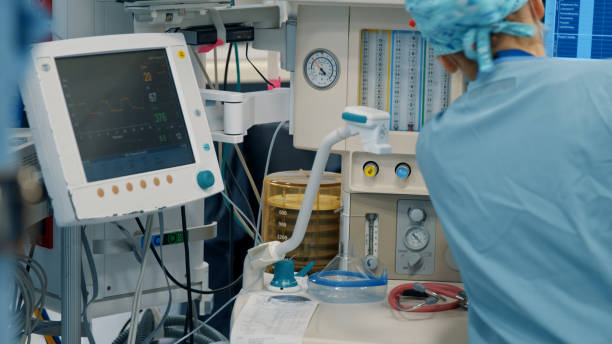
What Is an Anesthesia Machine Used For?
An anesthesia machine is a system designed to deliver medical gases and inhalational anesthetic agents while potentially integrating ventilation, monitoring, and alarm functions depending on its configuration.
Is an Anesthesia Machine with Ventilator the Same as an ICU Ventilator?
No. An anesthesia machine with ventilator integrates a ventilator into the anesthesia system and has a different intended use from an ICU ventilator. The two devices should not be treated as direct substitutes.
Does an Anesthesia Machine Require a Central Oxygen Supply?
This depends on the system design and facility infrastructure. The equipment may use gas supplied through a pipeline system and/or compatible cylinders. Supply and backup requirements should be confirmed for the exact model.
Does an Anesthesia Machine Require an Anesthetic Vaporizer?
For configurations using inhalational anesthetic vapor, the system requires an appropriate vapor-delivery solution. The vaporizer type and compatibility depend on the machine design.
Does an Anesthesia Machine Perform a Self-Test Before Use?
Some modern systems include automated self-test functions, but the scope of those checks varies. The function should not be considered a complete replacement for the facility's pre-use checking procedure.
Can an Anesthesia Machine Integrate with HIS/EMR?
Some systems support data exchange or connectivity with anesthesia information management software. Actual integration depends on protocols, software, licenses, and hospital infrastructure.
Should an Anesthesia Machine Be Selected Based on Its Initial Purchase Price?
No. Facilities should also account for vaporizers, accessories, consumables, medical gas infrastructure, AGSS, software, maintenance, spare parts, and equipment downtime over the lifecycle.
This article is provided for informational purposes regarding the components, functions, and selection criteria for anesthesia machines in healthcare facilities. It does not provide guidance on selecting anesthetic agents, dosage, gas concentrations, or ventilation settings for individual patients. Equipment configuration, operation, and checking should be performed by appropriately qualified personnel according to manufacturer instructions and facility procedures. The ISO standards mentioned are international technical references and do not automatically constitute mandatory legal requirements in Vietnam.
Explore Anesthesia Machine Technologies and Operating Room Equipment Solutions at Pharmedi Vietnam 2027
For hospitals investing in or upgrading anesthesia systems, equipment selection involves more than comparing ventilation functions or anesthetic vapor-delivery capabilities. An appropriate system should meet professional requirements, medical gas infrastructure needs, safety-monitoring requirements, consumable-supply needs, and long-term maintenance capabilities.
Pharmedi Vietnam 2027, taking place from September 28–30, 2027 at the Saigon Exhibition and Convention Center (SECC), Ho Chi Minh City, provides an opportunity for businesses, professionals, and healthcare organizations to meet, explore technologies, and discuss medical equipment solutions that support healthcare delivery.
For hospitals preparing an anesthesia equipment investment plan, Pharmedi Vietnam 2027 provides an opportunity to explore technology solutions, identify potential suppliers, and define the technical requirements that should be evaluated when selecting anesthesia systems for operating rooms.
Before working with suppliers, hospitals and healthcare organizations may proactively explore:
- Which ventilator configurations and patient groups does the anesthesia machine support?
- How are gas supplies, connectors, and infrastructure requirements designed?
- Are the vaporizer and related accessories included in the supplied configuration?
- How does the system monitor oxygen, CO₂, anesthetic gases, and ventilation?
- Which alarm and self-test mechanisms are included?
- What installation conditions are required for the waste anesthetic gas scavenging system?
- How are accessories, consumables, and technical services supported in Vietnam?
Preparing these criteria helps hospitals compare solutions, assess compatibility with their existing operating-room infrastructure, and develop an investment plan aligned with professional requirements.
For a system with multiple technical components and strong dependence on operating-room infrastructure, anesthesia machine selection should focus on integrated operation, safety, compatibility, and total long-term cost of use.
Dates: September 28–30, 2027
Venue: Saigon Exhibition and Convention Center (SECC), Ho Chi Minh City
Exhibition Information: https://pharmed.vn/
Exhibitor registration, visitor registration, and program information will be updated according to official announcements from the Pharmedi Vietnam 2027 Organizing Committee.
Related post
- FROM TREATMENT TO PREVENTION AND HOLISTIC CARE: HOW AI IS SHAPING THE FUTURE OF CANCER MANAGEMENT
- Safety in the use of testing equipment: Points to control in operation
- Vietnam and Denmark Launch Phase 3 of Healthcare Cooperation Program
- Conjoined twins surgery- Heroes in White Blouse continuing to write their names in Vietnamese Medical History